Europe intertwined - A tri-border journey through France, Germany, and Switzerland
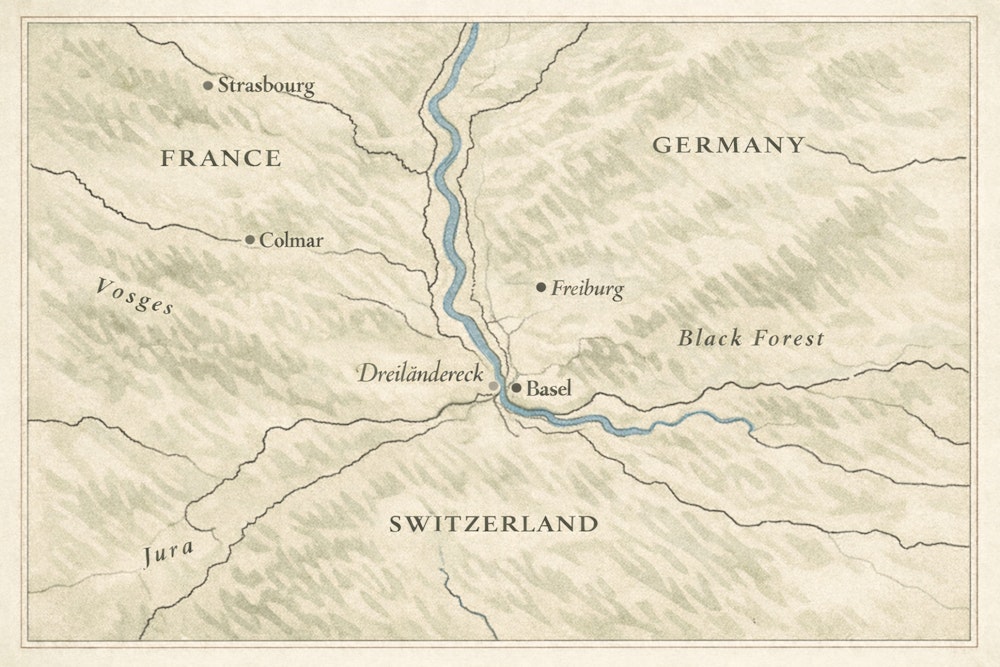
There are few places in Europe where borders feel less like divisions and more like invitations. In the Upper Rhine region - where France, Germany and Switzerland converge - cultures blend seamlessly, landscapes shift gently from vineyards to forests, and centuries of history unfold beside contemporary European life. Known as Dreiländereck, this tri-border area offers something increasingly rare: depth without distance, variety without hurry. Within a short drive, you can wander medieval streets in France, hike sunlit German hills and watch the Rhine flow past Swiss riverbanks - all before dinner.
A brief history of the Upper Rhine
To understand the Dreiländereck, one must look beyond the present borders. For over two millennia, the Upper Rhine has been a corridor of movement.
The Romans established settlements along its banks, including Augusta Raurica near Basel, transforming the river into a commercial artery linking northern Europe with the Mediterranean world. In the Middle Ages, free imperial cities such as Strasbourg flourished through trade, craftsmanship and scholarship.
From the 17th to the 20th century, Alsace in particular shifted repeatedly between French and German sovereignty. Architectural layers in Strasbourg’s Neustadt and Colmar’s medieval core reflect these political transformations. The monumental buildings around Place de la République stand beside half-timbered houses, embodying the region’s dual heritage.
The Franco-Prussian War, two World Wars and repeated border shifts left deep cultural imprints that remain visible in architecture, language and identity today. Yet today, the Rhine no longer marks division. Basel, meanwhile, maintained a distinct Swiss identity while prospering as a centre of humanism and learning. Its architecture, language variations and cultural rhythms all reflect centuries of adaptation.
A region of many languages
One of the most fascinating aspects of the Dreiländereck is how languages overlap and coexist. Within a short distance, you will hear French in Alsace, German in Freiburg, and Swiss German dialects in Basel - often within the same day. In Alsace, older generations still speak Alsatian, a Germanic dialect reflecting centuries of shifting sovereignties between France and Germany. In Basel, everyday speech is often in Swiss German, while standard German is used in formal contexts. French, meanwhile, remains deeply rooted in Strasbourg and across the Vosges foothills. English is widely understood, particularly in cities such as Strasbourg, Freiburg and Basel, making navigation easy for international travellers. But what makes the region special is not simply multilingual convenience - it is the lived experience of cultural fluidity. Here, language becomes less a barrier and more a reflection of shared heritage.
Alsace - Strasbourg, Colmar and the Vosges horizons
On the French side of the Upper Rhine lies Alsace, a region shaped by centuries of exchange. Nowhere captures this better than Strasbourg, capital of the Grand Est and one of Europe’s most symbolically positioned cities. Within 500 kilometres lie eight European countries - a reminder of Strasbourg’s historic centrality in Europe.
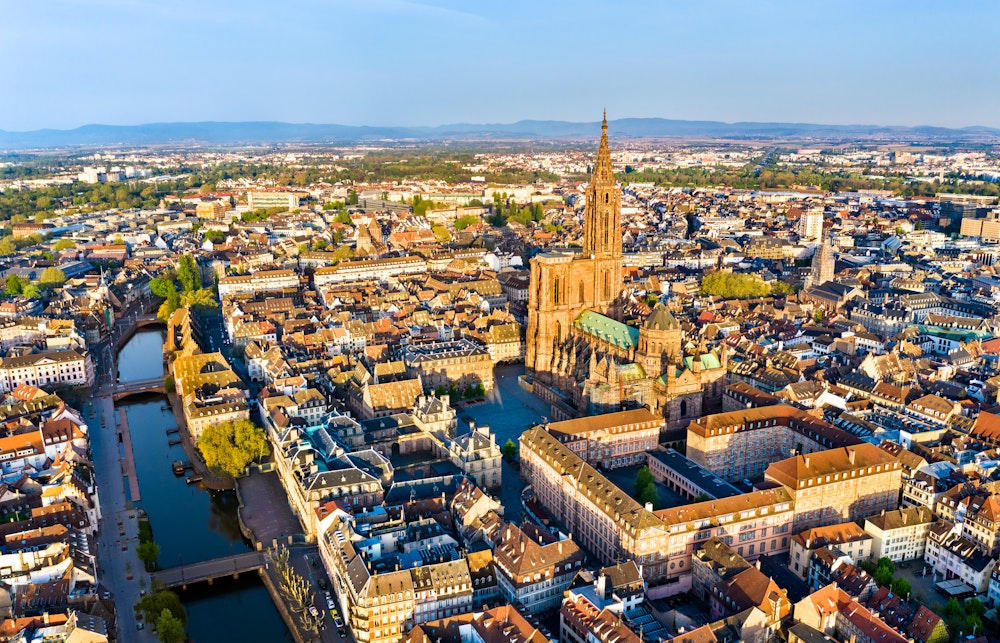
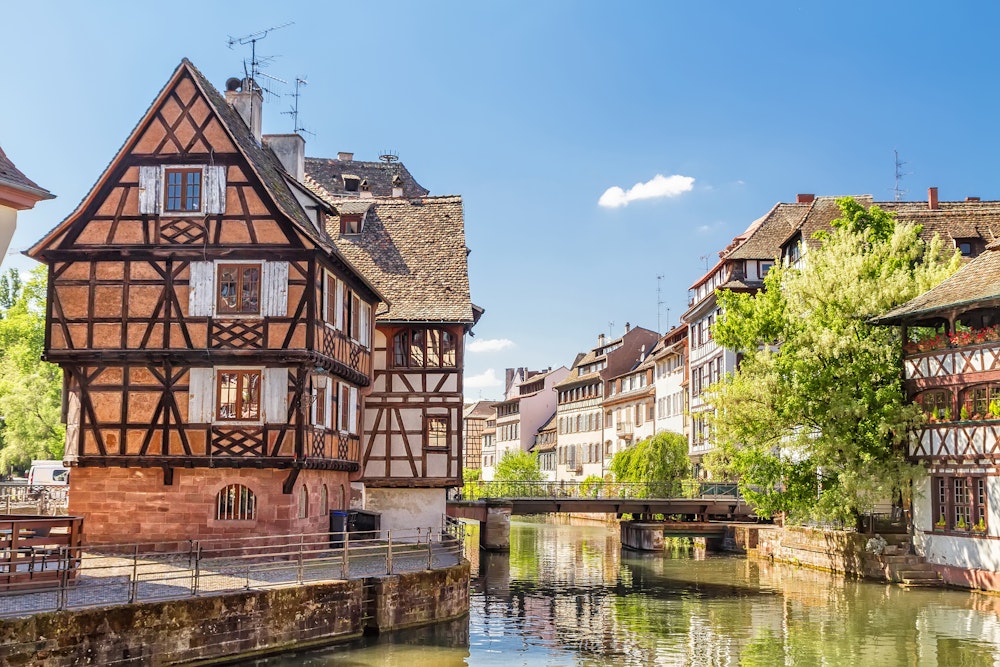
At the heart of Strasbourg stands the magnificent Cathédrale Notre-Dame, its 142-metre Gothic spire once the tallest structure in Christendom. Built in rose-hued sandstone that changes colour with the sky, it dominates the UNESCO-listed Grande Île. Nearby, the canals of La Petite France, once home to tanners and millers, reflect timbered façades that seem suspended between water and sky.
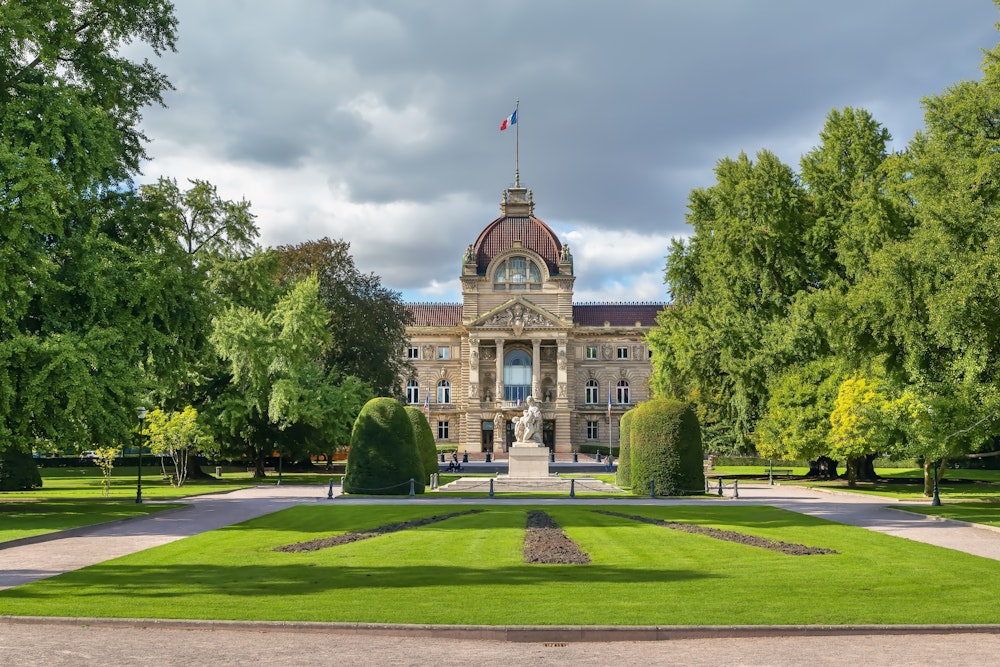
A boat tour along the River Ill reveals Strasbourg’s layered identity. Passing beneath stone bridges and along the imperial avenues of the Neustadt, visitors encounter grand 19th-century architecture around Place de la République, including the imposing Palais du Rhin, the Bibliothèque Nationale et Universitaire, and the Théâtre National de Strasbourg. Further along the Rhine rises the European Quarter, home to the European Parliament and the Council of Europe - institutions dedicated to cooperation and dialogue, fitting for a city long shaped by cultural intersections.
Strasbourg’s museum landscape adds further depth. The Musée Alsacien offers intimate insight into regional traditions and domestic life, while the Palais Rohan houses three major collections dedicated to fine arts, decorative arts and archaeology. For quieter interludes, the Parc de l’Orangerie offers shaded walks beneath tall trees where storks - emblematic of Alsace - nest peacefully. The nearby Botanical Garden provides a contemplative green retreat, while families may enjoy the interactive exhibits at Le Vaisseau science centre.
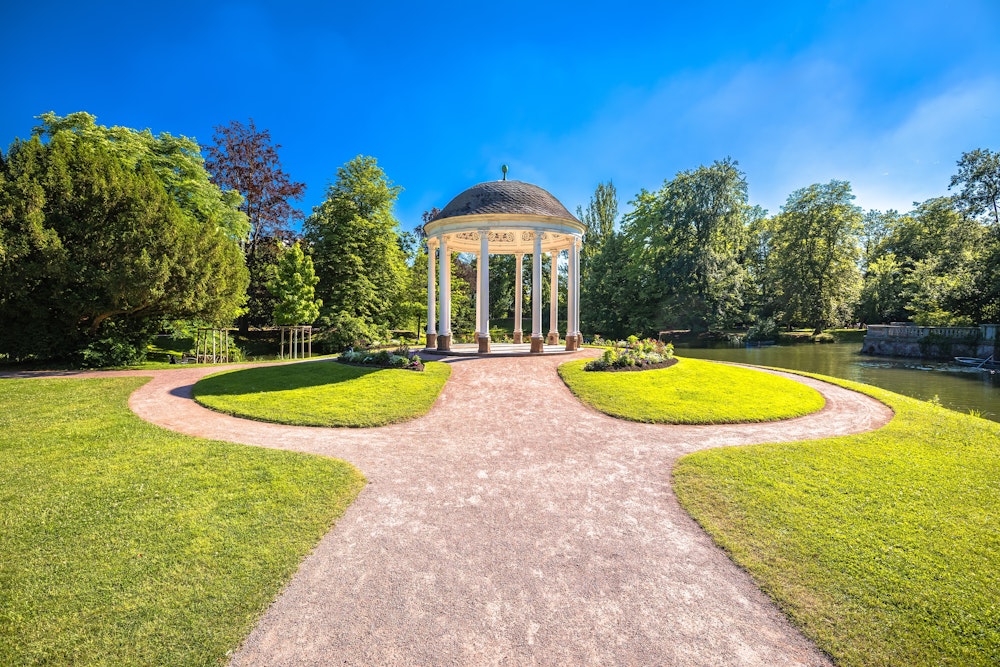
The tram line D extension now crosses the Rhine into Kehl, Germany, symbolically reconnecting two nations once divided. The landscaped Jardin des Deux Rives spans both banks, and the striking Turkish Mosque of Kehl, with its twin minarets, quietly reflects the region’s contemporary diversity - a reminder that cultural exchange continues to shape Europe.
South of Strasbourg lies Colmar, a jewel of half-timbered houses and canal-lined streets. Its “ Little Venice” quarter winds along the Lauch River, while the preserved medieval centre unfolds through colourful façades along Rue des Marchands and Rue des Clefs. The green expanse of Champs de Mars offers space to pause, with statues by Bartholdi - the sculptor of the Statue of Liberty - linking Alsace to global narratives.
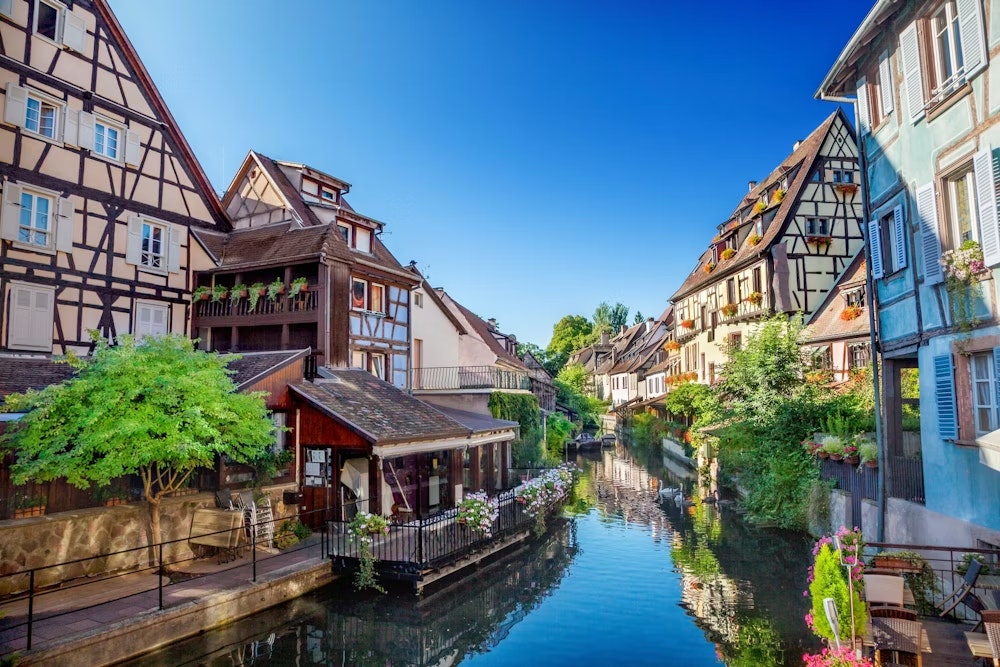
Art lovers will find depth in the Unterlinden Museum, home to the Isenheim Altarpiece, while the nearby Bartholdi Museum reveals the creative legacy of one of France’s most internationally recognised artists. The Dominican Church, home to Martin Schongauer’s celebrated “Madonna in the Rose Garden”, further enriches Colmar’s artistic heritage, connecting the town to the wider currents of late medieval European art.
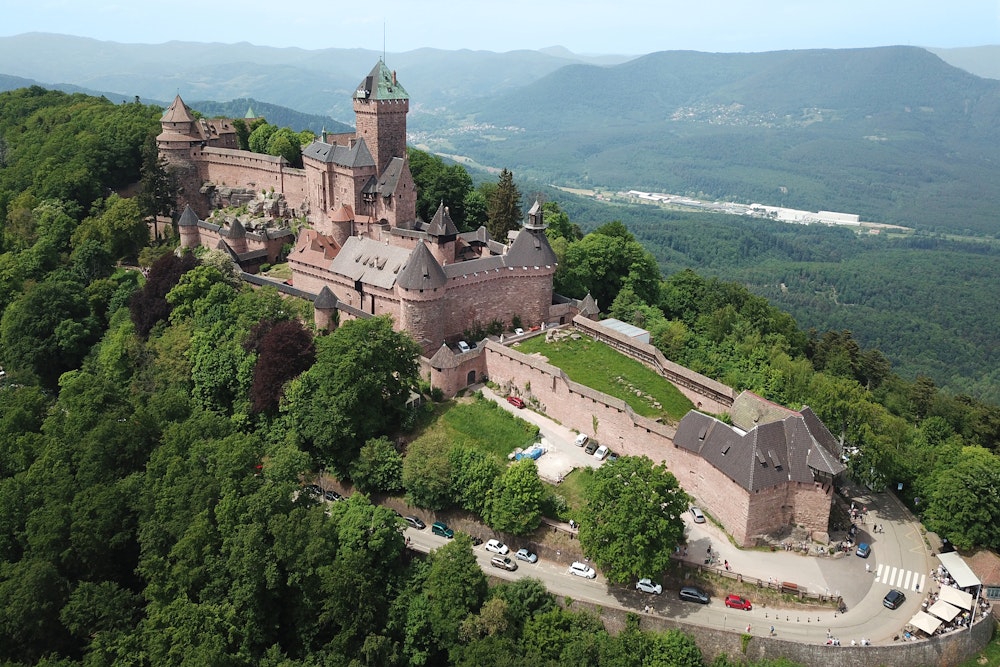
Above the plains rises the formidable Château du Haut-Koenigsbourg, a restored fortress commanding panoramic views across Alsace to the Black Forest. Not far away, the open-air Écomusée d’Alsace in Ungersheim recreates a living Alsatian village, preserving regional architecture and craftsmanship in immersive form.
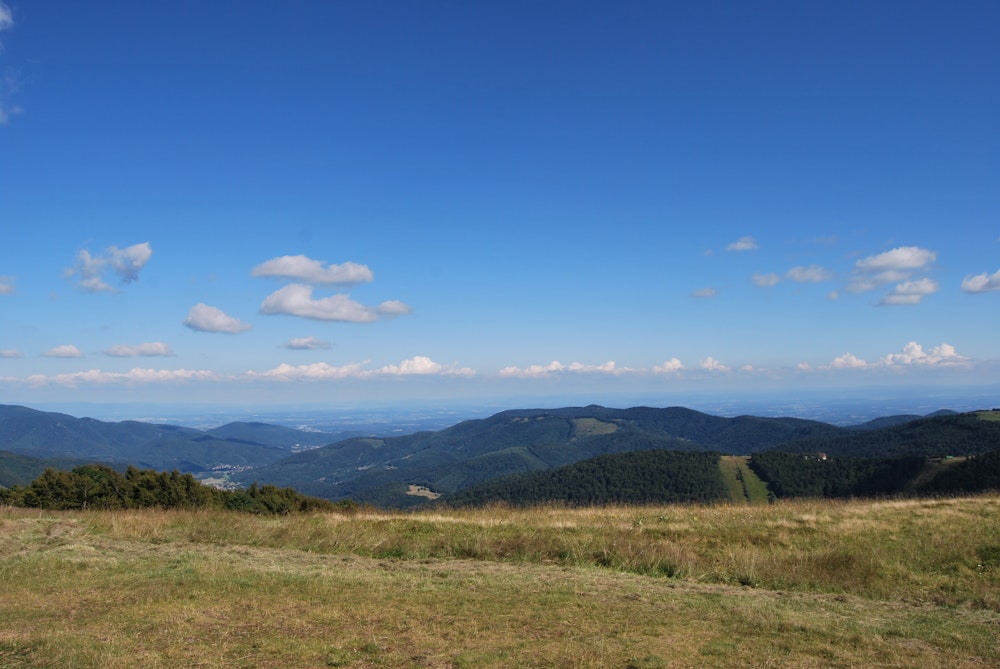
The landscape soon lifts into the Vosges Mountains. Following the scenic Route des Crêtes, travellers reach the summit of the Ballon d’Alsace, where views stretch across the Rhine valley to the Alps on clear days. Forest trails lead to mountain lakes such as Lac Blanc, Lake Longemer, and the tranquil Lac d’Alfeld, nestled above Sewen.
Freiburg, the Black Forest & Kaiserstuhl – forest light and volcanic vineyards
Crossing into Germany, the landscape deepens into pine-covered slopes and sunlit vineyard terraces. At the edge of the Black Forest lies Freiburg im Breisgau, a city that feels inseparable from its natural surroundings. Nestled between wooded hills and the Rhine plain, Freiburg rises gently towards forested ridges that seem to begin just beyond the cathedral square.
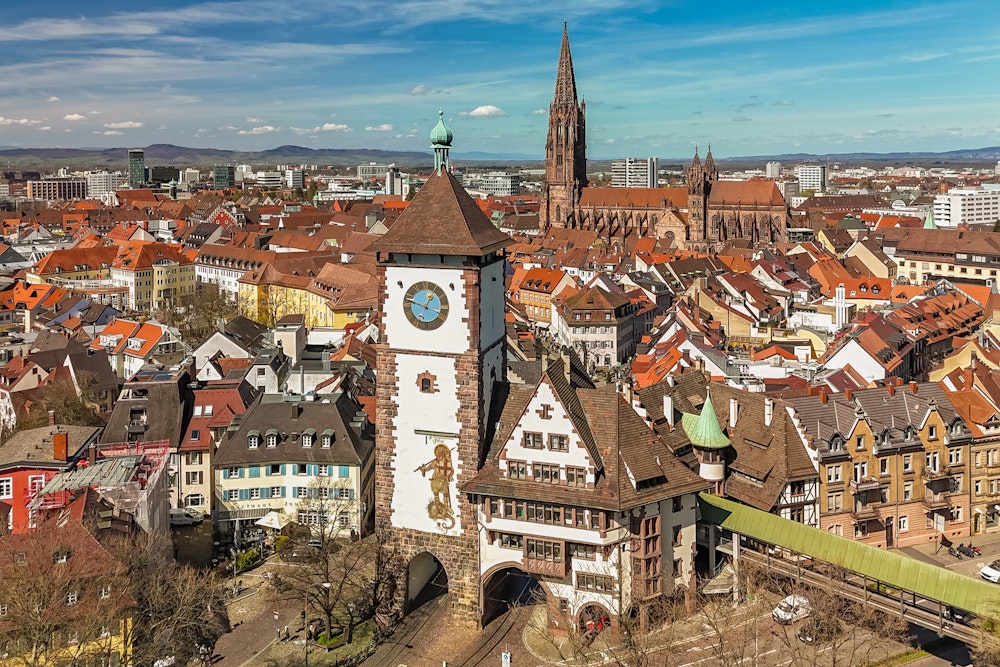
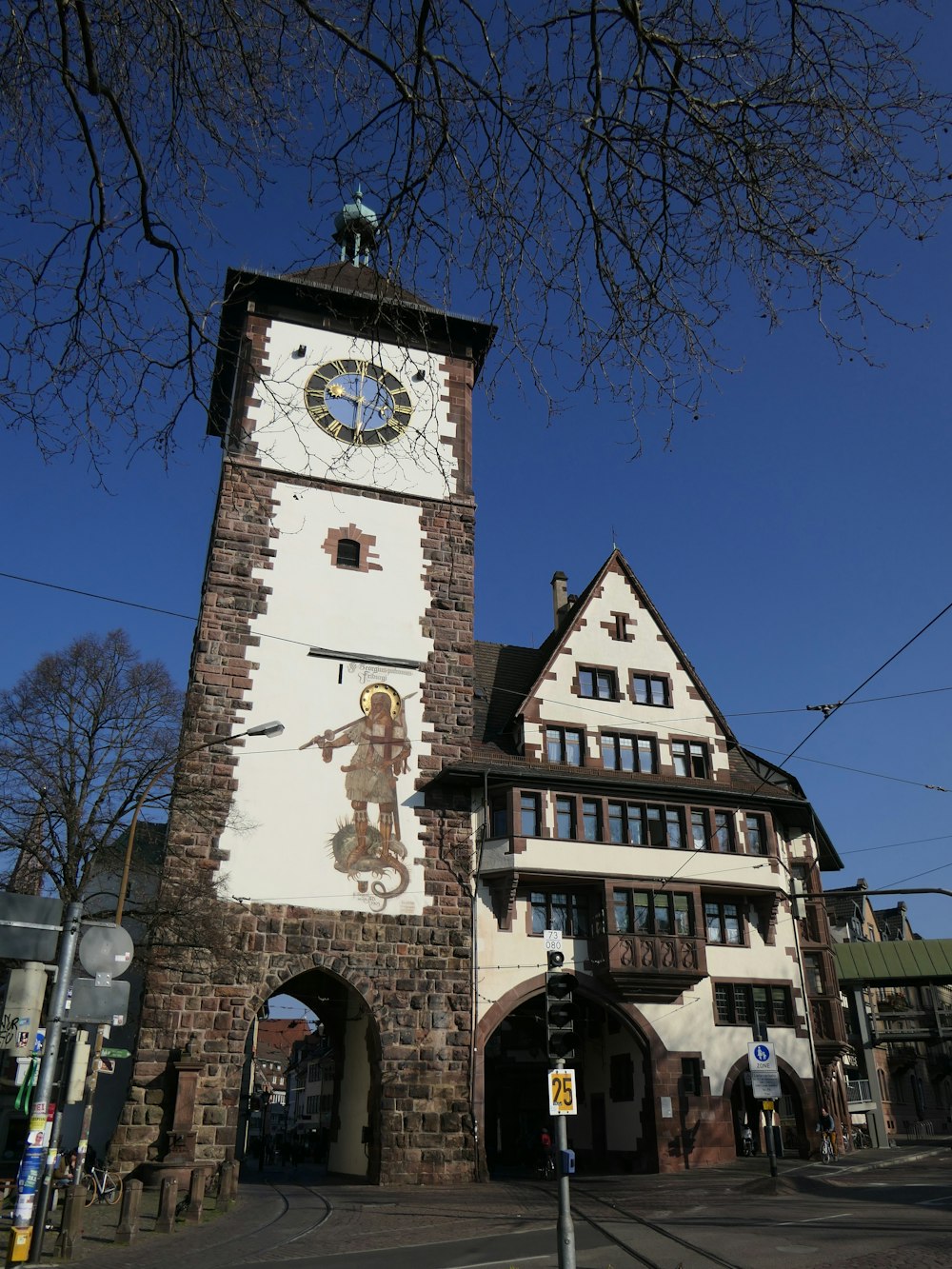
The soaring Gothic Freiburg Münster anchors the old town, surrounded by cobbled streets, medieval gateways such as the Schwabentor and Martinstor, and the narrow Bächle water channels that trace quiet lines through the city. Nearby, the Augustinermuseum traces the cultural history of the Upper Rhine through sculpture, painting and religious art, while the Museum Natur und Mensch explores the region’s environmental heritage - reinforcing Freiburg’s close relationship with both faith and landscape.Yet what defines Freiburg most is how quickly urban life gives way to nature.
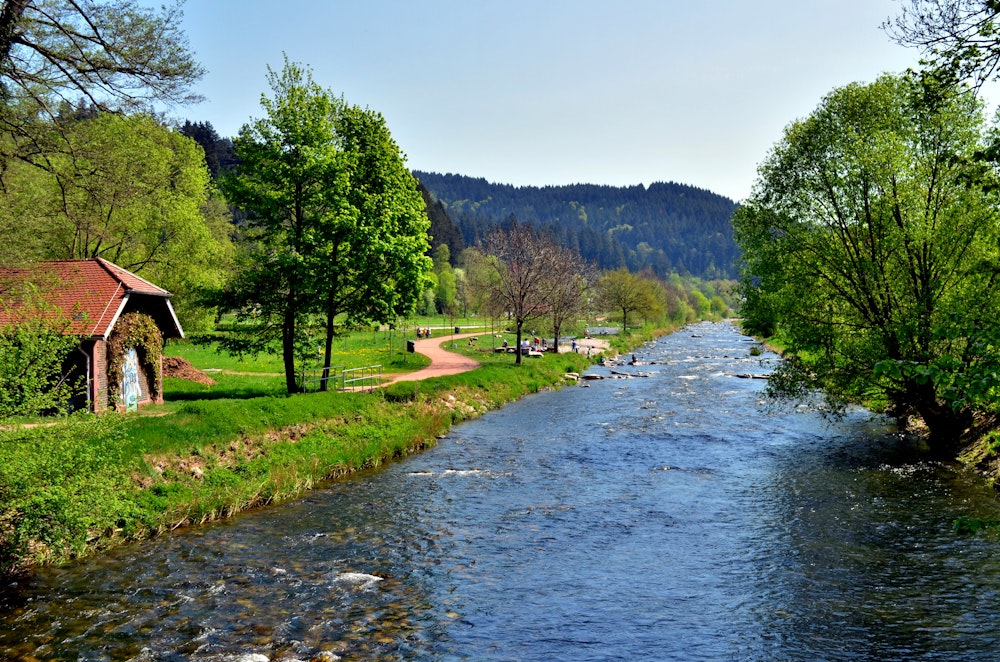
Behind the cathedral, the Schlossberg hill lifts into woodland within minutes of the centre. At its summit stands the Schlossbergturm observation tower, whose panoramic platform offers uninterrupted views across Freiburg’s rooftops, the Kaiserstuhl vineyards and, on clear days, the distant Vosges. Flowing calmly through the city is the Dreisam River, whose long riverside paths form one of Freiburg’s great assets. Cyclists and walkers follow this green corridor for kilometres - eastwards into the foothills of the Black Forest or westwards towards the Rhine - making extended walks and bike rides effortless and scenic.
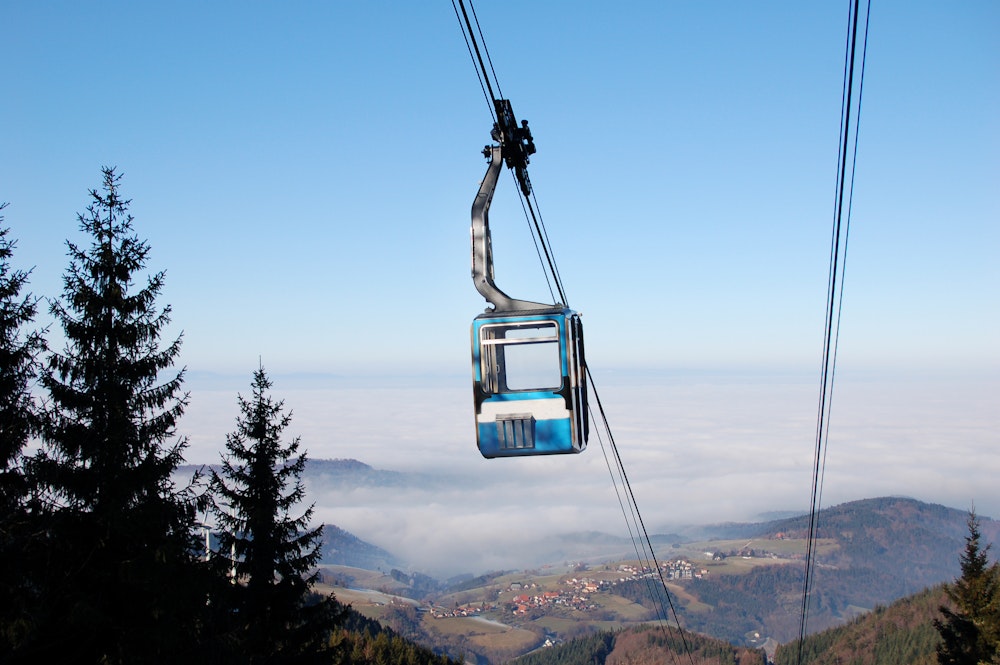
Above the city rises Schauinsland, reached by one of Germany’s longest cable cars. From the summit, trails branch across forest ridges and open meadows with panoramic views over the tri-border landscape.
To the west of Freiburg lies the volcanic Kaiserstuhl, a sun-warmed wine-growing region with a distinctly softer character. Vineyard paths here provide gentler hikes with wide views across the Rhine valley. Further south, the rolling hills of the Markgräflerland and the elevated trails of Tüllinger Berg extend the hiking network towards Basel.
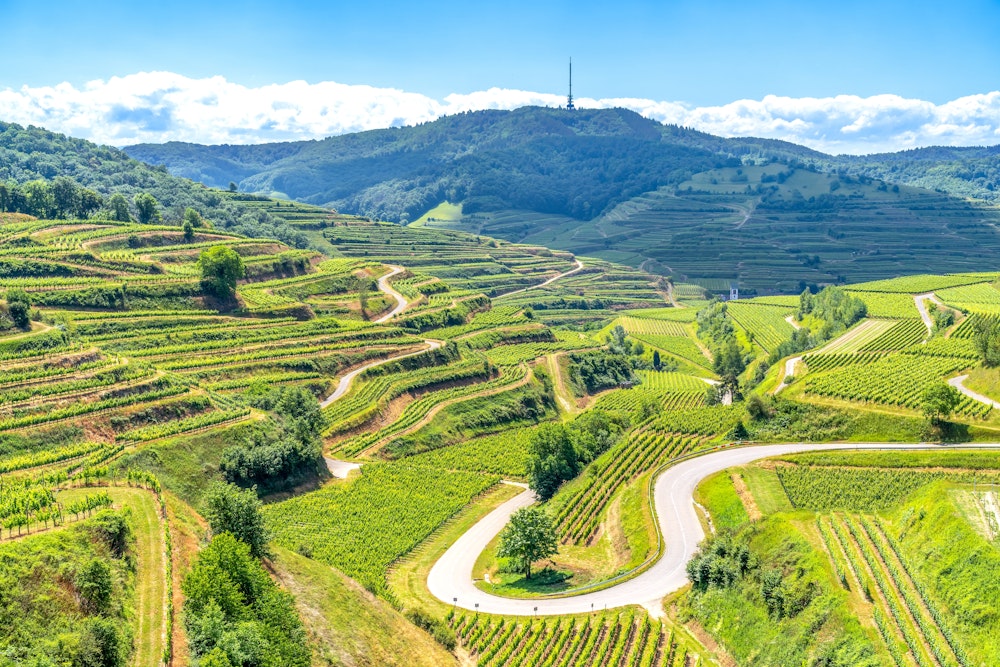
Nature continues to unfold deeper into the Black Forest, where the dramatic Ravennaschlucht Gorge cuts through dense woodland beneath its railway viaduct, and Titisee Lake offers calm waters framed by dark pines. Whether following river paths, climbing wooded hills or wandering vineyard terraces, Freiburg serves as a gateway to one of Europe’s most accessible and varied hiking landscapes.
One of the quiet pleasures of hiking in the Dreiländereck is the rhythm of ascent and pause. Throughout the Vosges, the Black Forest and the Jura, trails often lead to mountain farms and traditional inns - known variously as ferme-auberges, Berggasthöfe or farmhouses - where walkers stop for lunch, coffee or homemade cake. In the Vosges, farm inns serve simple regional dishes prepared with local ingredients; in the Black Forest, hikers pause for freshly baked bread, fruit tarts or a slice of the region’s famous cherry cake; in the Jura, rustic farm cafés offer terrace views across open pastureland. These mountain stops are not commercial resorts but working farms and family-run establishments, adding warmth and authenticity to a day in nature. Hiking here is not only about distance covered - it is about landscape, conversation and shared tables along the way.
Basel - river life, Jura horizons and cross-border sophistication
On the Swiss side of the Dreiländereck, Basel offers a refined yet quietly dynamic counterpoint to the forested slopes of Baden and the vineyard villages of Alsace. Compact and cultured, the city sits gracefully along a broad bend of the Rhine, its historic centre rising gently above the water.
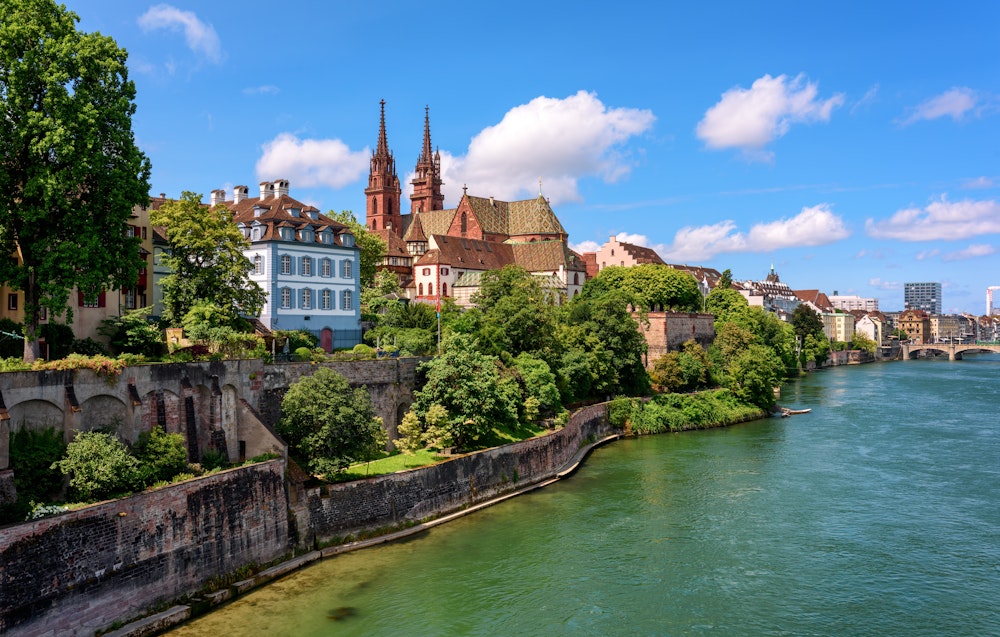
The red sandstone Basel Minster crowns the old town, and from the elevated Pfalz terrace, sweeping views open across the river towards Germany and France. Below, the medieval Altstadt (Old Town) unfolds through narrow alleys, painted façades and hidden courtyards. Guild houses and market squares recall Basel’s long-standing role as a mercantile and intellectual hub.
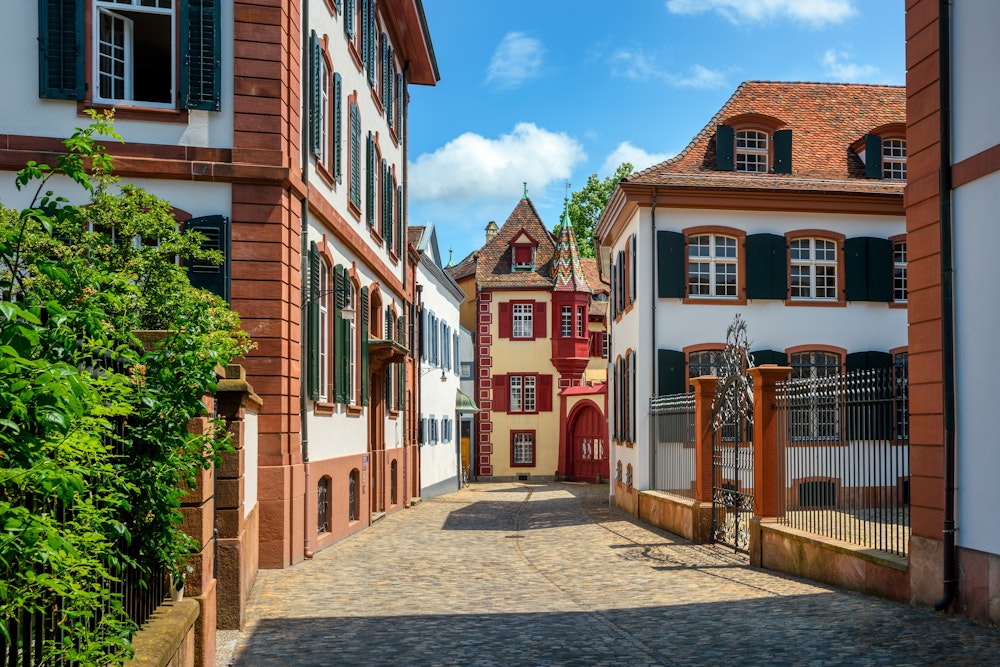
Founded in 1460, the University of Basel is Switzerland’s oldest university and a reminder of the city’s role in Renaissance scholarship and humanist thought. For centuries, Basel prospered through trade along the Rhine, linking northern Europe to Mediterranean markets. The river was not merely a geographical feature - it was an economic lifeline, shaping the city’s identity as a place of exchange.
Today, Basel’s cultural confidence is visible in institutions such as the Kunstmuseum Basel, home to one of the world’s oldest public art collections, and in the striking contemporary architecture of the nearby Vitra Campus, just across the German border. Yet Basel’s rhythm remains surprisingly relaxed.
The Rhine defines daily life here. In warmer months, locals float downstream using waterproof swim bags, emerging along the riverbanks to dry in the sun. Tree-lined promenades stretch along both sides of the water, offering some of the most pleasant urban walking routes in Europe. Cyclists follow dedicated river paths that connect seamlessly to the Rhine Cycle Route (EuroVelo 15), running north through Alsace to Strasbourg, with easy connections to Freiburg.
Nature lies just beyond the city. To the south and west rise the gentle limestone ridges of the Jura Mountains, completing the natural frame formed by the Vosges and the Black Forest. Hiking in the Jura feels expansive rather than dramatic - broad pastures, wooded slopes and long ridgelines with panoramic views over the Swiss plateau. Trails such as those near Wasserfallen or along the Jura crest routes offer rewarding day hikes within easy reach of the city. In the late afternoon, light settles softly across the Jura ridges, and the sense of openness contrasts gently with the darker forests of the Black Forest beyond.
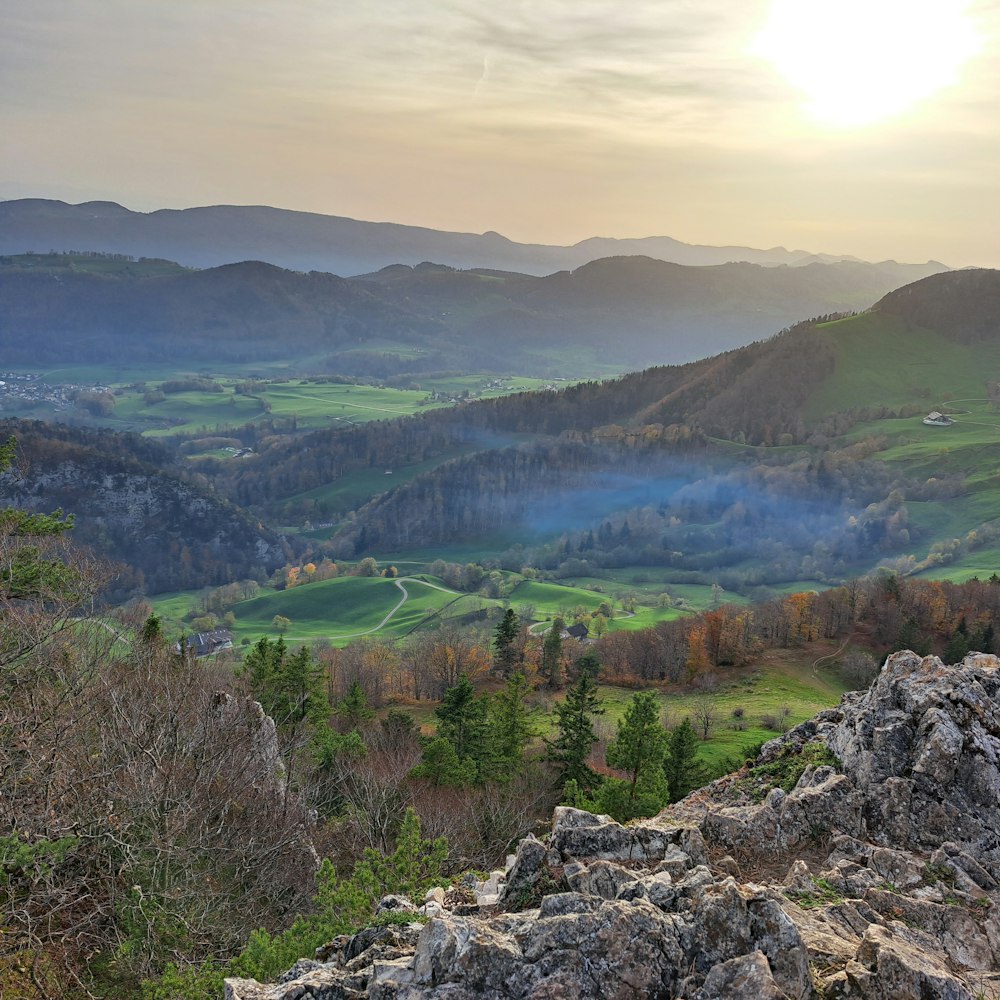
Closer to Basel, the rolling hills of Basel-Landschaft provide vineyard walks and quiet countryside escapes within minutes of the urban core. It is entirely possible to spend the morning in a museum, the afternoon hiking along a Jura ridge, and the evening dining beside the Rhine - all without long travel times.
The Rhine flows steadily through the city, connecting rather than dividing - a fitting symbol for a region where geography, history and culture intertwine. At the northern edge of Basel, where the Rhine bends through the harbour district, the Dreiländereck monument marks the meeting point of Switzerland, France and Germany. The sculptural column rises on the Swiss riverbank, while the exact tri-border junction lies quietly within the water itself. Though modest in setting, the monument carries symbolic weight: within a few steps - or a short boat ride - you move between three nations, reminded that in this region borders are less barriers than shared lines across a continuous landscape.
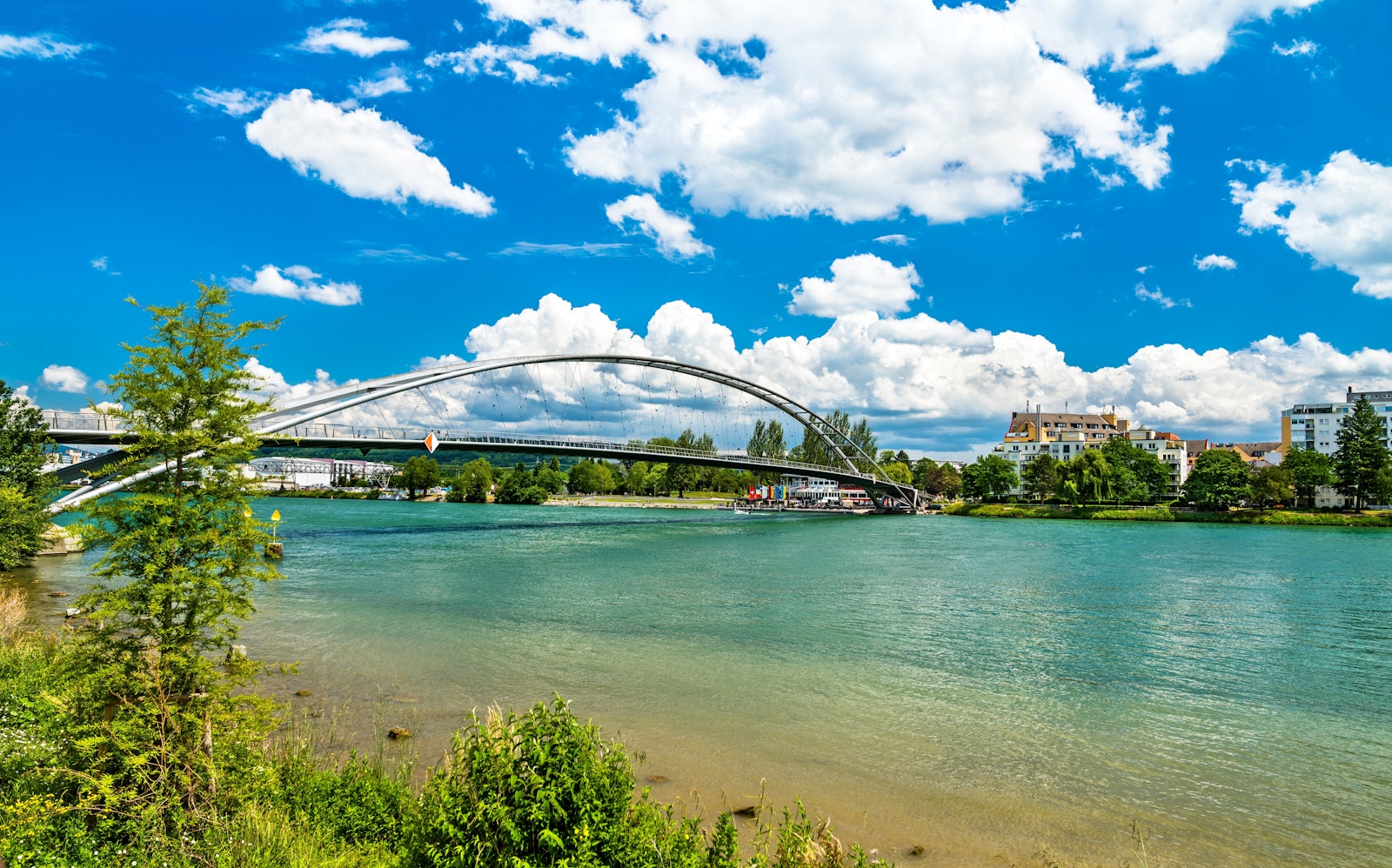
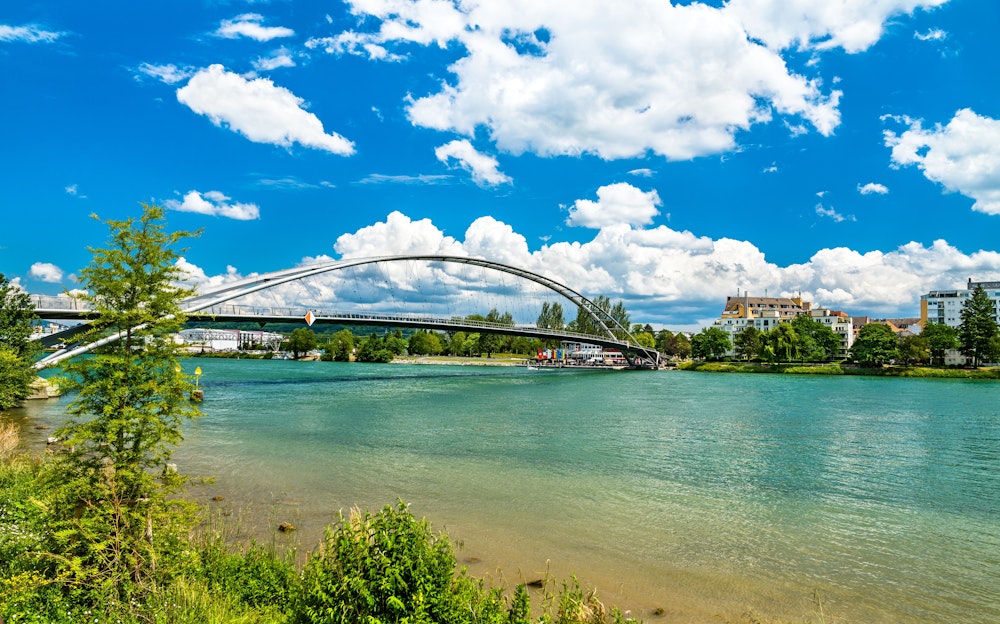
Just north of Basel, the elegant Three Countries Bridge (Dreiländerbrücke) arcs across the Rhine between France and Germany. Designed exclusively for pedestrians and cyclists, it allows visitors to cross from Huningue to Weil am Rhein in minutes - a contemporary architectural expression of the region’s openness.
A subtle thread of shared heritage
While the Dreiländereck is not widely associated with Islamic heritage, its story is one of exchange. For centuries, trade routes along the Rhine connected northern Europe to Mediterranean ports. Architectural influences, scholarly networks and mercantile links shaped cities like Strasbourg and Basel long before modern borders existed. For Muslim travellers, the combination of halal dining in urban centres, easy self-catering, walkable cities and nature-based experiences makes the region surprisingly convenient. It is a destination defined more by heritage, landscape and reflection than nightlife - naturally aligning with travellers who seek depth over distraction.
Luxury, wellness and meaningful travel
The Dreiländereck excels in understated luxury. Vineyard-facing suites in Alsace, forest-edge retreats in the Black Forest and spa hotels in Baden-Baden allow cultural discovery to blend seamlessly with restoration. Private wellness areas and spacious accommodations provide comfort without ostentation.
The elegant spa town of Baden-Baden, with its Roman bathing heritage and grand thermal complexes, offers refined relaxation. Closer to Freiburg, the Keidel Mineral-Thermalbad, surrounded by the Mooswald forest and countryside, provides mineral-rich indoor and outdoor pools - an understated counterpoint to active days spent on forest trails.
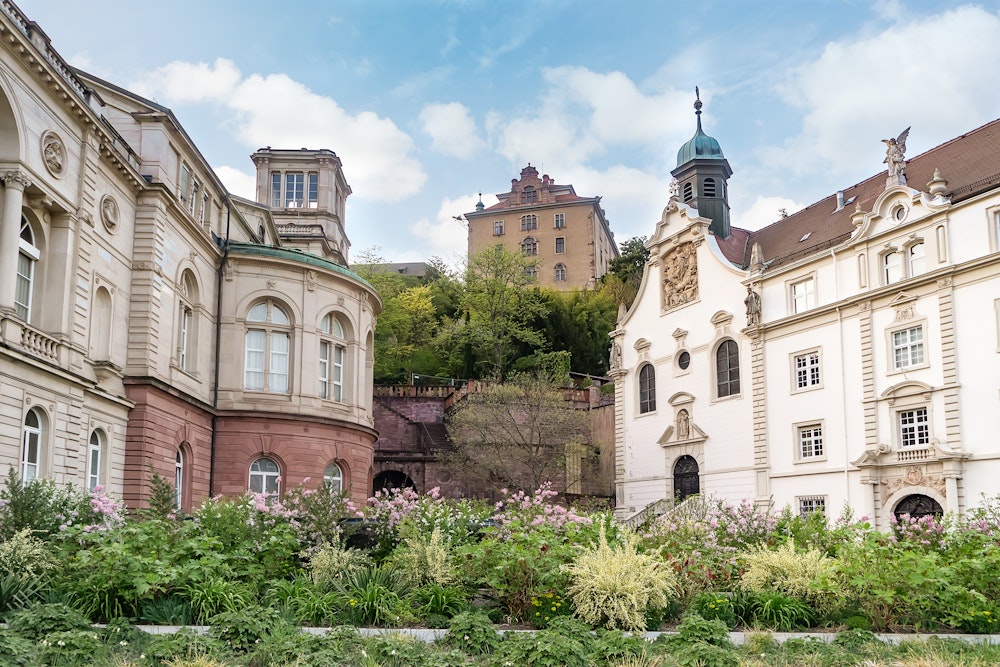
As is common in parts of Germany and Switzerland, some traditional thermal facilities operate textile-free or mixed-gender areas at certain times, so checking individual spa policies in advance is advisable.
Flavours of the Upper Rhine
Food in the Dreiländereck reflects the same layered identity as its architecture and languages. French refinement, German rusticity and Swiss precision meet across shared landscapes, creating a cuisine that feels both rooted and diverse.
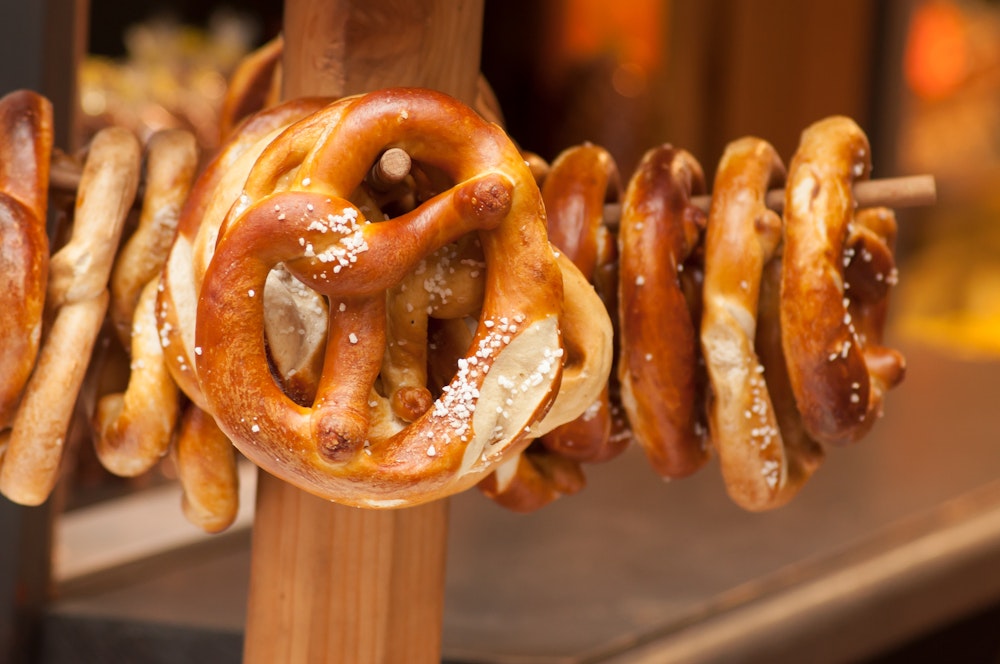
In Alsace, bakery culture plays a central role. The iconic Bretzel, with its golden crust and soft interior, is sold in markets and bakeries across the region, alongside Kougelhopf, the traditional ring-shaped yeast cake often enjoyed with coffee. Seasonal fruit tarts, orchard apples and locally produced honey reflect the agricultural richness of the Rhine plain.
Across the river in Baden, comforting dishes such as Spätzle and vegetable-based plates appear on many menus, while in Switzerland, the culinary landscape shifts towards alpine influences. In and around Basel, regional markets feature high-quality Swiss cheeses, from nutty hard mountain varieties to creamy semi-soft specialties, often enjoyed simply with bread and fresh produce. Traditional dishes such as Rösti, the golden crisp potato speciality, reflect the region’s pastoral roots and are widely available in vegetarian variations.

Throughout the region, weekly produce markets in Strasbourg, Freiburg and Basel overflow with fresh vegetables, cheeses, breads and pastries. A simple market picnic - warm bread, olives, fruit and pastries - often feels more authentic than a formal restaurant meal.
Wine culture is visible in vineyard areas such as the Route des Vins d’Alsace and the Kaiserstuhl. Yet beyond vineyards, what stands out most is the emphasis on quality ingredients and seasonal simplicity rather than elaborate gastronomy.
For Muslim travellers, halal restaurants are available in the larger urban centres, particularly Strasbourg, Freiburg and Basel, where Turkish, Middle Eastern and South Asian cuisines are well represented. In smaller towns and mountain areas, vegetarian dishes, seafood options and fresh market produce provide flexibility.
Equally important is the region’s suitability for self-catering travel. Serviced apartments, vineyard guesthouses and countryside stays make it easy to shop locally and prepare meals independently. Whether enjoying a Bretzel from a morning market, pausing for coffee and cake at a mountain farm, or preparing dinner with fresh ingredients after a day of hiking, food becomes part of the rhythm of slow travel in the Dreiländereck.
Getting around - effortless cross-border travel
International access is particularly convenient thanks to EuroAirport Base - Mulhouse - Freiburg, uniquely positioned on the French - Swiss border and serving all three countries. From the airport, Strasbourg, Freiburg and Basel can each be reached in around an hour, making it one of Europe’s most efficient gateways to a tri-border region.
Despite spanning three countries, the Dreiländereck is remarkably easy to navigate. Efficient rail connections link Strasbourg, Freiburg and Basel within short travel times, and cross-border regional trains operate seamlessly. Cycling is particularly rewarding. Dedicated river paths follow the Rhine for long stretches, and the wider Rhine Valley Cycle Route allows riders to move between France, Germany and Switzerland without noticing political boundaries. In Freiburg and Basel especially, bicycles are part of everyday life, and rental options are widely available. For those travelling by car, distances remain modest: Strasbourg to Freiburg is around 1 - 1.5 hours, depending on route and traffic; Freiburg to Basel, less than an hour. Scenic roads such as the Route des Vins d’Alsace or the Route des Crêtes transform simple transfers into panoramic journeys. Public transport is punctual and well integrated, and many urban centres are compact enough to explore entirely on foot. In the Dreiländereck, movement feels intuitive.
A landscape without edges
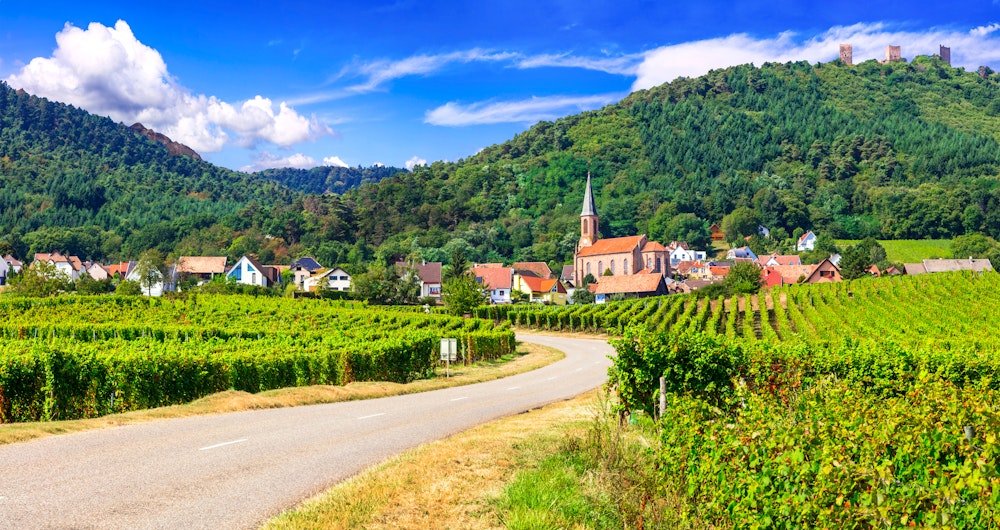
In the Dreiländereck, borders soften into pathways. A trail begun in France may open onto German hills; a walk along the Rhine in Switzerland flows naturally towards Alsace. Languages shift, architectural styles evolve, yet the rhythm of life remains quietly interconnected. The Rhine continues its steady course, as it has for centuries — carrying merchants, ideas and travellers across landscapes shaped by change. Here, the journey unfolds gently: hiking to a mountain farm, pausing in a market square, crossing a bridge into another country without noticing the moment it happens. In a part of Europe once marked by shifting borders, the Dreiländereck now offers something enduring - a shared landscape where history, culture and nature meet with ease.
Suggested 6-day journey through the Dreiländereck
The Dreiländereck is remarkably compact - distances are short, infrastructure is efficient, and borders feel almost invisible. This itinerary can be done entirely by public transport, but a rental car adds flexibility for mountain routes and vineyard villages. Best approach: Public transport for city-to-city travel (Basel - Freiburg - Strasbourg). Rental car from Day 3 or 4 onward if you plan to explore the Vosges, Kaiserstuhl or château landscapes more freely.
Day 1 – Basel
Arrival: EuroAirport Basel - Mulhouse - Freiburg to Basel city centre: 15 - 20 minutes by bus
Begin in Basel, arriving via EuroAirport Basel - Mulhouse - Freiburg, one of Europe’s most convenient tri-border gateways. Within minutes, the city unfolds along a broad curve of the Rhine. Spend your first afternoon wandering through the Altstadt, where narrow lanes lead to the red sandstone Basel Minster. From the Pfalz terrace, look across the river towards France and Germany - three countries visible within a single glance. Visit the Kunstmuseum or Fondation Beyeler for a gentle immersion into the region’s cultural confidence, then end the day beside the Rhine, watching the current carry swimmers and small ferries downstream in the golden evening light. Spend the night in Basel.
Day 2 – Jura landscapes
Basel to Jura foothills (e.g., Wasserfallen): approx. 40 - 60 minutes by train + short bus - By car: 30 - 45 minutes
Basel’s greatest luxury is proximity to nature. In the morning, head towards the Jura Mountains, where broad ridgelines and quiet pastures offer expansive views across the Swiss plateau. Trails near Wasserfallen or along the Jura crest routes provide rewarding hikes without dramatic difficulty. Return to Basel in the afternoon for a slower pace - perhaps a riverside walk or a visit to one of the city’s neighbourhood markets. Spend the night in Basel.
Day 3 – Freiburg
Basel to Freiburg: 40 - 55 minutes by direct regional train - By car: approx. 50 minutes
A short journey north brings you into Germany, where Freiburg im Breisgau rests between vineyard terraces and the dark slopes of the Black Forest. Explore the Münsterplatz in the morning light, step inside the soaring Gothic cathedral, and follow the Bächle water channels through the old town. From there, walk up the wooded Schlossberg hill. Climb the Schlossbergturm for panoramic views stretching towards the Kaiserstuhl and, on clear days, across to the Vosges in France - a reminder that borders here are visual, not restrictive. In the afternoon, stroll along the Dreisam River or take the Schauinsland cable car into higher forested ridges. Freiburg feels both urban and pastoral at once - a city defined by how quickly it dissolves into nature. Spend the night in Freiburg or in a nearby vineyard guesthouse. Optional: Pick up a rental car here if you want maximum flexibility for vineyard and mountain roads on the following days.
Day 4 – Kaiserstuhl & Colmar
Freiburg to Kaiserstuhl: 25 - 30 minutes - Freiburg to Colmar: approx. 1 hour - By public transport: 1.5 - 2 hours total (train connections required)
Begin the day among the sun-warmed hills of the Kaiserstuhl, where volcanic soils nurture neat vineyard rows overlooking the Rhine valley. Gentle walking trails offer wide views across to France. By afternoon, you arrive in Colmar, where pastel façades and half-timbered houses reflect softly in canal waters. Visit the Unterlinden Museum to encounter the Isenheim Altarpiece, then wander through the “ Little Venice” quarter at an unhurried pace. As evening settles, Colmar’s streets glow warmly - intimate and atmospheric, far removed from the scale of larger European cities. Spend the night in Colmar or a nearby Alsatian village.
Day 5 – Strasbourg
Colmar to Strasbourg: 30 - 35 minutes by direct train - By car: approx. 1 hour
Begin at the Cathédrale Notre-Dame, its intricate Gothic façade rising above the UNESCO-listed Grande Île. Climb the tower if you wish, then allow yourself time simply to observe the movement of the square below. A boat tour along the River Ill reveals the city’s layered identity - medieval Petite France, imperial Neustadt boulevards, and finally the European Quarter, where institutions dedicated to cooperation stand beside the Rhine. In the late afternoon, walk through the Parc de l’Orangerie or take the tram across the Rhine into Kehl, symbolically crossing a border that today feels almost invisible. Spend the night in Strasbourg.
Day 6 – Vosges or Haut-Koenigsbourg
Strasbourg to Château du Haut-Koenigsbourg: approx. 50 - 60 minutes - Strasbourg to Ballon d’Alsace (Vosges): 1.5 hours - Public transport possible but time-consuming (2 - 3+ hours with connections)
Option one leads into the Vosges Mountains, following the Route des Crêtes to panoramic summits such as the Ballon d’Alsace. Forest trails, high lakes like Lac Blanc, and wide Rhine valley views offer a fitting natural conclusion.
Option two brings you to the Château du Haut-Koenigsbourg, a commanding fortress overlooking the Alsatian plain. From its walls, you can trace the geography of the entire journey - the Rhine corridor, the Black Forest ridges, and the distant Swiss landscape.
If renting a car in Freiburg, most major providers allow one-way drop-off at EuroAirport Basel - Mulhouse - Freiburg, making departure straightforward. Alternatively, cars can be returned in Basel or Freiburg before continuing to the airport by train. Return towards Basel for departure, completing a circle that feels less like crossing borders and more like following a continuous cultural thread.
For travellers inspired to extend the journey, the Dreiländereck marks the ideal gateway to a cross-country adventure. Continue west through France in our guide: Road trips in France with Halalbooking: From East to West, 1,000 km of adventure.