Ramadan 2026 (1447 AH) – Great Mosques of the World
Every year in Ramadan, we reflect on how travel can deepen and enhance our faith. One of the greatest joys of being on the road is arriving in a new city and finding something instantly familiar: the call to prayer echoing through unfamiliar streets, rows of worshippers forming shoulder to shoulder, and the comfort of reinforcing our connection to the Ummah by joining the jamaat in one of the world’s great mosques.
"Say, [O Muhammad], 'Travel through the land and see how He originated the creation.'" [Surah Al-Ankabut, 29:20]
Across continents and centuries, certain mosques have become more than architectural landmarks. They are living spaces of devotion, memory and renewal - especially in Ramadan, when their courtyards fill before sunset and their nights are illuminated by prayer.
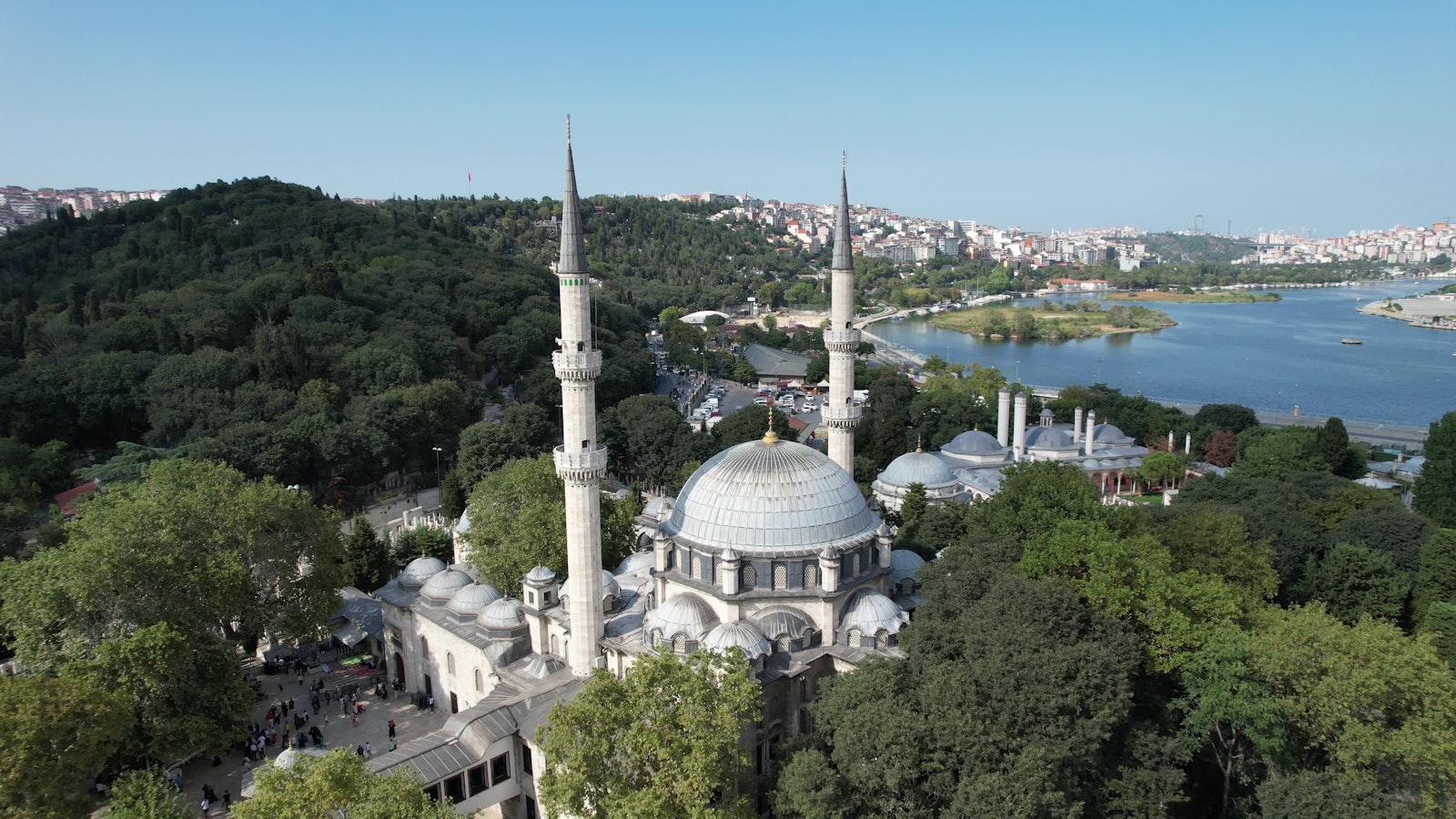
Eyüp Sultan Mosque, Istanbul
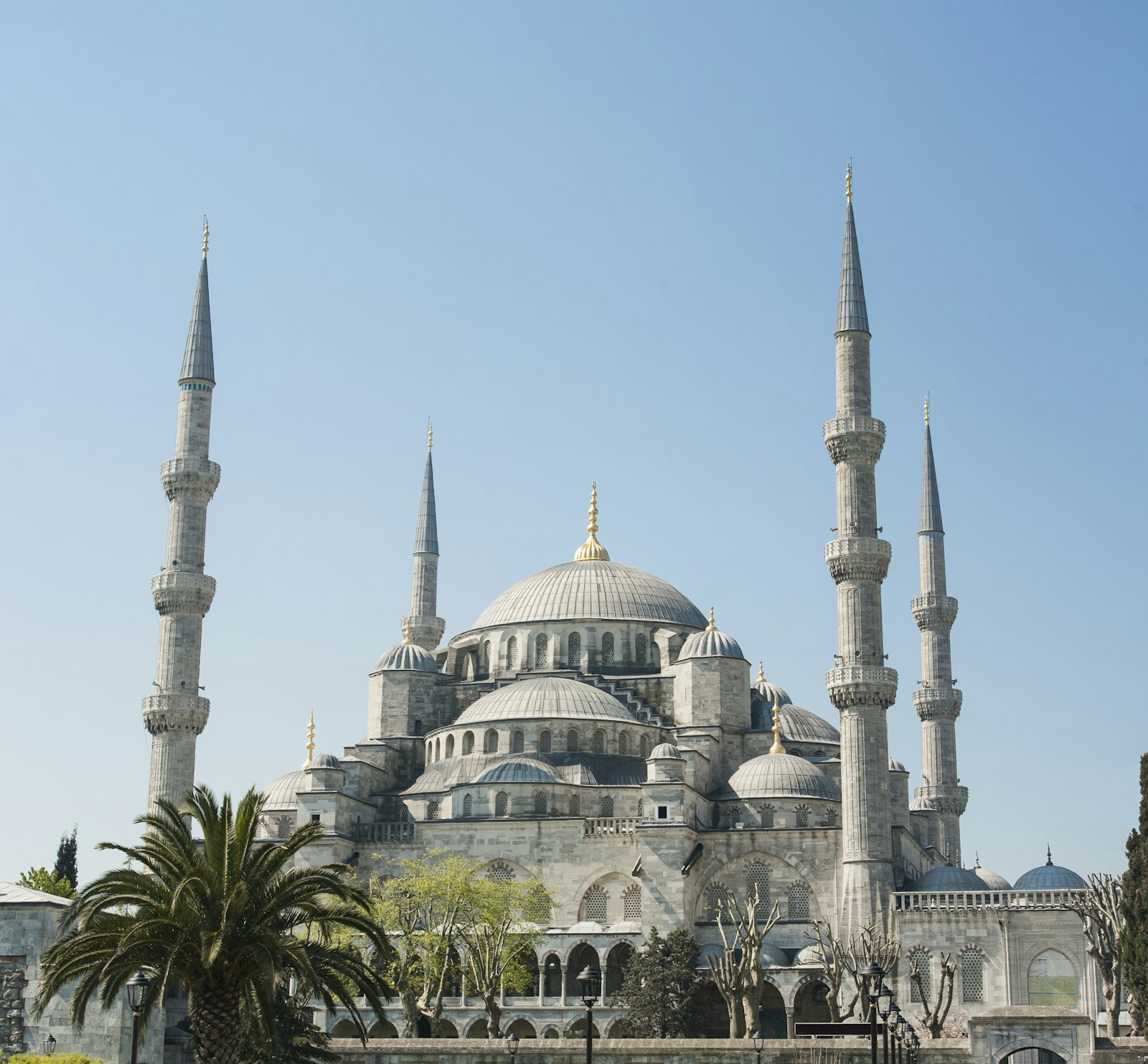
Among Istanbul’s many imperial mosques - such as the Süleymaniye, masterpiece of the great architect Sinan, and the Sultan Ahmed Mosque, known as the Blue Mosque - Eyüp Sultan Mosque holds a uniquely intimate spiritual weight.
Situated near the Golden Horn, it is named after Abu Ayyub al-Ansari (RA), the companion and standard-bearer of the Prophet Muhammad (SAW), who participated in the battles of Badr and Uhud and passed away during the first siege of Constantinople. His tomb, located within the mosque complex, has drawn generations of visitors seeking to pay their respects. The current structure dates largely to the 18th century, rebuilt in elegant Ottoman Baroque style, with a graceful courtyard and finely detailed interior decoration. In Ramadan, the surrounding neighbourhood becomes especially vibrant in the hours before Maghrib. Families gather, worshippers linger in quiet du’a near the mausoleum, and the mosque’s warm lighting at night enhances its contemplative atmosphere.
Al Masjid an-Nabawi, Madinah
Al Masjid an-Nabawi, established by the Prophet (SAW) upon his arrival in Madinah, stands on the site of his home and is also the place where he is buried. Over the centuries it has expanded dramatically, yet it retains a profound sense of tranquillity. The vast marble courtyard, shaded by its iconic retractable umbrellas, and the beloved green dome create one of the most recognisable and spiritually charged spaces in the Muslim world.
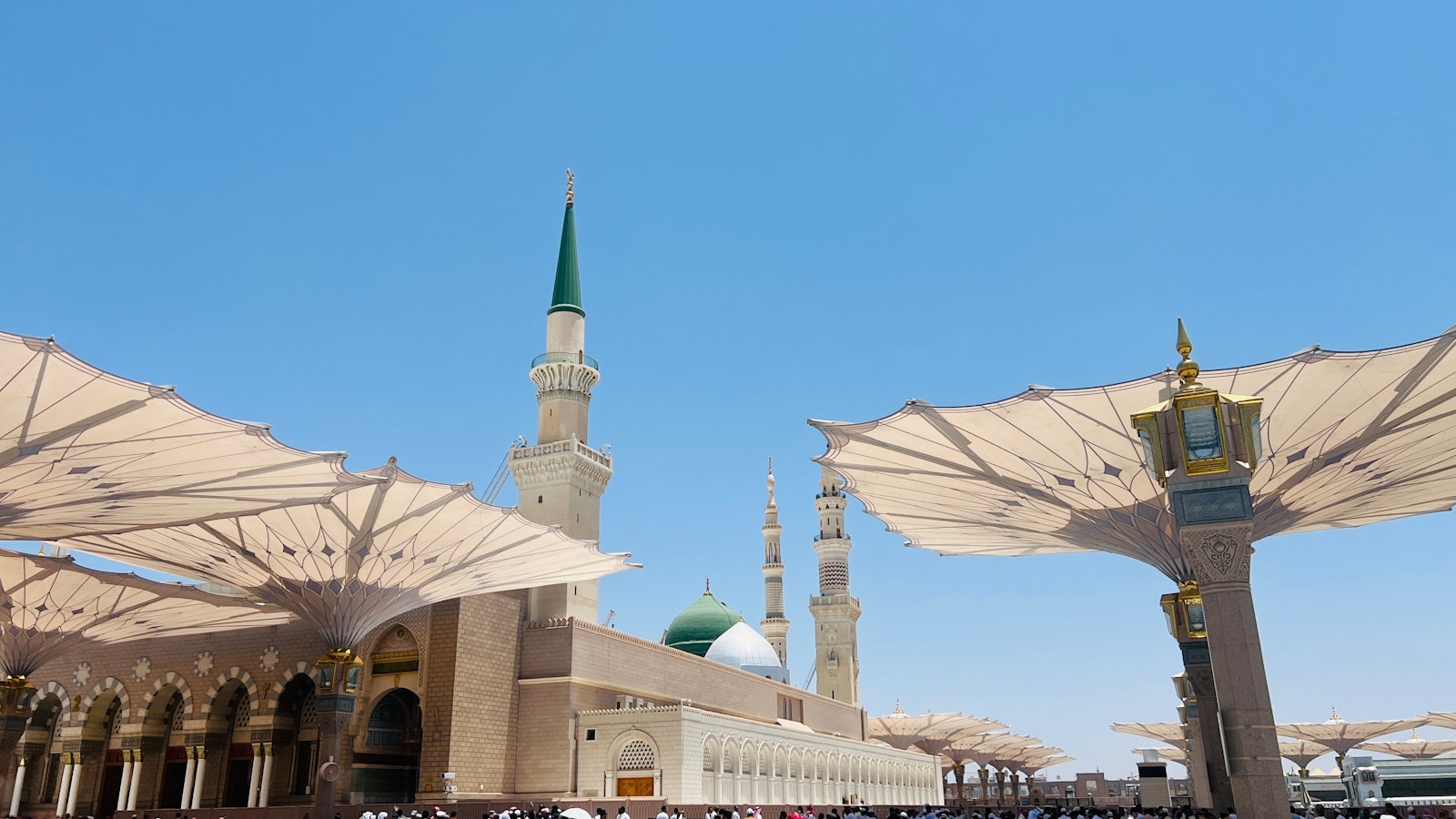
Ramadan transforms Madinah into a city of devotion. As sunset approaches, worshippers gather with dates and water, volunteers move quietly among the rows, and the mosque hums with anticipation. After Maghrib, the atmosphere shifts into focused worship, with Taraweeh prayers stretching late into the night.
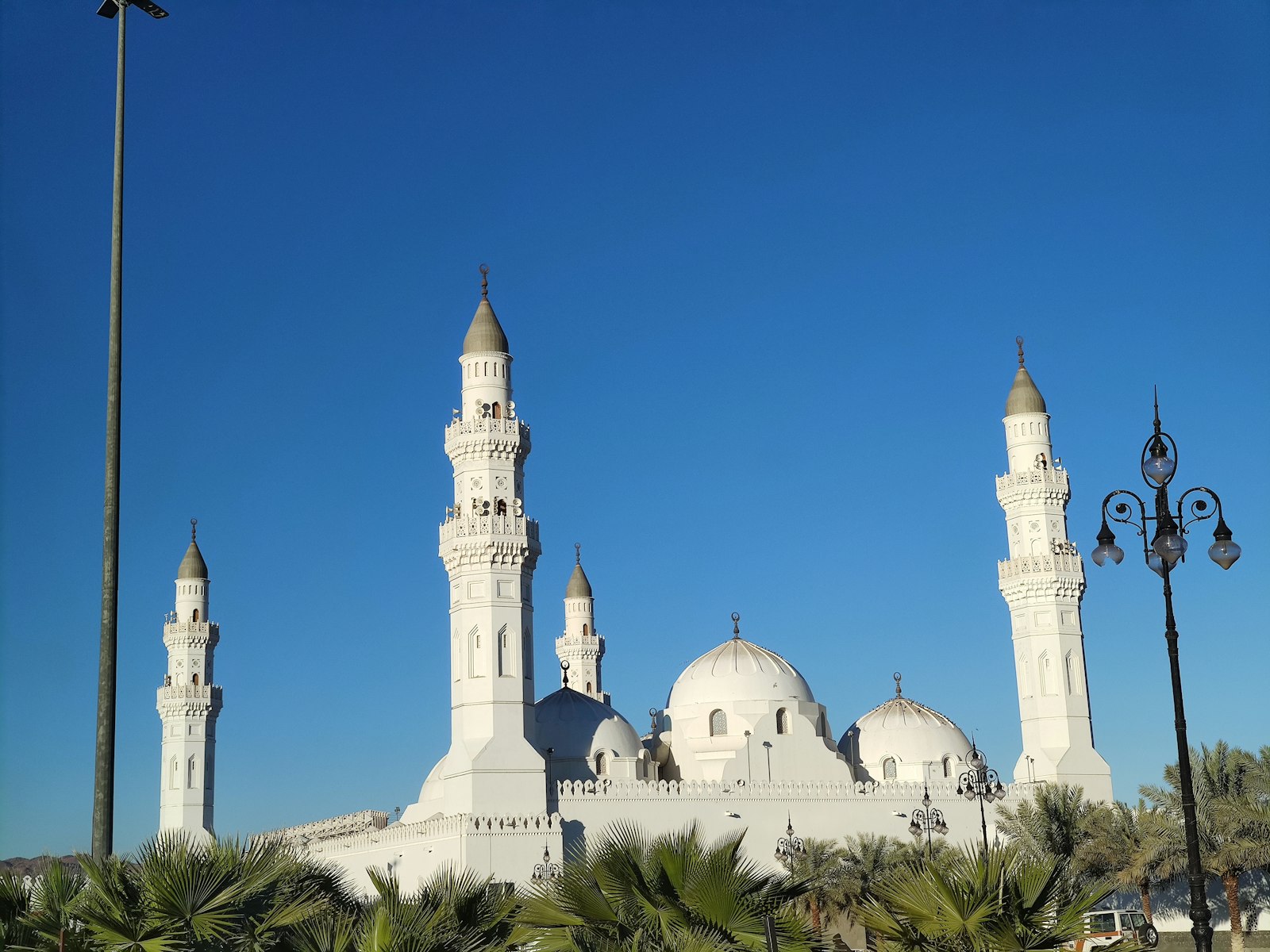
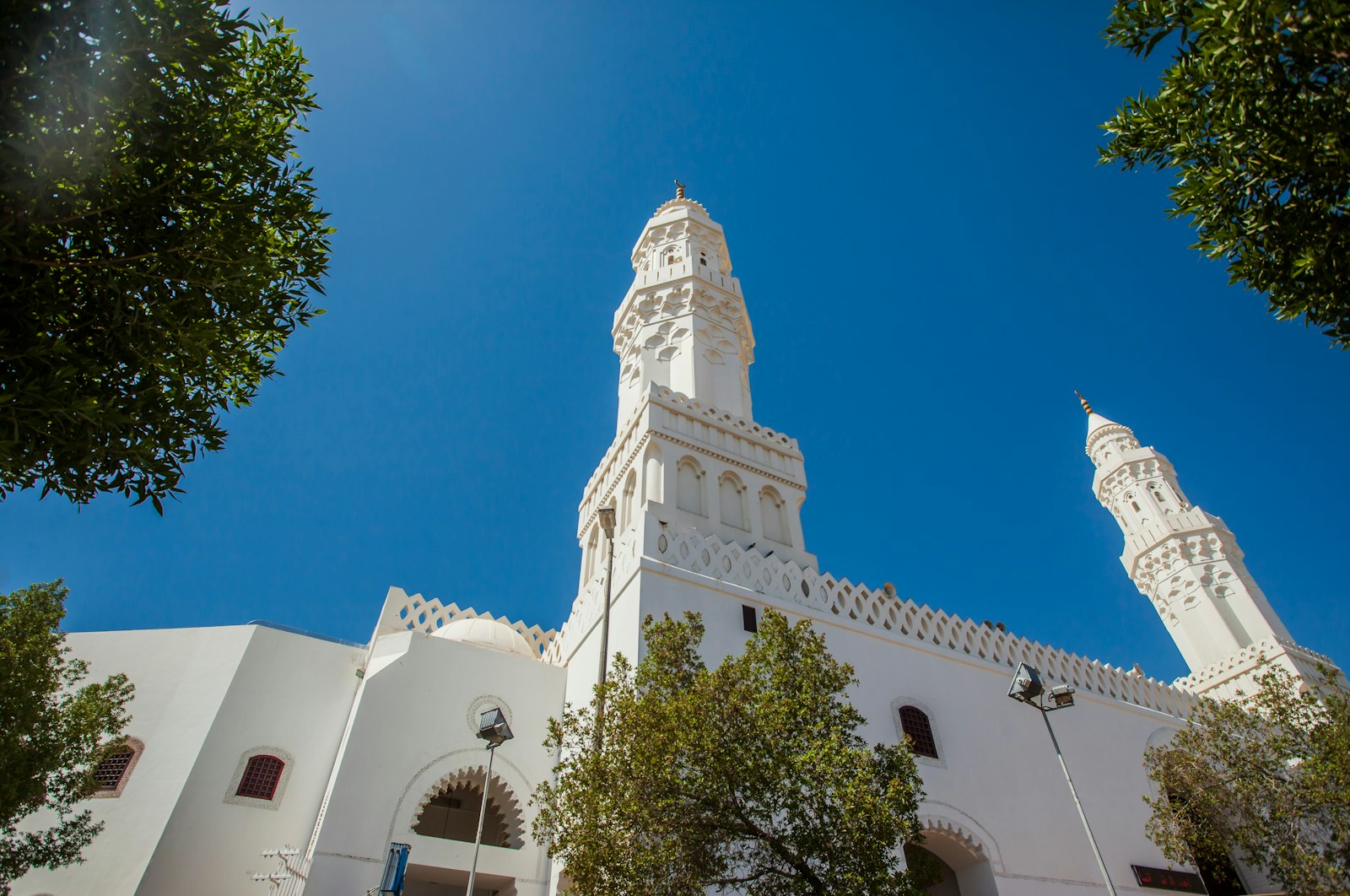
Nearby, Masjid Quba - the first mosque built in Islam in 1 AH (622 CE) - and Masjid Qiblatain, where the qibla was divinely changed from Al-Quds to Makkah in 2 AH, deepen the spiritual journey for visitors wishing to connect with the seerah.
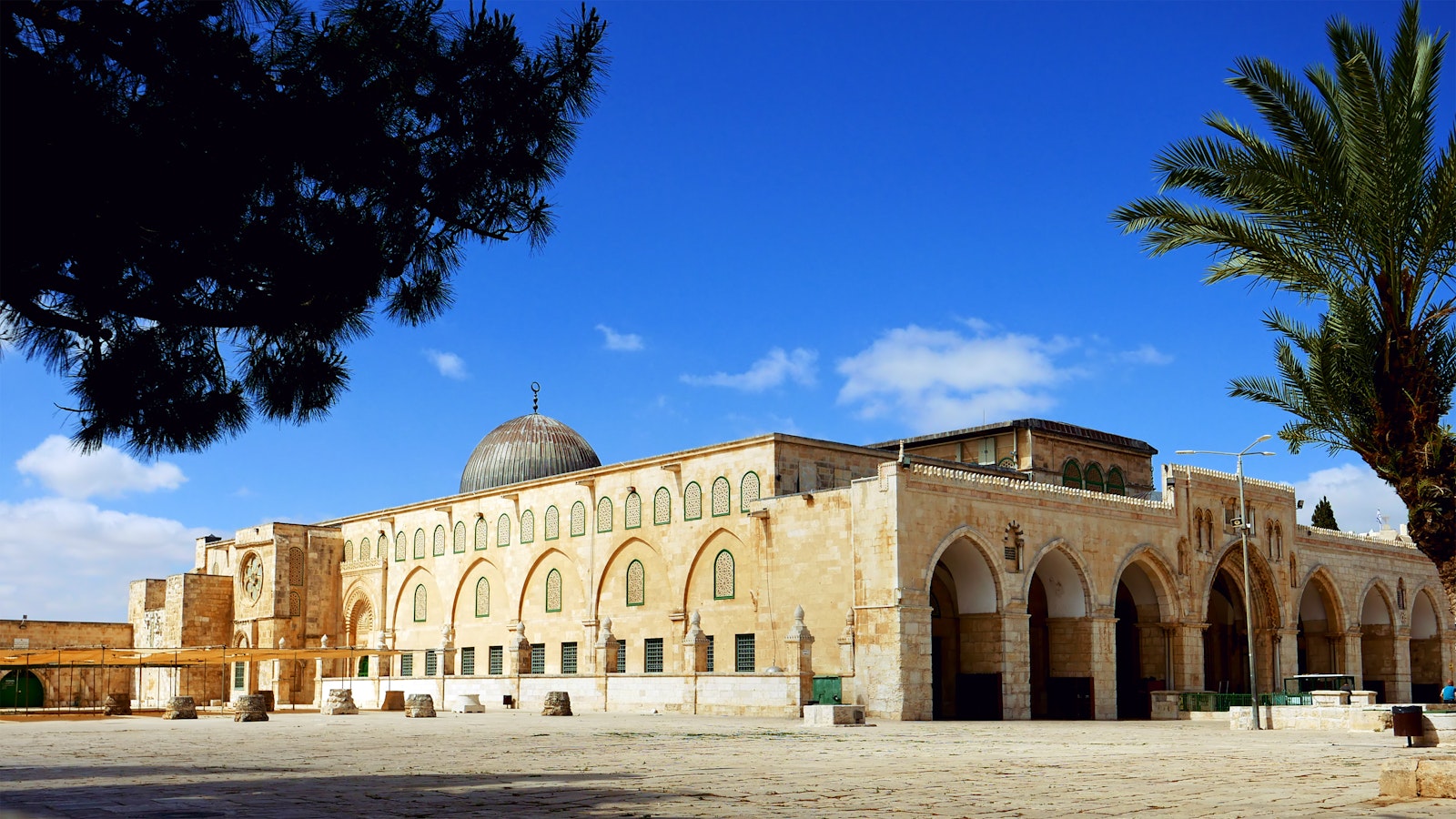
Masjid al-Aqsa, Al-Quds (Jerusalem)
Masjid al-Aqsa holds a special place in the heart of the Ummah as the third holiest mosque in Islam. Situated within the blessed sanctuary of Al-Haram al-Sharif, it is closely connected to the Isra and Mi‘raj, the Night Journey of the Prophet Muhammad (SAW), and has been a place of continuous worship for centuries. The mosque complex includes expansive courtyards, graceful arcades and historic prayer halls shaped by successive Islamic dynasties. Its layered architecture reflects a long and rich spiritual heritage.
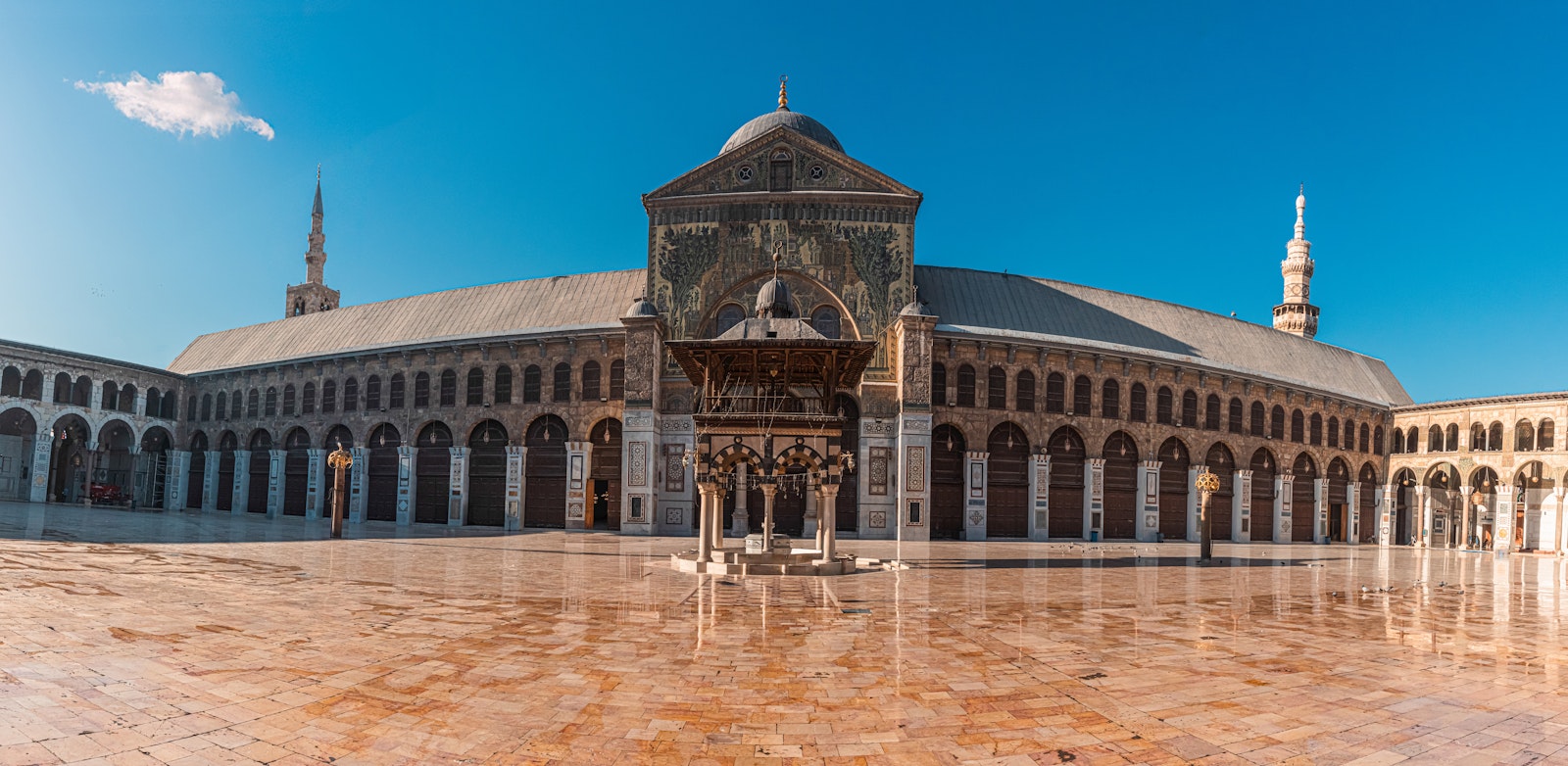
Umayyad Mosque, Damascus
The Umayyad Mosque in Damascus is one of the oldest and most influential mosques in Islamic history. Completed in the early 8th century under the Umayyad Caliph al-Walid I, it was built on a site that had long been a place of worship, reflecting layers of sacred history. Its vast courtyard, surrounded by arcades adorned with shimmering mosaics depicting paradisiacal landscapes, remains one of the great artistic achievements of early Islamic civilisation. Inside, the prayer hall’s grandeur is softened by filtered light and rhythmic arches.
Koutoubia Mosque, Marrakech
Rising above the medina of Marrakech, the Koutoubia Mosque is a masterpiece of Almohad architecture. Commissioned in the 12th century by Sultan Abd al-Mu’min, its red sandstone minaret - nearly 70 metres high - dominates the skyline.
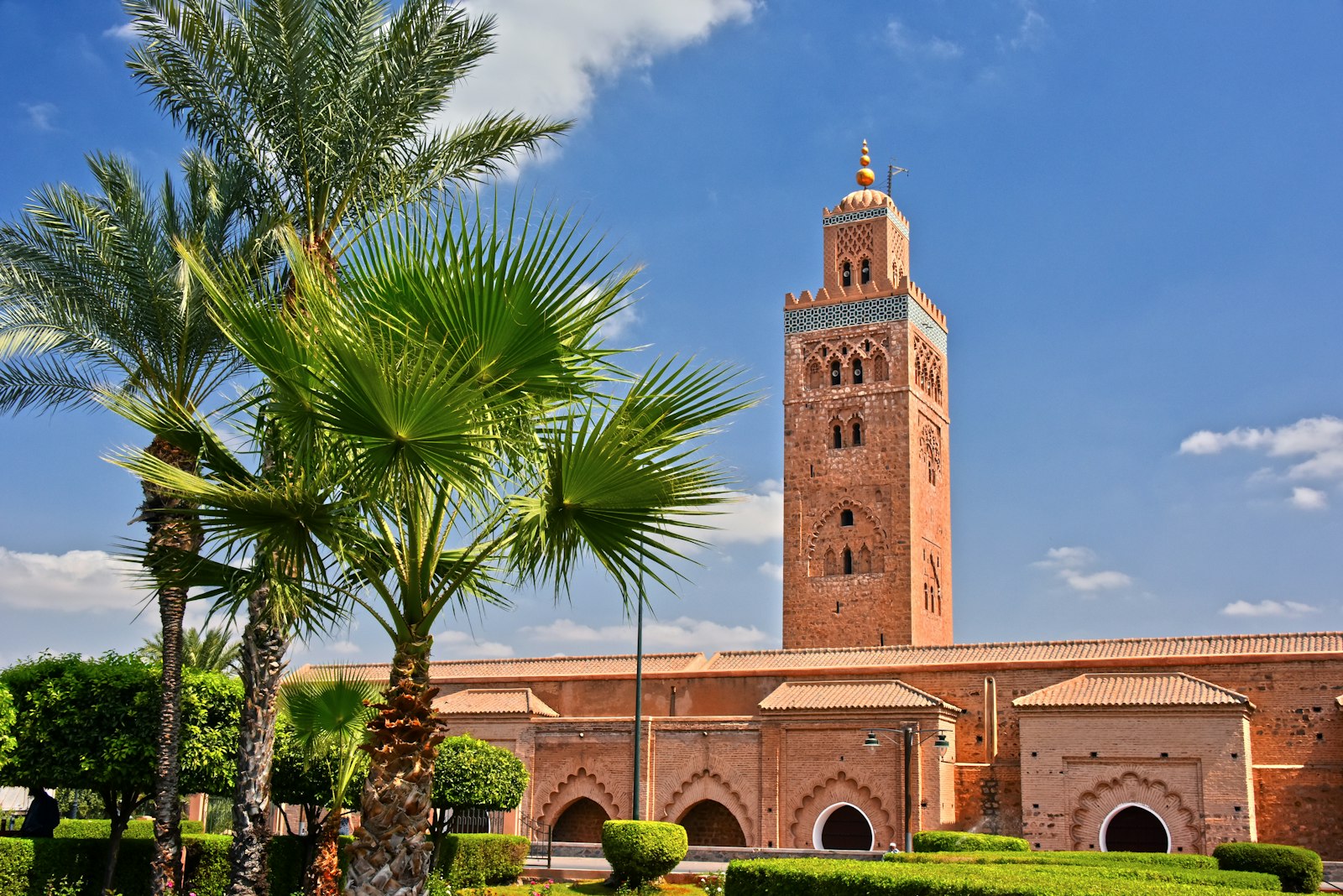
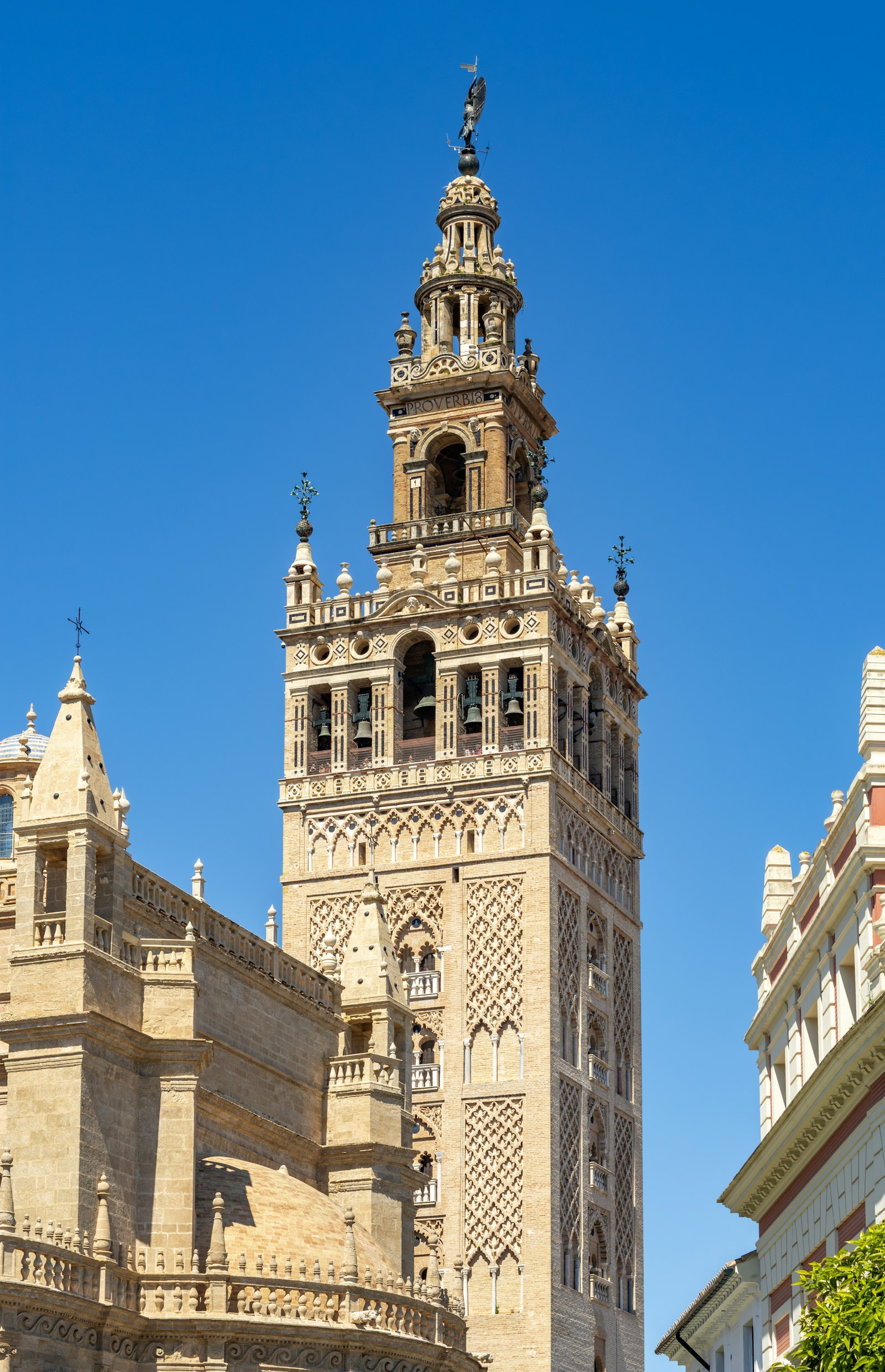
The geometric decoration, balanced proportions and restrained ornamentation influenced mosque architecture across North Africa and al-Andalus, including the Giralda of Seville. Though non-Muslims may admire it from the outside, for worshippers the mosque becomes especially stirring in Ramadan. As dusk settles over the medina, the call to prayer reverberates through narrow streets, and worshippers gather in expanding rows that often extend beyond the main prayer hall. The fusion of architectural harmony and communal devotion creates a powerful Ramadan memory.
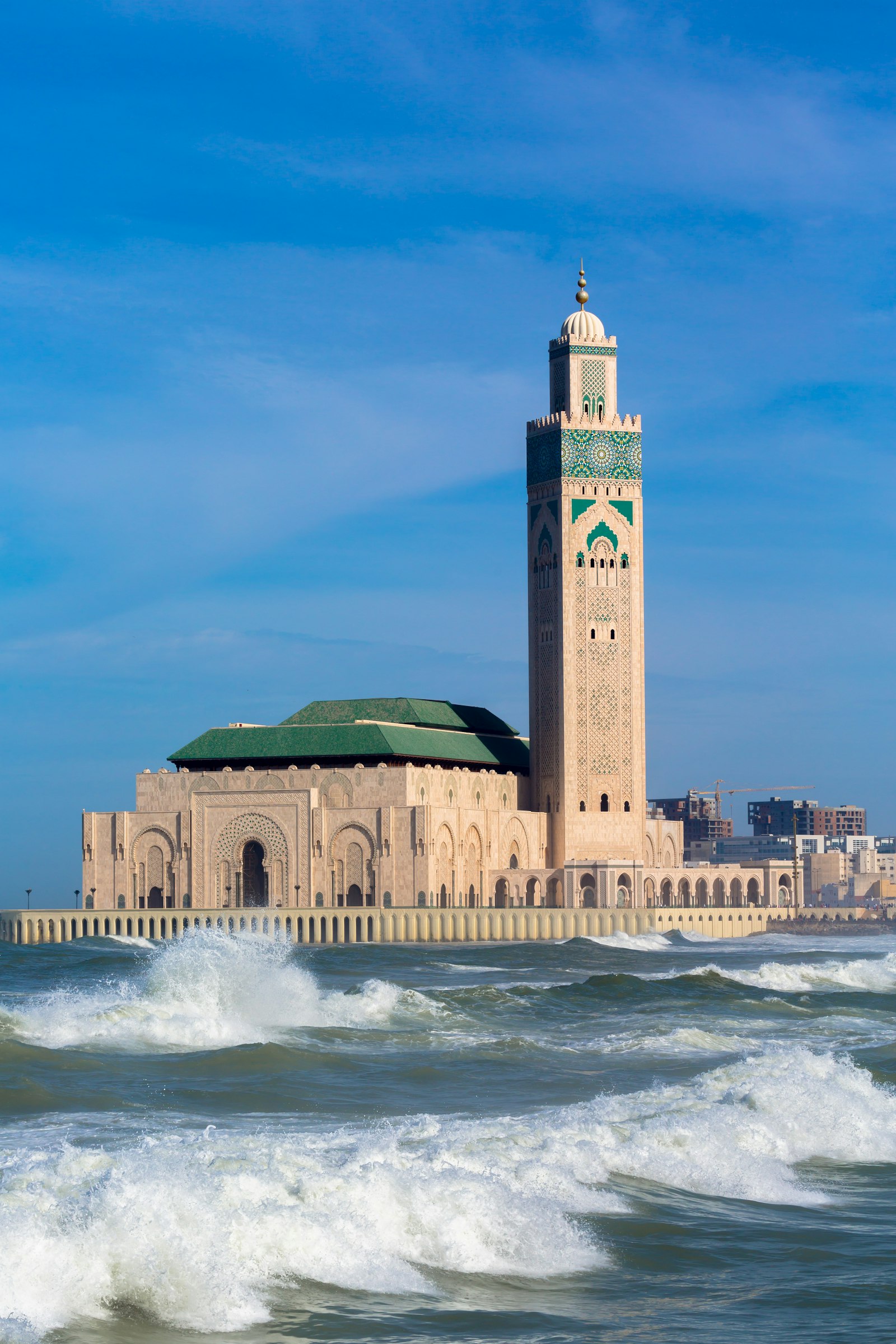
Hassan II Mosque, Casablanca
Standing dramatically above the Atlantic Ocean, the Hassan II Mosque is among the largest mosques in the world. Completed in 1993, it blends traditional Moroccan craftsmanship with modern engineering. Its towering minaret - one of the tallest globally - features intricate zellij tilework, carved cedar ceilings and marble floors, all executed by master artisans. The mosque’s location, partially built over the sea, evokes the Qur’anic imagery of Allah’s (SWT) throne upon water. In Ramadan, the ocean breeze mingles with the anticipation of iftar, and the illuminated minaret becomes a striking beacon against the night sky.
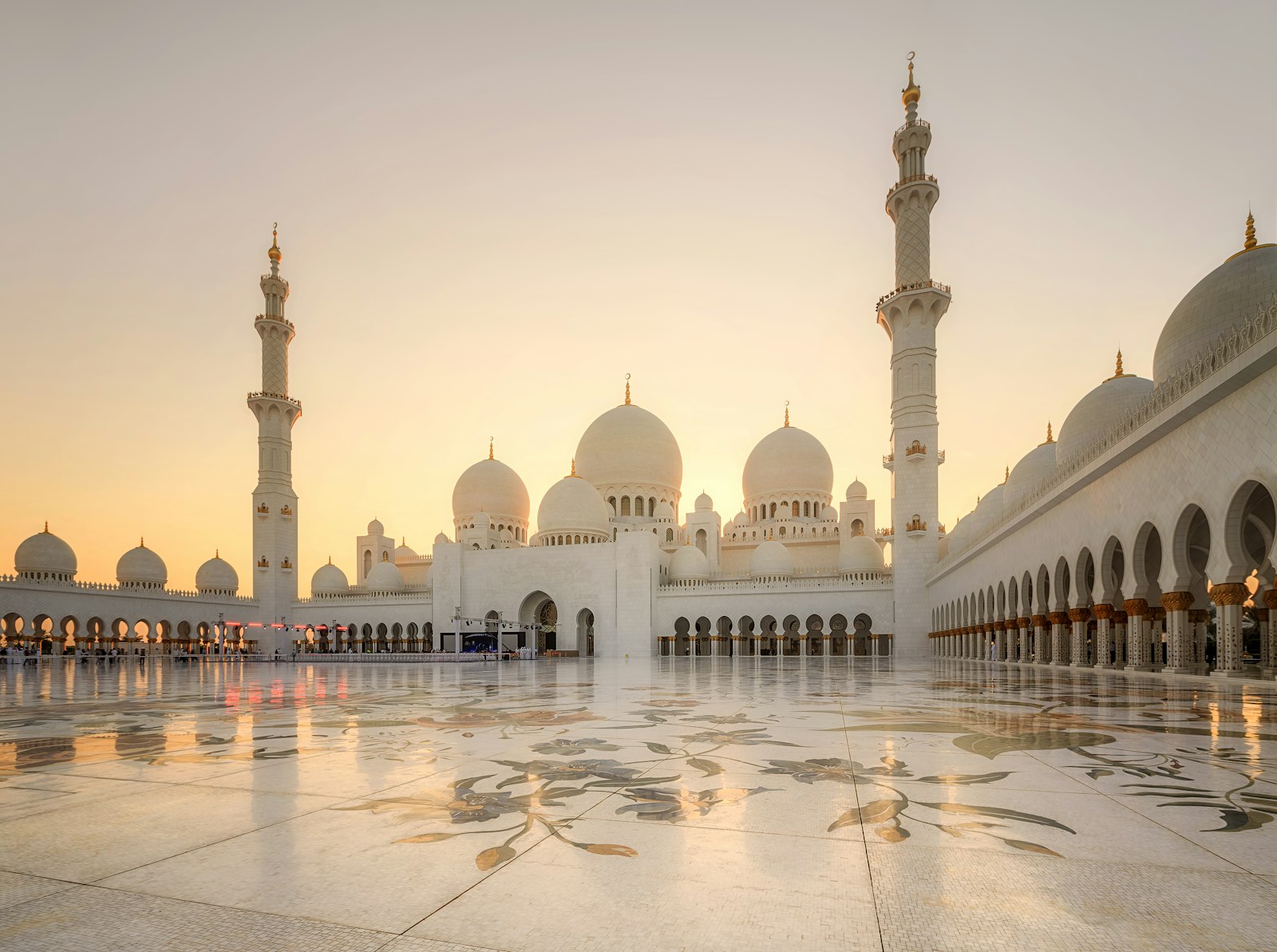
Sheikh Zayed Grand Mosque, Abu Dhabi
The Sheikh Zayed Grand Mosque is a contemporary landmark inspired by classical Islamic architectural traditions. Completed in 2007, it features 82 domes, reflective pools and one of the world’s largest hand-knotted carpets. Its white marble surfaces glow in changing light, symbolising purity and unity. During Ramadan, its vast courtyards and luminous prayer halls host large congregations in an atmosphere of order and serenity. The mosque’s design intentionally blends diverse Islamic styles - from Ottoman to Mughal - visually expressing the unity of the Ummah.
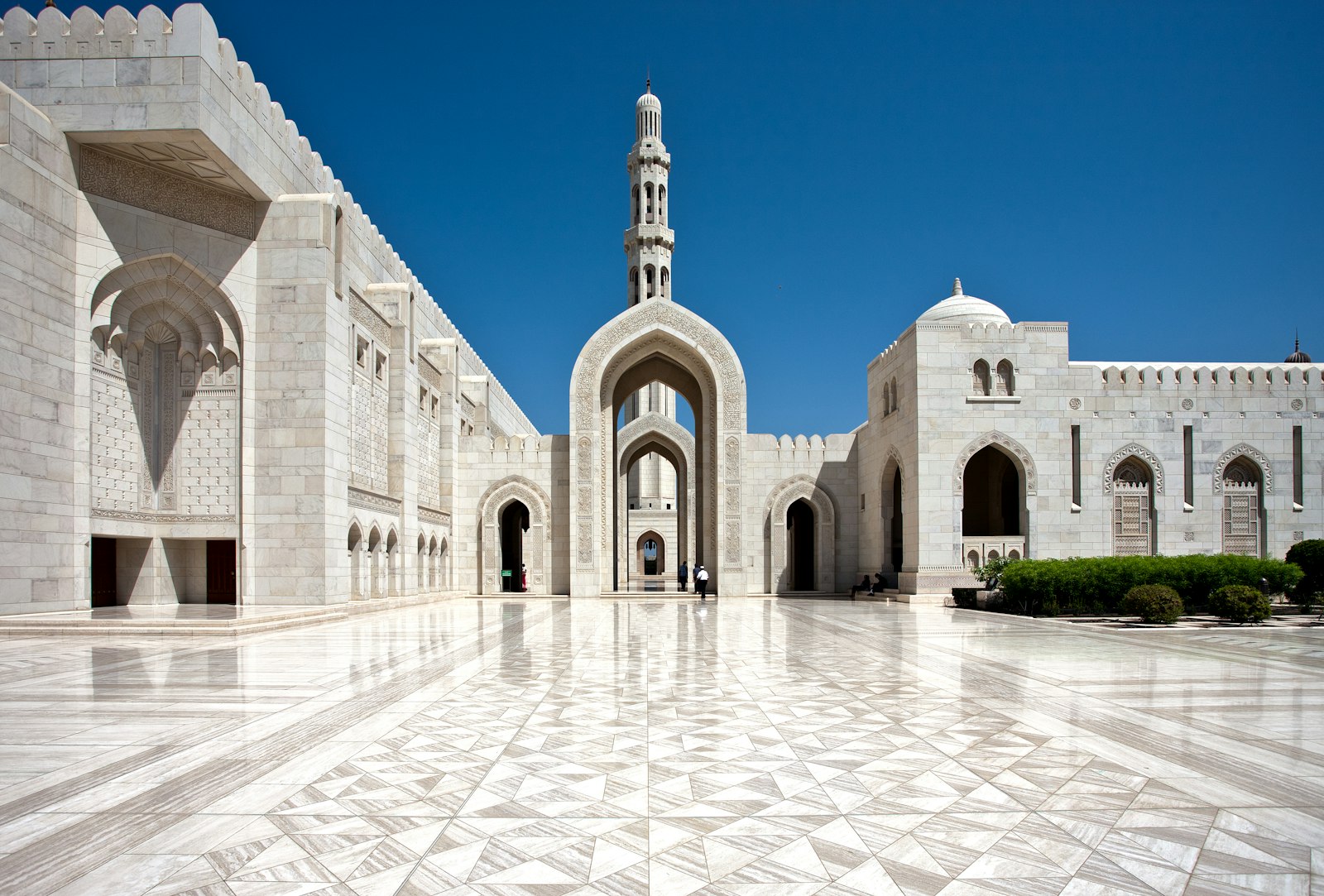
Sultan Qaboos Grand Mosque, Muscat
Completed in 2001, the Sultan Qaboos Grand Mosque in Muscat is a striking example of modern Omani Islamic architecture. Built from Indian sandstone and adorned with intricate geometric carvings, it combines simplicity with grandeur. The main prayer hall houses a vast Persian carpet and a magnificent chandelier that reflects thousands of crystals, casting warm light across the space. Its balanced proportions and serene gardens create an atmosphere of calm reflection. In Ramadan, the mosque becomes a focal point for worship in Muscat, its softly illuminated domes and minaret standing out against the evening sky.
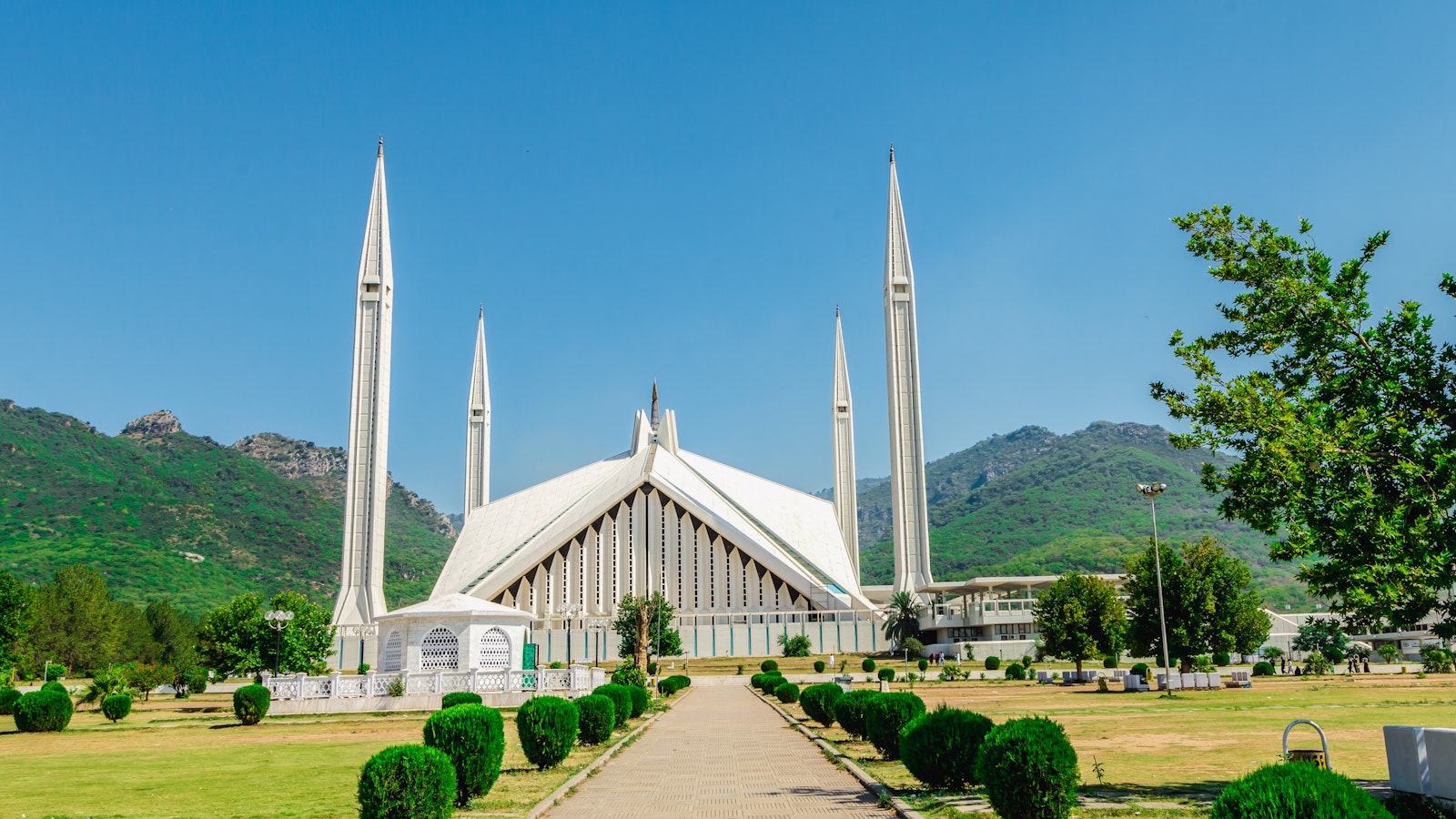
Shah Faisal Mosque, Islamabad
Set against the dramatic backdrop of the Margalla Hills, the Shah Faisal Mosque in Islamabad departs from traditional dome-and-arch forms. Designed by Turkish architect Vedat Dalokay and completed in 1986, its tent-like structure is inspired by Bedouin forms, with four slender minarets framing a vast triangular prayer hall. The mosque’s modernist design, clean lines and expansive courtyard create a striking visual presence. In Ramadan, the surrounding hills amplify the atmosphere of devotion as worshippers gather in large numbers for Taraweeh.
Al-Azhar Mosque, Cairo
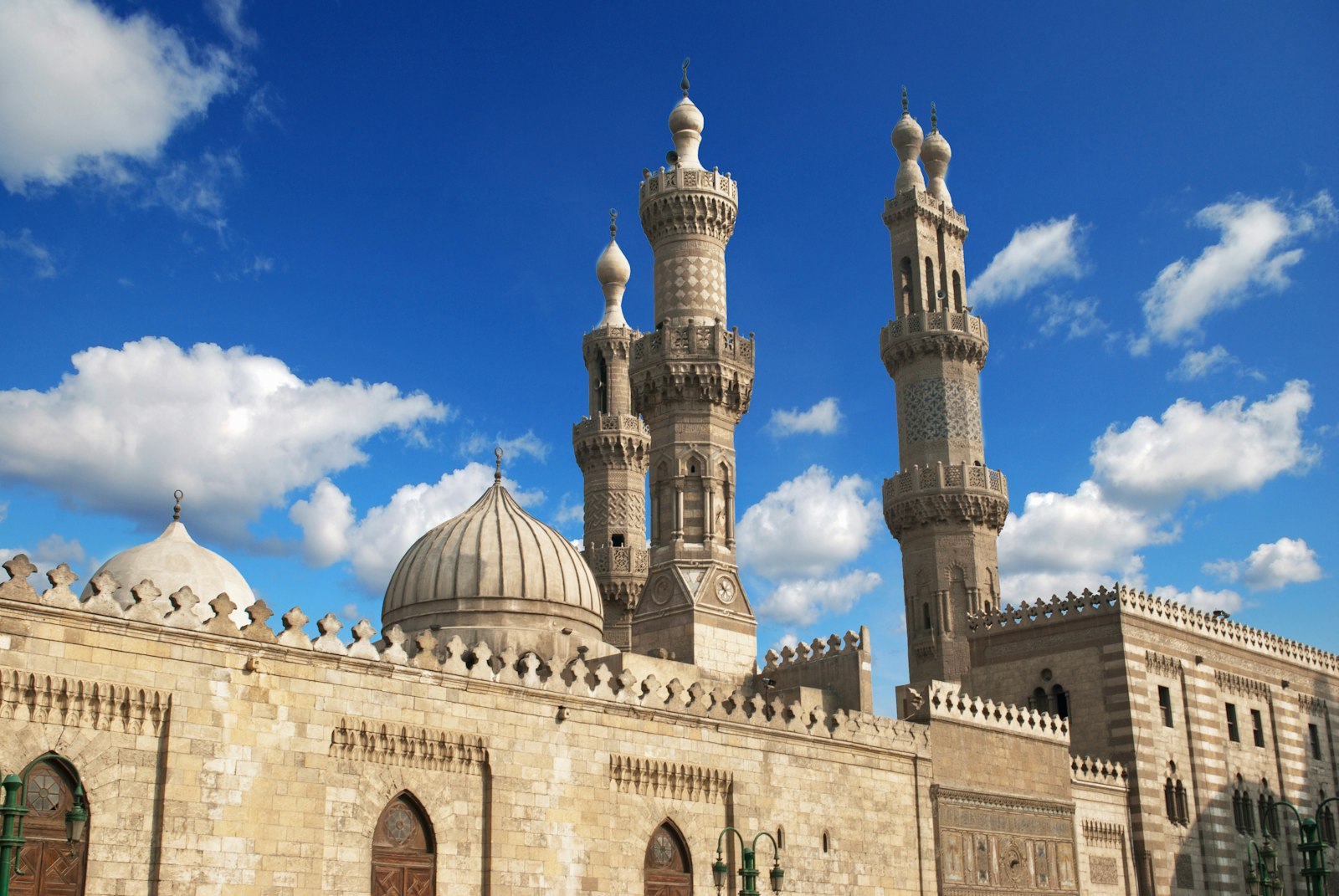
Founded in 970 CE during the Fatimid era, Al-Azhar Mosque is not only one of Cairo’s oldest mosques but also one of the most important centres of Islamic scholarship in the world. Its architectural evolution reflects centuries of additions, from Mamluk minarets to Ottoman refinements, resulting in a richly layered complex. The mosque’s courtyards and arcades have hosted scholars and students for over a millennium. In Ramadan, its historic stones seem to carry echoes of past recitations as worshippers fill its prayer halls.
Bibi-Khanym Mosque, Samarkand
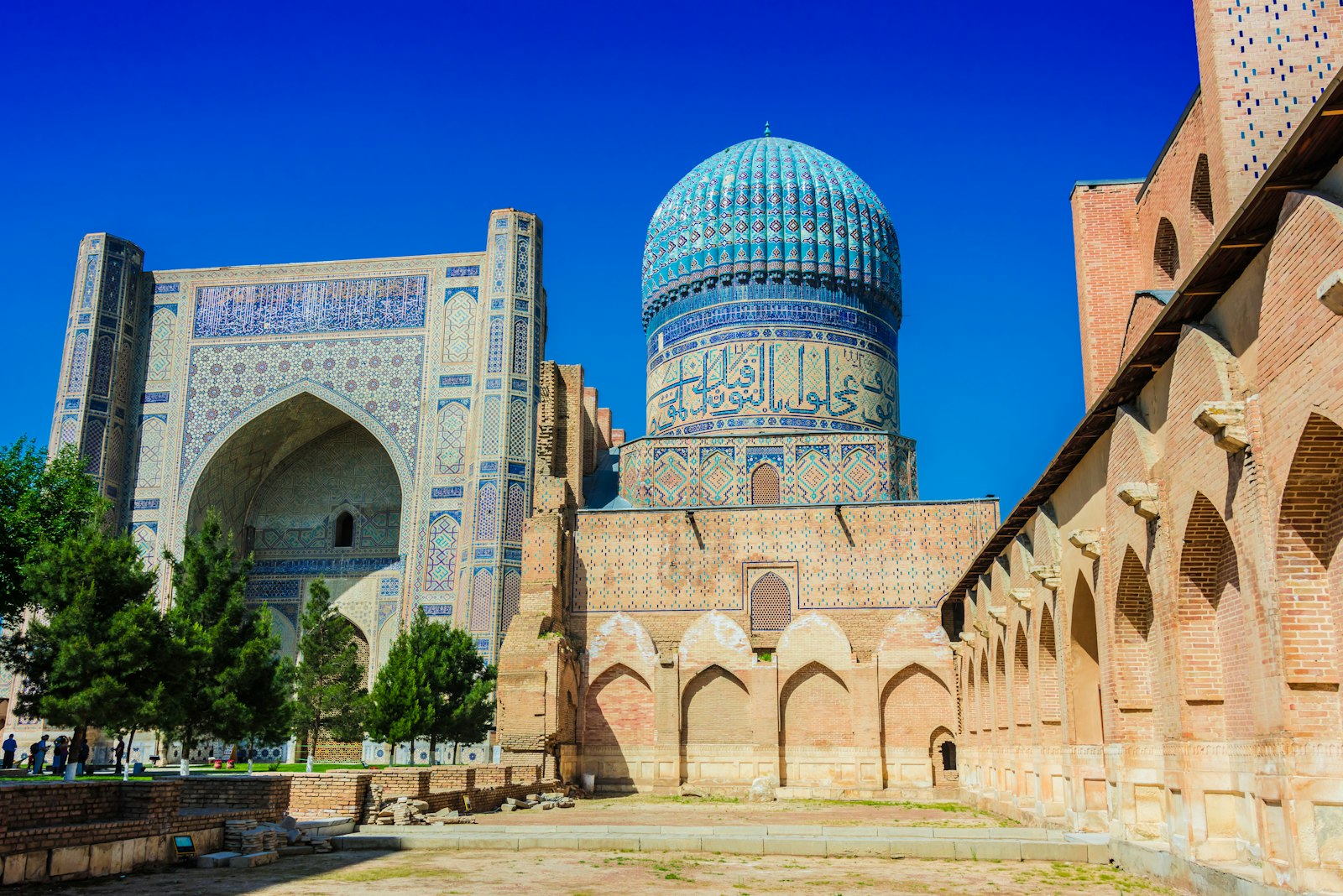
Rising from the heart of ancient Samarkand, the Bibi-Khanym Mosque stands as one of the great architectural achievements of the Timurid era. Commissioned in the early 15th century by Timur after his campaigns abroad, it was conceived as a symbol of imperial power and spiritual devotion along the Silk Road. Its vast courtyard, soaring monumental arched entrance and luminous turquoise domes reflect the artistic ambition of a city once regarded as the crossroads of the Islamic world. During Ramadan, the mosque’s scale and serenity invite quiet reflection, recalling centuries of scholarship, trade and faith that shaped Central Asia. Its immense courtyard, designed to hold thousands of worshippers, reflects the monumental vision of the Timurid age.
Masjid al-Haram, Makkah
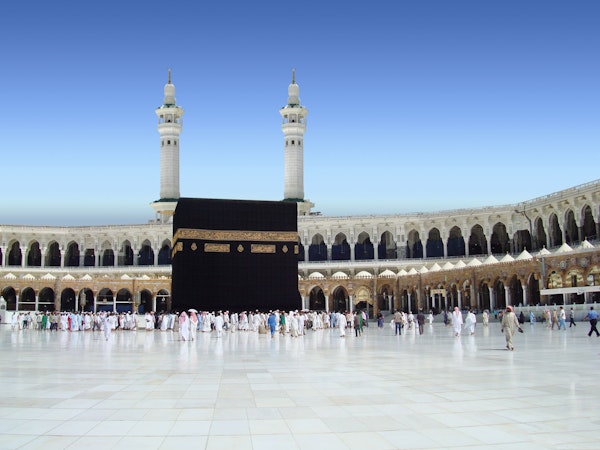
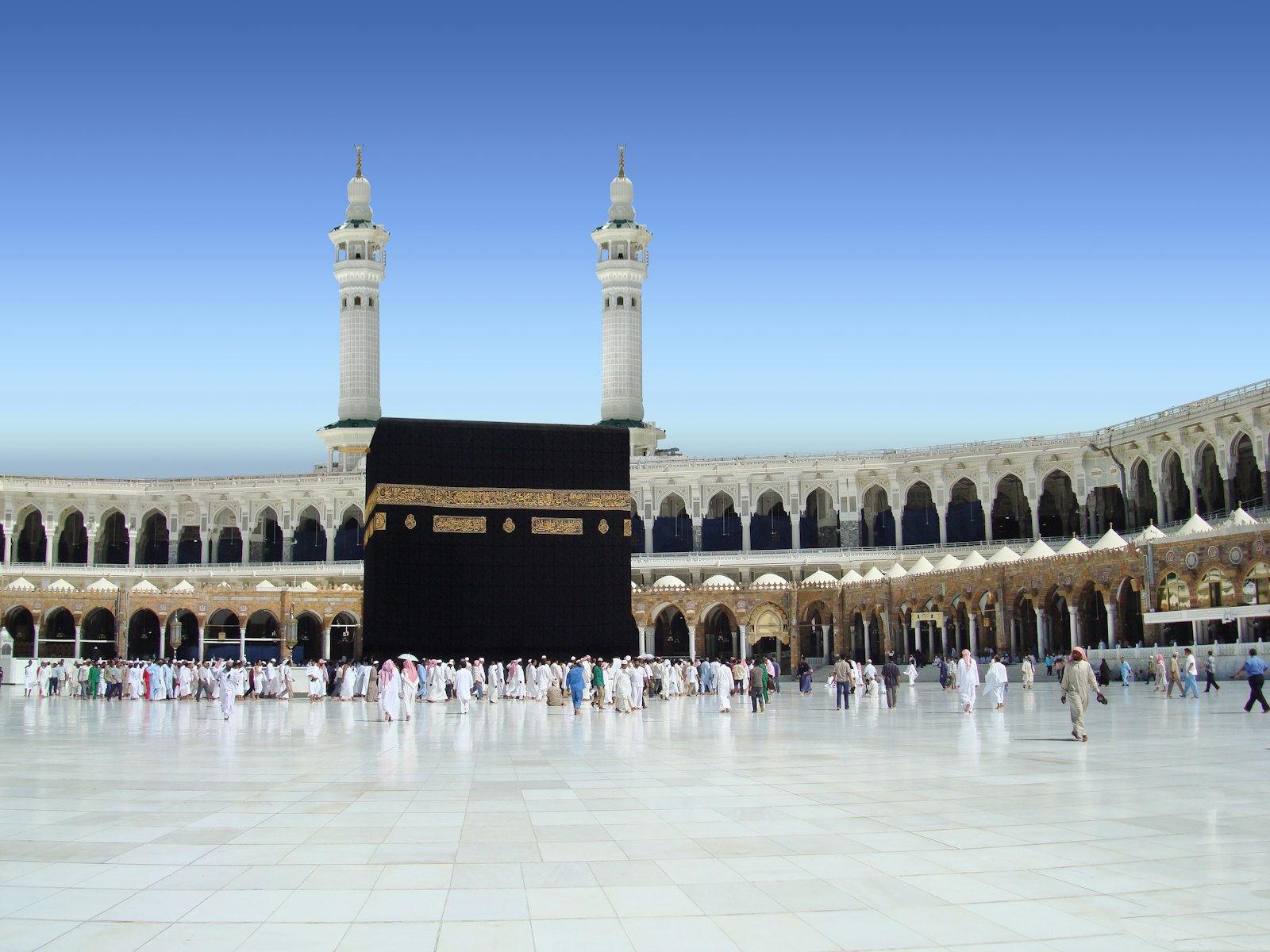
There can be no more fitting way to end our Ramadan series of great mosques of the world than by focusing on Masjid al-Haram, also known as the Great Mosque of Makkah, the most sacred mosque of Islam.
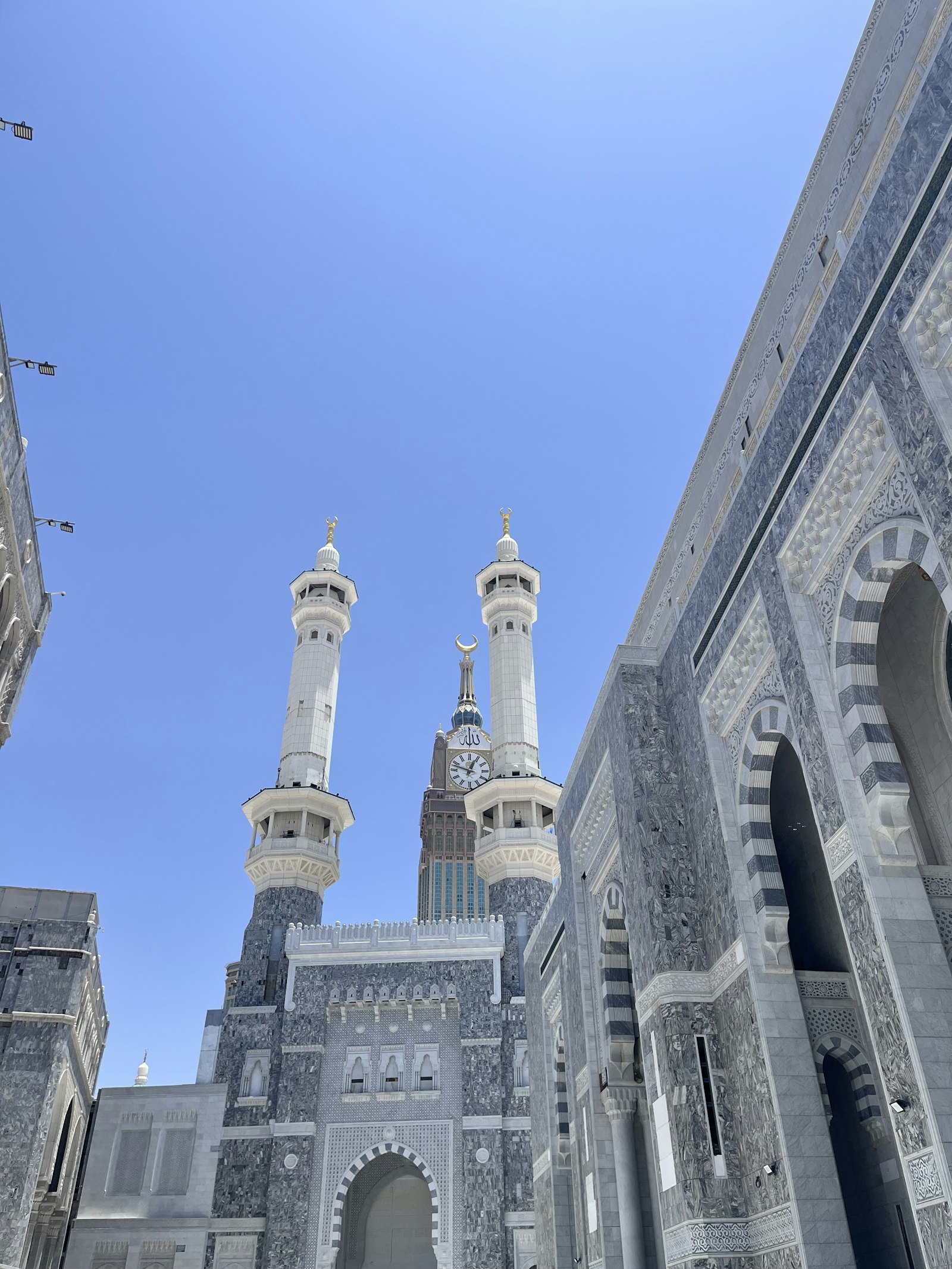
It surrounds the Kaaba, which is the focal point, the Qibla, which all of us throughout the world face when we pray. It is also the world’s largest mosque, currently undergoing its most extensive expansion ever, which will allow it to accommodate over 2 million worshippers at one time, and improve comfort and accessibility. It has 13 minarets, the first of which was erected in 139 AH and over 210 wooden gates, adorned with intricate copper motifs.
If you haven’t yet visited and seen it for yourself, why not make this the year to plan an independent Umrah? It’s become so much easier now that you can get your visa and make all of your travel arrangements online. If you want to have a view of the Haram, or even the Kaaba itself from your hotel room, simply use our unique filters to select your hotel.
From Istanbul to Muscat, from Cairo to Islamabad, and ultimately to Makkah, these mosques remind us that while architecture may differ across continents, the direction of our hearts remains one. May Allah (SWT) accept our prayers, our journeys, and every step we take towards Him this Ramadan.