

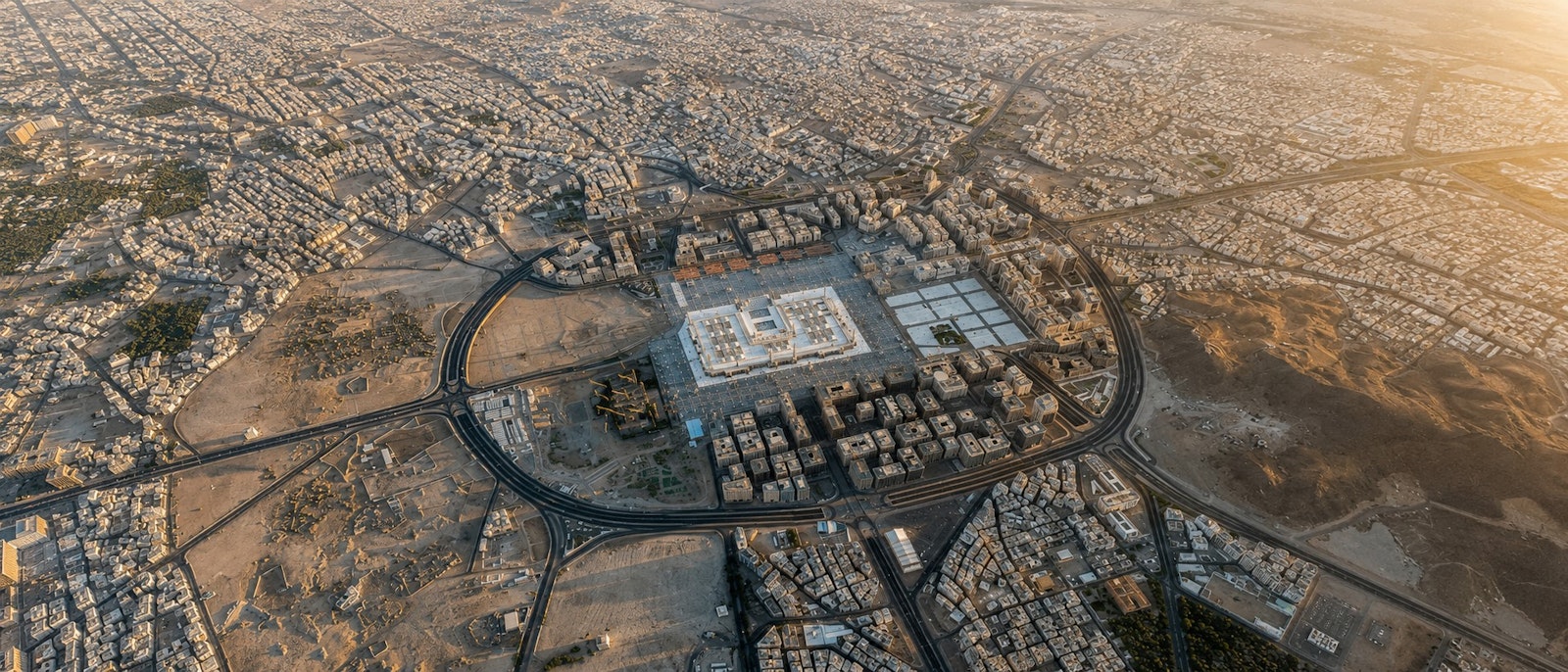
Where to Stay in Madinah: District & Neighborhood Guide
Where to Stay in Madinah?
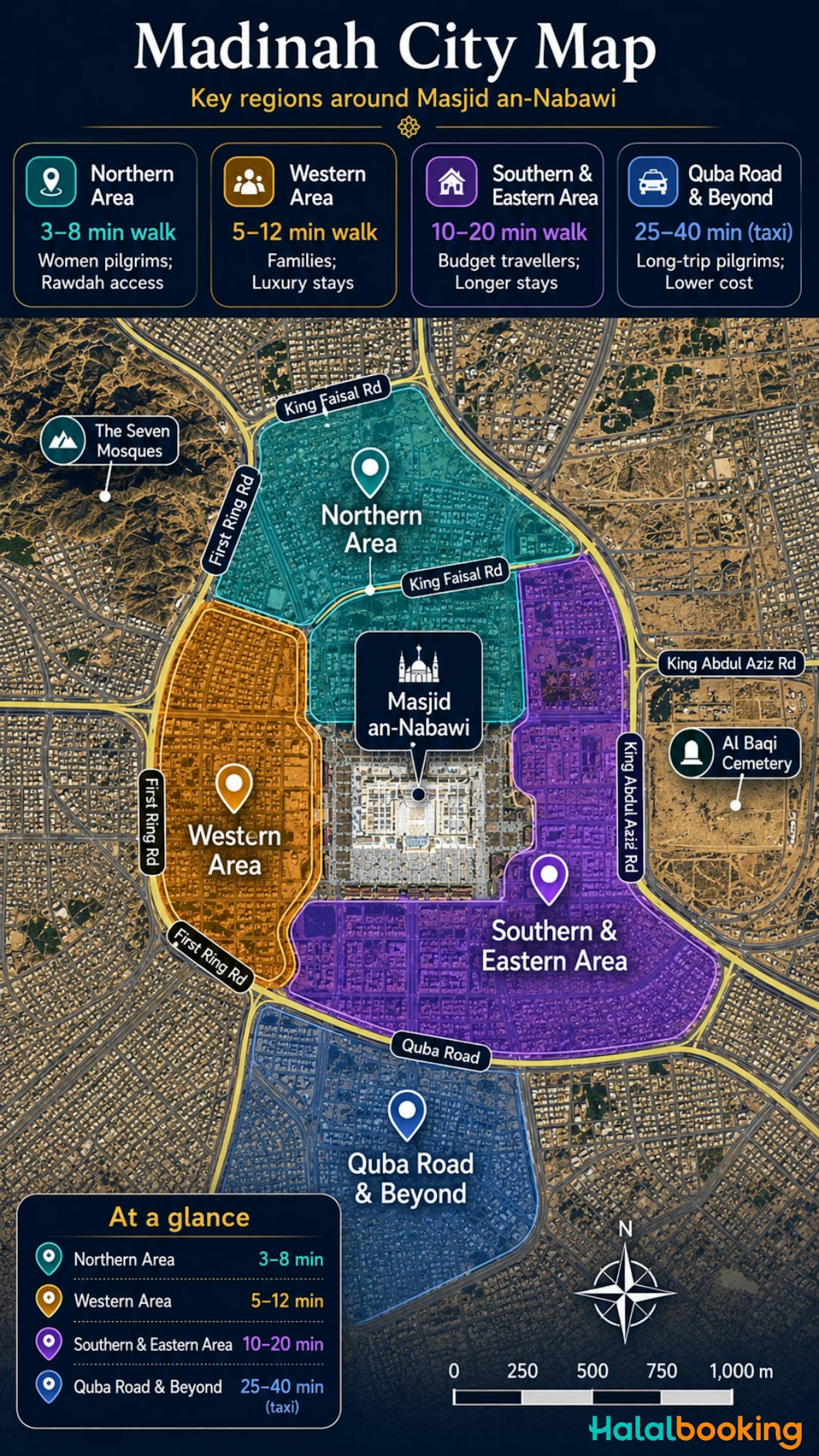
Choosing where to stay in Madinah comes down to one question above all others: how close do you want to be to Masjid an-Nabawi? The different sides of the mosque each have a distinct character – the northern area is best placed for women pilgrims accessing the Rawdah, the western area offers newer hotels and wide pedestrian boulevards, and the southern and eastern areas deliver the best value for longer stays. This guide maps each neighbourhood so you can choose with confidence.
Use this guide to understand Madinah’s neighbourhood landscape, then book your hotel on Halalbooking filtering by distance to the mosque. The Nusuk App is separate: it handles Umrah registration and Rawdah permits, not hotel booking.
Area | Walking Time | Best For | Key Trade-off |
|---|---|---|---|
Northern | 3–8 min | Women pilgrims; Rawdah access | Higher nightly rates |
Western | 5–12 min | Families; luxury stays | Busiest foot traffic |
Southern & Eastern | 10–20 min | Budget travellers; longer stays | Further from women's gates |
Quba Road & Beyond | 25–40 min (taxi) | Long-trip pilgrims; lower cost | Requires daily transport |
Navigating Madinah: Proximity to the Prophet’s Mosque
The Markaziyah – Madinah's central district – is the area immediately surrounding Masjid an-Nabawi. Pilgrims and hoteliers alike divide it informally into four sides: north, south, east, and west. Each side faces a different set of mosque entrances, serves different pilgrim profiles, and comes with its own price point and atmosphere.
The single most useful metric when choosing accommodation here is walking time to the nearest mosque gate – not distance in metres. Pedestrianised plazas, security barriers, and crowd patterns that vary by prayer time can all stretch a short hop into a long walk: a hotel advertised as '300 metres from the mosque' might require a 12-minute walk via the permitted route at peak hours. The figures in this guide reflect realistic walking times, not straight-line distances.
A second practical variable is which entrance you primarily need:
- Northern side – women's entrances and the Rawdah booking entry points
- Western side – the most accessible option for wheelchair users and those with pushchairs, given the wider paved courtyards
- Southern side – the primary arrival point for pilgrims coming from the Haramain Train station
The Northern Area: The Gateway for Women Pilgrims
The northern side of Masjid an-Nabawi is the most strategically positioned area for women pilgrims. The principal women's entrances – including the gates used for Rawdah visits – face northward. A hotel on this side eliminates the need to navigate around the mosque perimeter before entering, which for a pilgrim planning multiple daily prayers and a Rawdah visit is a genuine practical advantage, not simply a matter of comfort.
At a glance:
- Walking time to the women's gates: 3–8 minutes
- Highest concentration of hotels: along King Fahd Road, directly north of the mosque
- Price level: premium – typically the most expensive side of the Markaziyah, though the time saved across five daily prayers over a week-long stay makes the cost meaningful
Beyond the gate proximity, the northern area is quieter in character than the western side. The streets are narrower and the atmosphere more local, with smaller restaurants, date stalls, and pharmacy counters rather than the large retail arcades found to the west.

Insider tip
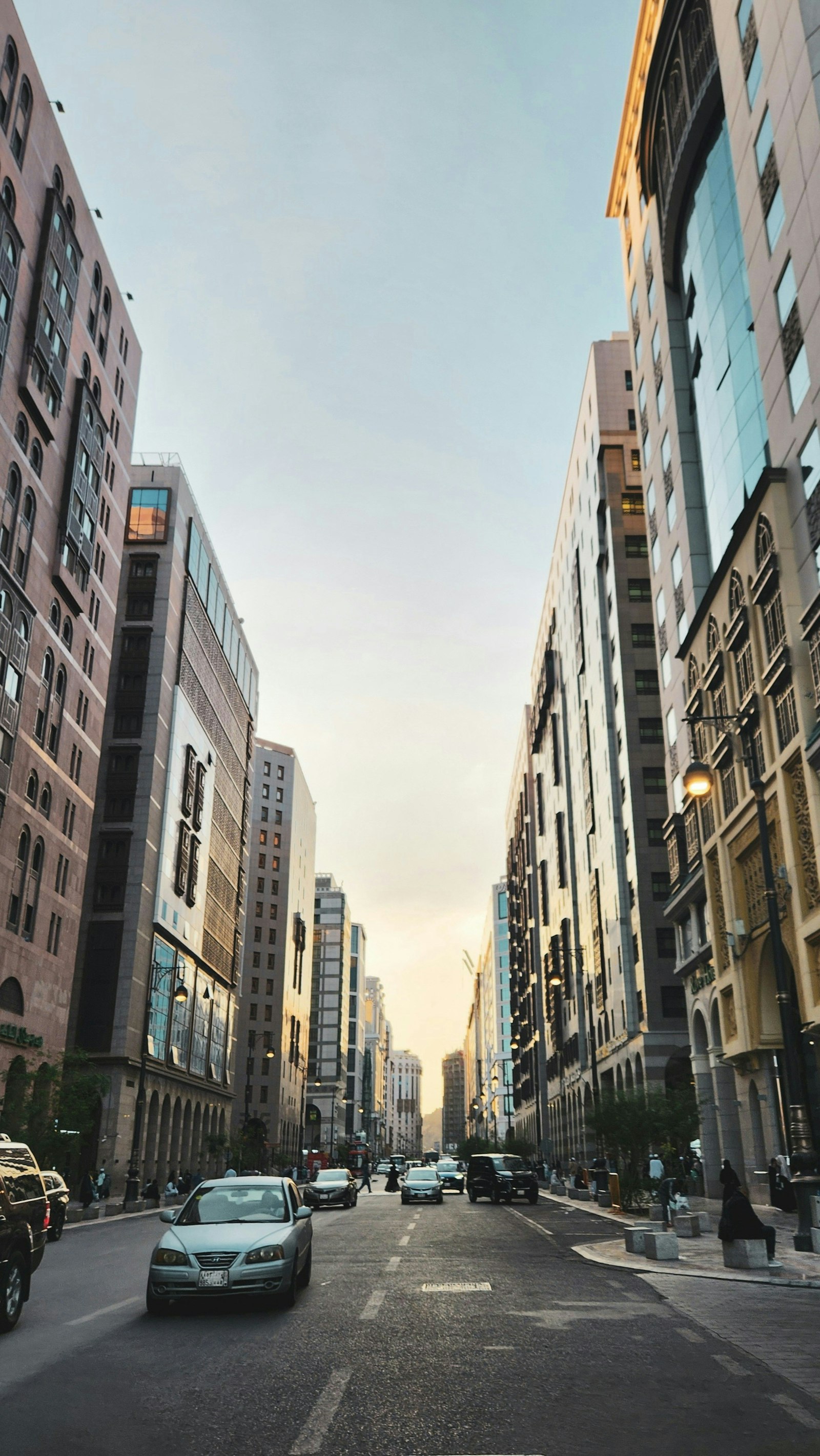
The immediate vicinity of King Fahd Road to the north of the mosque is where the highest concentration of accommodation in this zone is found.

Best for
Women pilgrims, older women, those travelling with young children, and anyone managing health considerations.
The Western Area: Modernity and Luxury
The western side of Masjid an-Nabawi underwent significant development as part of Saudi Vision 2030's expansion of Madinah's hospitality infrastructure. Wide pedestrianised boulevards, large retail and dining complexes, and the highest concentration of premium and five-star properties characterise this zone.
For families, the western area offers the most practical combination of mosque access and amenity. The main King Abdul Aziz Gate is on this side, and the broad paved plazas make movement with pushchairs and wheelchairs considerably easier than the narrower streets to the north and east.
At a glance:
- Walking time to the mosque: 5–12 minutes (outer western streets sit at the higher end)
- Main mosque entrance: King Abdul Aziz Gate
- Price level: premium – the highest concentration of five-star properties in the Markaziyah
- Dining and shopping: widest range of international dining options and the largest 24-hour supermarkets in the central area
Insider tip
The trade-off for proximity here is foot traffic: the western approach to the mosque is the busiest pedestrian corridor, particularly in the hours before Fajr and after Isha prayer, when the crowds are densest.
Best for
Families, pilgrims travelling with pushchairs or wheelchairs, premium and five-star travellers, and pilgrims with specific dietary requirements including those seeking vegetarian meals or allergen-aware menus.
The Southern and Eastern Areas: Budget-Friendly Accessibility
The southern and eastern sides of Masjid an-Nabawi are where value-for-money accommodation is concentrated. Hotels here are typically older properties – many have served pilgrims for decades – and while they may lack the polish of newer western-side developments, they are clean, functional, and well-placed for pilgrims whose priority is maximising days in Madinah without stretching their budget.
The eastern side is the least developed of the four zones and therefore offers the quietest streets, suited to pilgrims who prefer a more contemplative environment away from the retail and hotel towers.
At a glance:
Southern area
- Walking time to main entrances: 10–18 minutes
- Best access from: the Haramain High-Speed Rail station – the route from the station passes directly through this zone
- Character: lively, budget-friendly, well-placed for arrivals
Eastern area
- Walking time to main entrances: 12–20 minutes
- Character: the quietest of the four zones, with the least retail and hotel-tower density
- Trade-off for women pilgrims: an additional 10–15 minutes to reach the northern women's entrances compared to a northern-side hotel
Insider tip
Pilgrims arriving by HHR will find southern-area hotels the most logical choice for the final leg of their journey – the walk from the station area towards the mosque passes directly through this zone.
Best for
Pilgrims whose priority is maximising days in Madinah without stretching their budget, HHR train arrivals, and pilgrims prioritising calm over convenience.
Beyond the Central Area (Markaziyah): Strategic Stays for Long Trips
For pilgrims spending eight or more days in Madinah, hotels outside the Markaziyah deserve serious consideration. Properties along Quba Road and in the surrounding districts offer considerably lower nightly rates, which over a longer stay can represent a substantial saving without materially reducing the quality of the experience.
Staying near Masjid Quba also has its own spiritual dimension. The opportunity to pray two rak'ahs in the first mosque in Islamic history – within walking distance of your hotel – is something that central-area pilgrims typically arrange as a half-day excursion. For pilgrims based on Quba Road, it becomes a regular part of the daily routine.
At a glance:
- Distance to Masjid an-Nabawi: 25–40 minutes by taxi, depending on traffic and exact location
- Transport options: taxis (widely available and inexpensive by European standards) and the free Haramain Bus Service, which connects several points in the outer areas to the central mosque zone
- Price level: considerably lower nightly rates than the Markaziyah – meaningful savings over a long stay
- Spiritual feature: Masjid Quba within walking distance of most accommodation
Insider tip
Many long-stay pilgrims find a routine of travelling in for Fajr, remaining through Dhuhr and Asr, returning for rest, then coming back for Maghrib and Isha entirely workable.
Best for
Pilgrims spending eight or more days in Madinah and pilgrims who want Masjid Quba within walking distance as a regular part of the daily routine.
Frequently Asked Questions
Practical answers for choosing your Madinah neighbourhood
Which side of Masjid an-Nabawi is best for women pilgrims?
The northern side is generally the best choice for women pilgrims. The principal women's entrances and the Rawdah entry points used for Nusuk-booked visits are concentrated on the northern face of the mosque, meaning that a northern-area hotel minimises the walking distance to the gates you will use most. Hotels here tend to carry a premium over the southern and eastern areas, but for a stay structured around regular prayer and a Rawdah visit, the time saved across multiple days is a practical consideration worth the cost.
Is the Markaziyah area accessible for wheelchair users?
The western side of the Markaziyah offers the most accessible environment for wheelchair users and those with limited mobility. The wide paved courtyards and pedestrianised boulevards on the western approach to the mosque are significantly easier to navigate than the narrower streets to the north and east. The mosque itself has designated accessibility routes and ramps at several gate points.
How does the cost of staying in Madinah compare to Makkah?
Madinah accommodation is generally less expensive than Makkah for comparable proximity to the mosque. The Masjid al-Haram in Makkah is a larger footprint and the demand to be within 500 metres of it is intense, driving prices in the Makkah Markaziyah to a higher baseline. In Madinah, the slightly smaller central zone and greater availability of mid-range properties within walking distance of Masjid an-Nabawi means that value-for-money options are more accessible. Budget pilgrims in Madinah can typically find a clean, well-located room at a price point that would place them considerably further from the Haram in Makkah. That said, both cities see significant price spikes during Ramadan and Hajj season; booking early with a refundable room policy is advisable regardless of area.
What are the advantages of staying near Quba Road?
Staying near Quba Road makes most sense for pilgrims on longer trips – typically eight or more days – where the lower nightly cost translates into a meaningful overall saving. Beyond the financial case, properties in this area offer a quieter, less crowded environment that some pilgrims find more conducive to reflection and rest between prayers. The proximity to Masjid Quba – the first mosque in Islamic history – is a distinct spiritual advantage; a visit that central-area pilgrims must arrange as an excursion becomes a short walk from your door. The trade-off is consistent: daily transport to Masjid an-Nabawi adds time and a modest cost to each prayer. Most pilgrims staying in this zone use taxis or the Haramain Bus Service and find the routine manageable once established.
Your pilgrimage in the safest hands online
The world's #1 halal-friendly booking platform. Officially aligned with Saudi authorities, airline and lifestyle rewards programmes.






Scan the QR code with your phone camera to download it.


Ready to Book Your Madinah Hotel?
Halalbooking lists accommodation across the full Madinah area, from Markaziyah hotels to Quba Road properties. Filter by distance to the mosque.