

Makkah Food Guide: Best Restaurants & Cheap Eats
Makkah Food & Dining Guide: From Street Eats to Fine Dining
This guide covers where to eat at every budget, which traditional dishes every pilgrim should try, and where to find the finest Saudi dates to bring home — with practical timing advice to help you dine well without losing precious time near the Haram.
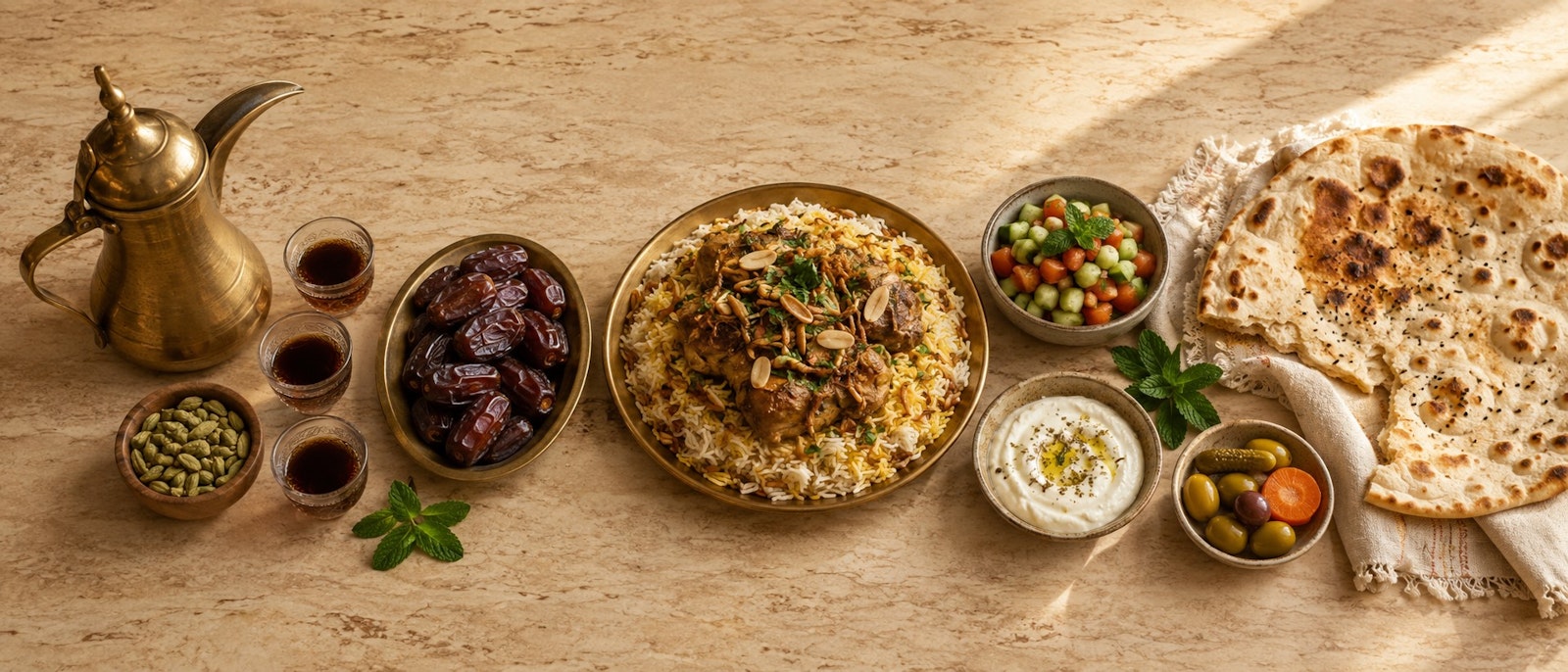
Makkah is, above all else, a city of worship — but every pilgrim must eat, and the city's culinary scene deserves far more attention than most Umrah guides give it. From award-winning panoramic restaurants perched above the Haram to steaming trays of mutabbaq sold for a few riyals at roadside stalls, Makkah offers one of the most diverse and satisfying food landscapes in the Islamic world. Millions of pilgrims from every corner of the earth have shaped a city where Arabic, South Asian, Turkish, Southeast Asian and Western cuisines all coexist within a few streets of the Grand Mosque.
A Culinary Journey in the Holy City: What to Expect
The food scene in Makkah reflects the city's unique position as the meeting point of the entire Muslim world. Walk along Ibrahim Al Khalil Street — the main artery connecting the Haram to the outlying hotel district — and within five minutes you will pass a Lebanese grill, a Pakistani karahi house, a Turkish pide bakery, an Indonesian nasi goreng stall and a Yemeni mandi restaurant.
Formal restaurants in the five-star towers surrounding Masjid al-Haram offer international fine dining with Haram views — some of the most dramatic restaurant settings in the world. At the other end of the scale, the food courts in Abraj Al Bait (Clock Tower), the street-level stalls of Ajyad Street and the budget canteens of the Misfalah and Aziziah districts feed pilgrims on a tight budget with generous, filling meals.

Pro tip
The busiest dining windows are immediately after Fajr and Isha prayers. Plan meals for 7–8am, 2–3pm or 8–9pm to avoid the longest queues at popular restaurants near the Haram.
Makkah Dining at a Glance: Where to Eat & What to Pay
A quick-reference guide to every dining tier in Makkah — from panoramic fine dining to sub-20 SAR street food — with location and price guidance for 2026.
Venue / Type | Location | Cuisine | Price (SAR/person) | Best For |
|---|---|---|---|---|
Arabesque Restaurant | Fairmont Makkah Clock Royal Tower | Mediterranean & Levantine fusion | 250–500 SAR | Special occasion dining; Haram views |
Al Dira (Hilton Suites) | Abraj Al Bait — Hilton towers | International buffet | 120–180 SAR | Hotel guests; pre/post-prayer buffet |
Hotel all-day dining (Swissôtel, Marriott) | Clock Tower & Jabal Omar hotels | International buffet | 100–160 SAR | Families; varied diet needs |
Al Baik | Ajyad St & multiple central branches | Saudi broasted chicken | 15–30 SAR | Iconic Saudi fast food; all pilgrims |
Al Romansiah | Multiple Makkah branches | Saudi & Arabic grills | 40–80 SAR | Family groups; kabsa & mandi |
Abraj Al Bait food court | Clock Tower — lower levels | International fast food & grills | 25–50 SAR | Quick meals between prayers |
Jabal Omar food courts | Marriott & Hyatt, Jabal Omar | Pakistani, Arab, Yemeni | 20–45 SAR | Budget dining near Gate 79 |
Shawarma stalls | Ajyad St & Misfalah district | Levantine street food | 5–10 SAR | On-the-go snacks between rituals |
Mutabbaq stalls | Misfalah & Shisha districts | South Asian street pastry | 8–15 SAR | Quick, filling budget meal |
Tamees bakeries | Old city / near Haram gates | Hijazi flatbread & ful | 2–5 SAR | Sunnah breakfast; early morning |
Yemeni mandi restaurants | Aziziah & Batha districts | Yemeni slow-roasted lamb/rice | 30–60 SAR | Traditional feast; large portions |
Prices shown are indicative for 2026 and may vary by season.
Also worth trying — popular among European, Turkish & international pilgrims
Restaurant / Café | Location | Cuisine | Price (SAR) | Why Pilgrims Rate It |
|---|---|---|---|---|
Gürkan Şef Steakhouse | Ibrahim Al Juffali St | Turkish fine dining & steaks | 200–350 SAR | Dry-aged steaks, Turkish mezze, family-friendly with children's area — the most-reviewed upmarket restaurant in Makkah |
MADO | Clock Tower (Abraj Al Bayt), Level 3 | Turkish grill, bakery & desserts | 60–130 SAR | Well-known Turkish chain with Haram views; serves döner, grills and baklava |
AlForno | Jabal Omar Hyatt Regency | Italian bistro (wood-fired pizza & pasta) | 80–160 SAR | World Luxury Restaurant Award winner; gluten-free options available on request |
Oasis Restaurant | Jabal Omar Hyatt Regency | Turkish & international buffet | 100–180 SAR | One of the oldest restaurants in Makkah; award-winning breakfast buffet with Haram views; popular with Turkish and Gulf pilgrims |
Café Moment | Near Masjid al-Haram (Jabal Omar area) | Specialty café | 20–50 SAR | Widely recommended for its Haram views; a favourite coffee and rest stop for European pilgrims between prayers |
B Laban | Clock Tower (Abraj Al Bayt), Level 4 | Desserts & milk cakes | 15–35 SAR | Known for mango milk cake, pistachio cream and Lotus desserts — consistently sells out by late evening |
Brew 92° | Tundobawi area, near Haram | Specialty coffee | 15–30 SAR | Go-to for specialty coffee; Saudi-founded café brand with consistent quality and a calm atmosphere |
Al Shorfa | Clock Tower complex | Arabic buffet with Haram view | 70–120 SAR | A step above food courts without fine-dining prices; panoramic Haram view makes it a popular choice for a sit-down meal after Tawaf |
Fine Dining & Iconic Views: Top Restaurants in Makkah
Arabesque Restaurant: A Fusion of Mediterranean and Middle Eastern Flavours
Located inside Fairmont Makkah Clock Royal Tower — the luxury property built into the Abraj Al Bait complex — Arabesque is the most acclaimed fine-dining destination in Makkah. The restaurant fuses Levantine, Moroccan and Mediterranean culinary traditions into an elevated menu that spans cold meze, charcoal-grilled meats and elaborate dessert platters. Expect to pay in the range of 250–500 SAR per person (approximately £55–£110), excluding beverages. Reservations are strongly advised, particularly during Ramadan and the peak Hajj shoulder season.
Pro tip
Arabesque is ideal for a special occasion dinner mid-pilgrimage — a moment of calm and beauty between the intensity of the rituals. Book directly with the Fairmont on arrival or through your hotel concierge.
Al Dira & The Oasis: Luxury Buffets with Haram Views
For pilgrims staying in the Makkah Clock Royal Tower, Hilton Suites or Swissôtel properties — all directly connected to or adjacent to the Abraj Al Bait — the all-day dining restaurants on the upper floors offer extensive buffets with live cooking stations, a rotating international spread and the same extraordinary Haram panorama. Al Dira, within the Hilton towers, is consistently rated among the best hotel buffets in the city for the range of its Arabic mezze and Saudi main dishes.
Budget Bites: Best Cheap Eats Near the Grand Mosque
Finding Value: Cheap Eats Near Gate 79 (King Fahd Gate) & Jabal Omar
The streets immediately surrounding King Fahd Gate (Gate 79) and the Jabal Omar development to the west of the Haram are home to Makkah's densest concentration of budget dining. The ground-floor food courts within the Jabal Omar Marriott and Hyatt towers offer quick, affordable meals — Pakistani karahi, Arab grills, falafel wraps — priced for the pilgrim market at 20–45 SAR per meal. The streets running parallel to the complex — particularly Umm Al Qura Road — are lined with independent canteens serving rice dishes, grilled chicken and fresh juices at similarly accessible prices.
The Abraj Al Bait food court, accessed from the Clock Tower's lower levels, houses a large mix of fast-food counters and sit-down restaurants at mid-range prices, and is convenient for pilgrims staying in the central towers who need to eat between prayers without venturing into street traffic.
Al Baik: The Legendary Saudi Fried Chicken Experience
Founded in Jeddah in 1974, Al Baik is popular for its signature broasted (pressure-fried) chicken, which is served with a mild garlic sauce and comes in family-sized boxes; the fish fillet sandwich and shrimp burger have their own devoted following.
Al Baik branches are located throughout central Makkah, including near Ajyad Street and within several of the tower food courts. Expect queues at peak prayer hours — but the queue moves quickly and the wait is part of the experience. A full meal costs 15–30 SAR per person.
Local Staples: Shawarma, Mutabbaq and Tamees for Under 20 SAR
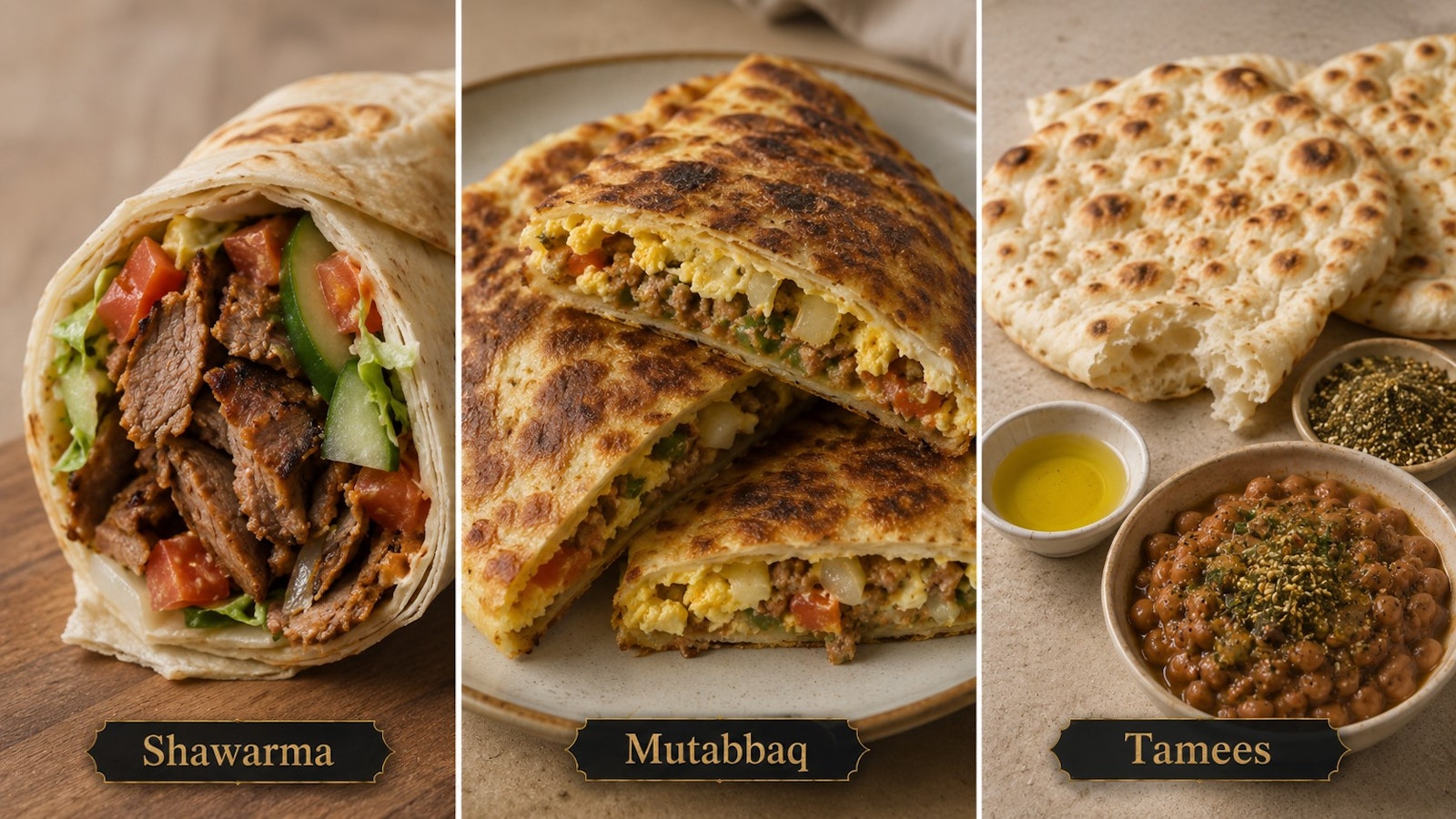
Three dishes define the pilgrimage street-food experience and are available on almost every block surrounding the Haram:
- Shawarma — thinly shaved lamb or chicken folded into flatbread with garlic sauce and pickles — is sold from rotating spits at stalls throughout Ajyad Street and the Misfalah district for 5–10 SAR. It is fast, filling and designed for eating on foot between prayers.
- Mutabbaq (also spelt murtabak) is a folded pan-fried pastry stuffed with spiced minced meat, egg and onion — a dish brought to the Hijaz by South Asian and Southeast Asian pilgrims who never left. The best mutabbaq in Makkah is found at small dedicated stalls in the Misfalah and Shisha districts, where the pastry is made fresh to order for 8–15 SAR.
- Tamees is a traditional Hijazi flatbread — thin, slightly charred and torn rather than cut — baked in clay ovens and eaten with olive oil and zaatar, or used to scoop up ful medames (slow-cooked fava beans). Tamees bakeries typically open from early morning and sell out by mid-morning; a round of bread costs 2–5 SAR.
Pro tip
The cluster of budget restaurants on the streets south of the Haram — particularly around the Misfalah district and Ajyad Street — are consistently better value and less crowded than the stalls directly adjacent to the mosque gates.
Authentic Saudi Flavours: Must-Try Traditional Dishes
Kabsa and Mandi: The Essence of Saudi Hospitality
- Kabsa is the national dish of Saudi Arabia and the centrepiece of Hijazi hospitality — fragrant basmati rice cooked in a spiced broth with saffron, dried lime (loomi), cardamom and cinnamon, served over slow-cooked lamb or whole roasted chicken. The spice blend is warming rather than hot, and the dish is typically accompanied by a simple salad, yoghurt dip and date chutney.
- Mandi is a Yemeni-influenced cousin of kabsa, where the meat is slow-cooked in a sealed underground pit (the tandoor) with wood smoke, producing an extraordinarily tender, smoky result. Yemeni mandi restaurants — recognisable by the tandoor pit visible behind the counter — are concentrated in the Aziziah and Batha districts of Makkah and offer some of the most generous and flavoursome meals in the city for 30–60 SAR per person.
- Saleeg is a Hijazi speciality worth seeking out — white rice slow-cooked in seasoned chicken broth until creamy, then finished with warm milk and served with a whole poached chicken on top. It is lighter and more comforting than kabsa, and is particularly popular as a restorative meal after a long night of worship. Al Romansiah and most traditional Saudi restaurants in Makkah serve saleeg and kabsa as regular menu items.
Hijazi Breakfasts: Ful, Tamis and Arabic Coffee
The traditional Hijazi breakfast is one of the great pleasures of the Makkah experience and a powerful act of cultural connection for the pilgrim.
- Ful medames — creamy slow-cooked fava beans dressed with olive oil, lemon and cumin — is served with fresh tamis bread and hard-boiled eggs at breakfast canteens throughout the old city from 5 am onwards. A full Hijazi breakfast plate costs 10–20 SAR and is one of the most sustaining meals available before a long morning of Tawaf.
- Qahwa — Arabic coffee brewed light and fragrant with cardamom and saffron, served in small handleless cups alongside a plate of dates. In Saudi culture, refusing qahwa is a significant discourtesy; accepting it and finishing three small cups before tilting the cup is the correct custom.
- Karak chai, for pilgrims who prefer something milkier- — spiced black tea simmered with evaporated milk, cardamom and saffron — is the drink that keeps Makkah running. Sold from small street stalls and corner shops throughout the city for 2–5 SAR a cup.
Shopping for the Sunnah: Authentic Saudi Date Markets
Dates hold a unique place in Islamic culture — the Prophet ﷺ is reported to have broken his fast with dates, and the date palm is referenced repeatedly in the Quran. Returning from Umrah with a supply of premium Saudi dates for family and neighbours is a deeply embedded tradition, and Makkah offers some of the finest date shopping in the world.
Where to Find Premium Ajwa and Sukkari Dates in Makkah
The two varieties every pilgrim should know:
- Ajwa dates — grown exclusively in Madinah — are the most spiritually significant dates in Islam. They are small, dark, soft and wrinkled, with a dense fudge-like texture and a complex flavour of dried fruit, caramel and earthiness. Expect to pay 40–120 SAR per 500g, depending on grade and vendor.
- Sukkari dates — the name means 'sugary' in Arabic — are the most popular everyday date in Saudi Arabia. They are golden-yellow, firm and pleasantly crisp when fresh, becoming softer and more caramel-like as they mature. Sukkari are ideal as gifts for those who prefer a lighter date, and are widely available throughout Makkah's date market at 20–50 SAR per 500g.
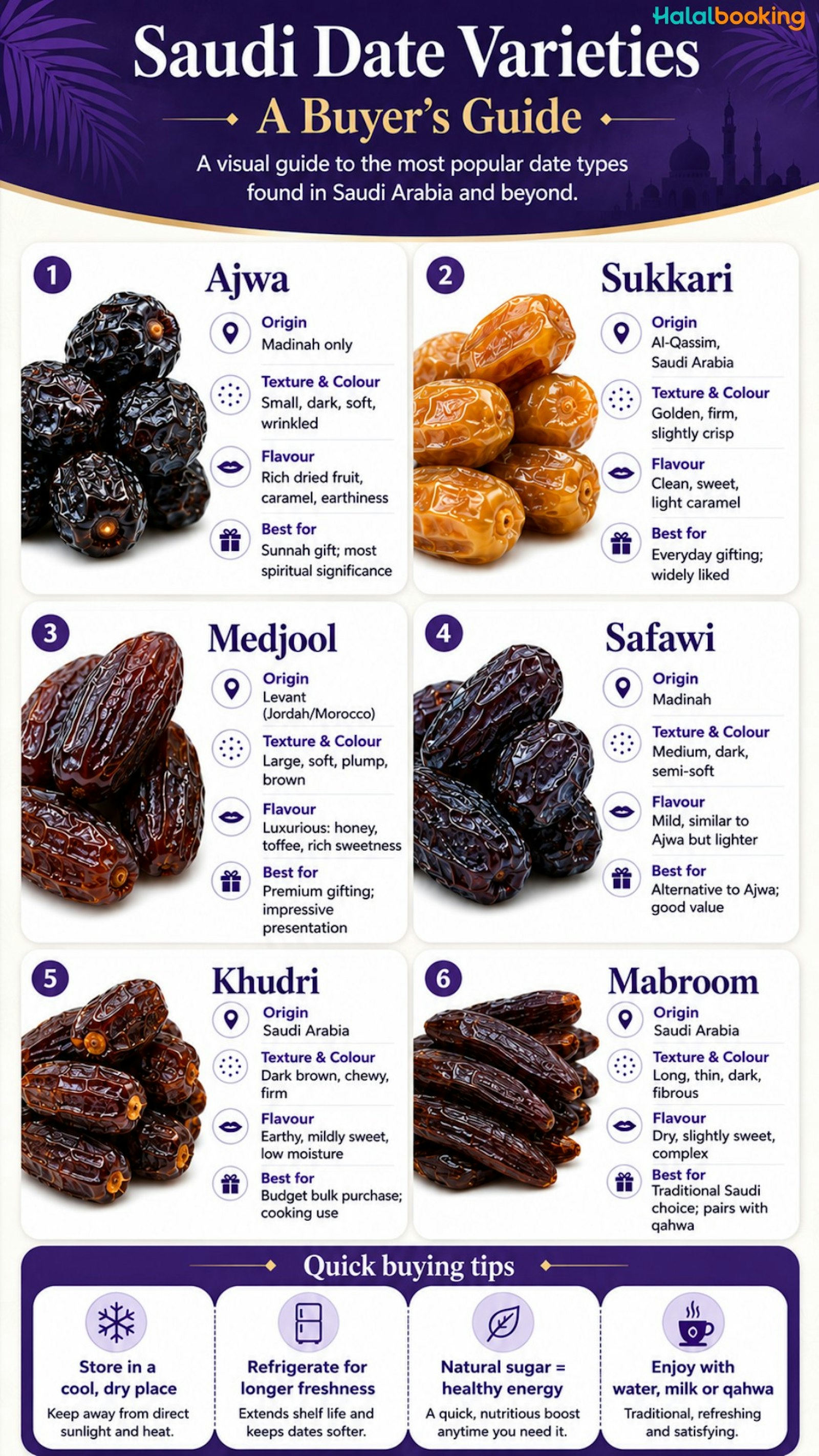
Saudi Date Varieties: A Buyer's Guide
Variety | Origin | Texture & Colour | Flavour | Best For |
|---|---|---|---|---|
Ajwa | Madinah only | Small, dark, soft, wrinkled | Rich: dried fruit, caramel, earthiness | Sunnah gift; most spiritual significance |
Sukkari | Al-Qassim, Saudi Arabia | Golden, firm, slightly crisp | Clean, sweet, light caramel | Everyday gifting; widely liked |
Medjool | Levant (Jordan/Morocco) | Large, soft, plump, brown | Luxurious: honey, toffee, rich sweetness | Premium gifting; impressive presentation |
Safawi | Madinah | Medium, dark, semi-soft | Mild, similar to Ajwa but lighter | Alternative to Ajwa; good value |
Khudri | Saudi Arabia | Dark brown, chewy, firm | Earthy, mildly sweet, low moisture | Budget bulk purchase; cooking use |
Mabroom | Saudi Arabia | Long, thin, dark, fibrous | Dry, slightly sweet, complex | Traditional Saudi choice; pairs with qahwa |
Visiting the Central Date Souqs vs. Boutique Date Shops
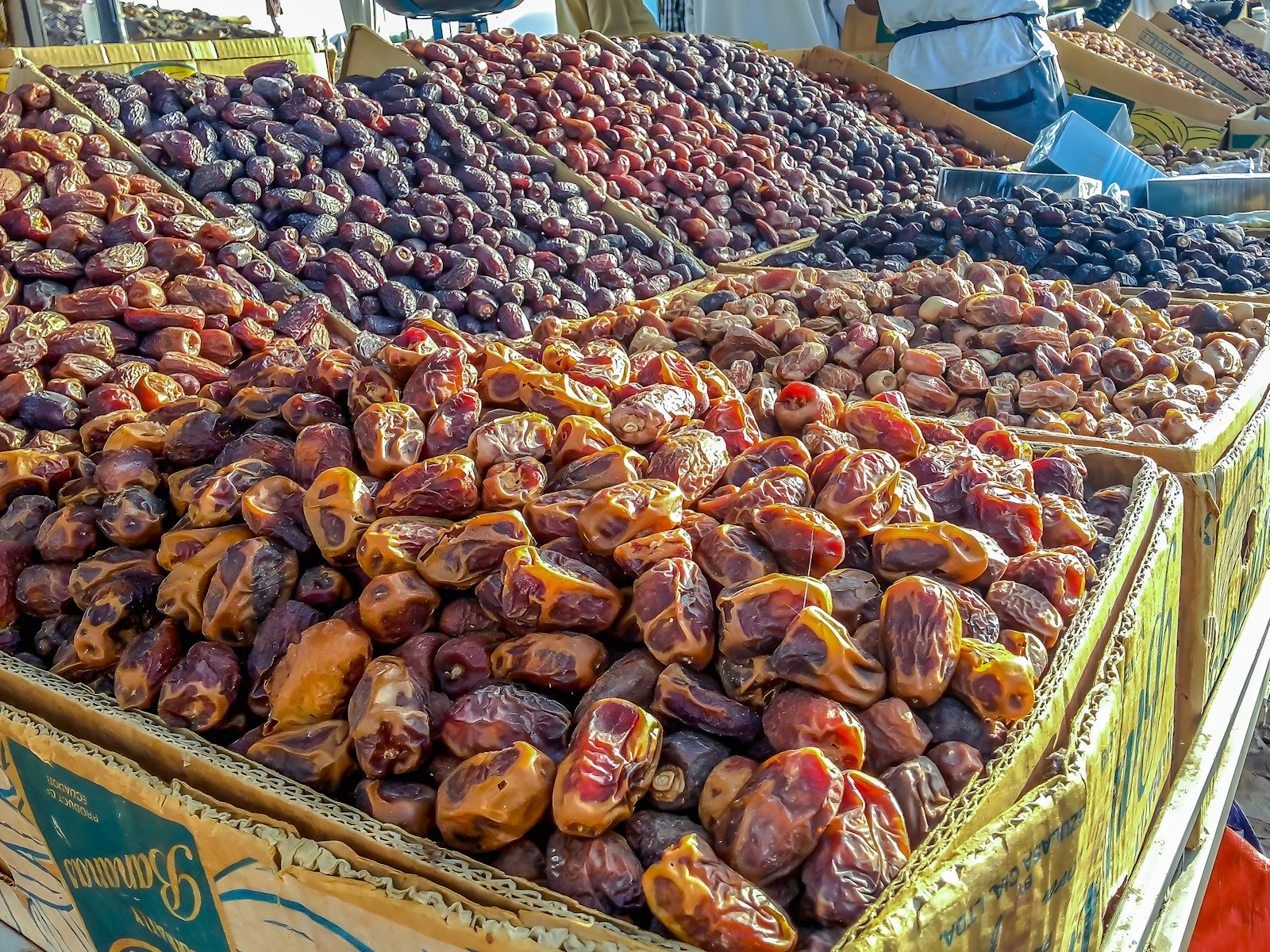
The Central Makkah Date Souq — centred on Souq Al Layl and the surrounding market streets north of the Haram — is the largest date market in the city. Dozens of vendors display enormous flat trays of dates by variety, grade and origin, and sampling before buying is standard practice. For bulk purchases — 2kg boxes or larger to bring home as gifts — the souq offers the best value.
For premium-grade, gift-packaged dates, the boutique date retailers in the shopping concourses of the Clock Tower complex and the Abraj Al Bait mall offer beautifully presented boxes of Ajwa, Sukkari and Medjool varieties, often with Arabic calligraphy packaging suitable for gifting. Prices are higher than the souq, but the presentation quality justifies the difference for special gifts.
Pro tip
Ask vendors to vacuum-seal your dates for travel — this extends shelf life significantly and makes airport security much easier. Most date shops in Makkah offer this service for a small additional cost.
Practical Tips for Dining During Umrah
Best times to eat: avoiding the prayer-time rush
Quietest dining windows
2 – 4 pm · 11 pm – 1 am
Between Dhuhr and Asr prayers, and late night before Fajr. Restaurants and food courts at their calmest — shorter queues, faster service, more relaxed atmosphere.
Busiest periods
30–45 min after each prayer
Particularly after Fajr and Isha, when tens of thousands of pilgrims leave the Haram simultaneously. Allow 45 minutes after the prayer ends before heading to busy restaurants.
Late-night option
Al Tazaj — a Saudi grilled chicken chain with branches throughout central Makkah — operates 24 hours at 18–25 SAR and is consistently reliable for a clean, filling meal at any hour. The Abraj Al Bait food court also keeps extended hours during peak pilgrimage seasons.
Hygiene and Health: Staying Energised During Your Rituals
The physical demands of Umrah — Tawaf, Sa'i and repeated walking in summer heat — deplete energy quickly. Eat freshly cooked food from high-turnover vendors; avoid pre-cut fruit from street stalls in summer; carry water and dates at all times.
Frequently Asked Questions
Quick answers about food in Makkah
Can I find authentic Turkish food near Masjid al-Haram?
Yes — Turkish cuisine is well represented near the Haram, with dedicated restaurants on Ibrahim Al Khalil Street and in the Jabal Omar district. Look for Turkish pide (flatbread pizza) bakeries and lahmacun stalls along Ibrahim Al Khalil Street and the streets east of the Haram. Several Turkish-run kebab restaurants in the Misfalah district serve adana kebab, döner and baklava to a consistently high standard. For a sit-down experience, Gürkan Şef Steakhouse on Ibrahim Al Juffali Street is the most-reviewed upmarket Turkish restaurant in Makkah.
Are there specific restaurants in Makkah that suit the Turkish palate?
Yes, Turkish-style grills and meze restaurants are clustered along Ibrahim Al Khalil Street and in the Jabal Omar district. The flavour profile — grilled meats, aubergine dishes and fresh flatbread — closely resembles the Levantine and Arabic cuisines that dominate Makkah, so Turkish palates adapt well without difficulty.
Where is the best place to buy authentic dates as gifts?
The Souq Al Layl date market north of the Haram offers the widest selection at the best prices. For premium gift packaging, Bateel in the Abraj Al Bait mall is the most reliable option. For Ajwa specifically, the Madinah date market is the gold standard — purchase there if your itinerary includes Madinah.
What are the best restaurants within walking distance of the Haram?
Arabesque (Fairmont) for fine dining; Al Dira (Hilton) for a hotel buffet; the Abraj Al Bait food court for affordable international options; and Ajyad Street stalls for instant cheap eats — all within a 10-minute walk of the Haram gates.
Where can I find affordable dining near King Fahd Gate (Gate 79) and Jabal Omar?
The food courts in the Jabal Omar Marriott and Hyatt complexes are the most convenient, with meals at 20–45 SAR. Independent canteens along Umm Al Qura Road serve Pakistani, Arab and Yemeni food at comparable prices.
Are there restaurants suitable for large family dinners?
Yes. Al Romansiah — multiple Makkah branches, dedicated family seating and a broad Saudi menu at 40–80 SAR per person — is the most reliable choice. Hotel buffets at the Hilton and Swissôtel towers also suit families well.
What are the most authentic Saudi dates to buy as gifts?
Ajwa are the most spiritually significant; Sukkari the most universally liked; Medjool the most luxurious. A mixed box combining all three covers every preference — most date shops in Makkah will assemble one on request.
Are international fast-food chains widely available in Makkah?
Yes — many international fast-food chains operate in Makkah alongside a wide variety of local and Muslim-owned alternatives. Pilgrims are never short of familiar options, but many find the local food scene far more rewarding: Al Baik, the beloved Saudi broasted chicken institution, is available throughout central Makkah; fresh shawarma, mandi and kabsa are sold at every price point; and Turkish, Yemeni and Levantine restaurants add further depth. With so many flavourful, locally rooted choices on every corner, international chains are simply one option among many — and rarely the most memorable one.
Is there vegetarian food available in Makkah?
Yes — vegetarian food is easy to find in Makkah. Ful medames (slow-cooked fava beans with olive oil and lemon), falafel sandwiches, hummus with fresh pita and tamees with zaatar are widely available at budget stalls throughout the city for under 15 SAR. Hotel buffets offer a broader spread of salads, rice dishes and vegetable mains. Most traditional Saudi dishes such as kabsa and saleeg are also available in chicken or vegetable variations.
Can I order food delivery to my hotel in Makkah?
Yes — food delivery is widely available in Makkah through Hunger Station and Jahez, the two main platforms operating in Saudi Arabia. Both are available as smartphone apps with Arabic and English interfaces. Delivery is a practical option for pilgrims who are resting between rituals, travelling with elderly family members, or simply prefer to eat in their room after a long night of worship.
Is street food safe to eat in Makkah?
Street food in Makkah is generally safe, and millions of pilgrims eat from stalls every year without difficulty. The practical rule is to follow the queues — a busy stall with high turnover means the food is constantly fresh. For shawarma, check that the meat cone is actively rotating and freshly carved. Avoid pre-cut fruit from open stalls in summer heat. Carrying a small hand sanitiser is sensible given the volume of foot traffic near the Haram.
Are restaurants open differently during Ramadan in Makkah?
Yes. During Ramadan, most restaurants in Makkah shift their hours significantly. Many close during daylight hours and reopen for iftar (sunset), often offering special buffets priced at 80–150 SAR per person that are popular with families and group pilgrims. Hotel restaurants typically offer lavish iftar spreads — booking in advance is strongly recommended. For suhoor (the pre-dawn meal), 24-hour options remain open, and street stalls near the Haram often operate through the night during Ramadan to serve the large overnight prayer crowds.
Your pilgrimage in the safest hands online
The world's #1 halal-friendly booking platform. Officially aligned with Saudi authorities, airline and lifestyle rewards programmes.






Scan the QR code with your phone camera to download it.


Ready to Start Your Umrah Journey?
Book your accommodation in Makkah with confidence. Refundable options available.