Sri Lanka - ancient heritage and tropical serenity
Sri Lanka is a captivating island where ancient rainforests meet emerald-green highlands and turquoise seas blend seamlessly with vibrant cultural traditions. Known historically as Serendib, this diverse destination offers everything from idyllic beaches to rugged mountains and sacred cities that have stood for millennia. Strategically located on the maritime Silk Road, Sri Lanka’s history is a rich tapestry of Buddhist, Hindu, and Islamic influences. For the halal-conscious traveller, it is a land that feels both exotic and familiar, offering a warm welcome and a deeply rooted respect for diverse traditions.
Top 5 reasons for Muslim travellers to holiday in Sri Lanka
Exceptional Local Hospitality - Sri Lankans are world-renowned for their warmth. The local Muslim community, which makes up about 10% of the population, is particularly welcoming, often going out of their way to help travellers find prayer facilities or the best local halal eateries.
Vibrant Islamic Heritage - With a history of Arab trade dating back over a thousand years, the island is dotted with historic mosques and vibrant Muslim neighbourhoods like Dharga Town and Pettah, offering a deep sense of cultural connection.
Ease of Halal Dining - Finding halal food is effortless. From high-end resorts to local street stalls, halal-certified meat is the norm in many areas, and the island's famous seafood and vegetarian dishes are naturally Muslim-friendly.
Breathtaking Natural Diversity - You can explore the misty "Little England" of the tea country, go on an ethical elephant safari, and relax on pristine beaches, all within a few hours' drive of each other.
Family-Friendly Privacy - Many boutique villas and luxury resorts featured on Halalbooking are designed with privacy in mind, offering private pools and gardens that are not overlooked, perfect for families and couples.
Top attractions in Sri Lanka
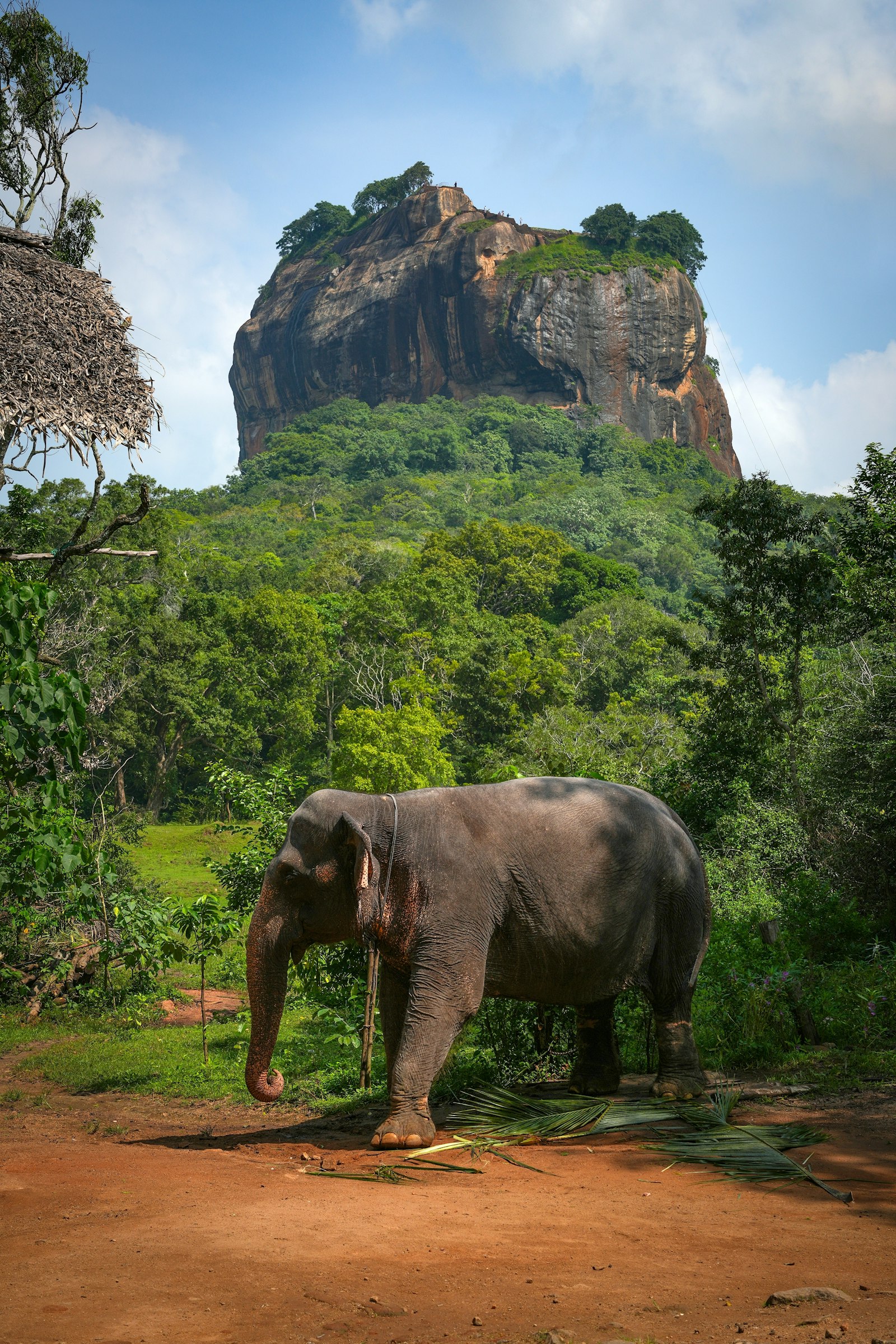
Sigiriya Rock Fortress
An architectural marvel rising 200 metres from the jungle floor. This UNESCO World Heritage site served as a royal citadel in the 5th century. Visitors can climb past the famous "Lion's Paw" entrance, through the mirror wall, and past ancient frescoes to reach the summit, which houses the ruins of the upper palace and offers breathtaking 360-degree views of the surrounding forest.
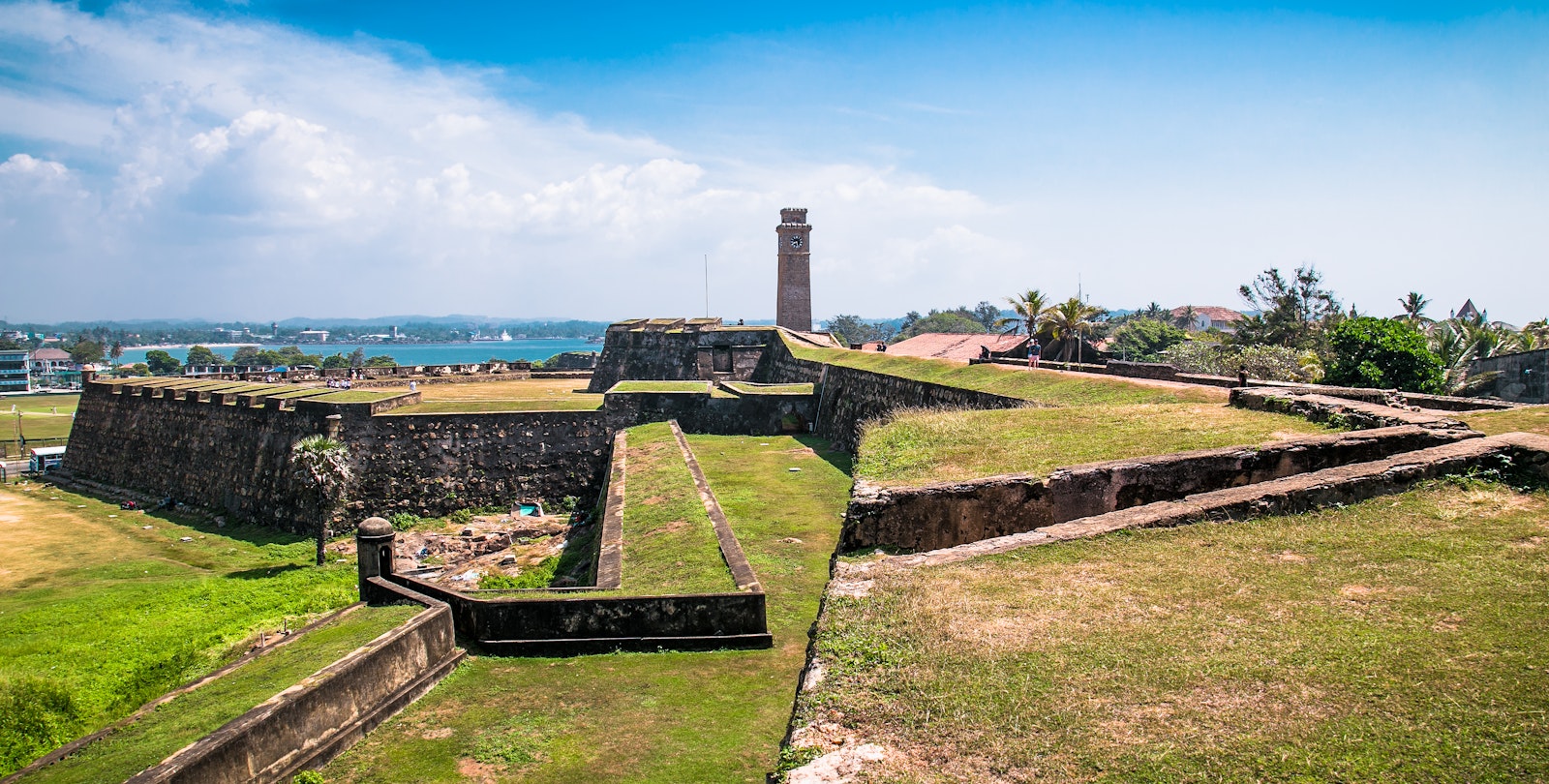
Galle Fort
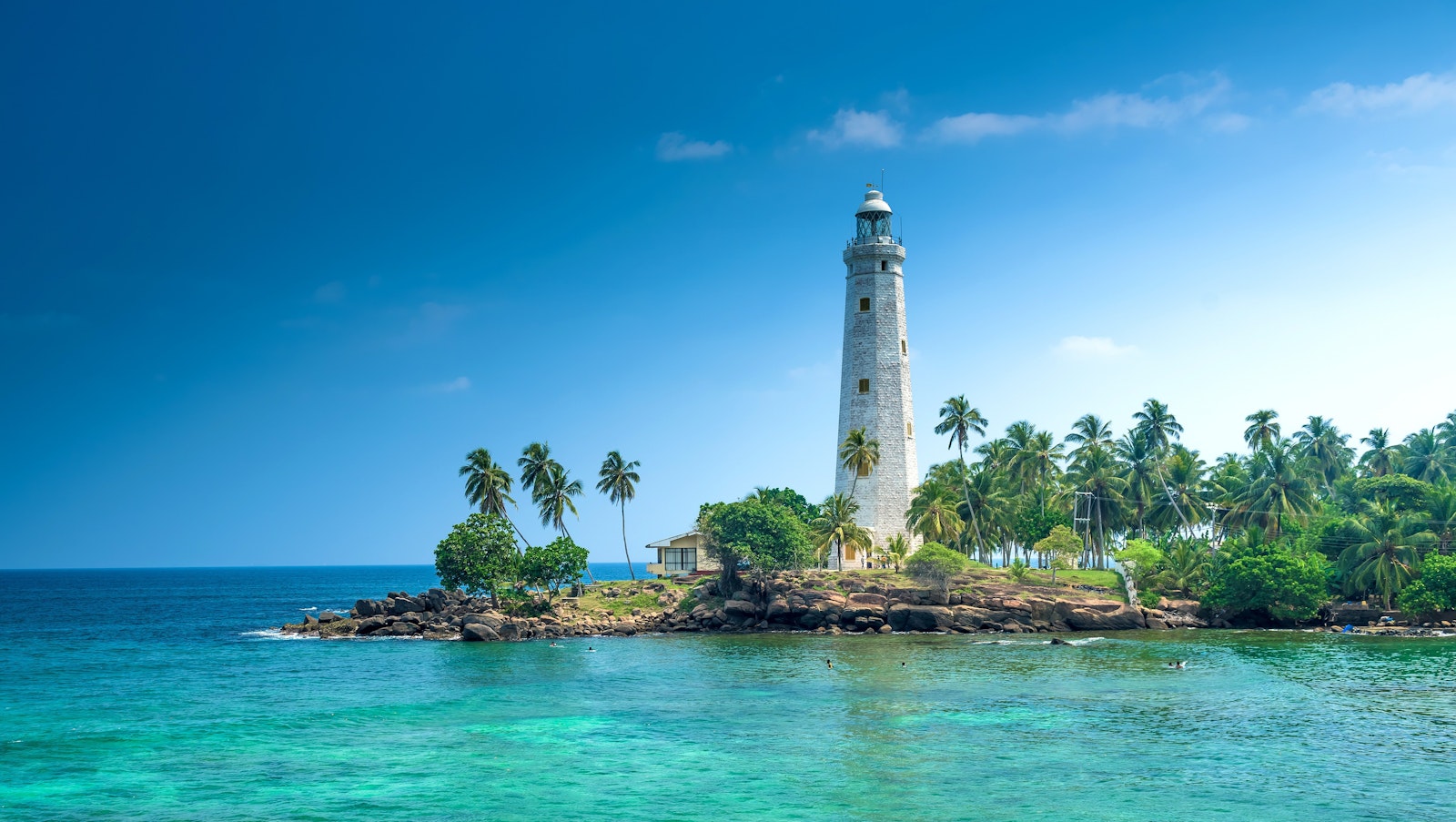
Offers a labyrinth of narrow streets filled with Dutch-colonial architecture, boutique shops, and spice markets. Walking the massive stone ramparts at sunset is a quintessential island experience, where the historic lighthouse stands guard over the Indian Ocean. The fort is also home to a vibrant local Muslim community and historic prayer facilities.
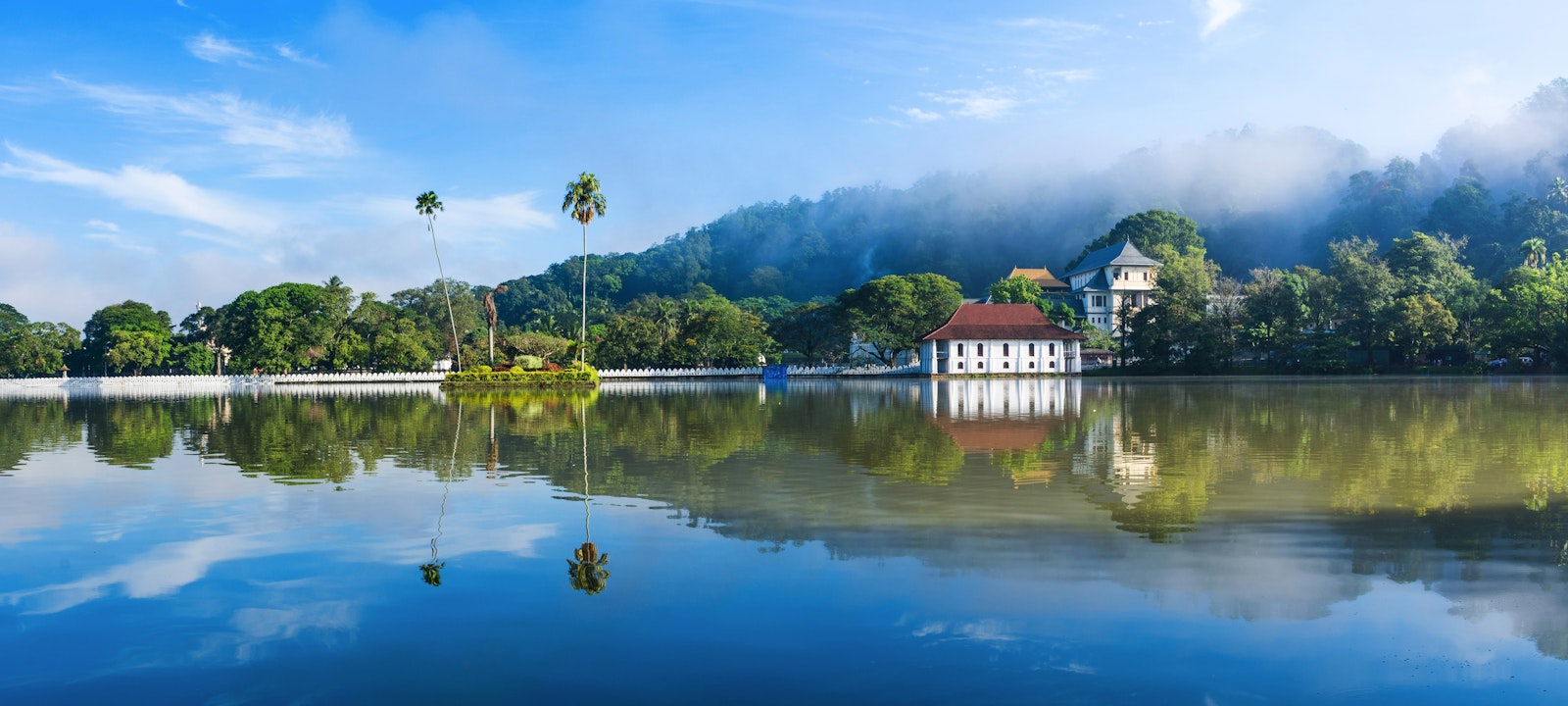
Temple of the Sacred Tooth Relic
Located in Kandy, it is the country's most important religious site, housing a relic of the tooth of the Buddha. The temple complex is a beautiful example of classical Kandyan architecture with its gold-topped roof and white stone walls. Attending an evening puja (Hindu ritual) ceremony here, with the sound of rhythmic drums and the scent of jasmine, is deeply moving.
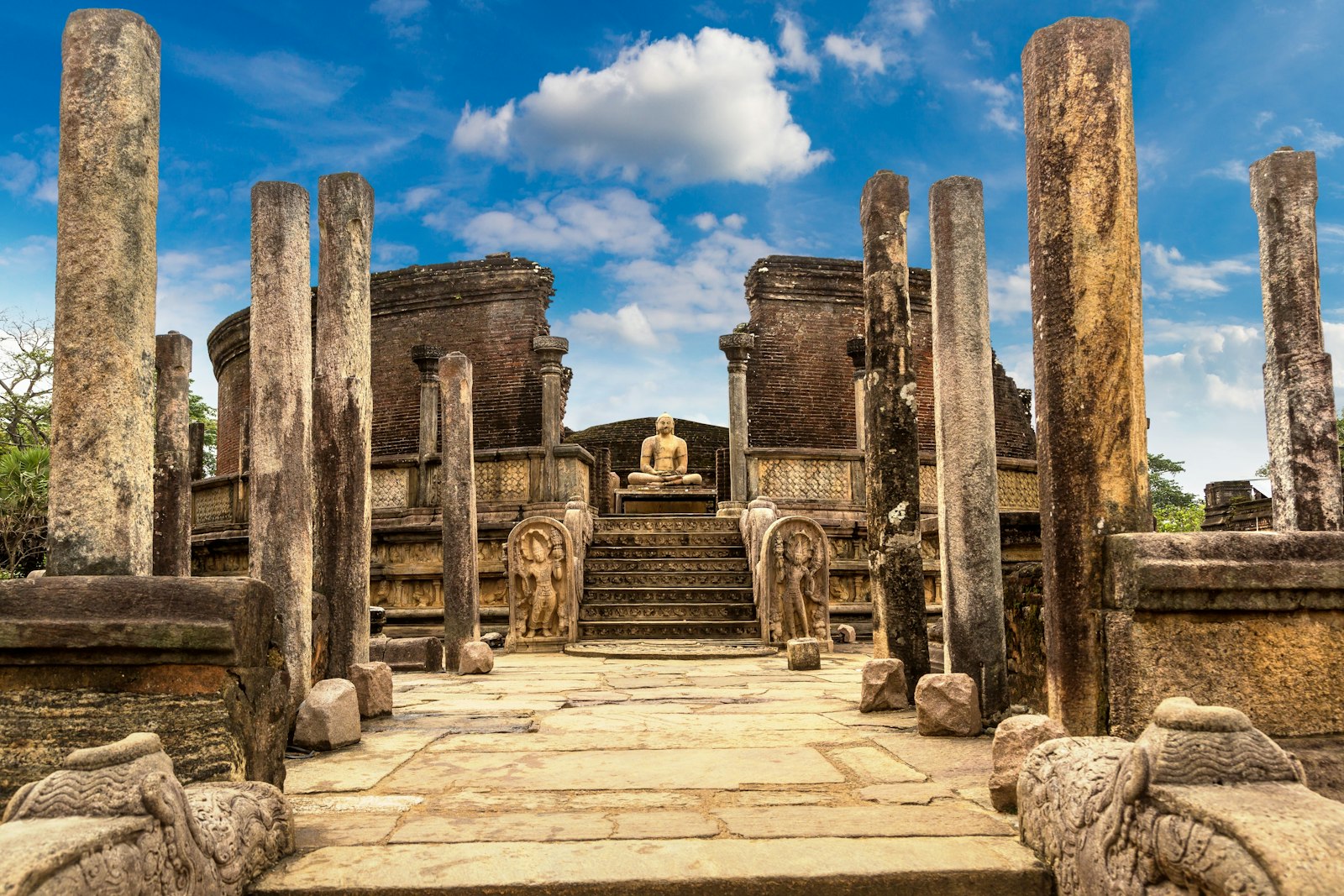
Ancient City of Polonnaruwa
Polonnaruwa was the island’s medieval capital and remains one of the best-planned archaeological relic sites in the country. It is home to the Gal Vihara, where four massive Buddha statues are carved into a single granite rock, showcasing the incredible artistry of the 12th century.
Top activities in Sri Lanka
Scenic Blue Train Journey
The Kandy to Ella Train Journey is often described as the most beautiful rail journey in the world.
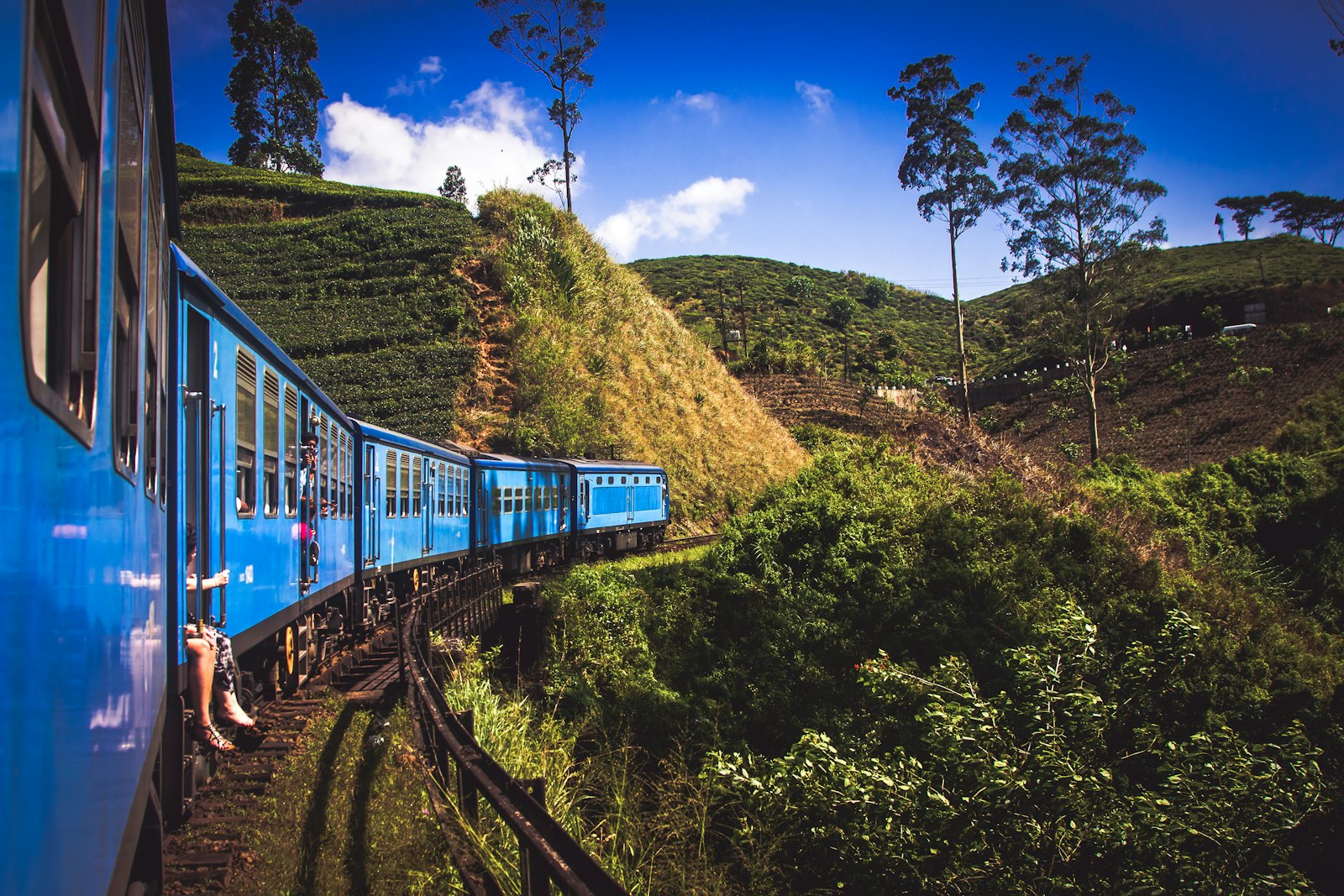
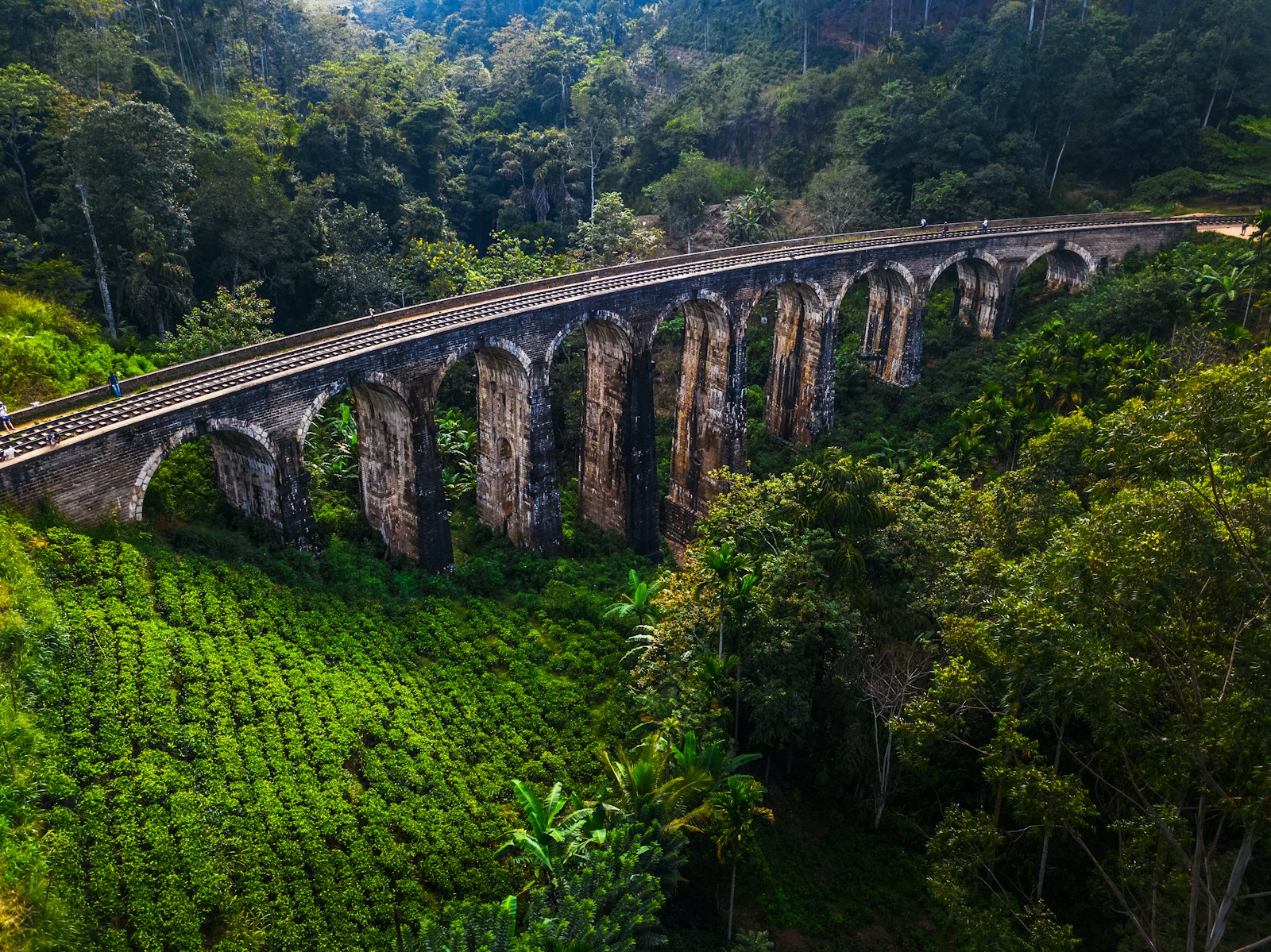
As the iconic blue train winds through the mist-covered mountains, you are treated to views of rolling tea plantations, cascading waterfalls, and the famous Nine Arch Bridge. It is an immersive way to see the "Hill Country" and connect with the local pace of life.
Ethical Wildlife Safari
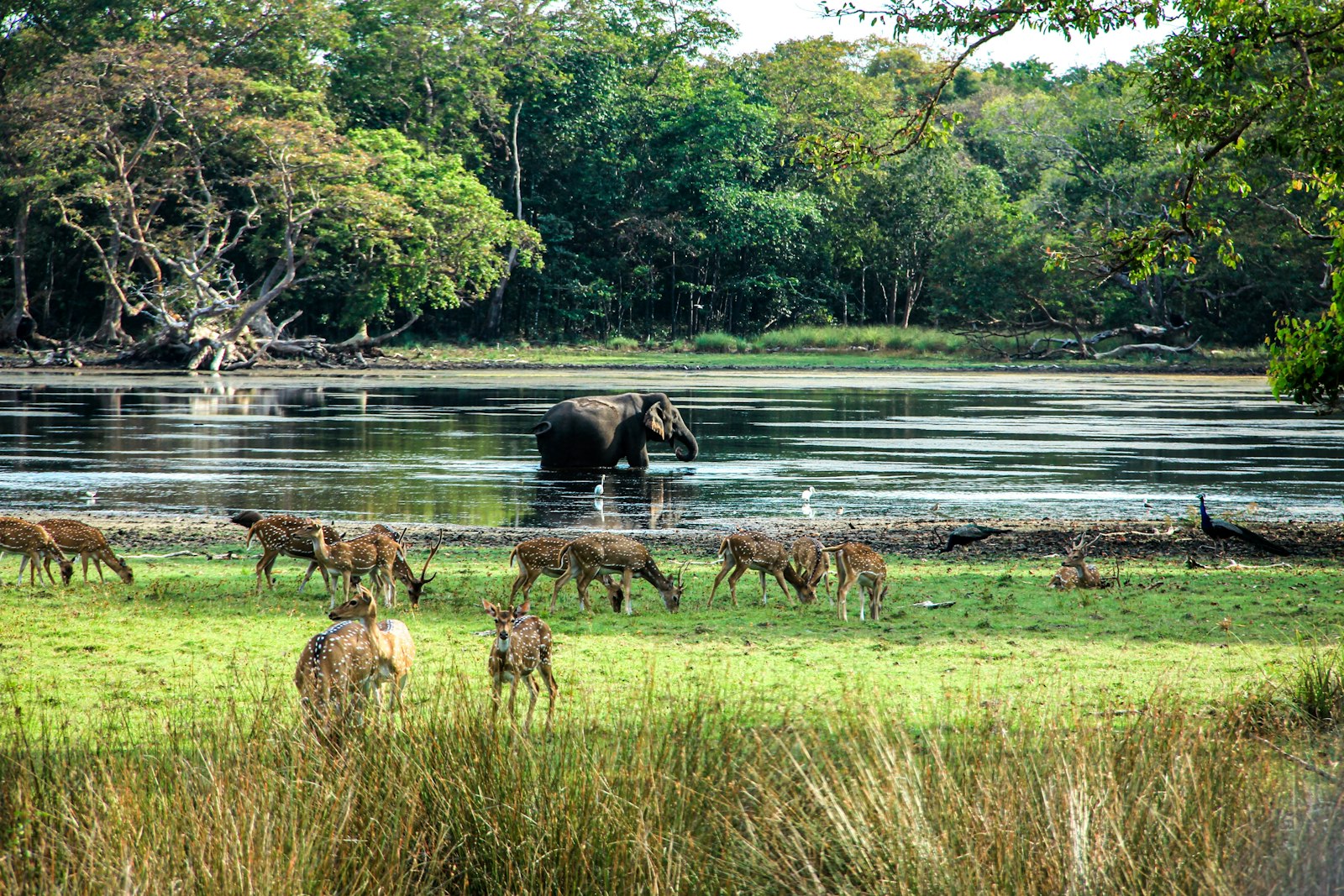
Offers a front-row seat to the wonders of the animal kingdom. At Minneriya National Park, you can witness "The Gathering," where hundreds of wild elephants congregate. Alternatively, visit Udawalawe National Park, home to the Born Free Foundation elephant sanctuary, where you can responsibly observe rehabilitated elephants and learn about their conservation. For those hoping to spot leopards, Yala National Park is the most famous destination, though Wilpattu National Park offers a more tranquil, dense jungle experience that is open year-round.
Whale Watching in Mirissa or Kalpitiya
A bucket-list experience for nature lovers. The waters off the southern and western coasts are prime locations for spotting Blue Whales, Sperm Whales, and pods of playful dolphins. Many operators follow strict conservation guidelines to ensure the marine life is protected while providing visitors with an unforgettable encounter.
Pristine East Coast Beaches
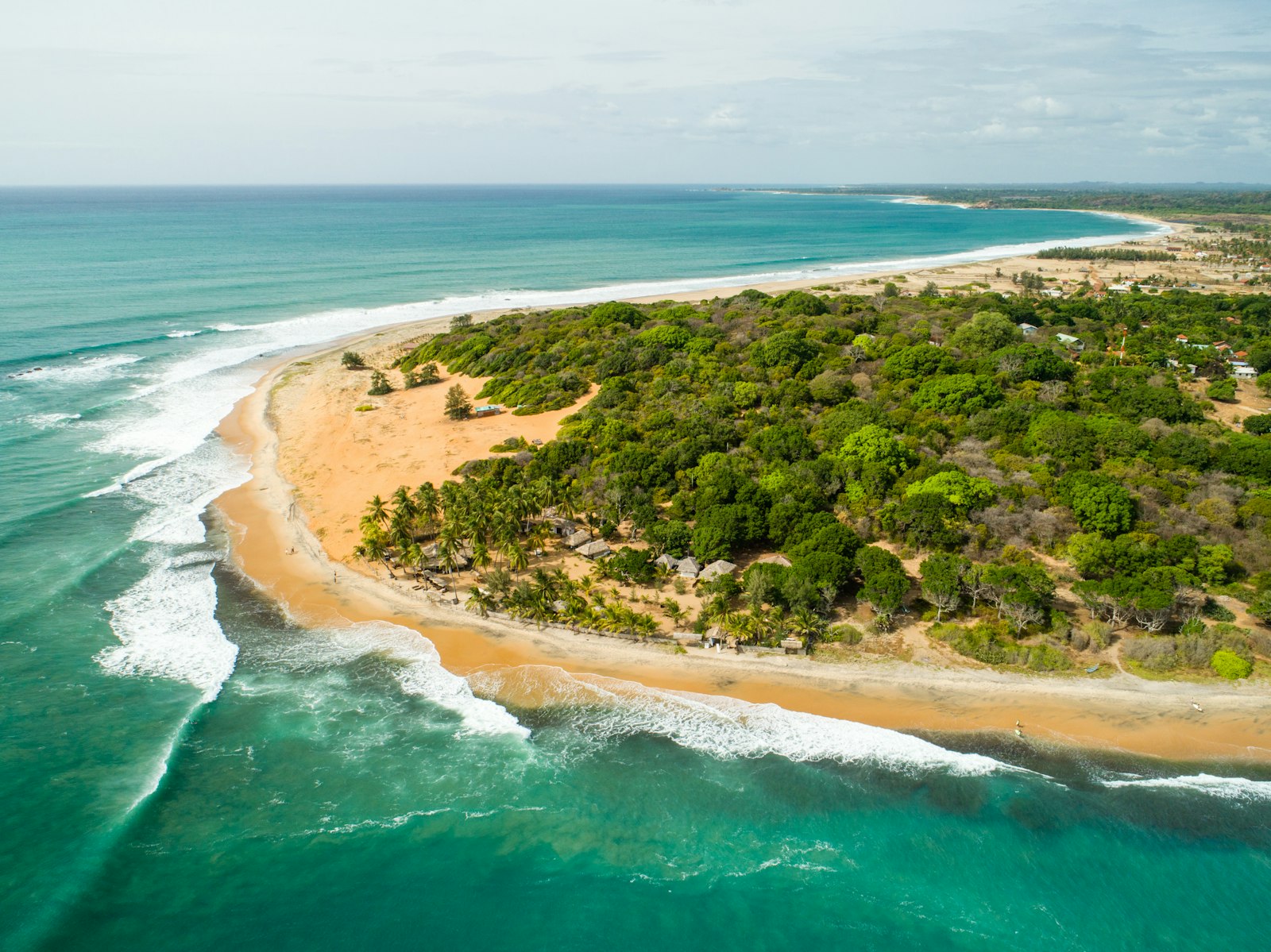
If you are visiting between May and September, the East Coast offers some of the island's best coastal experiences. Nilaveli is famous for its white sands and boat trips to Pigeon Island for snorkelling. Arugam Bay is a world-class surfing destination with a laid-back vibe and a significant local Muslim population, making halal food and mosques easily accessible.
Hiking the Pekoe Trail
A newer addition to Sri Lanka’s tourism map, offering 300km of walking paths through the central highlands. It allows travellers to explore the tea country on foot, passing through remote villages and lush forests, offering a peaceful alternative to the more crowded tourist hubs.
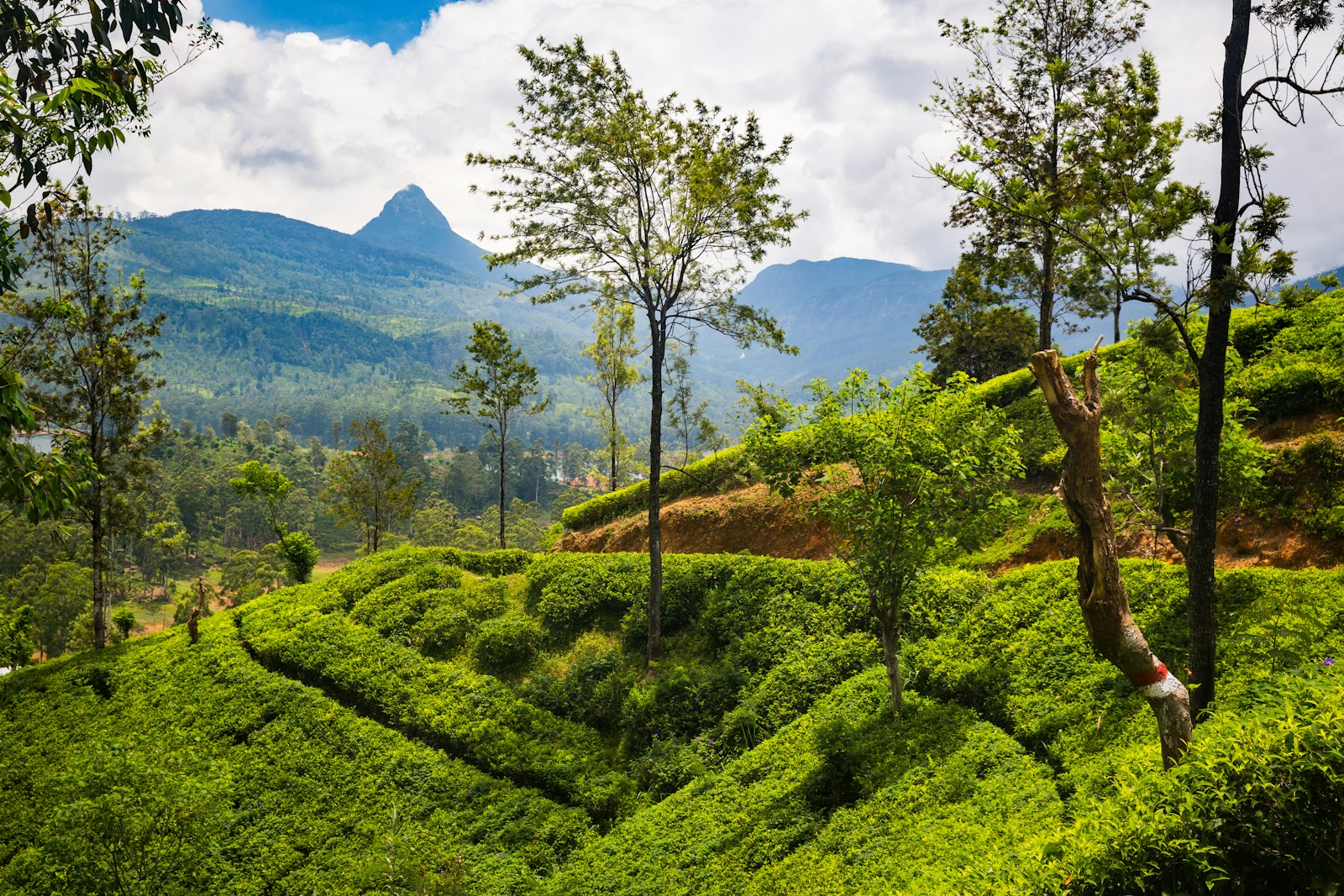
Exploring the Tea Estates of Nuwara Eliya
The Tea Estates of Nuwara Eliya are essential for understanding the island's heritage. You can tour a working factory like Mackwoods or Uva Halpewatte to see how Ceylon Tea is processed. Enjoying a fresh brew overlooking the manicured green hills of "Little England" provides a perfect moment of tranquility.
Shopping and Souvenirs
While traditional markets offer spices and crafts, Colombo is also a hub for modern shopping. Visit One Galle Face or Colombo City Centre, which offer international brands, air-conditioned comfort, and extensive food courts with halal certification. As Sri Lanka is a major garment manufacturer, you can often find high-quality clothing at excellent prices. Most major malls also provide dedicated prayer rooms for shoppers.
Mosques in Sri Lanka
With Islam practiced by nearly 10% of the population, prayer facilities are widely available and integrated into daily life.
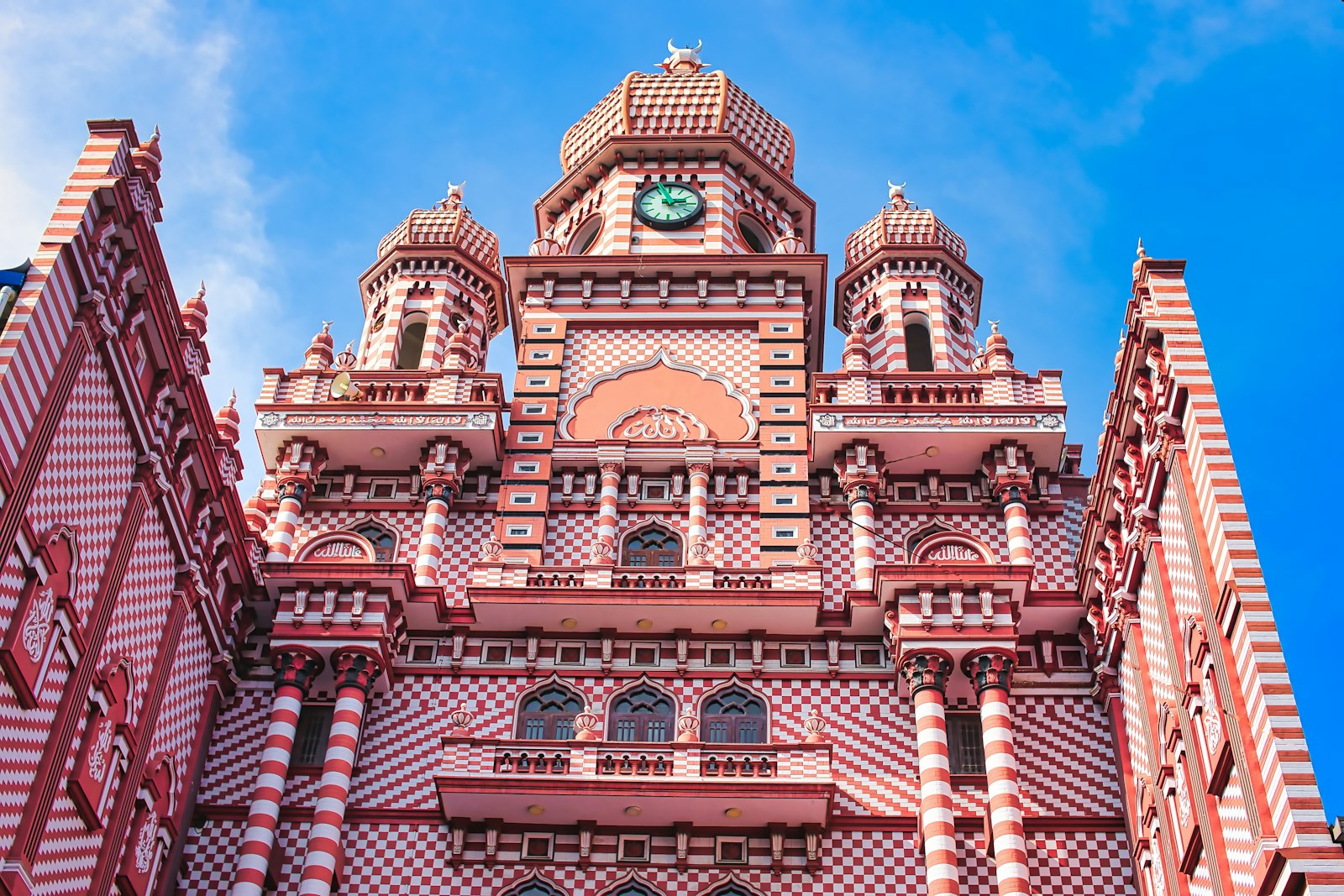
Jami Ul-Alfar Mosque (Red Mosque)
Popularly known as the Red Mosque, this architectural icon in Colombo’s Pettah district is world-famous for its striking red-and-white candy-striped brickwork and intricate domes. Built in 1909, its distinctive pomegranate-shaped domes once served as a landmark for sailors, and today it remains a vital spiritual hub for the city’s Muslim community. Remarkably welcoming to visitors, the mosque can accommodate up to 10,000 worshippers and is a must-visit for anyone exploring Sri Lanka’s capital.
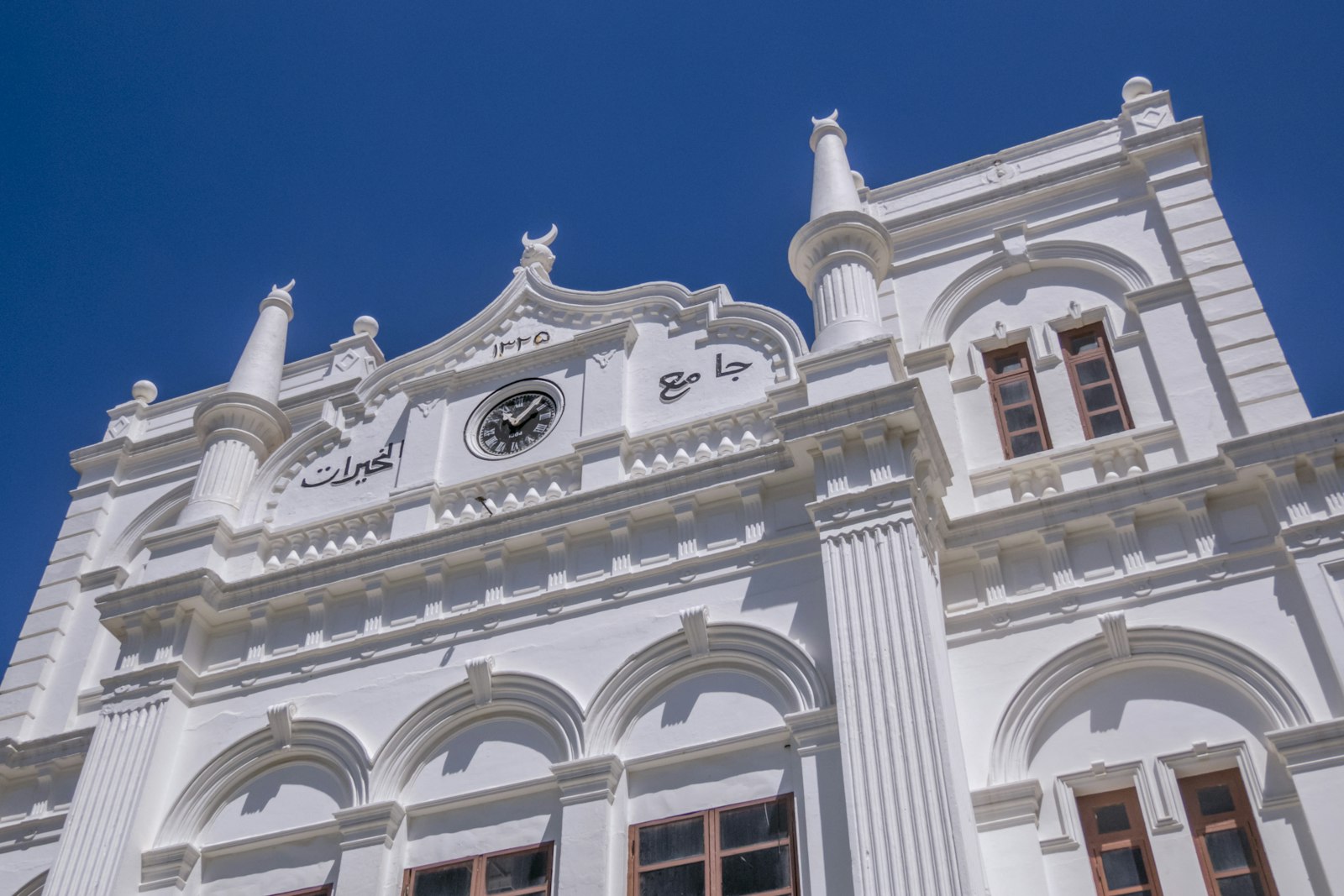
Meeran Jumma Mosque
Located inside the historic Galle Fort mentioned earlier, this stunning whitewashed building is over a hundred years old. Its unique facade blends British Victorian and Baroque styles with Islamic detailing, resembling a cathedral from the outside but housing a serene atrium and artistic glasswork within.
Colombo Grand Mosque
Situated in Hulftsdorp, this is the oldest mosque in the capital. It serves as a vital historical link to the early Arab traders and remains a focal point for religious life, famously using a historic cannon to signal the end of the fast during Ramadan.
Kechchimalai Mosque, Beruwala
Built on a rocky peninsula overlooking the ocean, this is considered one of the oldest mosques in Sri Lanka. It marks the spot where the first Yemeni Muslims landed on the island in the 11th century. Its Dutch-style gables and white minarets offer one of the most serene views on the coast.
Bandarawela Jumma Mosque
Located in the misty hills of the Uva Province, this mosque is a vital spiritual stop for travellers undertaking the famous Kandy to Ella train journey. It serves a historic local trading community and offers a convenient and welcoming place for prayer amidst the cool climate and rolling tea estates of the central highlands.
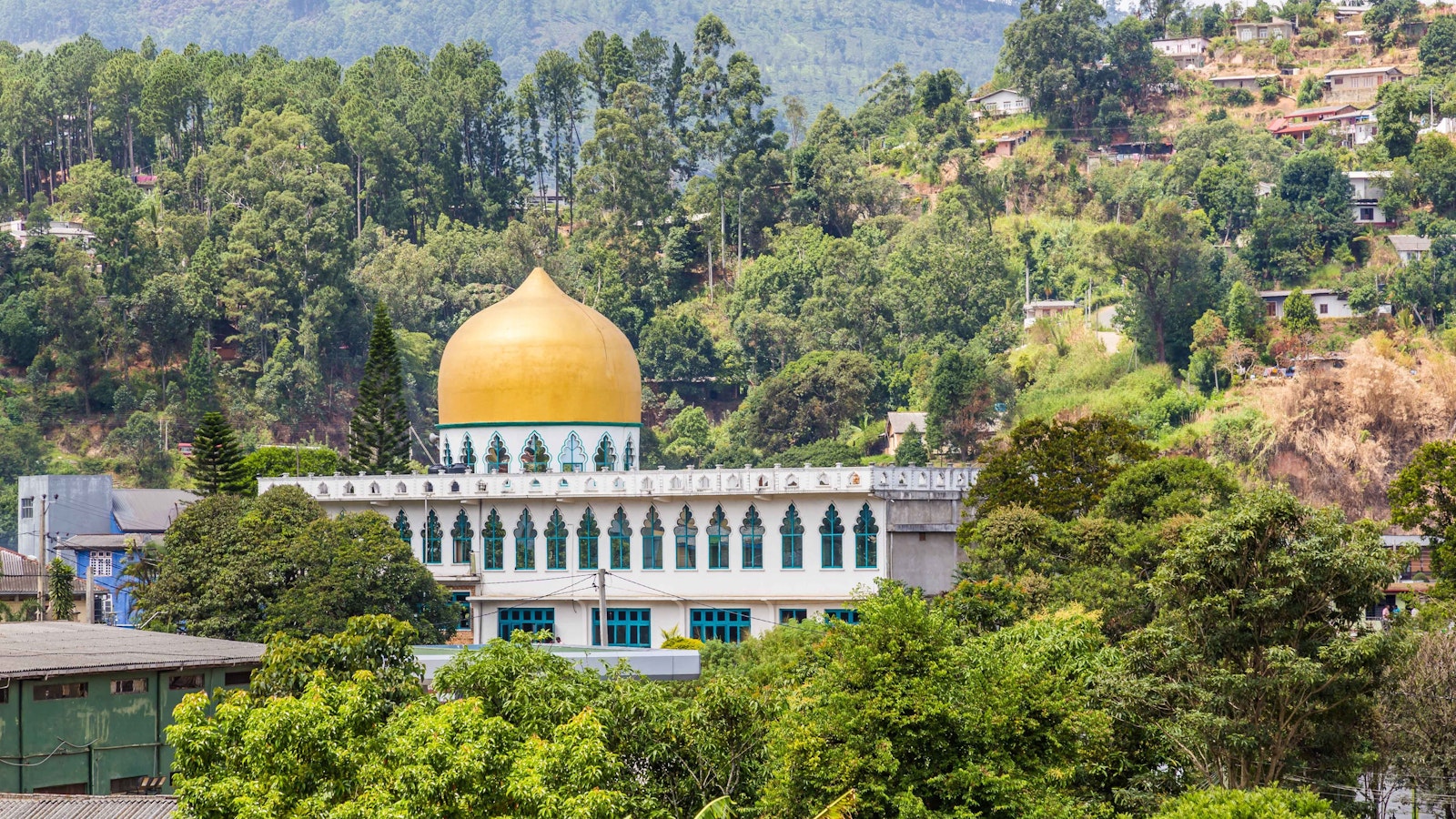
Dharga Town Mosques
The bustling Muslim town of Dharga is home to numerous mosques and a vibrant Islamic culture, serving as a spiritual heart for the community on the west coast.
Halal food and restaurants in Sri Lanka
Finding halal food in Sri Lanka is exceptionally easy due to the large Muslim community and the widespread availability of halal ingredients.
Kottu Roti - The ultimate street food, made from shredded paratha bread, vegetables, and halal meat.
Rice and Curry - The staple meal of Sri Lanka. It typically consists of a large serving of rice surrounded by several contrasting dishes, ranging from the mild and creamy Parippu (dhal curry) to the spicy Fish Ambul Thiyal (sour fish curry) or a rich Beef or Chicken Curry, which are widely available in halal variations.
Watalappam - A traditional Muslim dessert - a rich coconut custard spiced with cardamom and nutmeg.
String Hoppers (Idiyappam) - Steamed rice noodles typically served for breakfast with a spicy coconut gravy (sothi).
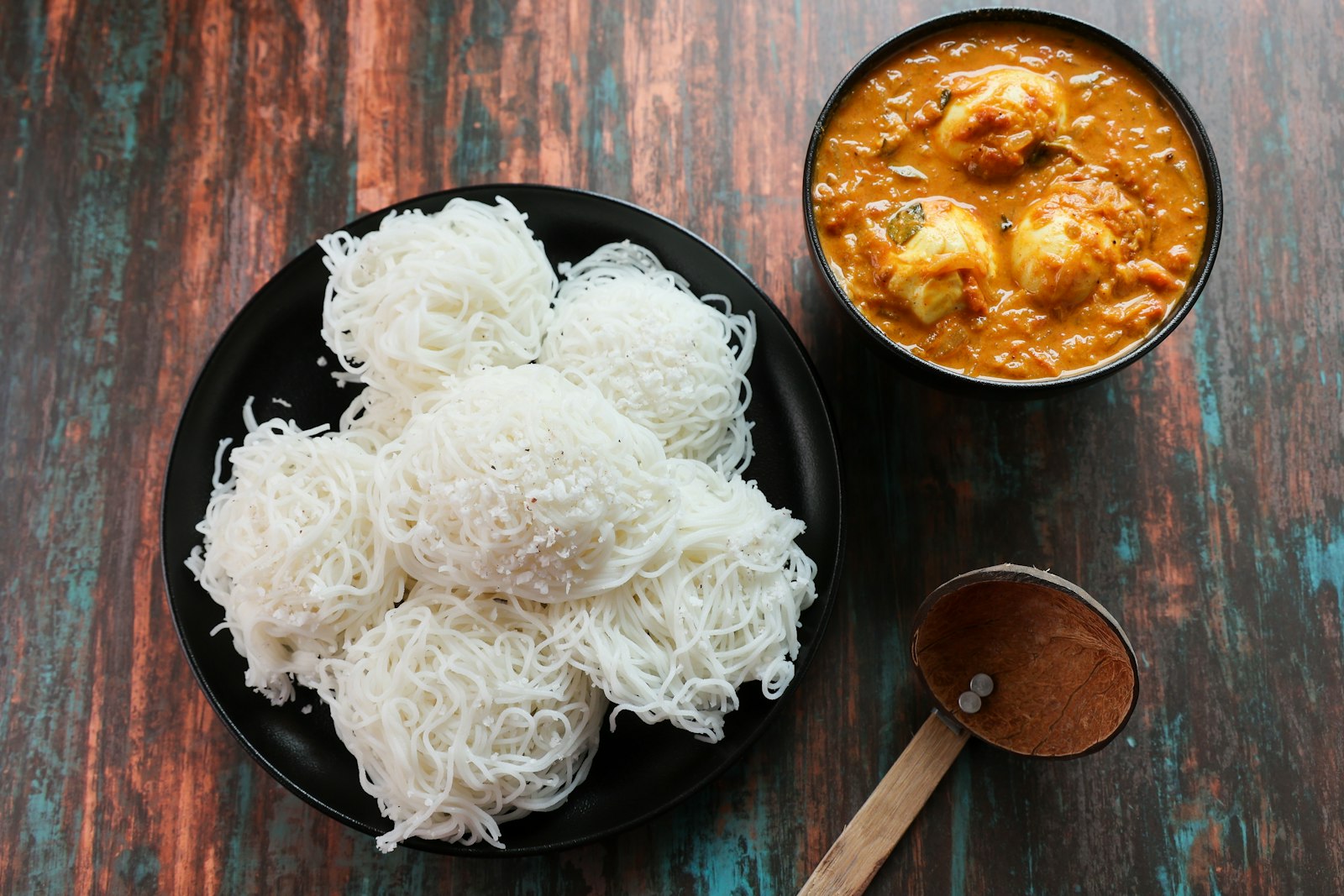
Hoppers (Appa) - Iconic bowl-shaped pancakes made from fermented rice flour and coconut milk. They are often served with a soft egg baked into the centre (Egg Hoppers) and are a staple for breakfast or dinner.
Pol Sambol - The quintessential Sri Lankan condiment. It is a fresh, spicy mixture of grated coconut, dried red chillies, red onions, and lime juice, which adds a burst of flavour to rice, curries, and hoppers.
For authentic local flavours, visit the Dharga Town district or the Pettah market in Colombo. Popular chains like KFC, McDonald's, and Pizza Hut in Sri Lanka are also halal-certified by the Sri Lanka Halal Council.
How to get to Sri Lanka
Sri Lanka is well connected to Europe, the Middle East and Asia via Bandaranaike International Airport (Colombo). Direct flights operate from major hubs such as London, Paris, Frankfurt, Dubai, Doha and Istanbul. Flight times from Europe range between 10 and 12 hours, while journeys from the Gulf typically take around 4 to 5 hours.
Upon arrival, private transfers, domestic flights or chauffeur-guided services provide convenient access to beach resorts, the Cultural Triangle and the central highlands. Many travellers choose to combine coastal relaxation with inland heritage sites in a single itinerary, thanks to the island’s compact size.
Travel Essentials
Visa and entry Requirements - Planning your arrival is straightforward. Most visitors require an Electronic Travel Authorization (ETA), which can be applied for online before you travel. Ensure your passport is valid for at least six months from your date of entry to avoid any issues at immigration.
Connectivity - Wi-Fi is standard in hotels, but having data on the go is essential. You can easily purchase a tourist SIM card (Dialog or Mobitel) at the arrivals hall in Bandaranaike International Airport. Data packages are very affordable and offer good coverage across the island.
Currency & Cash - The currency is the Sri Lankan Rupee (LKR). While hotels and large malls accept cards, cash is essential for street food, small shops, and independent restaurants. Carry small notes for tipping and small purchases.
Temple Etiquette - Sri Lanka is deeply religious. When visiting Buddhist sites like the Temple of the Tooth or Dambulla Caves, both men and women must cover their shoulders and knees. You will also be required to remove your shoes and hats before entering the sacred grounds.
How to get around in Sri Lanka
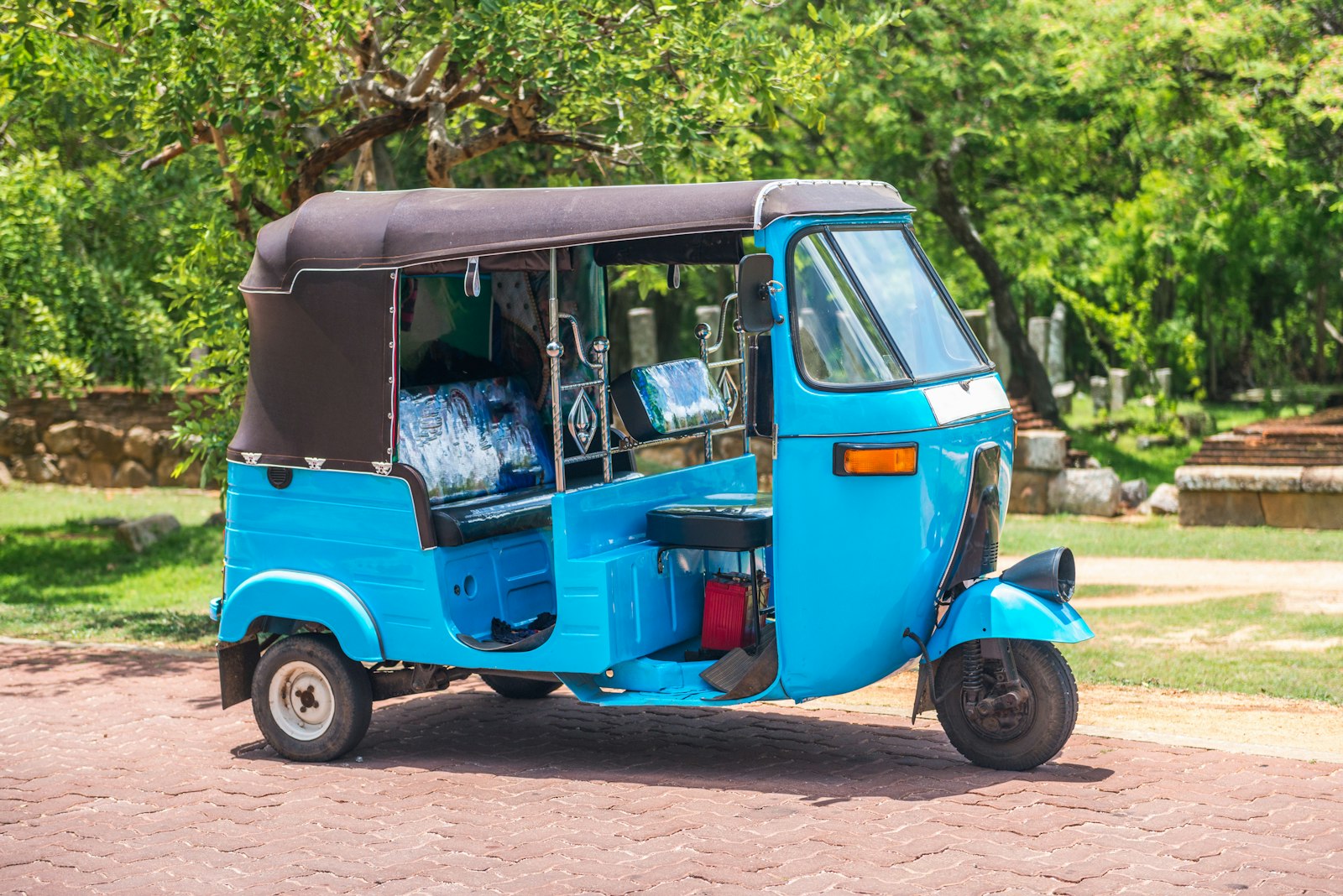
The most convenient way to explore is by hiring a private driver-guide. For shorter city journeys, the colourful Tuk-Tuk is essential. Rather than hailing one on the street, it is usually safer and more cost-effective to use ride-hailing apps such as PickMe - Sri Lanka’s local equivalent of Uber (which also operates in Colombo). These apps provide fixed prices and remove the need to negotiate. For longer distances between major hubs, the Intercity Express trains are highly recommended for their comfort and scenic views.
Best time to visit Sri Lanka
For the West and South coasts and the Hill Country, visit between December and April. For the East Coast (Nilaveli and Arugam Bay), the best weather is from May to September.
Where to stay in Sri Lanka
Halalbooking offers a wide and diverse range of properties, from budget-friendly stays to luxury international hotels, including private pool villas in the south and tranquil jungle retreats in the Cultural Triangle. Our collection is carefully curated to meet the needs of halal-conscious travellers. Use our unique filters to find accommodation that suits your requirements - such as properties serving halal food, offering alcohol-free environments, or allowing modest swimwear in their facilities.