Morocco: A rich and rewarding halal-friendly travel destination
From the blue-washed towns of the north to the profound stillness of the Sahara, Morocco unfolds in striking contrasts. Ancient medinas give way to sweeping mountain ranges, Atlantic cities open onto wide ocean horizons, and desert landscapes stretch far beyond the last palm groves and kasbahs.
The country’s identity has been shaped by a long and layered history, drawing on Amazigh (Berber), Arab and Andalusian influences. Over the centuries, dynasties such as the Almoravids, Almohads and Saadians left a lasting mark through architecture, scholarship and the growth of cities that remain central to Morocco today.
That heritage is still vividly present in places such as Marrakech, Fes and Meknes, where medinas, mosques and palaces are woven into daily life rather than set apart from it. From the Andalusian detail seen in carved plaster, tilework and courtyards to the enduring traditions of Amazigh communities in the Atlas Mountains, Morocco’s cultural layering continues to shape its atmosphere and character.
Travelling through Morocco is not only visually captivating but deeply immersive. Its rhythm is guided by centuries of history and a living Islamic heritage that still defines everyday life. For Muslim travellers, that creates a rare sense of ease: halal food is the norm, mosques are part of every neighbourhood, and modesty is naturally understood. Whether exploring imperial cities, retreating into nature or journeying into the desert, Morocco offers a travel experience that feels both enriching and reassuringly familiar.
Top attractions in Morocco
Marrakech and its vibrant medina
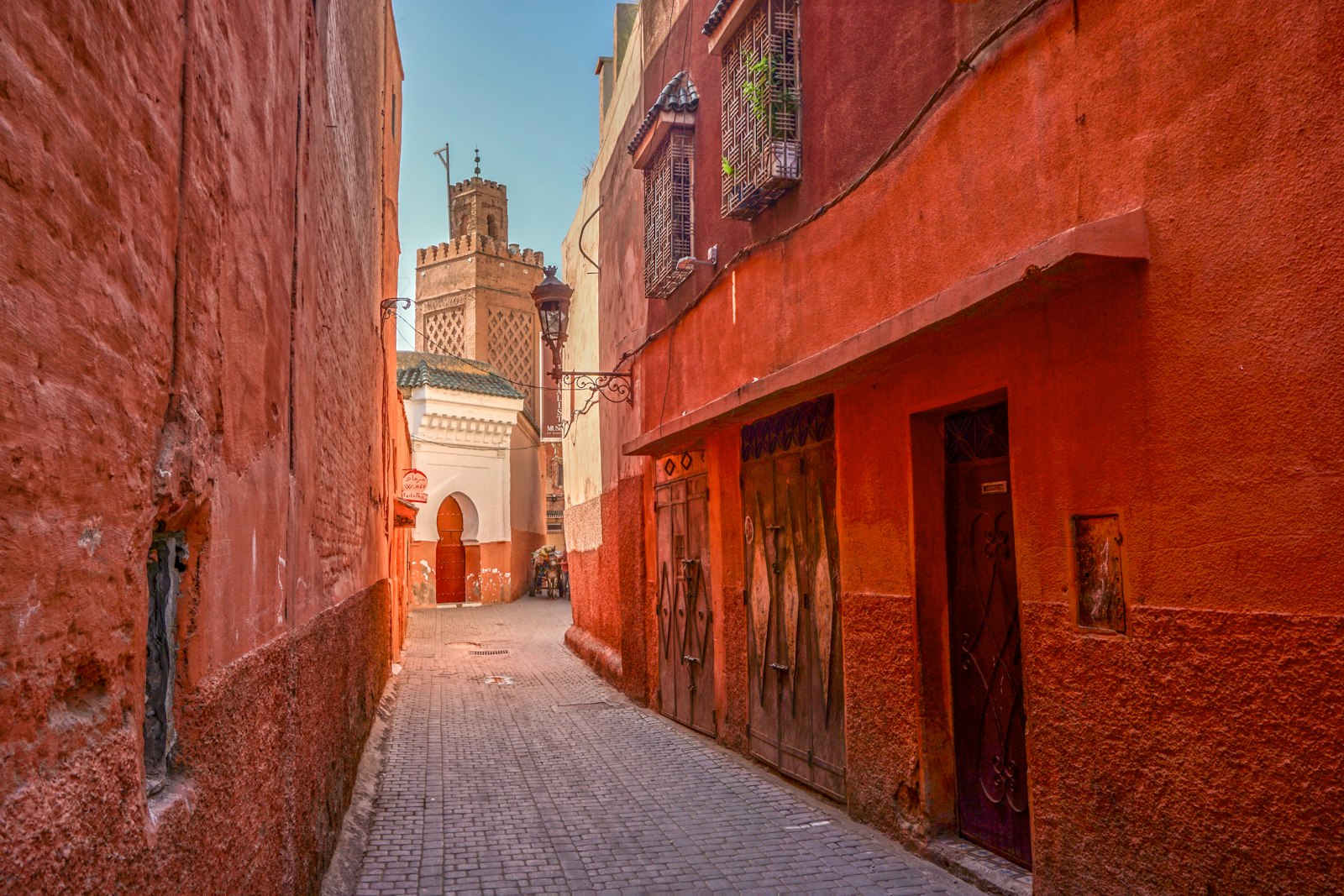
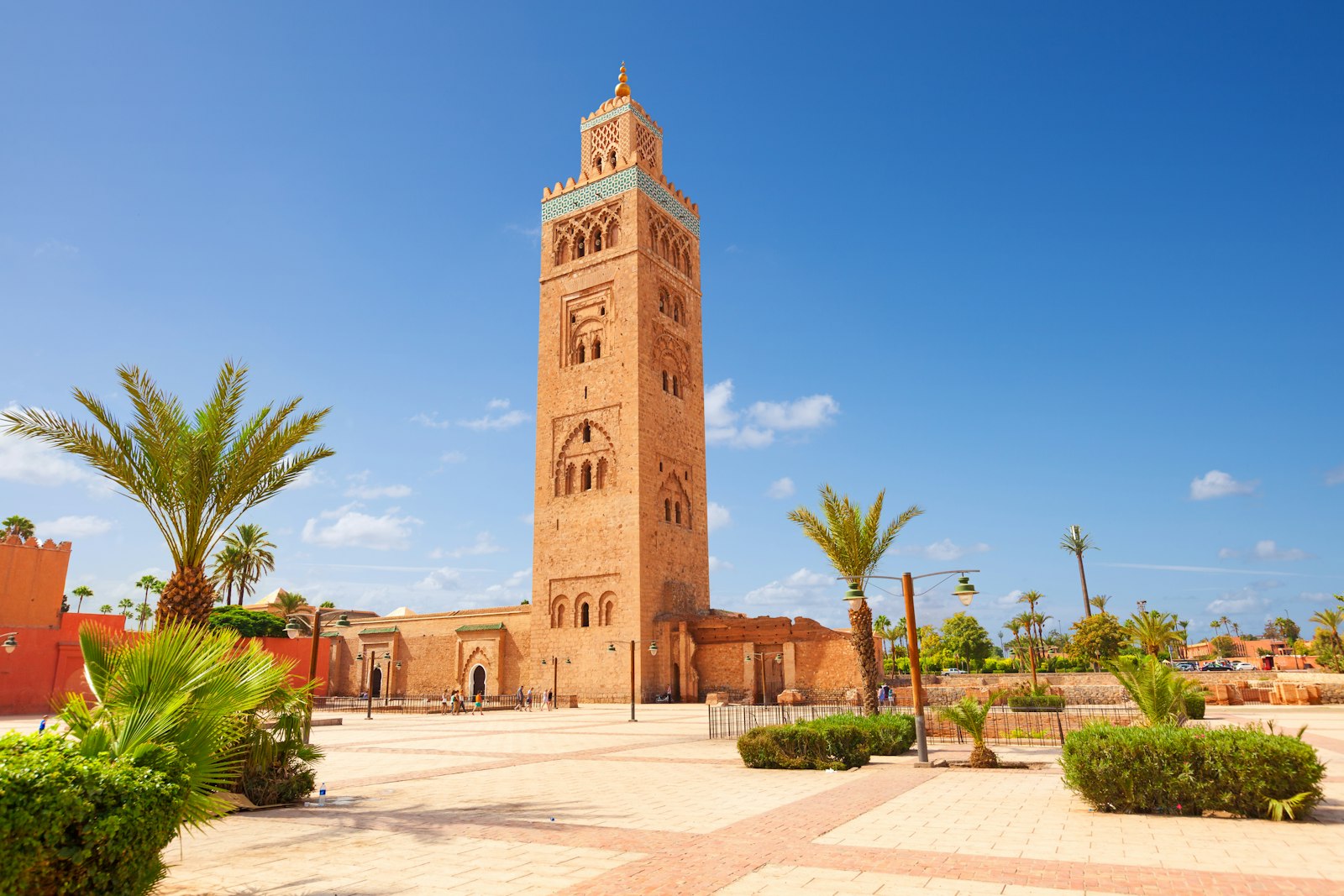
As one of Morocco’s imperial cities, Marrakech captures the country’s spirit with particular intensity. Inside the medina, life unfolds through a maze of alleyways lined with souks, workshops and hidden courtyards. Jemaa el-Fnaa is the city’s beating heart, shifting from a daytime marketplace to a lively evening gathering of food stalls and performers. Landmarks such as the Koutoubia Mosque, the Bahia Palace - built in the late 19th century by the Grand Vizier Si Musa and renowned for its painted cedar ceilings and ornate courtyards - and the Saadian Tombs, a royal necropolis dating to the 16th-century reign of Sultan Ahmad al-Mansur and hidden from the world for over two centuries before their rediscovery in 1917, reveal centuries of history, while traditional riads provide calm behind discreet walls.
For a more detailed look, see our dedicated article: Once upon a time in Marrakech
Fes and Meknes, imperial cities of heritage and scale
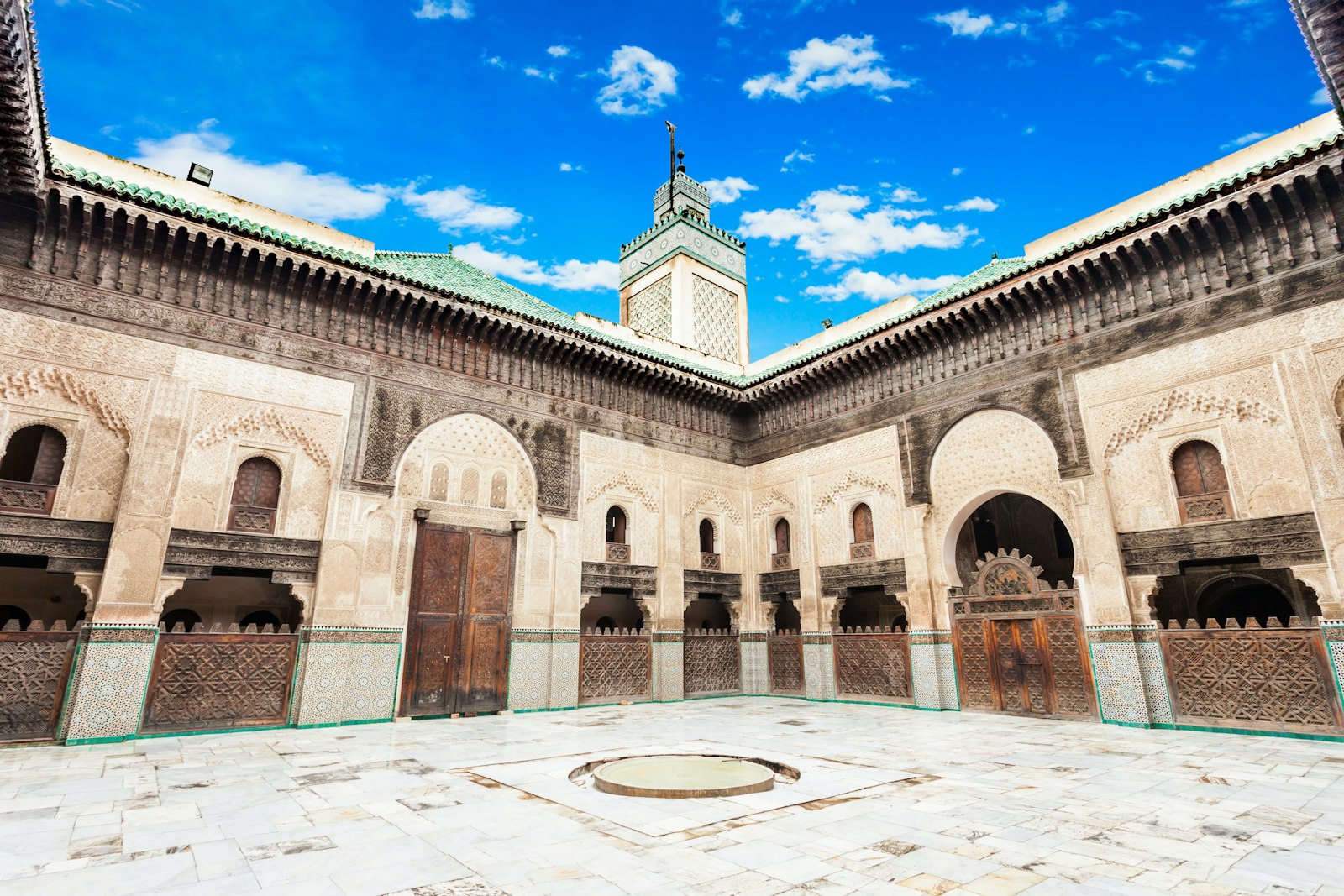
In Fes, Morocco’s oldest imperial city, the past feels ever-present. Fes el-Bali, one of the world’s largest car-free urban areas, forms a dense network of narrow lanes where donkeys still transport goods and traditional crafts continue much as they have for centuries. The Bou Inania Madrasa, built between 1350 and 1355 by the Marinid sultan Abu Inan Faris and widely considered a high point of Moroccan medieval architecture, reveals exceptional craftsmanship, the Chouara tanneries offer insight into historic leather-making, and the Al Quaraouiyine Mosque and University reflect the city’s enduring intellectual and spiritual importance.
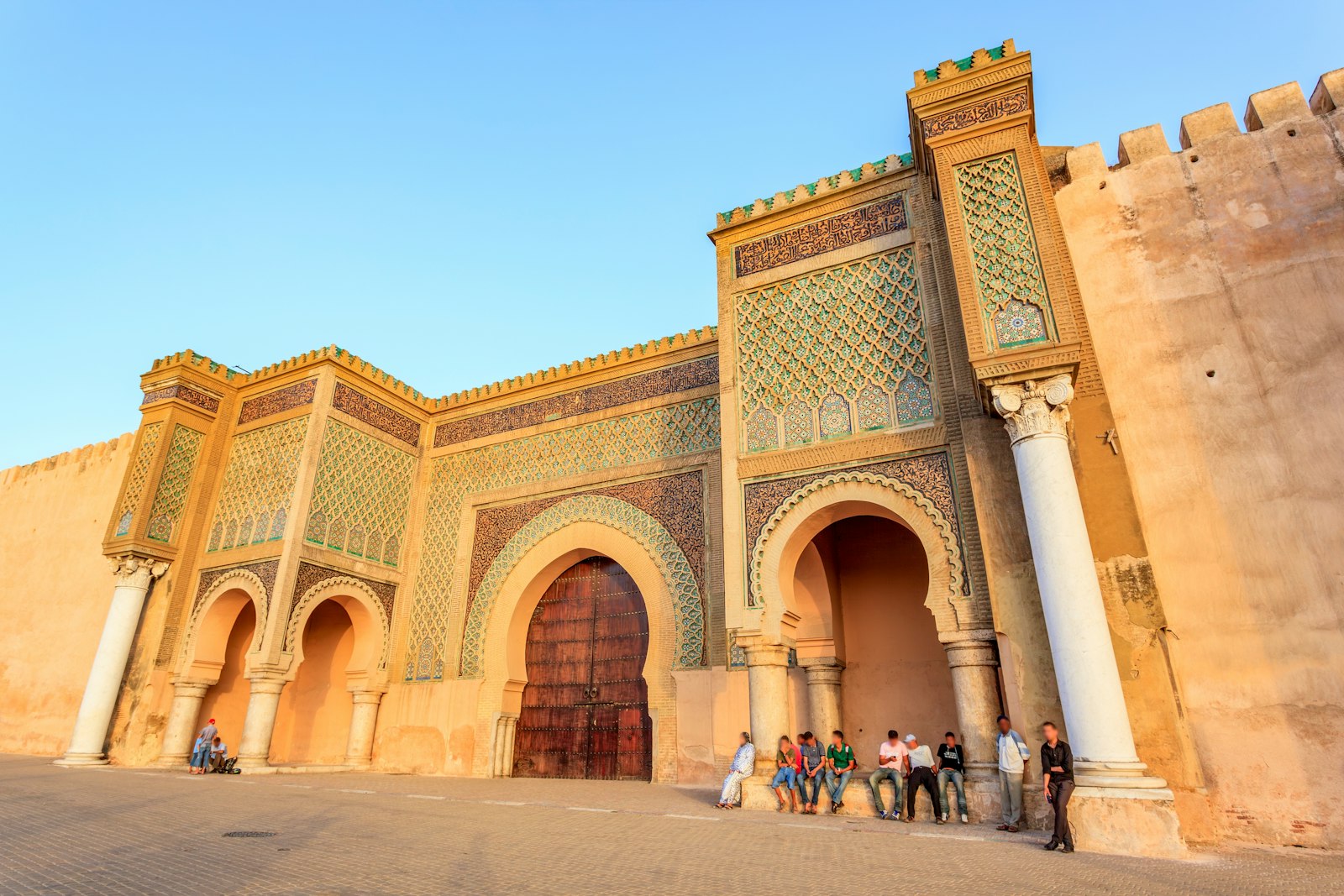
Within easy reach, Meknes, one of Morocco’s imperial cities, offers a more spacious and measured atmosphere. It is defined by monumental architecture, including the grand Bab Mansour, vast royal granaries and long stretches of fortified walls. Its medina is quieter than that of Fes, allowing for a more relaxed pace while still reflecting the power and ambition of the dynasties that shaped it.
A short distance away, the Roman ruins of Volubilis - founded in the 3rd century BC, a significant outpost of the Roman Empire and a UNESCO World Heritage site since 1997 - provide a striking contrast to Morocco’s Islamic heritage, with well-preserved mosaics and monumental remains set within a rural landscape.
Chefchaouen, the blue city
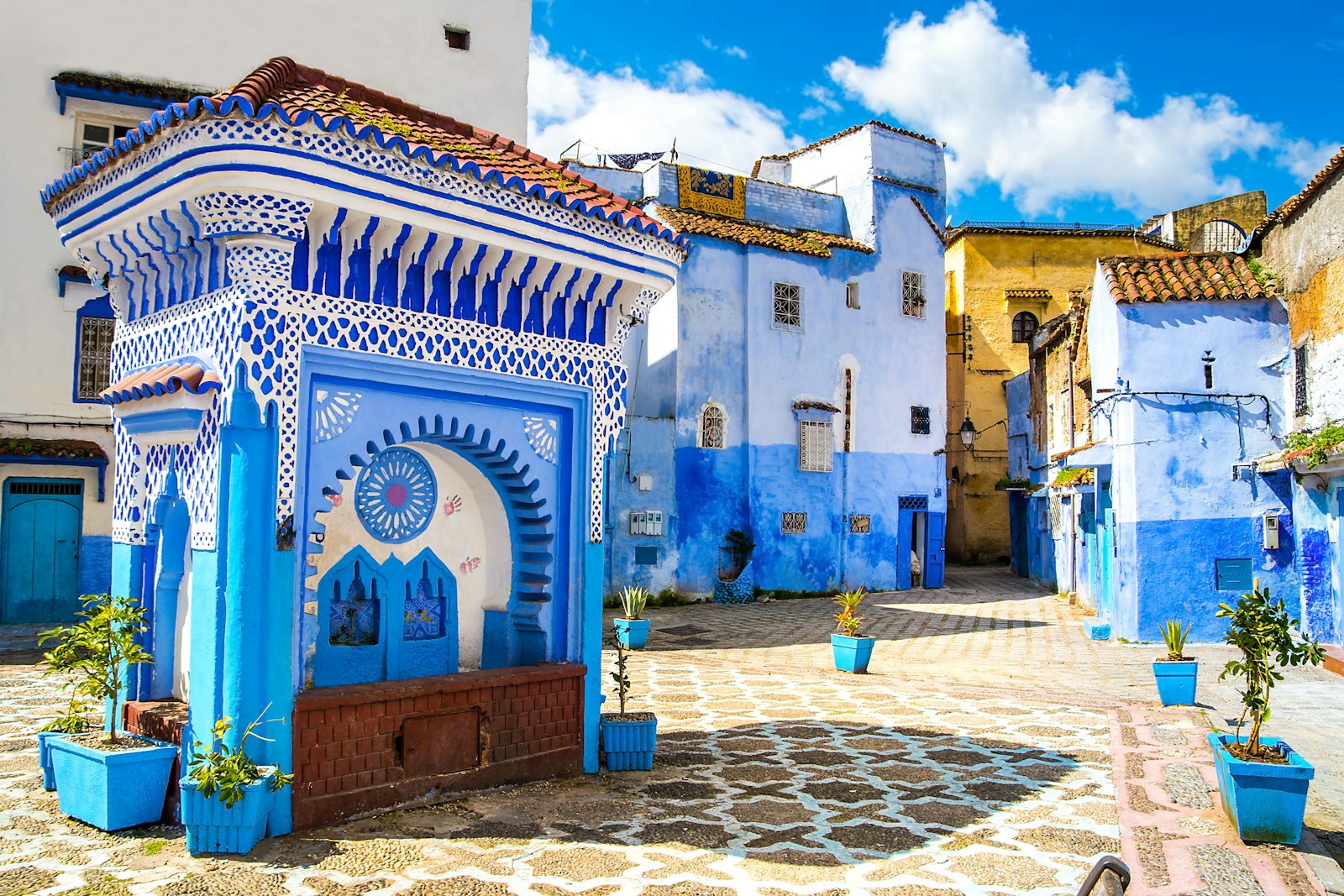
Set against the Rif Mountains, Chefchaouen is known for the soft blue tones that wash over its walls, streets and stairways. Its compact medina invites slow wandering through quiet alleys, small squares and artisan shops. Surrounded by mountain scenery, the town has a calm, contemplative atmosphere that sets it apart from Morocco’s busier urban centres.
Tangier and Morocco’s northern coast
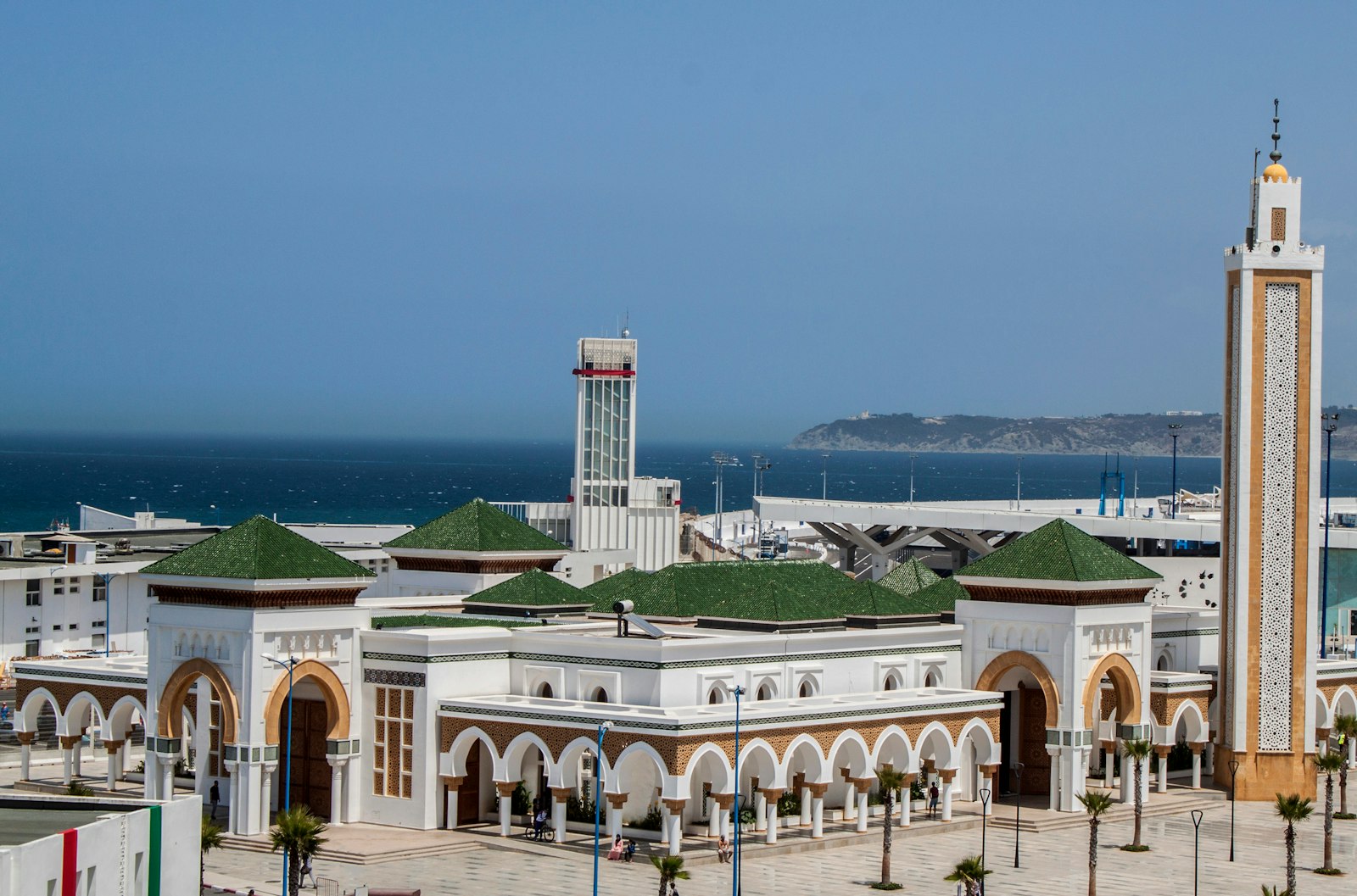
At Morocco’s northern edge, Tangier looks towards Europe while remaining deeply rooted in its own identity. The historic Kasbah overlooks the sea, while the Grand Socco and Petit Socco reflect the city’s layered cultural past. The Grand Mosque of Tangier, set within the medina, adds another layer to this history, standing on a site shaped by successive civilisations. Just beyond, Cap Spartel marks the meeting point of the Atlantic Ocean and the Mediterranean Sea, and the nearby Caves of Hercules add a dramatic natural dimension to the coastline.
For a more detailed look, see our dedicated article: Tangier – the international city with Spanish influences
Further along the northern coast, Tetouan, with its UNESCO-listed medina and strong Andalusian heritage, offers a more traditional and less visited alternative. Smaller coastal points along this stretch, including quiet fishing villages such as Ksar Sghir, reflect a slower, less explored side of the region.
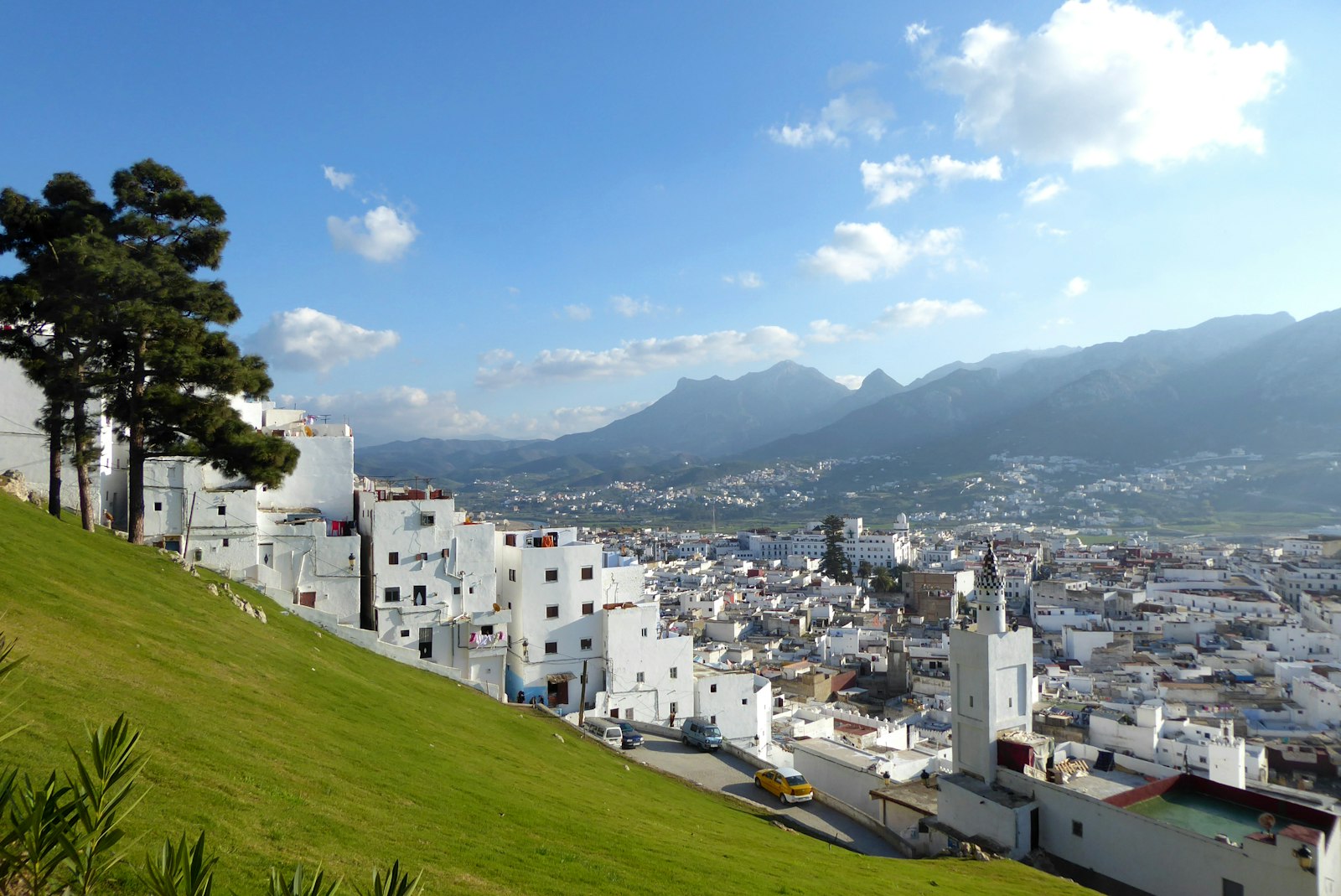
Rabat and Casablanca, two distinct faces of Morocco
As one of Morocco’s imperial cities, Rabat offers a refined, understated atmosphere. The Kasbah of the Udayas, with its white and blue lanes, gazes out over the Atlantic, while the Hassan Tower and Mausoleum of Mohammed V reflect the country’s historical and political legacy.
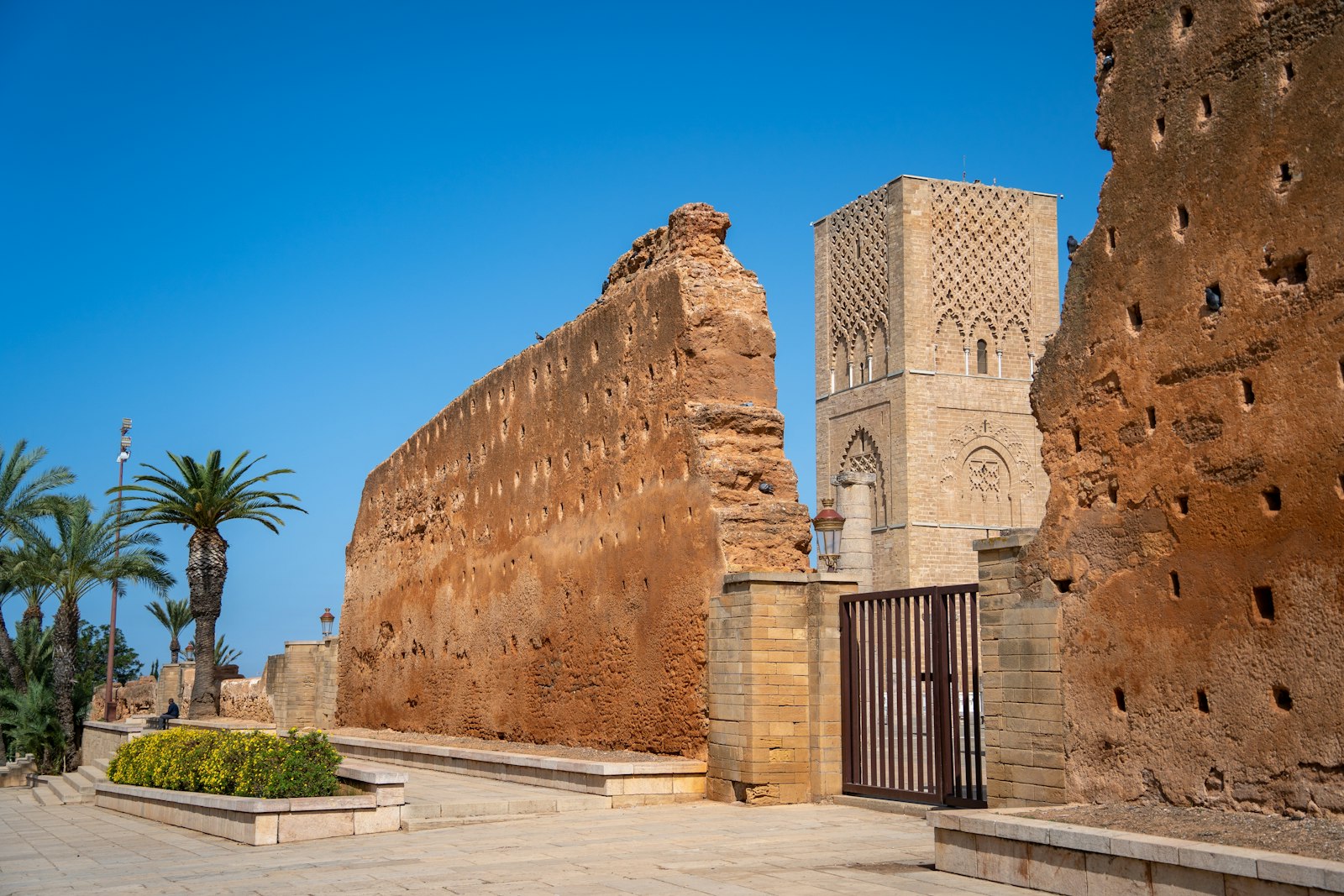
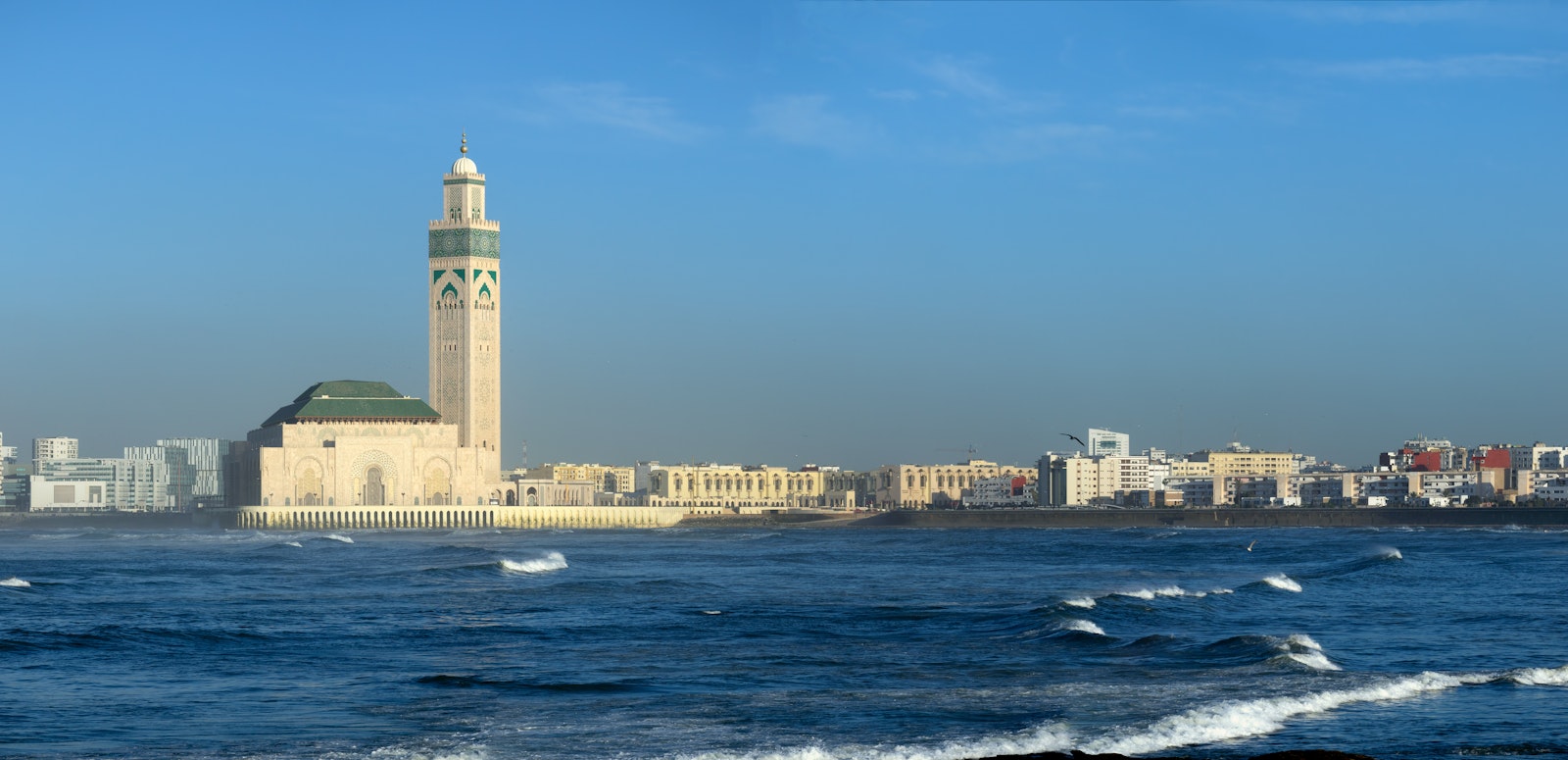
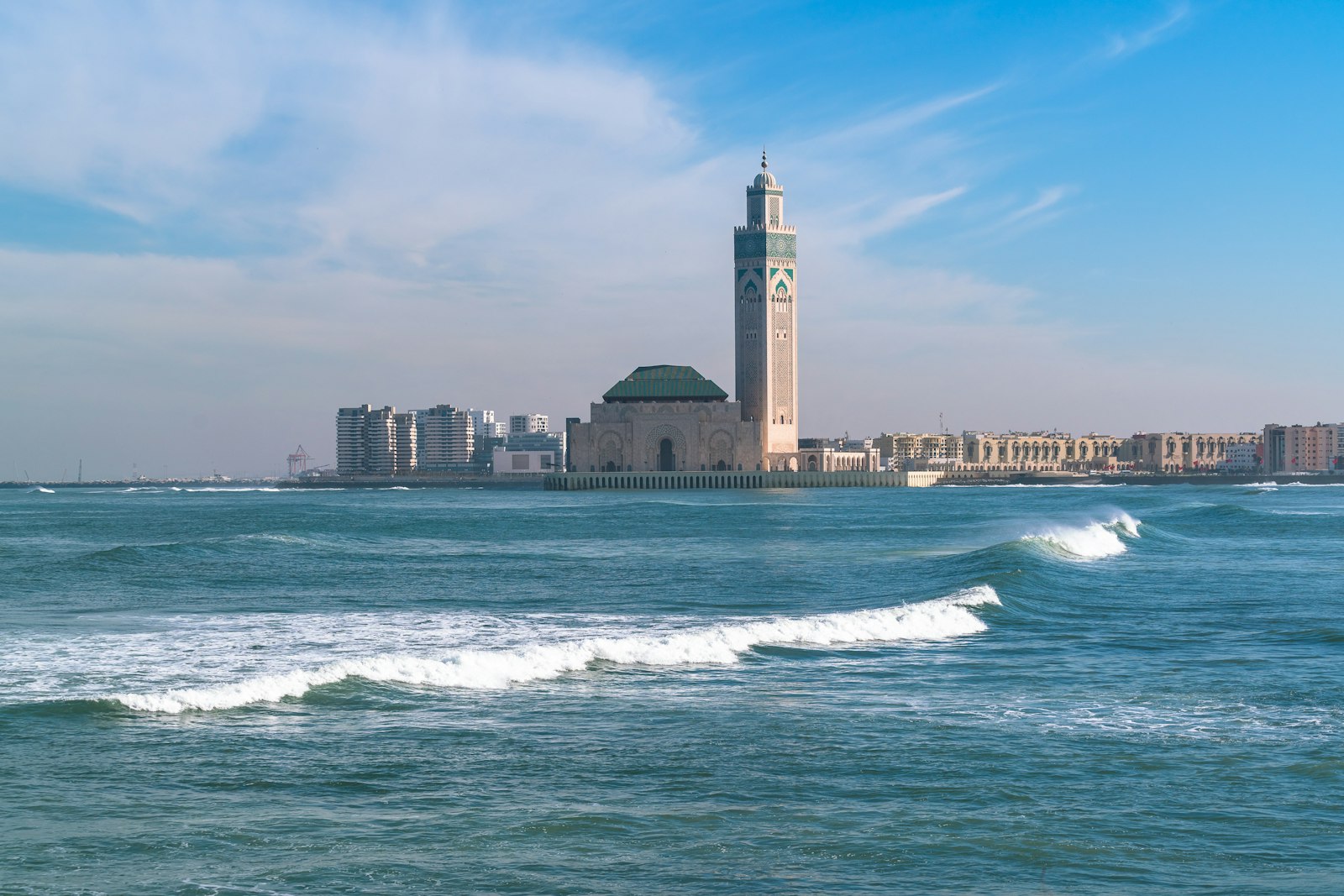
Further along the coast, Casablanca presents a more contemporary face of Morocco. Its defining landmark, the Hassan II Mosque, rises dramatically beside the ocean and stands among the country’s most remarkable architectural achievements. Broad boulevards and a coastal setting give the city a distinct atmosphere, balancing tradition with modern urban life.
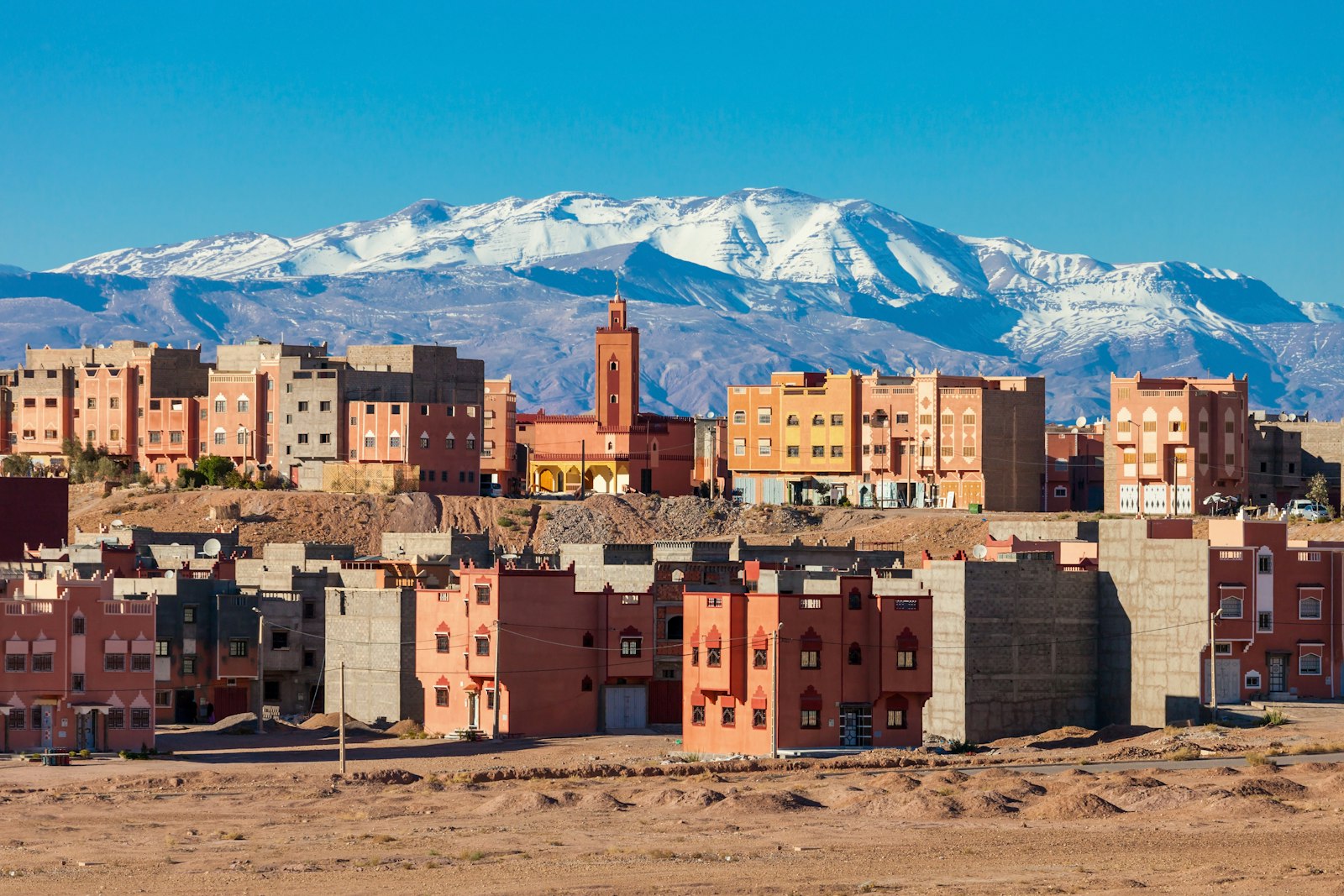
Ouarzazate and the gateway to the desert
Often referred to as the gateway to the Sahara, Ouarzazate sits at the crossroads of southern Morocco’s desert routes and mountain landscapes. Its setting, framed by arid plains and distant peaks, gives it a distinctly cinematic quality. Ouarzazate also serves as a natural starting point for journeys into the Draa Valley and onwards to the Sahara, linking some of Morocco’s most iconic landscapes into a coherent route.
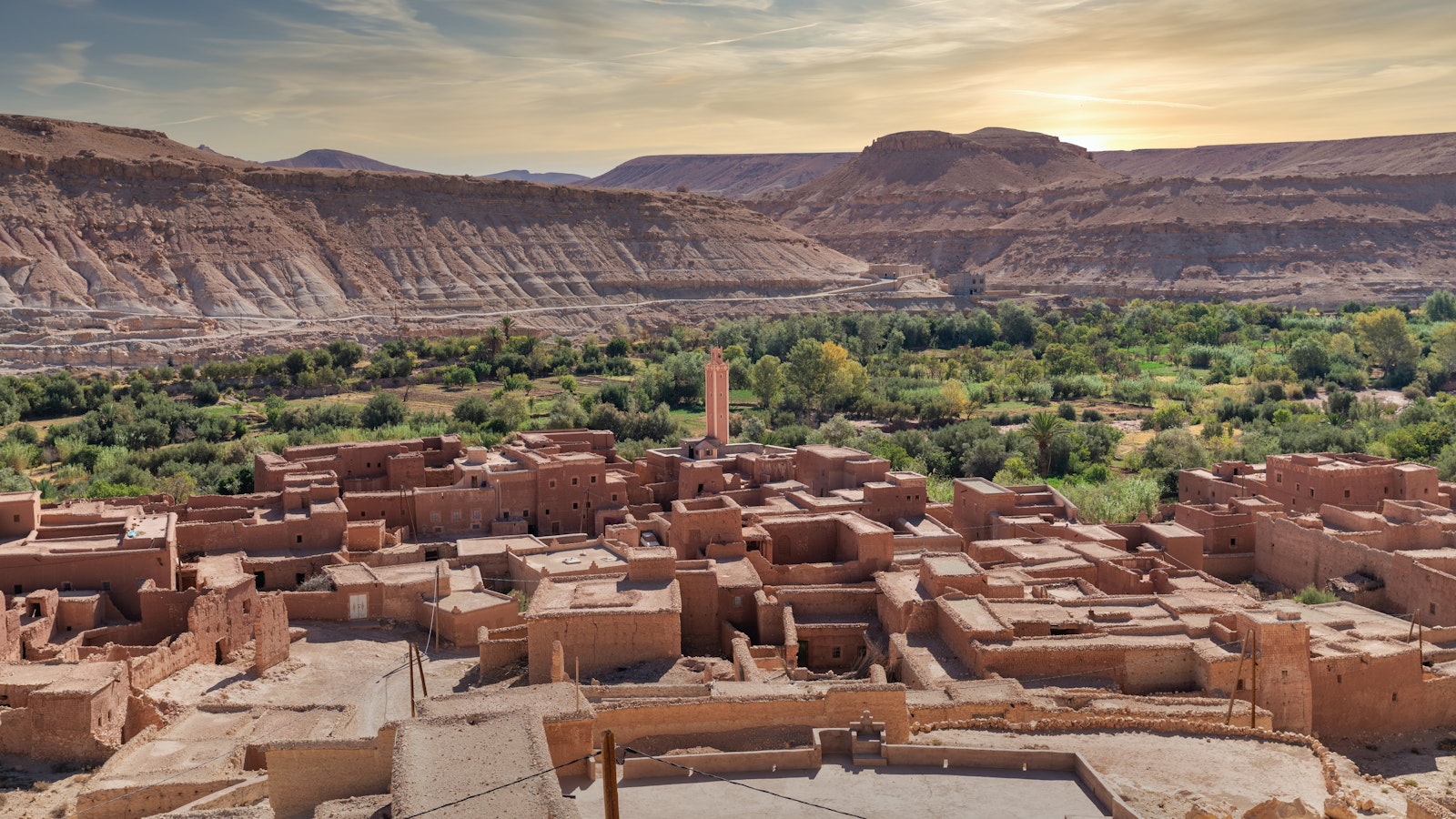
Nearby, the fortified village of Aït Ben Haddou, a UNESCO World Heritage Site since 1987 and considered one of the finest examples of Moroccan earthen clay architecture, rises from the landscape in earthen tones, while the surrounding region is dotted with historic kasbahs and palm-filled valleys.
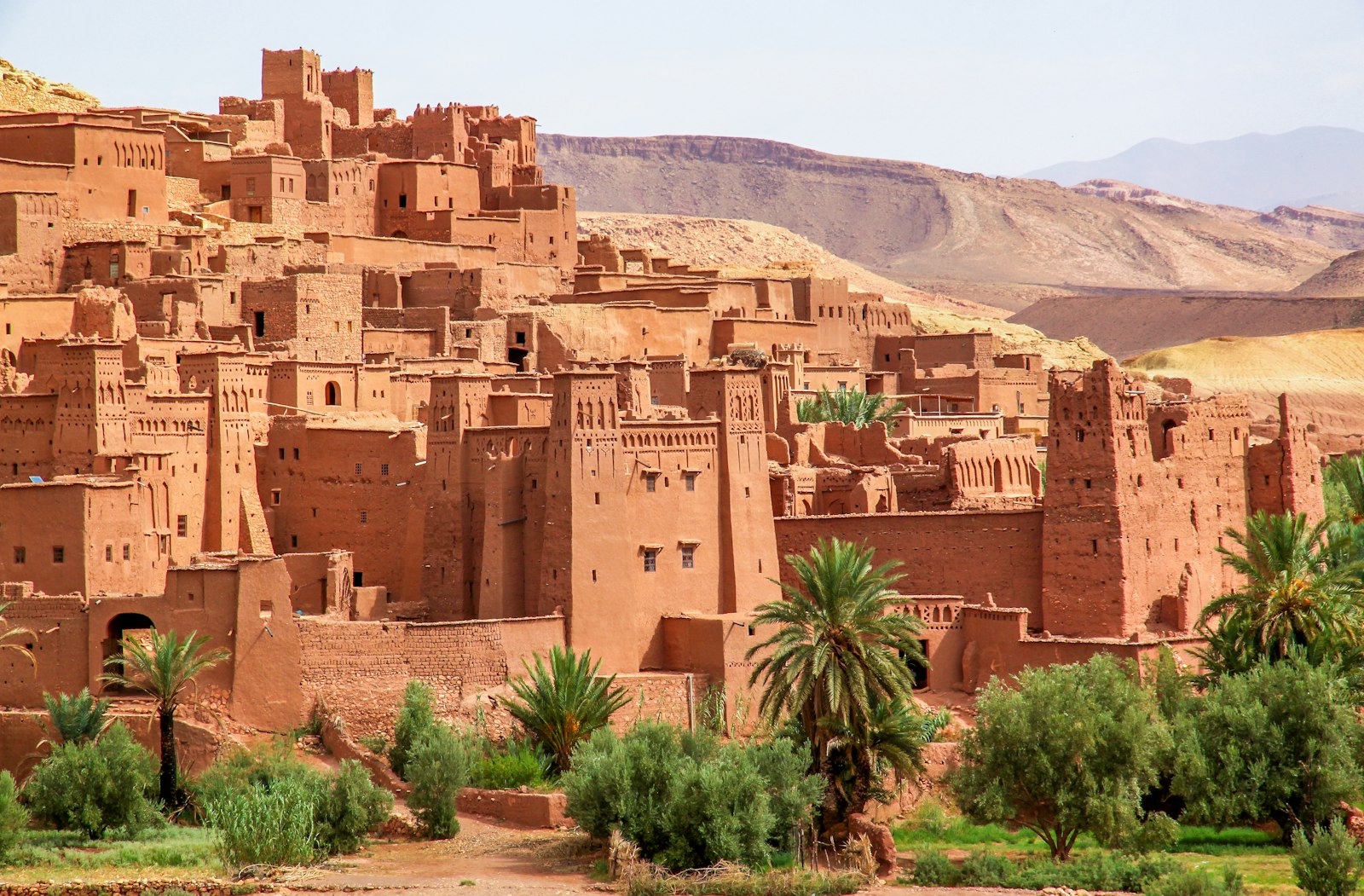
The Sahara Desert and its vast landscapes
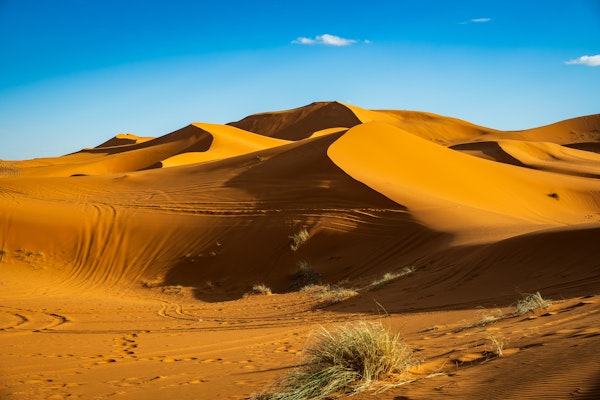
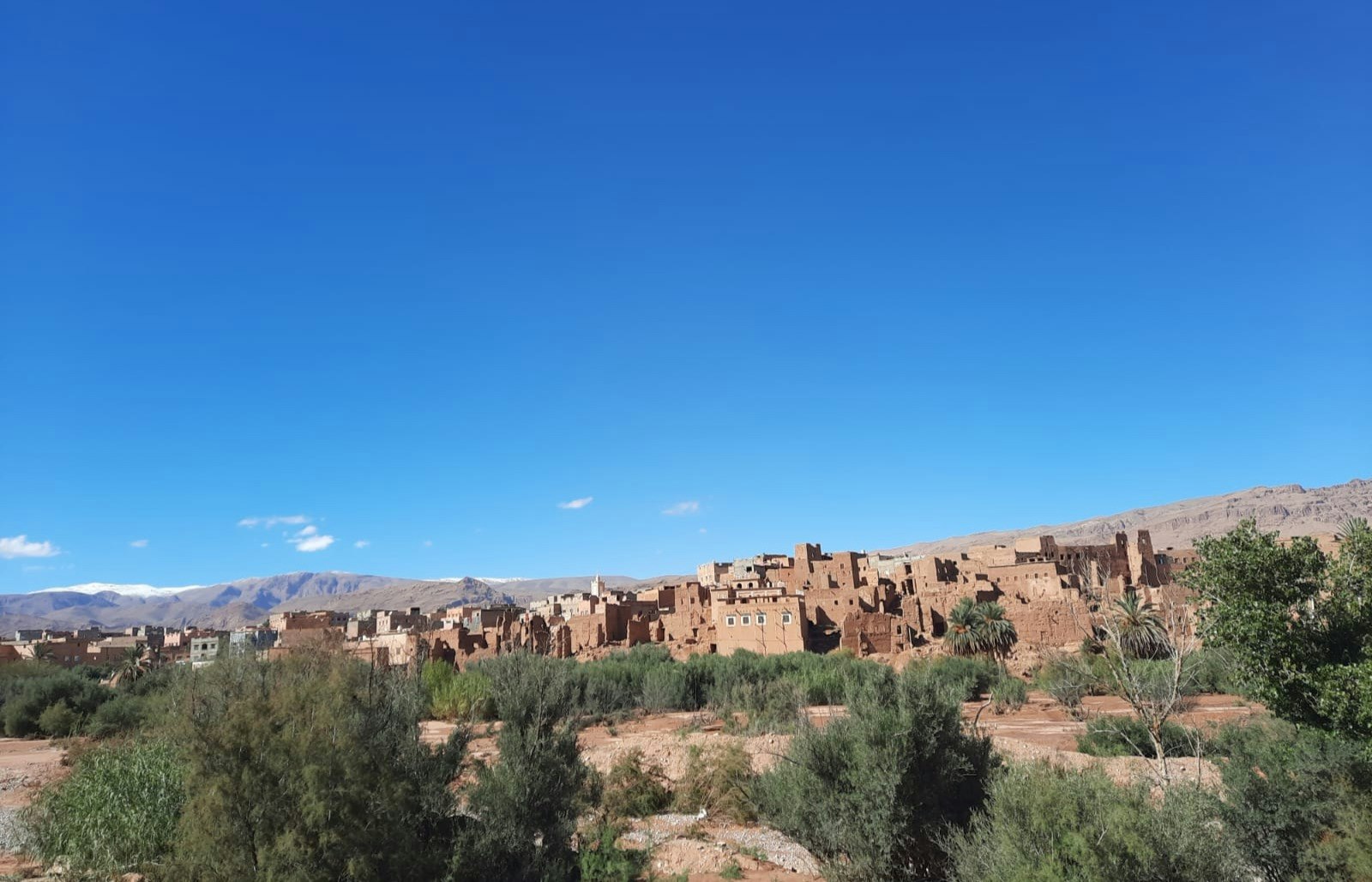
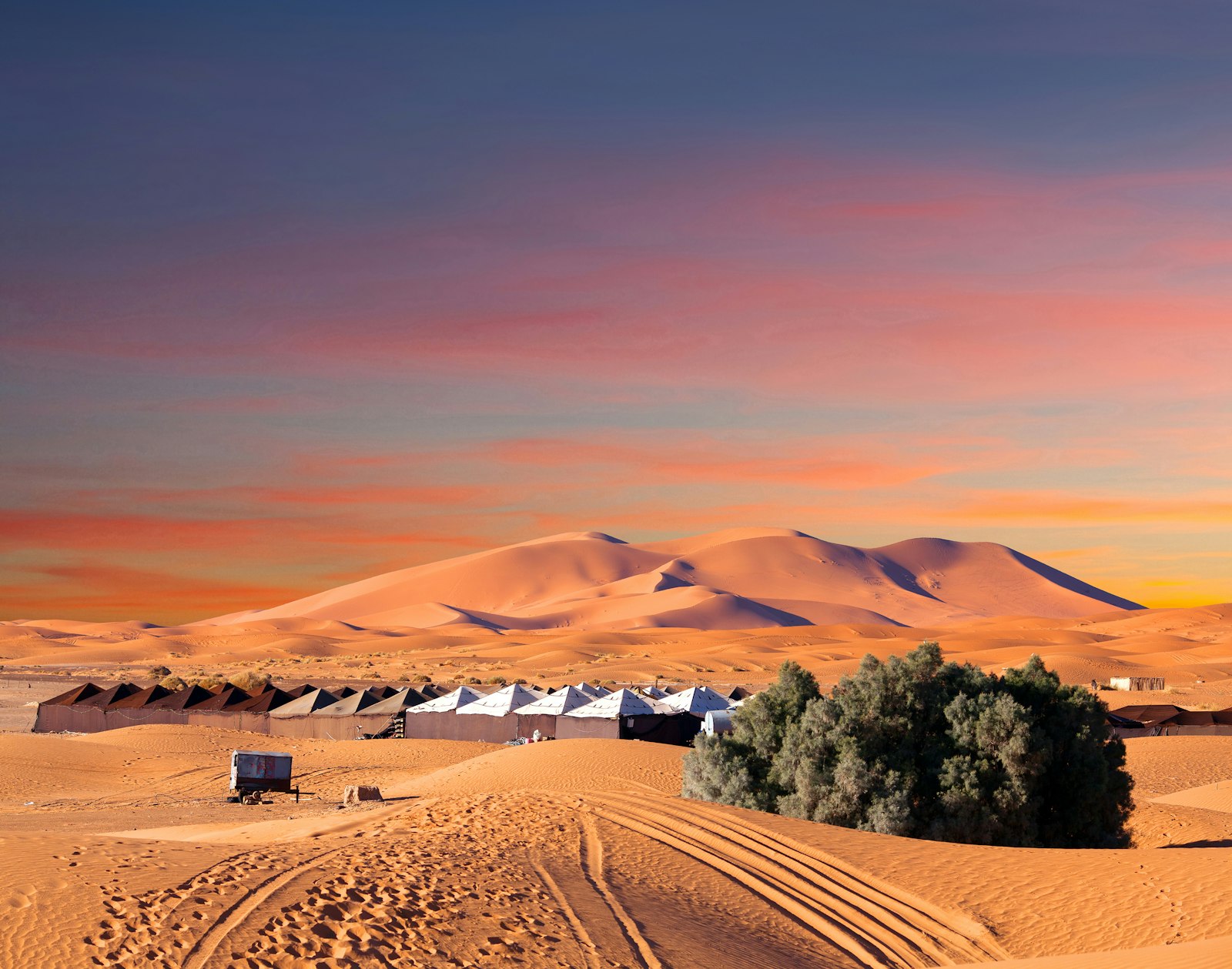
To the south, Morocco opens into the immense stillness of the Sahara. The dunes of Erg Chebbi near Merzouga rise in sweeping golden curves, while the more remote Erg Chigaga offers an even deeper sense of isolation. Journeys into the desert often pass through oasis valleys such as the Draa Valley and the Ziz Valley, where palm groves, ksour and historic kasbahs trace the course of the river.
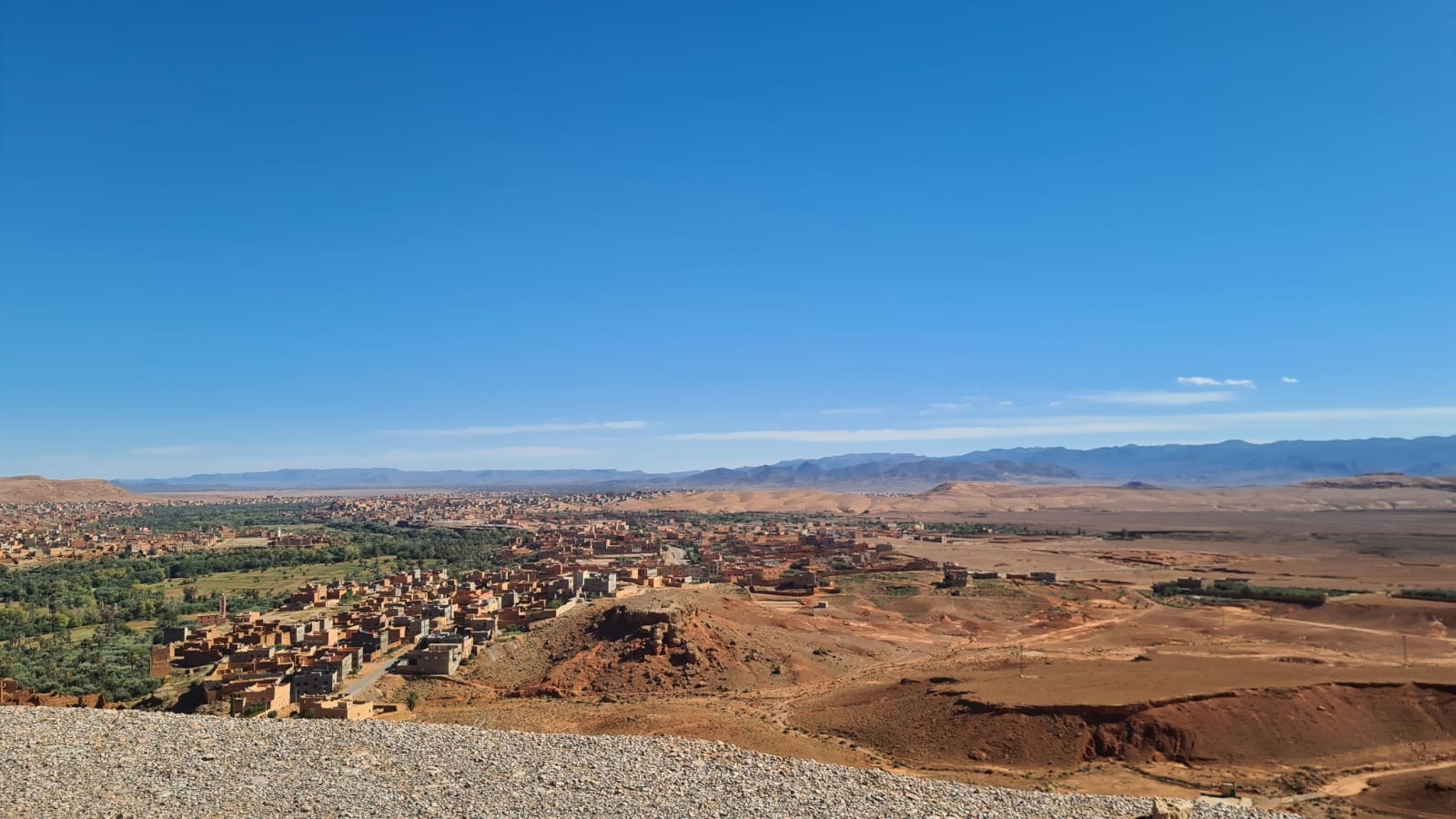
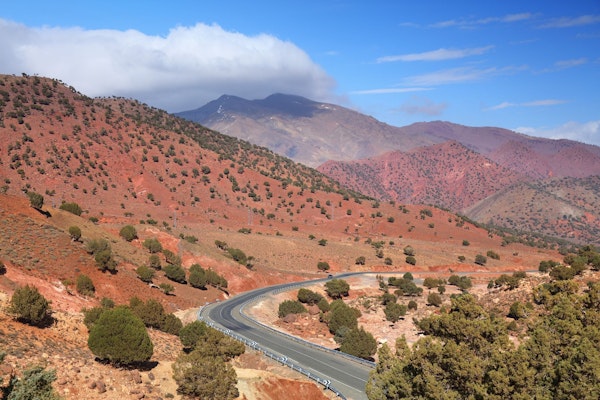
Reaching the desert is part of the experience itself, with routes crossing the High Atlas via dramatic mountain passes before descending into arid plains and oasis landscapes. Once there, the rhythm slows: camel journeys across the dunes, evenings beneath vast, star-filled skies and the quiet light of early morning create a rare sense of stillness. At sunrise and sunset, the desert transforms in colour and atmosphere, offering one of Morocco’s most memorable and immersive landscapes and traditional ksar settlements.
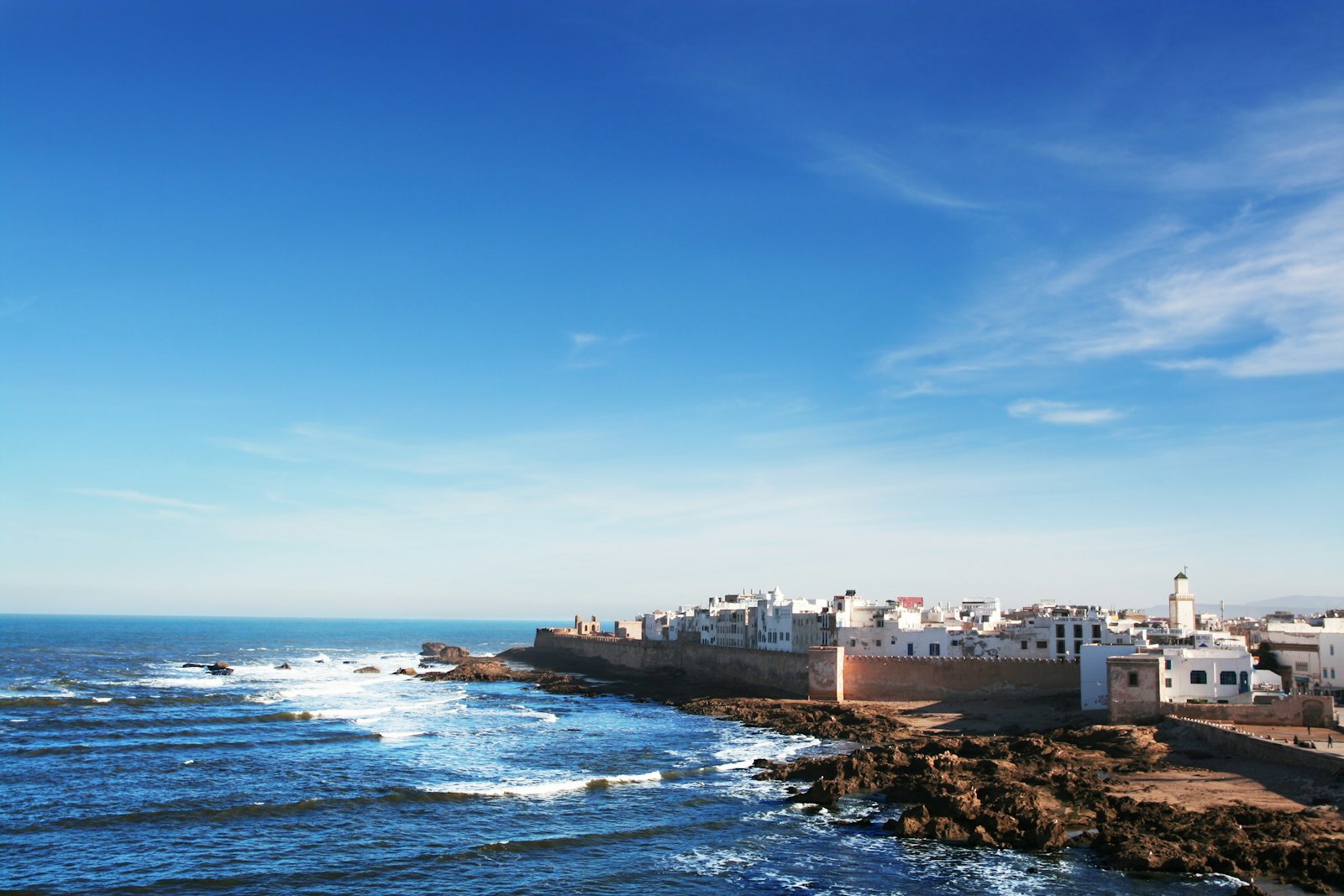
Essaouira, Asilah and the Atlantic coast
On the Atlantic coast, Essaouira moves to a gentler rhythm. The Skala de la Ville traces the old ramparts with views across the ocean, the fishing port remains central to daily life, and the medina is filled with artisan workshops and galleries that reflect the town’s creative spirit. Moulay Hassan Square links the port, sea and old town, while long beaches stretch beyond the walls beneath wide, wind-shaped skies.
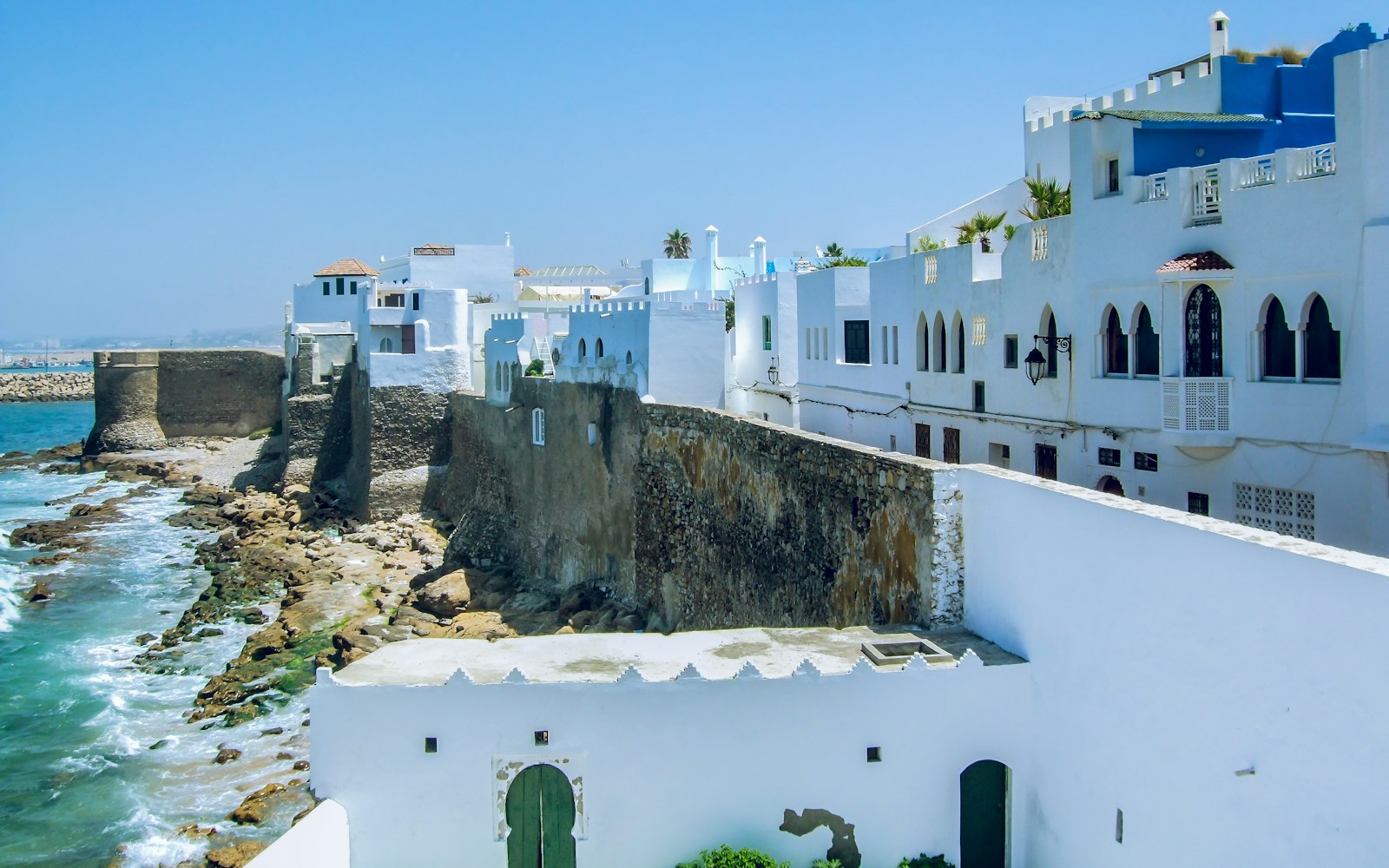
Further north, Asilah offers a quieter coastal experience, known for its whitewashed medina, seasonal murals and relaxed atmosphere. Its smaller scale and artistic identity make it feel more intimate, providing a gentle contrast to Morocco’s larger cities.
Dakhla and the southern Atlantic lagoon
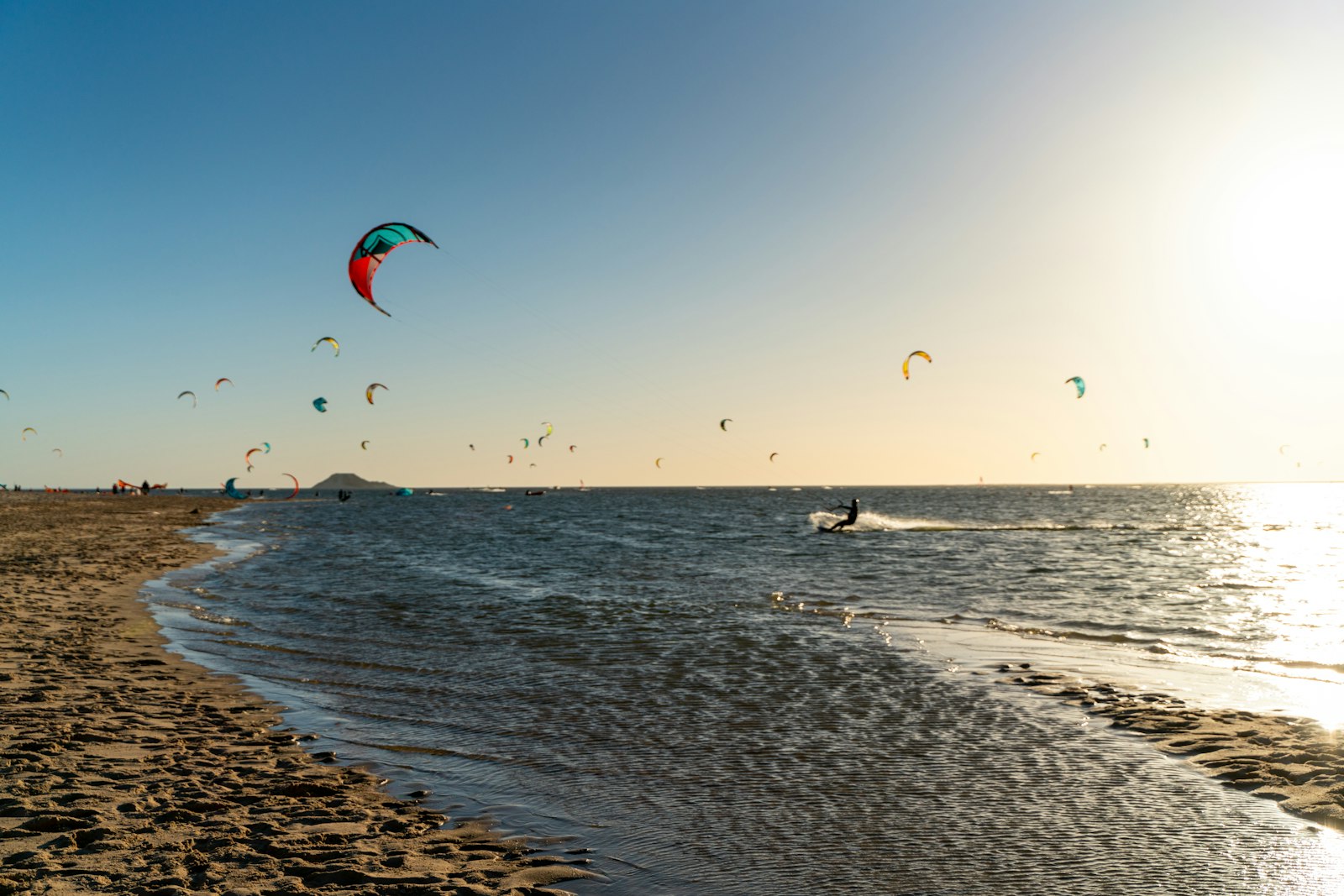
At the far south of Morocco, Dakhla offers a strikingly different landscape, where desert meets the Atlantic in a vast, tranquil lagoon. Known for its calm waters, wide horizons and almost untouched natural setting, it feels remote and expansive, far removed from the country’s more visited regions. The Dakhla Lagoon is particularly renowned for its unique ecosystem, where shifting sands and shallow waters meet constant Atlantic breezes. It has also become a premier destination for kitesurfing, windsurfing and surfing, attracting visitors seeking both activity and stillness. Whether experienced through coastal walks, time on the water or simply taking in the vast open scenery, Dakhla offers one of Morocco’s most distinctive and serene environments.
The Atlas Mountains and traditional regions
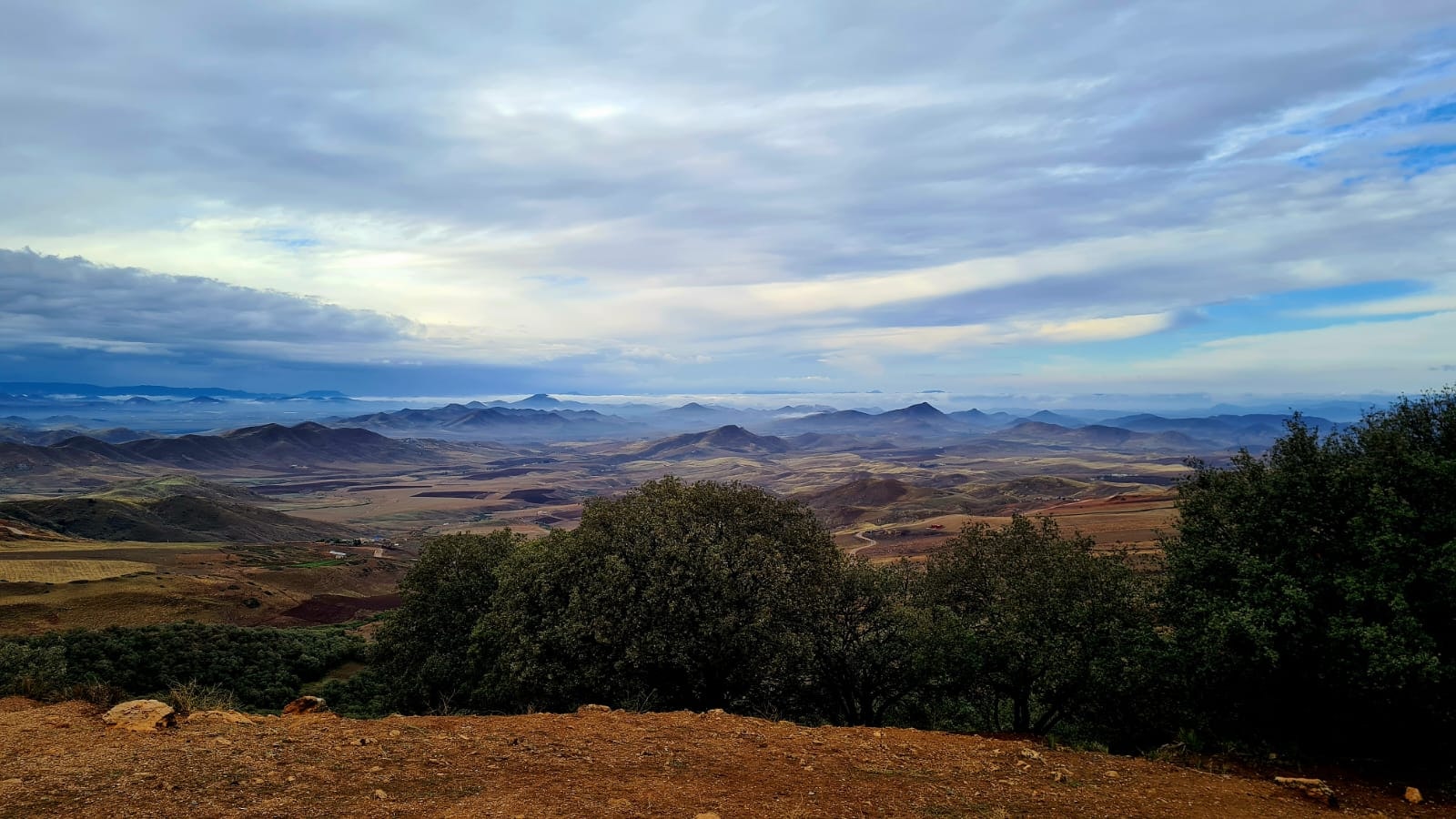
The Atlas Mountains reveal another side of Morocco: quieter, more spacious and deeply rooted in local tradition. In the High Atlas, villages such as Imlil serve as gateways to routes leading towards Mount Toubkal, North Africa’s highest peak. The Ourika Valley combines rivers, terraced fields and mountain scenery, while farther south the Dades Valley and the dramatic cliffs of Todra Gorge create some of the country’s most striking natural landscapes. Across the Middle Atlas and Anti-Atlas, cedar forests, plateaus and remote settlements add further diversity.
Top activities in Morocco
Getting lost in the souks
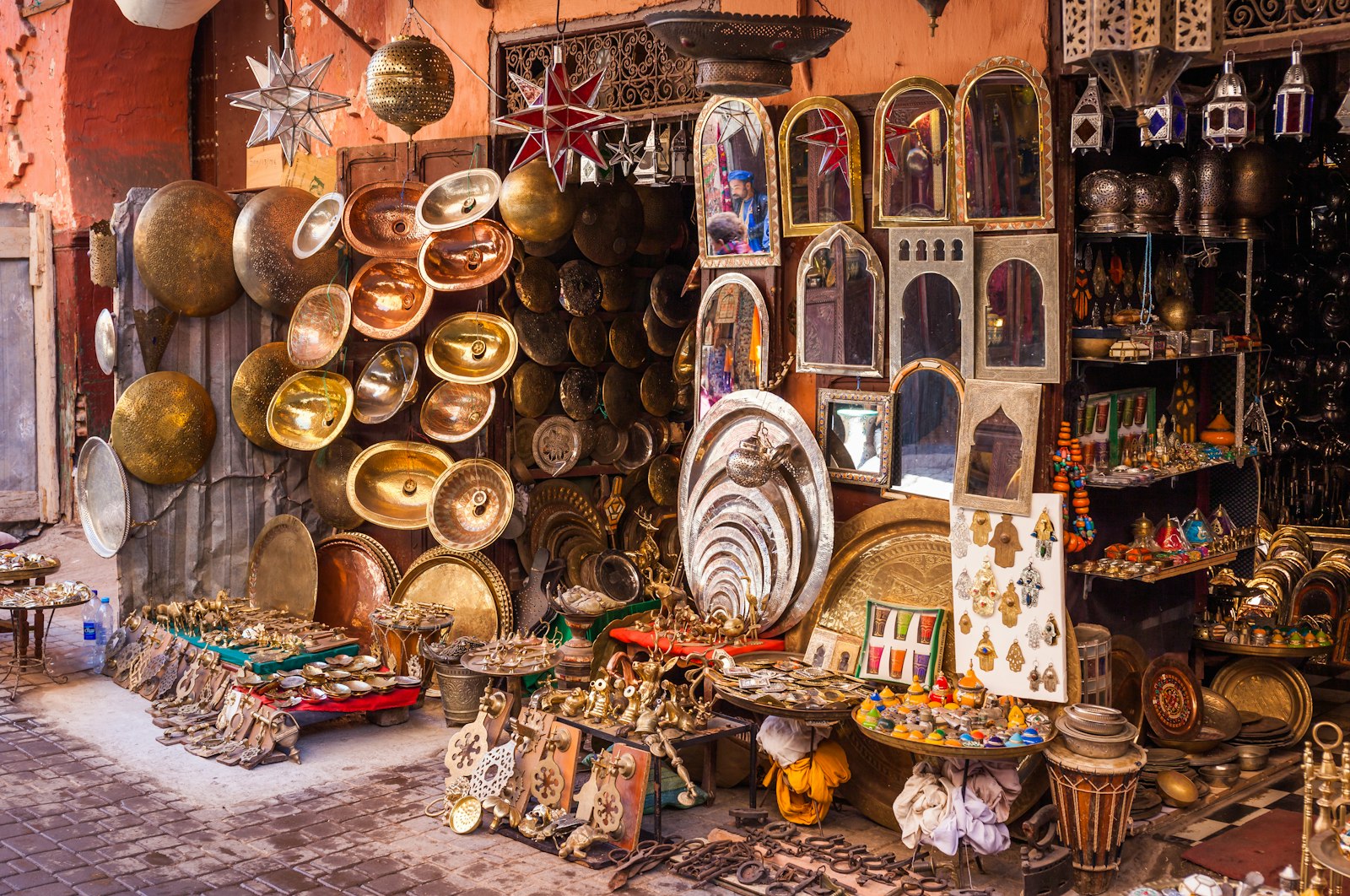
The souks of Marrakech, Fes and Tangier are among Morocco’s most immersive spaces. Organised by craft, they reveal artisans working with leather, metal, wood and textiles using skills passed down through generations. Moving through them is as much about observation as discovery, with each turn revealing new colours, textures and details.
Experiencing the desert
A journey into the Sahara, particularly around Merzouga or Zagora, brings a rare sense of stillness. Camel rides across the dunes, evenings beneath vast star-filled skies and the soft light of early morning create an atmosphere that feels both peaceful and unforgettable.
Staying in a traditional riad
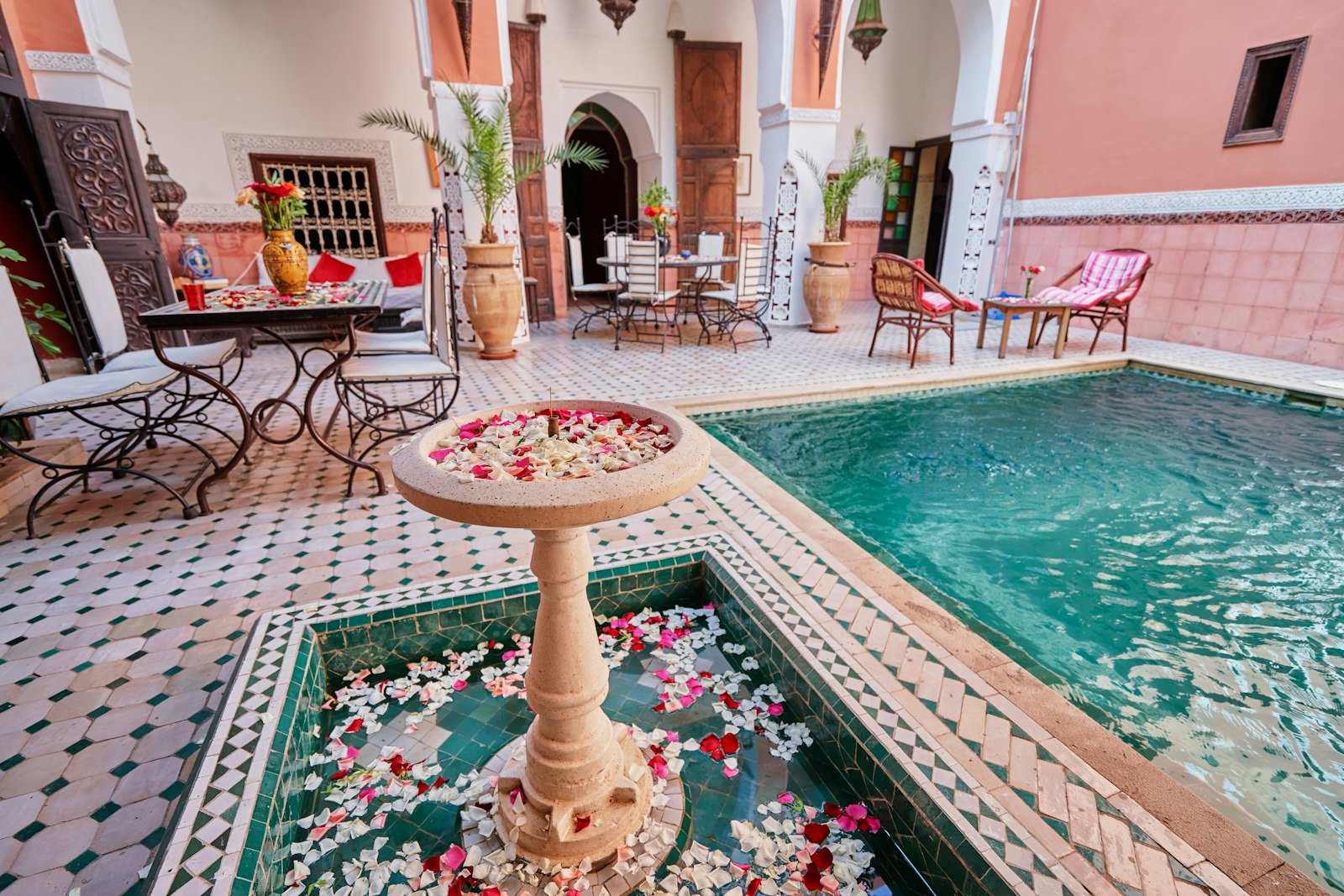
Staying in a riad offers an intimate encounter with Moroccan architecture and hospitality. Behind plain exteriors, these traditional homes open into serene courtyards filled with greenery, light and intricate detail, providing a calm retreat within the medina.
For a more detailed look, see our dedicated article: Morocco’s riads: a retreat worthy of royalty
Exploring coastal towns and beaches
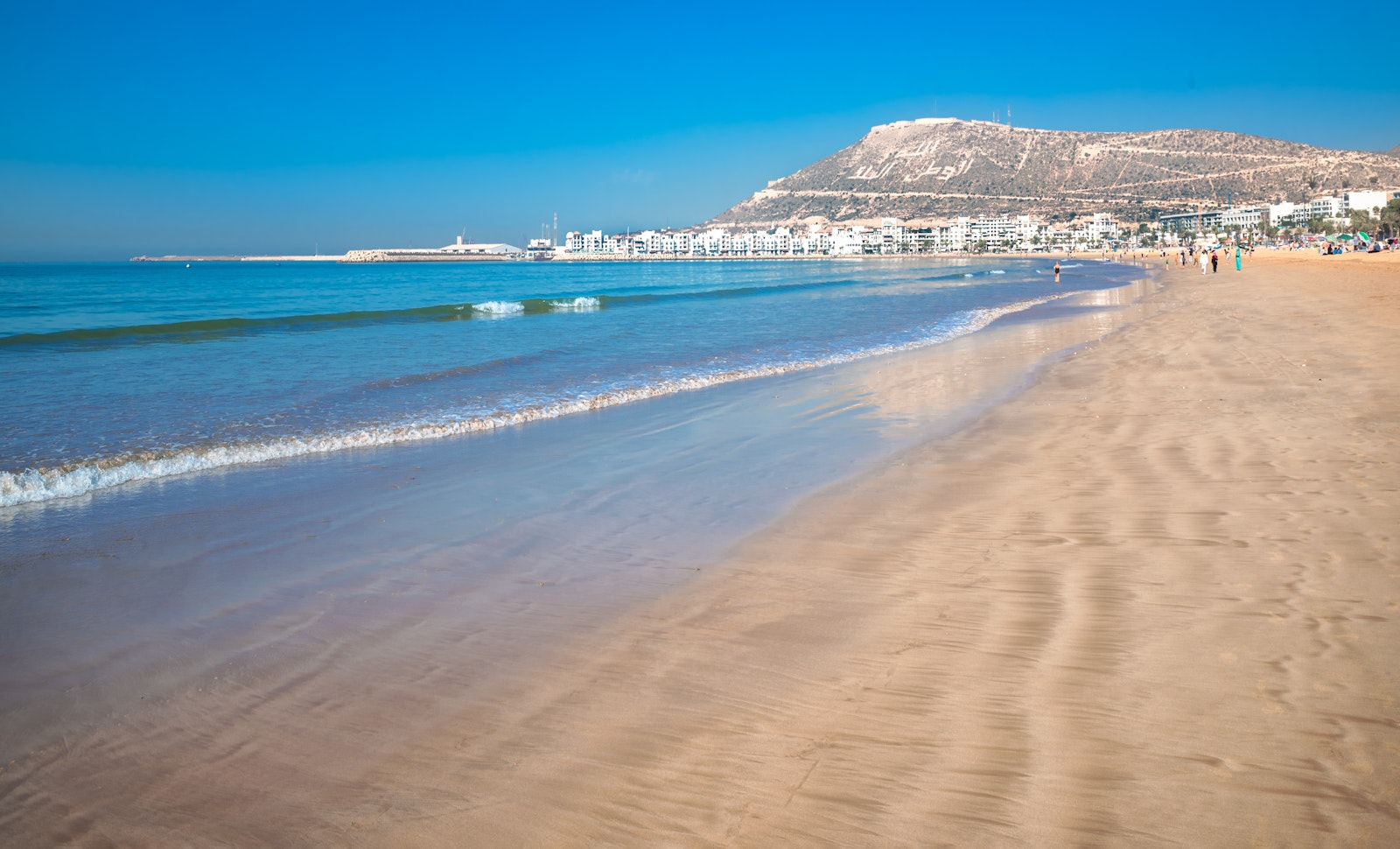
Along the Atlantic coast, destinations such as Essaouira and Agadir offer space to slow down. Wide beaches, ocean views and fresh sea air create a relaxed setting. Further along the coastline, Taghazout Beach, Legzira Beach, known for its striking red rock arches, and the wide sands of Agadir Beach offer varied landscapes, from renowned surf spots to quieter, more expansive stretches of shoreline, while more remote destinations such as Dakhla offer exceptional conditions for water sports and a more secluded coastal experience.
Discovering mountain landscapes
In the Atlas Mountains, walking through valleys, visiting villages and following scenic routes reveals a quieter, more grounded side of Morocco, where the pace slows and the connection to landscape and local life deepens.
Traditional hammam experiences
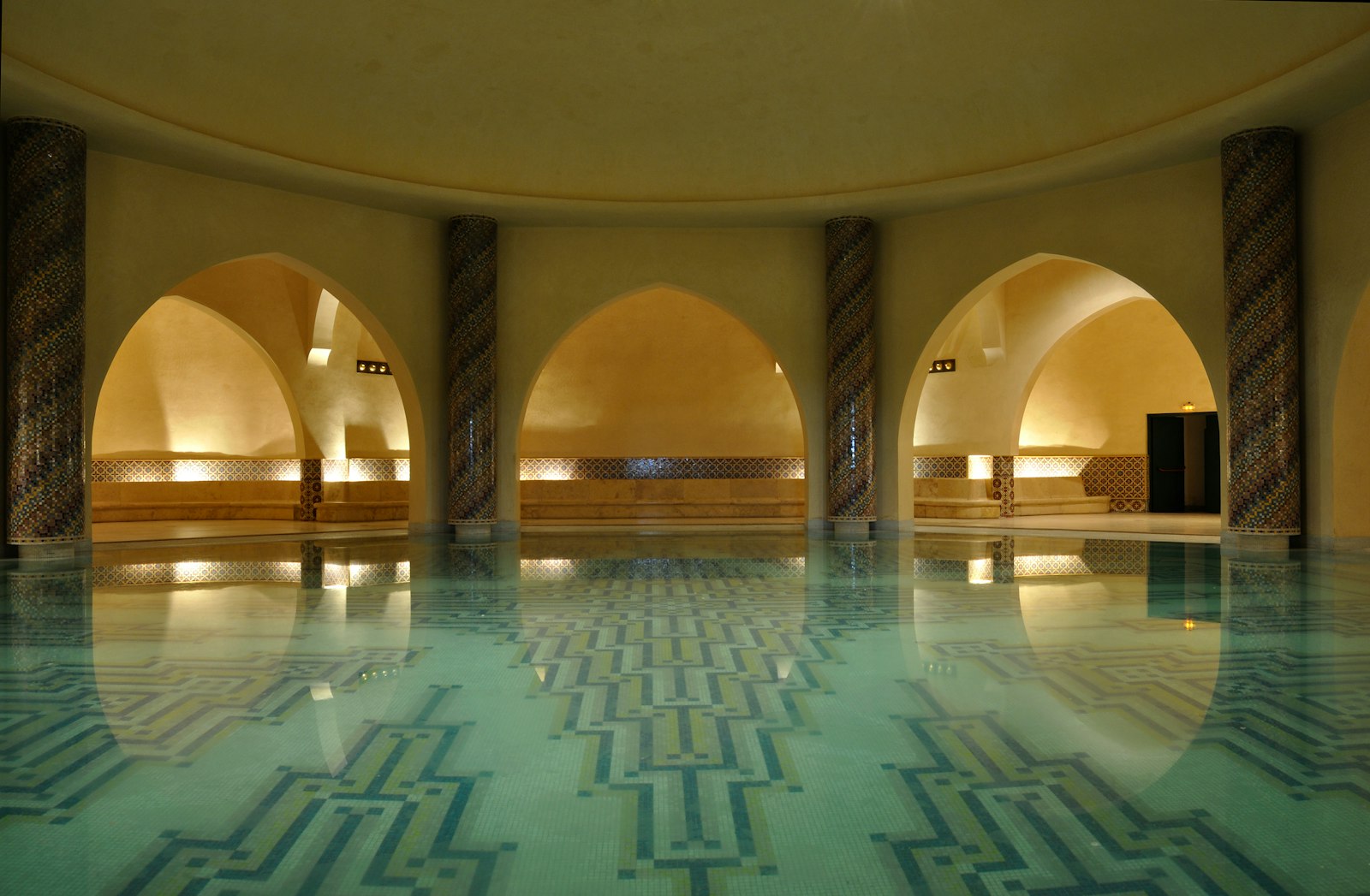
The hammam remains an essential part of Moroccan culture, combining ritual cleansing with rest and renewal. More than a spa treatment, it is a long-standing social and cultural practice that continues to shape everyday life across the country.
Mosques in Morocco
Mosques form both the spiritual and architectural backbone of Morocco, from major landmarks to small neighbourhood prayer spaces woven into daily life.
Hassan II Mosque, Casablanca
Set dramatically above the Atlantic, the Hassan II Mosque is among the most impressive religious landmarks in Morocco. Completed in 1993, it can accommodate up to 105,000 worshippers, making it one of the largest mosques in the world, while its 210-metre minaret - among the tallest in the Islamic world - dominates the city skyline. Intricate tilework, carved cedar and a vast prayer hall showcase remarkable craftsmanship, while its soaring minaret dominates the city skyline.
Koutoubia Mosque, Marrakech
The Koutoubia Mosque is Marrakech’s defining landmark, founded in the 12th century by the Almohad caliph Abd al-Mu'min and rising to 77 metres, its elegant minaret visible across much of the city and said to have inspired both the Hassan Tower in Rabat and the Giralda in Seville.
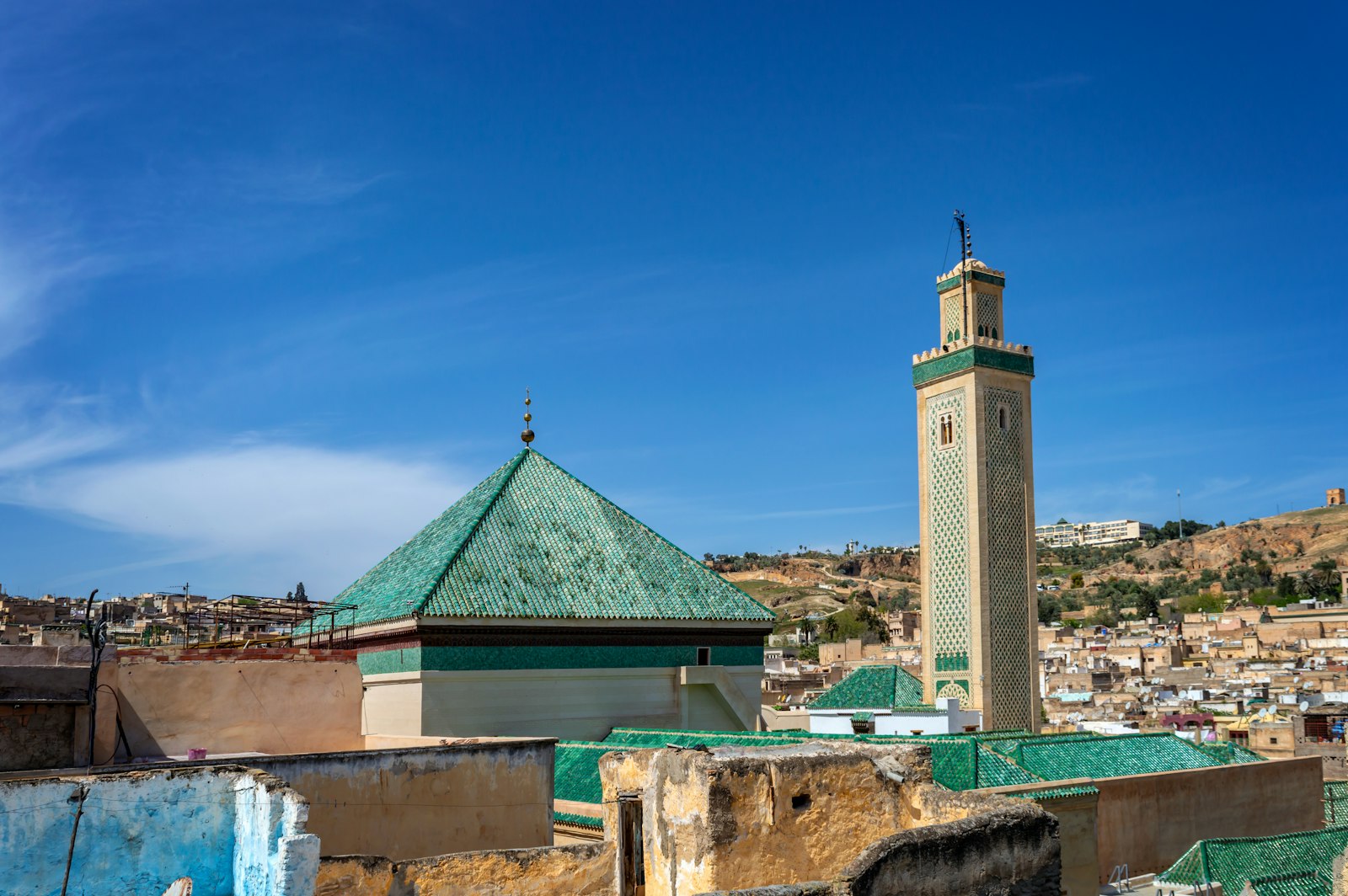
Al Quaraouiyine Mosque, Fes
Located in the heart of Fes, the Al Quaraouiyine Mosque is part of one of the world’s oldest centres of learning, founded in 859 by Fatima al-Fihri and recognised by UNESCO and the Guinness World Records as the oldest continuously operating educational institution in the world. It remains an important symbol of Islamic scholarship and spiritual life in Morocco.
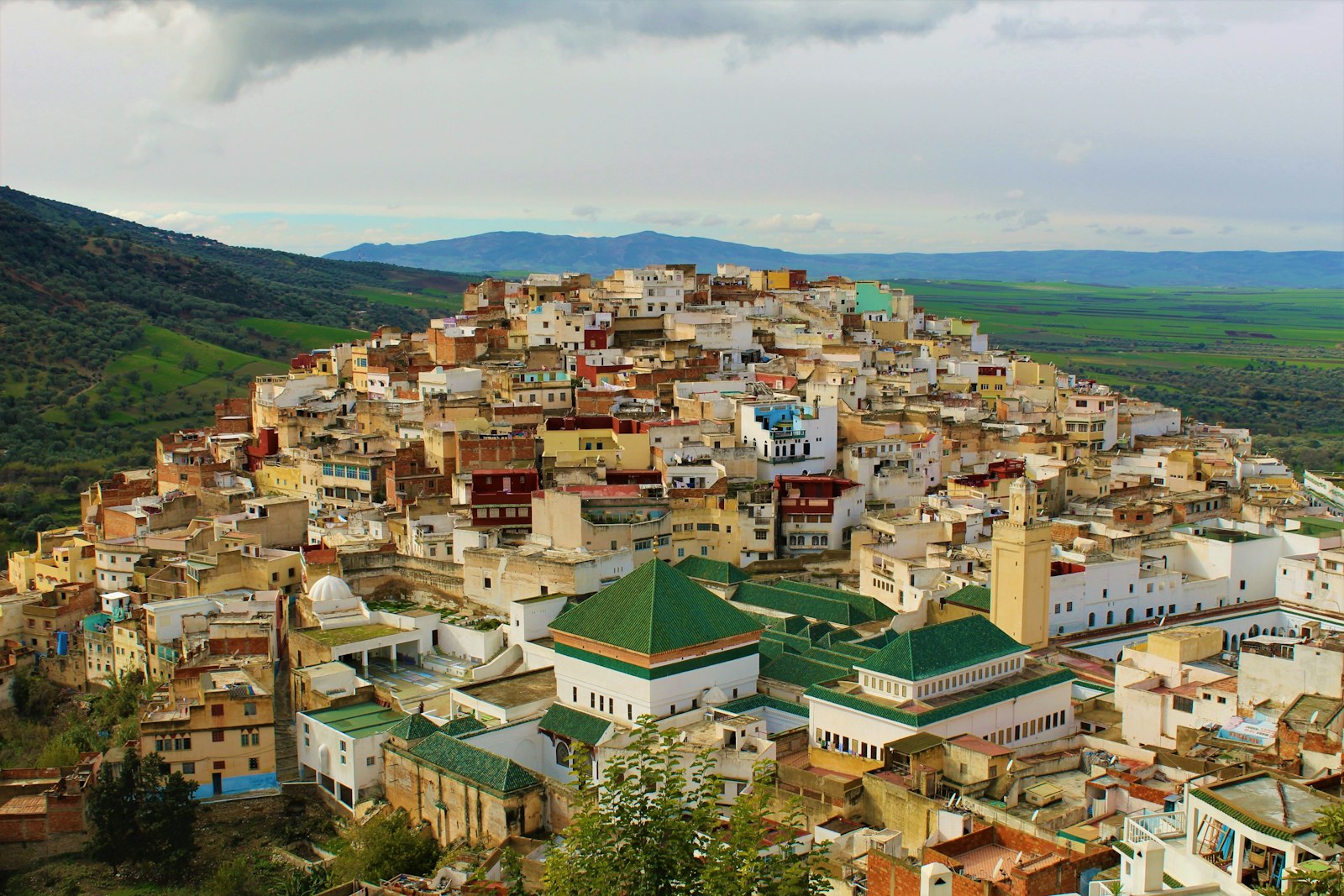
Moulay Idriss Zerhoun and local mosques
Across Morocco, from imperial cities to mountain villages, smaller mosques shape the rhythm of everyday life. In Moulay Idriss Zerhoun, one of the country’s most significant pilgrimage towns, that spiritual heritage feels especially profound.
Halal food and restaurants in Morocco
Moroccan cuisine is naturally halal, deeply traditional and shaped by centuries of cultural exchange. Meals are often generous, communal and unhurried, reflecting a strong culture of hospitality.
Popular dishes include:
Tagine – slow-cooked with meat, vegetables and aromatic spices
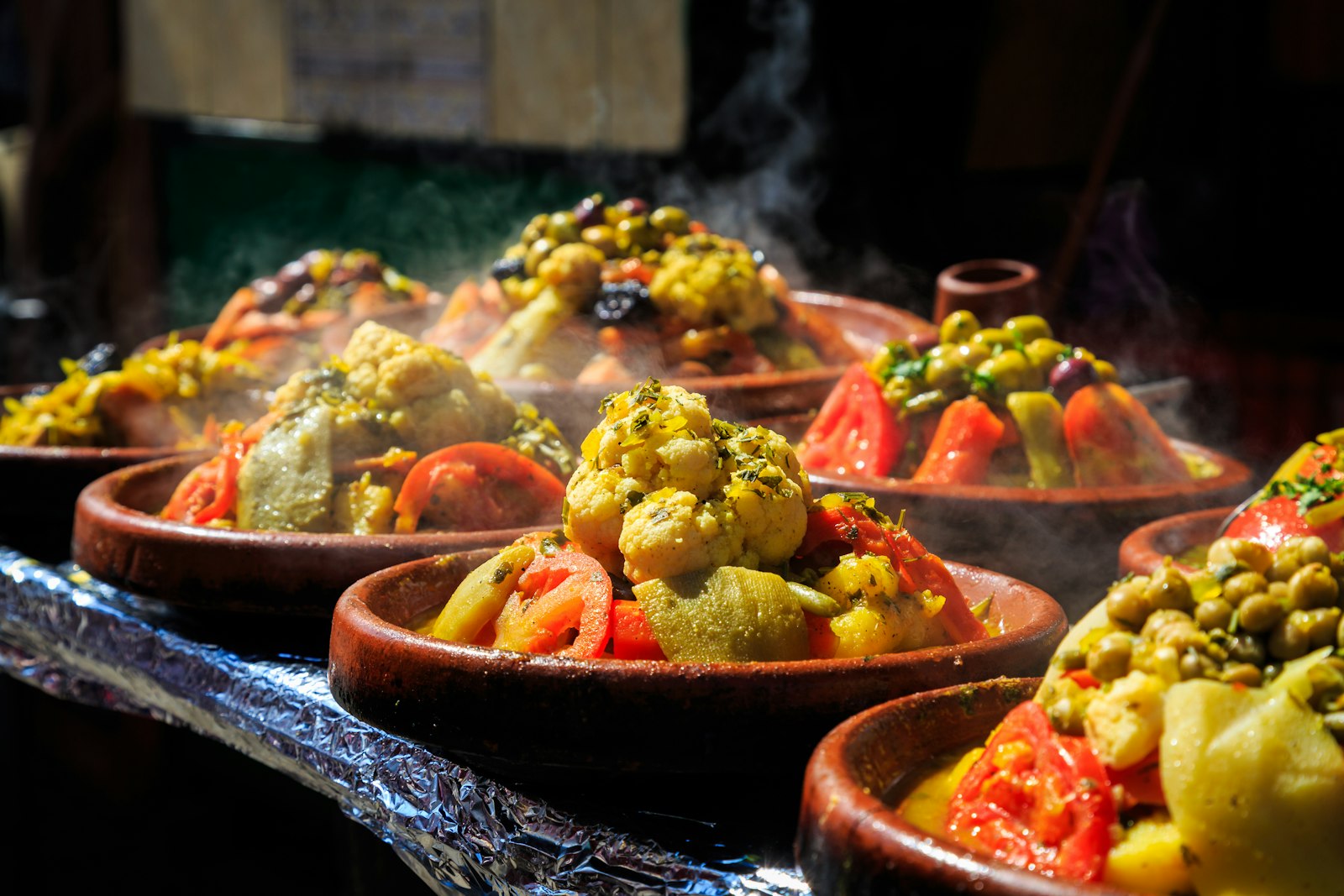
Couscous – traditionally served on Fridays, often with vegetables and lamb
Pastilla – a delicate pastry combining savoury and sweet flavours
Harira – a rich soup often enjoyed during Ramadan
Mechoui – slow-roasted lamb, tender and flavourful
Grilled meats and brochettes – widely available in markets and restaurants
From street food stalls in bustling medinas to refined dining in riads and coastal restaurants, halal options are easy to find across the country, making dining both accessible and memorable.
How to get around in Morocco
Travelling across Morocco is relatively straightforward, with a range of transport options suited to different styles of travel.
The rail network connects major cities such as Casablanca, Rabat, Fes and Marrakech, offering a comfortable and affordable way to travel. High-speed trains operate between key routes, while standard trains provide reliable connections across the country.
For greater flexibility, many travellers choose to hire a car. Road conditions are generally good, particularly between major cities, and driving allows access to more remote areas such as the Atlas Mountains, the Draa Valley and routes towards the Sahara. Distances can be long, but with planning they are manageable.
Long-distance coaches are another popular option, with companies such as CTM and Supratours offering comfortable and well-organised services between cities and regions at relatively low cost. Within cities, walking is often the best way to explore medinas, while taxis are widely available and inexpensive for longer distances. Travellers soon notice one of Morocco’s small urban quirks: petit taxis have different colours depending on the city, from red in Casablanca and blue in Rabat to ochre/yellow in Marrakech, light blue in Tangier and orange in Agadir. They quickly become part of the everyday rhythm of exploring Morocco’s cities.
Travel practicalities in Morocco
Morocco is generally easy to navigate, but a few practical considerations can help ensure a smoother journey. In medinas, streets are often narrow and unmarked, so using offline maps or local guidance can be helpful, particularly in cities such as Marrakech and Fes.
Car rental is widely available and offers a flexible way to explore Morocco at your own pace, particularly when travelling towards the Atlas Mountains or the desert; an international driving permit may be required depending on your licence.
Arabic and Amazigh are the official languages, while French is widely spoken and commonly used in signage, hospitality and administration. In tourist areas, basic English is generally understood, though learning a few simple phrases can be helpful.
Visa requirements depend on nationality, but many travellers, including those from the UK and EU countries, can enter Morocco visa-free for short stays. It is advisable to check current entry requirements before travelling, as regulations may change.
Cash remains widely used, especially in souks, smaller shops and rural areas, although cards are accepted in hotels and larger restaurants. Bargaining is a normal part of shopping in markets and is typically conducted in a friendly and respectful manner.
Dress tends to be modest, particularly outside major tourist areas, and lightweight, loose-fitting clothing is well suited to both the climate and local customs. During Ramadan, daily rhythms shift, with many cafés and restaurants closed during daylight hours, while evenings become more lively.
It is also worth noting that many traditional buildings are designed to keep interiors cool during the hotter months and may not have central heating. As a result, during cooler seasons, particularly in winter and early spring, interiors can feel unexpectedly cool, even when temperatures outside remain pleasant. Packing a few warm layers is therefore recommended, especially for evenings and early mornings.
Overall, travel in Morocco is welcoming and accessible, with a strong culture of hospitality that helps visitors feel at ease throughout their journey.
Best time to visit Morocco
Morocco can be visited throughout the year, with each season offering a different experience.
Spring and autumn are often the most comfortable times to travel, with mild temperatures ideal for exploring cities, mountains and desert landscapes. Summer can be hot, particularly in inland areas such as Marrakech and Fes, though coastal destinations like Essaouira and Agadir remain more temperate. In winter, temperatures drop, especially in the Atlas Mountains, where snow is common, while the desert remains accessible with cooler evenings.
Where to stay in Morocco
Accommodation across Morocco reflects the country’s diversity, offering a wide range of options for different travel styles.
Traditional riads, often located within medinas, provide an intimate and authentic experience centred around peaceful courtyards. Coastal hotels and resorts in destinations such as Agadir offer a more relaxed seaside setting, while private villas provide space and privacy, making them ideal for families or groups.
In mountain and desert regions, guesthouses and camps offer a more immersive connection to the landscape. Across the country, halal-friendly accommodation options continue to grow, making it easier than ever to find stays that align with personal preferences while remaining close to Morocco’s most memorable locations.
Beyond its landscapes, historic cities and halal-friendly travel experiences, Morocco is also remembered for the warmth of its people. From riad hosts and shopkeepers to café owners and local guides, travellers often encounter a quiet generosity and easy helpfulness that make the country feel especially welcoming.
To explore Morocco’s dramatic interior in more depth, follow our spectacular road trip from the Atlas Mountains to the Sahara.