

20 Expert Umrah Travel Tips for a Smooth Journey
Practical Umrah Tips: Insider Secrets for a Stress-Free Pilgrimage
Heat, crowds, connectivity failures, lost sandals, and queues are some of the real risks — this guide addresses all of them
The difference between a smooth Umrah and an exhausting one rarely comes down to religious preparation — it comes down to logistics. Use the table below as a quick reference, then jump to the categories most relevant to your trip via the cards. For a full packing rundown, see our Packing Checklist; for emergencies on the ground, our Help & Support main page.
Quick-Reference: The Top Tip from Each Category
Category | Top Tip | Saves You |
|---|---|---|
Crowds | Tawaf between 2–4 AM | Hours of waiting |
Budget | Eat in Misfalah, not near the Haram | 30–50% on meals |
Health | Oral rehydration salts daily | Umrah flu derailing your trip |
Footwear | Photograph your shoe rack on arrival | Lost sandals at the Haram gate |
Power | 20,000 mAh power bank, minimum | Dead phone mid-Tawaf |
Transport | Haramain Railway, book 2–3 days ahead | Private taxi premium costs |
Crowd Management: Best Times for Tawaf and the Rawdah
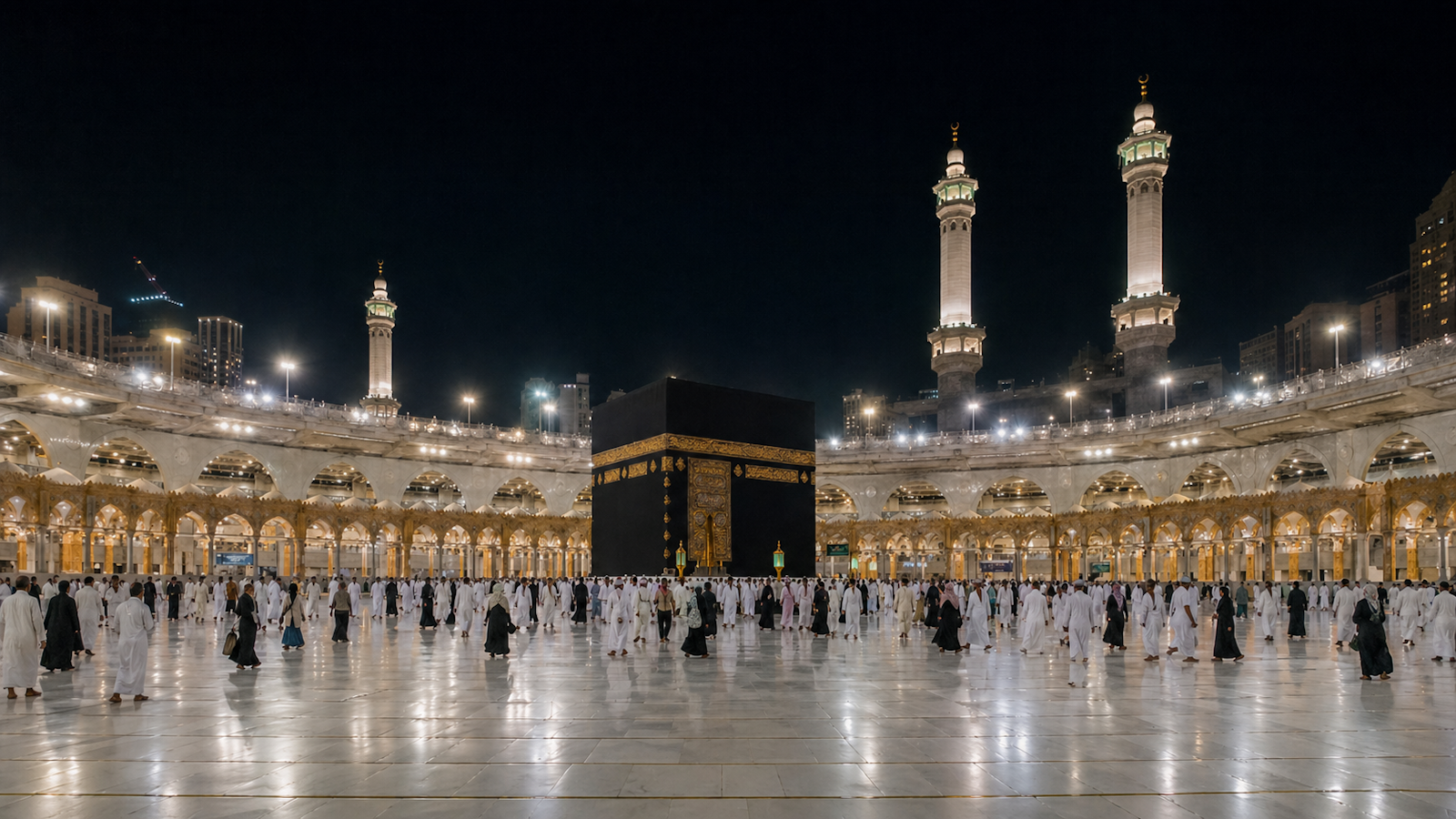
The window between 2 AM and 4 AM — after Tahajjud crowds thin and before Fajr fills the Haram — is consistently the least congested period for Tawaf throughout the year. This pattern holds even during Ramadan, though the gap narrows in the last ten nights. Pilgrims who sleep after Isha and rise at 1:30 AM consistently describe this as the most spiritually concentrated experience of their trip. The same principle applies in Madinah: Masjid an-Nabawi is easiest in the early hours before Fajr.
Before leaving your hotel, check the Nusuk App's live capacity indicator for Masjid al-Haram. A high reading is a reliable signal to delay by one to two hours — a wait at the hotel is almost always preferable to two hours pressed into a dense circuit.
Time | Density | Best for |
|---|---|---|
2–4 AM (any night) | Lowest | Focused worship Tawaf |
9–11 AM (non-Friday weekday) | Low–medium | Reconnaissance Tawaf, learning the layout |
Hour before Dhuhr | Medium | Sa'i and additional rakat |
Immediately after Fajr / Isha | High | Avoid by default |
Friday Dhuhr–Asr | Very high | Avoid — Jumu'ah crowds |
Last ten nights of Ramadan | Highest of the year | Plan 3–4 hour buffers |

Pro tip
On your first full day in Makkah, do a reconnaissance Tawaf in the late morning to learn the layout and locate your gate. Then do your focused worship Tawaf at 2–4 AM when you know exactly where you are going.
Budgeting Hacks: How to Save on Food and Local Transport
The 200-metre rule and the train ticket that beats a private taxi by 80%
Spending on food and local transport can vary hugely in Makkah and Madinah. Walk 200 metres away from any Haram gate before choosing a restaurant — prices drop immediately once you clear the tourist radius. The Misfalah district (~1.5 km south-west of the Haram) is where Makkah's resident population eats. For Makkah–Madinah travel, the Haramain High-Speed Railway is dramatically cheaper than a private taxi; book through HHR's website or app two to three days ahead during peak season.
What | Tourist option | Local option | Saving |
|---|---|---|---|
Yemeni mandi lunch | SAR 60 (Haram-adjacent) | SAR 25–40 (Misfalah) | ~50% |
Hijazi breakfast (ful + tamis + egg) | SAR 25–35 (hotel) | SAR 10–15 (street stall) | ~60% |
Makkah → Madinah travel | SAR 300–450 (private taxi) | SAR 60–80 (HHR economy) | ~80% |
Local transport in Makkah | SAR 15–25 per ride-hail | Free (govt shuttle network) | ~100% |
The "Umrah Flu": Health Tips to Stay Energised
A real upper respiratory infection that affects many pilgrims within 3–5 days — the causes are consistent and these tips may help avoid it
Plain water — even Zamzam — does not replace electrolytes lost through heavy sweating in the 40°C+ Hijaz climate. Pilgrims who drink only water frequently experience fatigue, cramps, and headaches despite feeling hydrated. Air-filtration masks are now widely worn in the Haram without social stigma — at peak prayer, in full Mas'a, and in Rawdah queues.
Hydration & Mask Protocol
- Oral rehydration salts (ORS): at least one sachet daily, more after extended Tawaf or Sa'i. Available at any pharmacy, SAR 5–10 for a pack of ten.
- Caffeinated drinks: minimise — diuretic effect compounds dehydration in 40°C+ heat.
- FFP2 / N95 masks: pack at least ten per person for a two-week trip. Wear at peak prayer times, full Mas'a during Sa'i, Rawdah queues, and on the flight.
- Cold-water hack: freeze a 500 ml bottle in your hotel room the night before any outdoor Ziyarat — by the time you need it, it will be cold rather than ambient 45°C.
Packing Smart: Items You Didn’t Know You Needed
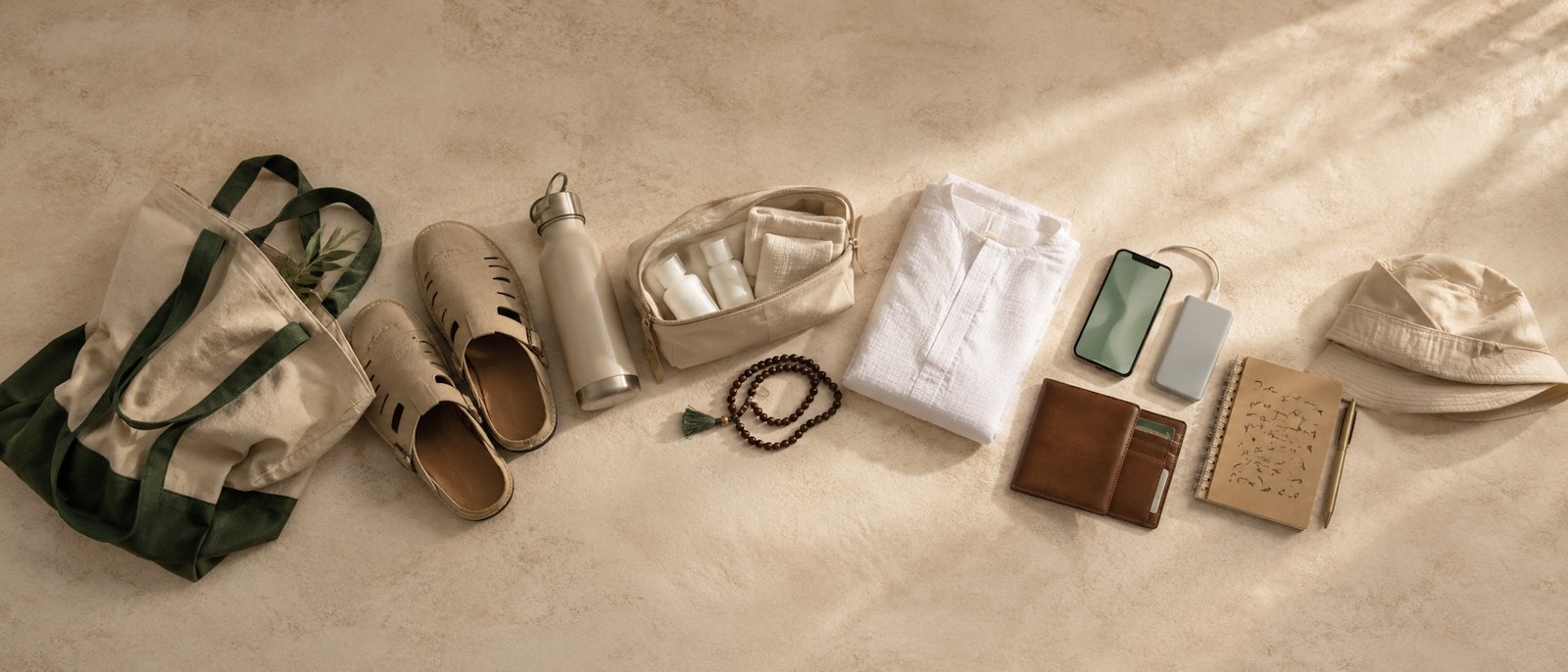
The standard list is in our Packing Checklist — these are the items that don't appear there but that experienced pilgrims wish they had brought.
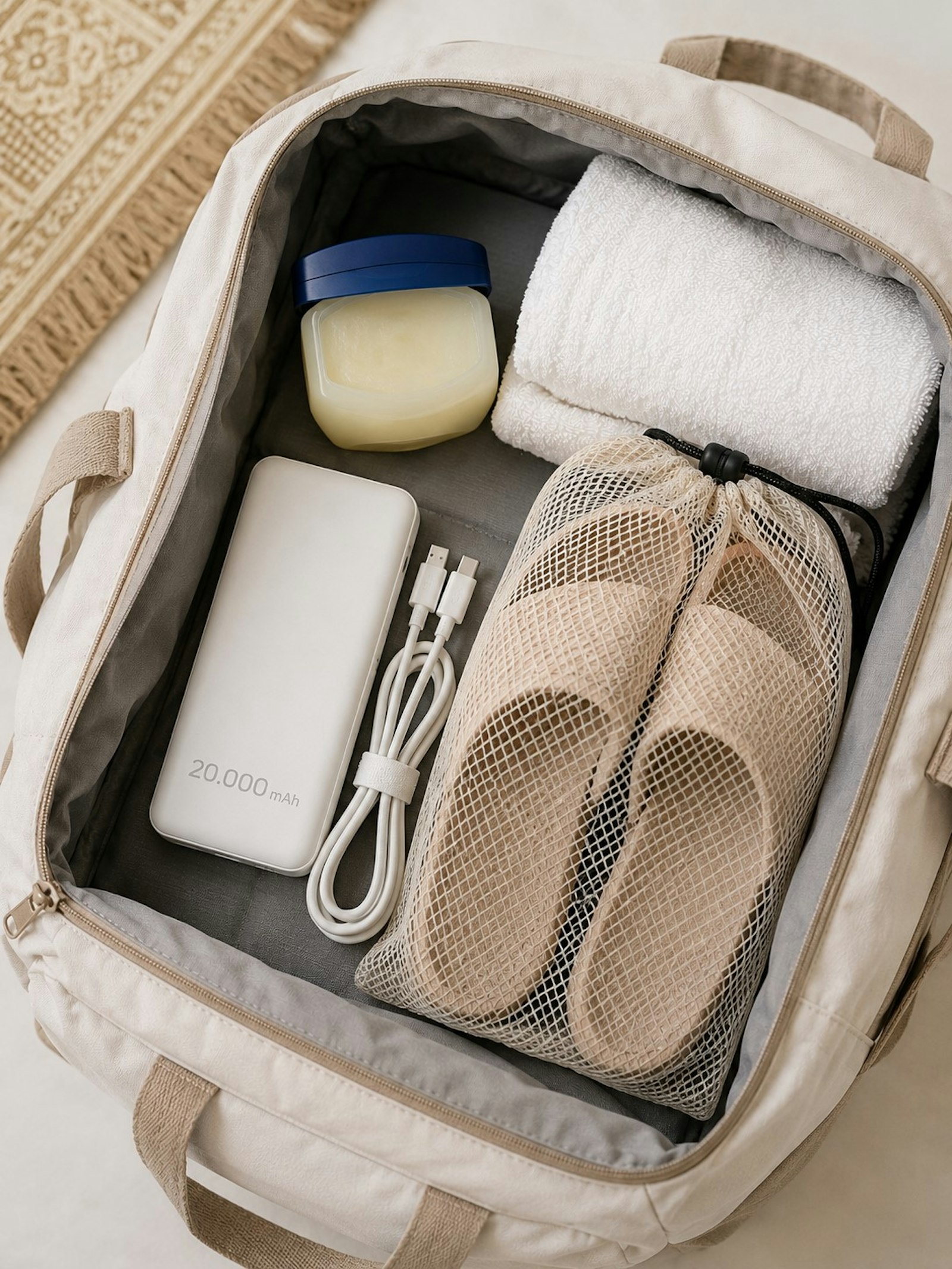
Anti-Chafe Jelly - Vaseline
Men in Ihram walk several kilometres over marble — chafing is one of the most common avoidable complaints. Apply fragrance-free jelly (vaseline) to inner thighs and underarms before entering Ihram. Reject any product listing parfum, fragrance, or aroma.
High-Capacity Power Bank
Your phone is your Nusuk permit, navigation, and emergency contact. 20,000 mAh minimum for two weeks (4–5 full charges). Saudi sockets are Type G — same as the UK, no adapter needed. Pack a 1.5–2 m cable.
A Compact Shoe Bag
Outdoor racks at Haram gates hold thousands of identical pairs. A mesh drawstring bag means you carry your sandals inside the Haram, eliminating lost-shoe risk. Marble floors are A/C-cold pre-Fajr — non-slip socks inside, sandals in your bag.
Tech-Savvy Pilgrim: Essential Apps and Power Management
The right set-up eliminates several categories of problem — the wrong set-up creates new ones
Haram Wi-Fi is congested at peak prayer times and data inside the Mataf during major prayer events is unreliable on every network. Before travel, download offline maps for Makkah and Madinah covering a 5 km radius around each Haram. Screenshot your Nusuk permit QR codes too — they scan offline.
All three major Saudi operators have airport branches at King Abdulaziz International (Jeddah) and Prince Mohammad bin Abdulaziz Airport (Madinah). SIM registration requires your passport. eSIM options are now available for compatible handsets, allowing activation before travel.
Operator | Tourist package | In-Haram coverage | eSIM |
|---|---|---|---|
STC | SAR 50–100 / 10–20 GB | Strongest historically | Yes |
Mobily | SAR 50–100 / 10–20 GB | Reliable | Yes |
Zain | SAR 50–100 / 10–20 GB | Reliable | Yes |
Shoe Management: How to Never Lose Your Footwear in the Haram
Lost sandals are not a minor inconvenience — barefoot on hot marble blisters form fast, and replacement sandals near the Haram are expensive and rarely comfortable
When you leave shoes on an outdoor rack, photograph the gate sign and rack section before walking in. This takes five seconds and eliminates the problem of returning to the wrong gate. Name the photo with the gate number for quick retrieval. Even better: agree a fixed gate and rack for your entire trip and always use the same one — after two or three visits you won't need the photograph.
However, the most secure and convenient method is simply to keep your footwear with you. Carry a lightweight, inexpensive drawstring bag specifically for your shoes. You can slip your shoes inside and carry them onto the carpets or place them in the cubbies directly behind you while you pray. This completely removes the risk of losing your shoes or having them mistakenly taken by someone else in the crowds.
Cumulative walking during active worship periods regularly exceeds 15–20 km per day. Thin rubber flip-flops cause blistering and plantar fasciitis within 2–3 days at this level of use. The table below covers what works for each scenario.
Wearer / scenario | Recommended | Avoid |
|---|---|---|
Men in Ihram | Quality leather or sport sandals, contoured footbed, ankle bones exposed | Thin rubber flip-flops, closed-toe shoes |
Women in Ihram | Comfortable flats or slip-ons, moisture-wicking socks for marble | New, unbroken-in shoes |
Non-Ihram travel & Ziyarat | Quality trainers with cushioned soles | Worn-down soles or unsupportive flats |
Inside the Haram (any pilgrim) | Non-slip socks + sandals carried in a mesh bag | Bare feet on cold A/C marble pre-Fajr |
Pro tip
Pack gel insoles that can be transferred between shoes. The marble floors in both Masajid are hard regardless of footwear quality, and gel insoles add meaningful cushioning for multi-hour prayer sessions.
Laundry and Hygiene Hacks for Long-Term Stays
Independent solutions cost a fraction of the hotel rate — and the fragrance-free rule applies to everything
The Aziziyah district (~2–3 km from the Haram) has dense independent laundry shops. A 5–8 kg bag costs SAR 15–30 vs. SAR 80–150 at hotels. Drop in the morning, collect in the evening. For Ihram garments specifically, pack four to five sachets of fragrance-free travel detergent — a quick hand-wash dries within 4–6 hours in the dry Hijaz climate.
The fragrance-free rule applies across several toiletry categories. Front-of-pack labels lie — read the ingredients. If you see parfum, fragrance, or aroma, the product violates Ihram. The test is identical for every item below.
Item | Status in Ihram | Confirm by | How to apply |
|---|---|---|---|
Laundry detergent | Permitted if fragrance-free | Reading ingredients list | Hand-wash, hang to dry 4–6 hours |
Vaseline (anti-chafe) | Permitted if unscented | Plain pharmacy version | Apply before entering Ihram |
Sunscreen | Permitted if fragrance-free | Reading ingredients list | Apply before Ihram, allow to absorb |
Deodorant | Permitted if fragrance-free (most scholars) | Ingredients list, not front-of-pack | Apply before Ihram; pack 2 sticks |
Hand soap | Permitted if unscented or baby formula | "Fragrance-free" label | Use throughout |
Frequently Asked Questions
Find quick, expert answers to your most common questions about travel hacks, packing, and making your Umrah journey completely stress-free.
Which mobile network offers the best coverage in Haramain?
Coverage inside the Haramain has improved significantly across all major Saudi operators in recent years, with all three investing heavily in in-building infrastructure. For most pilgrims, any current Saudi tourist SIM with a data package will perform adequately for permit access, navigation, and messaging. Purchase a local SIM on arrival at the airport or from authorised retailers in Makkah or Madinah.
What is the most effective way to avoid blisters during Saʼi?
The most effective blister prevention for Saʼi is a combination of appropriate footwear with adequate cushioning (not thin flip-flops), fragrance-free barrier balm applied to heels and pressure points before starting, and moisture-wicking socks for non-Ihram sections. Saʼi involves seven lengths covering approximately 3.15 km in total. If you have any existing hotspots, cover them with blister plasters before you begin rather than waiting for the blister to develop.
How can I save money on inter-city travel between Makkah and Madinah?
The Haramain High-Speed Railway is the most cost-effective option: economy tickets cost SAR 60–80 (approximately £12–16) per person for the roughly two-hour journey, compared to SAR 300–450 for a private taxi. The Makkah HHR station is about 10 km from the Haram, so factor in a local transfer (SAR 20–40). Book through the official HHR app or hhr.sa two to three days ahead during busy periods. For groups of four or more with elderly relatives or young children, a pre-booked private transfer can be competitive on a per-person basis while offering door-to-door convenience.
Is it better to exchange currency at home or in Saudi Arabia?
Airport exchange counters in both your home country and Saudi Arabia consistently offer the least favourable rates. For the best value, exchange a small amount before departure to cover immediate arrival expenses, then exchange the bulk of your budget at exchange offices in Makkah or Madinah — those in the Misfalah neighbourhood in Makkah and on King Faisal Road in Madinah tend to offer competitive rates close to the Haram. Rates vary daily; compare a few offices before committing.
What are the “hidden gems” in Makkah for quiet contemplation?
The upper floors of the Masjid al-Haram expansion wings – accessible by escalator – are significantly less crowded than the ground level outside the five daily prayers. The view of the Kaaba from above is unobstructed and the atmosphere is considerably quieter; many pilgrims find extended personal duʼa easier here. The gardens adjacent to the Haram’s outer perimeter in the early morning after Fajr, before the city wakes fully, are consistently peaceful. For outdoor contemplation, the hillside areas around Jabal Nour are quiet before the tour groups arrive in the mid-morning, though the climb is steep.
Your pilgrimage in the safest hands online
The world's #1 halal-friendly booking platform. Officially aligned with Saudi authorities, airline and lifestyle rewards programs.






Scan the QR code with your phone camera to download it.


Plan Your Perfect DIY Umrah Today
Hotels in Makkah, Madinah, and across Saudi Arabia — with the proximity, amenities, and laundry options that make these tips work.