

Madinah Food Guide: Best Restaurants, Cheap Eats & Dates
Dining in Madinah: A Taste of Local Hospitality
Madinah's food scene is truly a reflection of its global role—it's a pilgrim's paradise! The incredible diversity of culinary options, particularly near Masjid an-Nabawi, reflects the millions who arrive annually from all parts of the Muslim world.
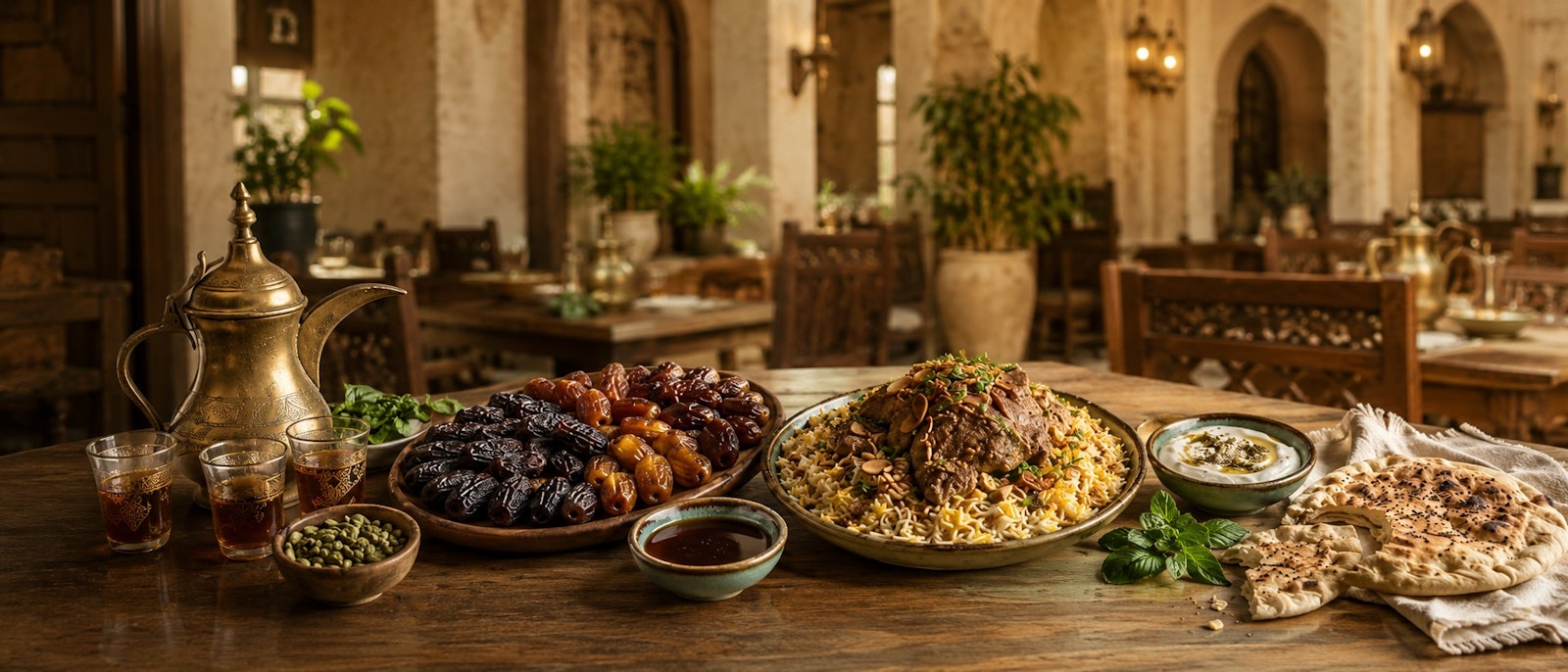
Every restaurant, street stall, and date shop is ready to cater to a mosaic of international tastes and budgets. That means you can genuinely find it all, from authentic Arabic Mandi and comforting Turkish pide to zesty South Asian karahi, plus local Hijazi breakfast must-tries, and, of course, some of the world's most exquisite dates—all just steps from the Prophet's Mosque.
Consider this your go-to guide for the top places to eat, the essential dishes you absolutely must try, and the very best souvenirs to pack in your suitcase.
Madinah Dining at a Glance
A quick-reference guide to every dining tier — from upmarket hotel restaurants to sub-15 SAR street stalls — with cuisine type and price range for 2026.
Dining Tier | Best For | Cuisine | Approx. Cost |
|---|---|---|---|
Arabesque (Shaza Hotel, Gate 21) | Special occasion, group dinner | Arabic / International buffet | SAR 99–115 |
Hotel buffets (central district) | Convenience, variety, families | International | SAR 60–100 |
Hadramout Kitchen | Authentic Mandi & Kabsa | Yemeni / Saudi | SAR 20–35 |
Mid-range sit-down restaurants | Everyday meals, groups | Arabic, Turkish, South Asian | SAR 25–55 |
Gate 330 street stalls | Quick, cheap, post-prayer | Shawarma, mutabbaq, South Asian | SAR 5–20 |
Date market stalls | Gifting, tastings | Dates, Arabic coffee | SAR 20–80 per box |

Tip
Restaurants close briefly during the adhan for each prayer. Plan meals to start 20–30 minutes before the call or wait 15 minutes after prayers end to avoid locked doors and queues.
Also worth trying: Pilgrim-recommended restaurants in Madinah
The following restaurants are frequently recommended by European and Turkish pilgrims across review platforms and social media, and are worth adding to your shortlist alongside the main options in this guide.
Restaurant | Cuisine | Known For | Proximity to Haram |
|---|---|---|---|
CznBurak (Chef Burak) | Turkish | Theatrical Turkish dishes; viral social media following; upmarket atmosphere | Central hotel district |
Huda Turk | Turkish | Authentic pide, kebab and Turkish staples; walking distance from Haram; popular with Turkish pilgrims | Walking distance |
Turkish Steakhouse | Turkish / Grills | Adana and lamb kebab, steaks; clean family seating; popular with European groups | Near Prince Mohammed Bin Abdulaziz Rd |
Zaitoon | South Asian / Arabic | English and Urdu-speaking staff; family-friendly; high turnover popular with UK pilgrims | Near Masjid an-Nabawi |
Hadramout Kitchen | Yemeni / Saudi | Best Mandi and Kabsa in Madinah; large platters ideal for sharing | Central district |
Al Nakheel | Saudi | Traditional Kabsa, Madfoon (slow-cooked lamb), mezze; warm décor | Central Madinah |
Best Restaurants in Madinah for Families and Groups
Madinah has a well-developed mid-range and upmarket dining scene, with several restaurants that cater specifically to larger groups – important for families travelling together who need space, varied menus, and a relaxed pace.
- Mandi and Kabsa restaurants are the backbone of group dining in Madinah. These traditional Saudi dishes – slow-cooked rice with lamb or chicken, served communally on large platters – are found throughout the city at prices ranging from SAR 25–60 per person. The atmosphere is informal, the portions are enormous, and the food is exactly what a hungry pilgrim needs after a full day at the mosque. Look for restaurants displaying whole roasted lamb in their windows; freshness and turnover are the key quality signals.
- Saleeg – white rice cooked in bone broth and topped with roasted chicken – is a local Hijazi speciality less commonly found outside Madinah and well worth ordering over the more internationally familiar Kabsa if it appears on the menu.
Arabesque Restaurant: Upmarket Dining Near the Haram
Arabesque is among the most consistently recommended upmarket dining options in the central Madinah area, offering a fusion of Arabic and international cuisine in a formal setting. The restaurant caters well to larger group bookings and is suited to family celebrations or a considered sit-down meal after Ziyarat. The menu covers grilled meats, mezze platters, and Arabic specialities in a setting considerably calmer than the street-level dining below.
For families seeking a step up from standard hotel buffets without moving far from the mosque, Arabesque represents one of the most reliable options in the central district.
The Legend of Gate 330: Cheap Eats and Street Flavours
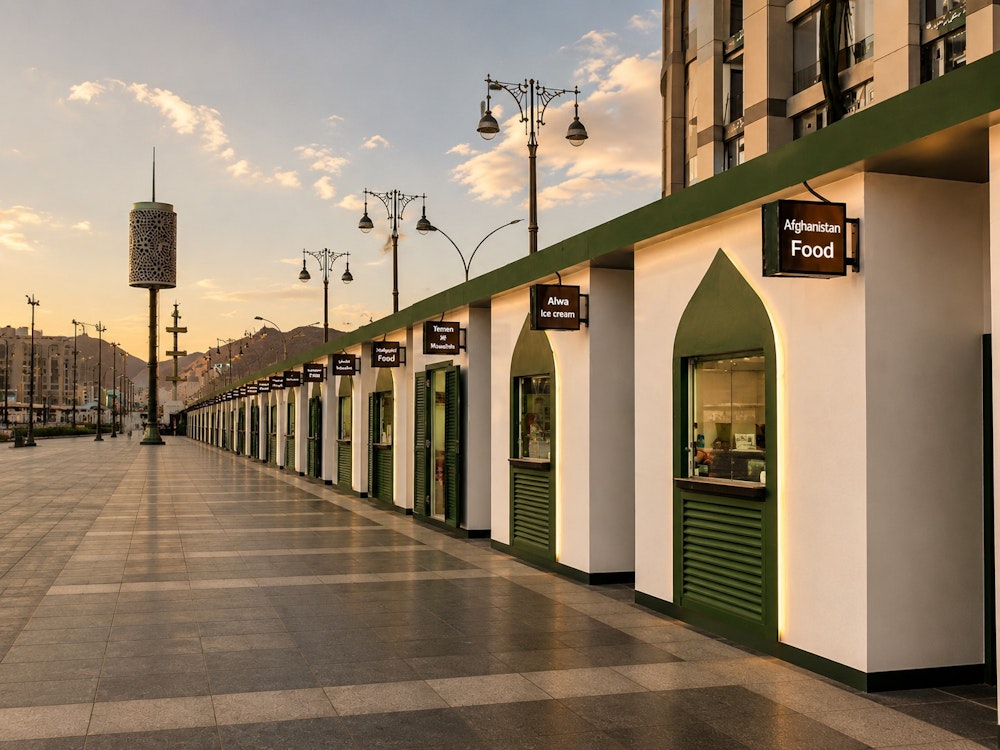
Gate 330 – one of the numbered entrance gates on the northern perimeter of Masjid an-Nabawi – has become synonymous with affordable, high-quality street food in a way that no other gate area in Madinah quite matches.
The gate sits adjacent to one of the main pedestrian routes connecting the large budget and mid-range hotel blocks to the mosque entrance. Thousands of pilgrims pass this point multiple times daily – heading to the mosque before Fajr, returning after Isha – and the food economy that has grown up around it reflects that relentless foot traffic.
What to try at Gate 330:
- Fresh shawarma – SAR 6–10
- Mandi rice – SAR 15–25, served in large portions
- Mutabbaq (stuffed flatbread) – SAR 5–8
- Grilled corn – widely available from pavement vendors
- South Asian street food – an array of dishes catering to the large Pakistani and Indian pilgrim community
Many stalls operate through the night, serving pilgrims returning from late prayers or departing for Tahajjud.
The atmosphere around Gate 330 – particularly in the hour after Isha – is one of the more memorable culinary experiences Madinah offers: outdoor eating, the sound of the adhan echoing across the plaza, pilgrims from dozens of countries sharing tables at pavement stalls. It is unhurried, generous, and entirely local in character.
Insider tip
Arrive after Isha when the stalls are fully stocked and the crowds have thinned slightly from the post-prayer peak. Bring cash – smaller stalls operate cash-only.
Turkish Delights: Finding Authentic Home Tastes in Madinah
The Turkish pilgrim community is one of the largest national groups in Madinah throughout the year, and the city's restaurant scene has adapted accordingly. Turkish cuisine is well represented, particularly in the streets north and west of Masjid an-Nabawi where Turkish tour groups and independent travellers concentrate.
Street food and bakeries: Turkish pide bakeries – serving boat-shaped flatbreads topped with minced meat, cheese, or egg – are among the most visible Turkish food outlets near the mosque area. Lahmacun (thin flatbread with spiced minced meat) is widely available and remains one of the most satisfying quick meals for Turkish pilgrims seeking a familiar flavour. Döner kebab is ubiquitous throughout the city at every price point.
Sit-down meals: Turkish-run restaurants in the central hotel district serve recognisable favourites:
- Adana kebab – spiced, hand-minced grilled meat
- İskender kebab – sliced döner over flatbread with tomato sauce and yoghurt
- Mercimek çorbası – Turkish lentil soup
- Grilled chicken dishes – familiar to any Turkish palate
Lentil soup in particular – a staple of Turkish Ramadan and everyday eating – appears on many menus in Madinah year-round, something Turkish pilgrims often note with quiet appreciation.
Sweets and gift boxes: Baklava and Turkish sweets are sold in specialist confectionery shops near the mosque gates, alongside Arabic sweets such as Kunafa and Qatayef. These shops do a brisk trade in gift boxes, which many pilgrims purchase alongside dates to take home.
The Date Souks: Buying Premium Ajwa and Sukkari Dates
The Prophet (SAW) said, "If somebody takes seven Ajwa dates every morning, he will not be affected by poison or magic on that day till night."
Agreed upon by Bukhari, Muslim and several others
No visit to Madinah is complete without purchasing dates – and no date carries the significance of the Ajwa. Dark, soft, and deeply sweet, the Ajwa is grown exclusively in the Madinah region and has been cultivated here since the time of the Prophet (PBUH). It is the most spiritually significant date in Islamic tradition, and the most sought-after by pilgrims taking gifts home.
Understanding the varieties:
Variety | Appearance | Flavour Profile | Best For |
|---|---|---|---|
Ajwa | Small, dark, wrinkled | Rich, earthy, mildly sweet | Gifts, spiritual significance |
Sukkari | Golden, soft | Very sweet, caramel-like | Everyday eating, universal appeal |
Medjool | Large, plump | Luxurious, toffee-sweet | Premium gifting |
Safawi | Dark brown, firm | Bold, mildly smoky | Longer shelf life, travel |
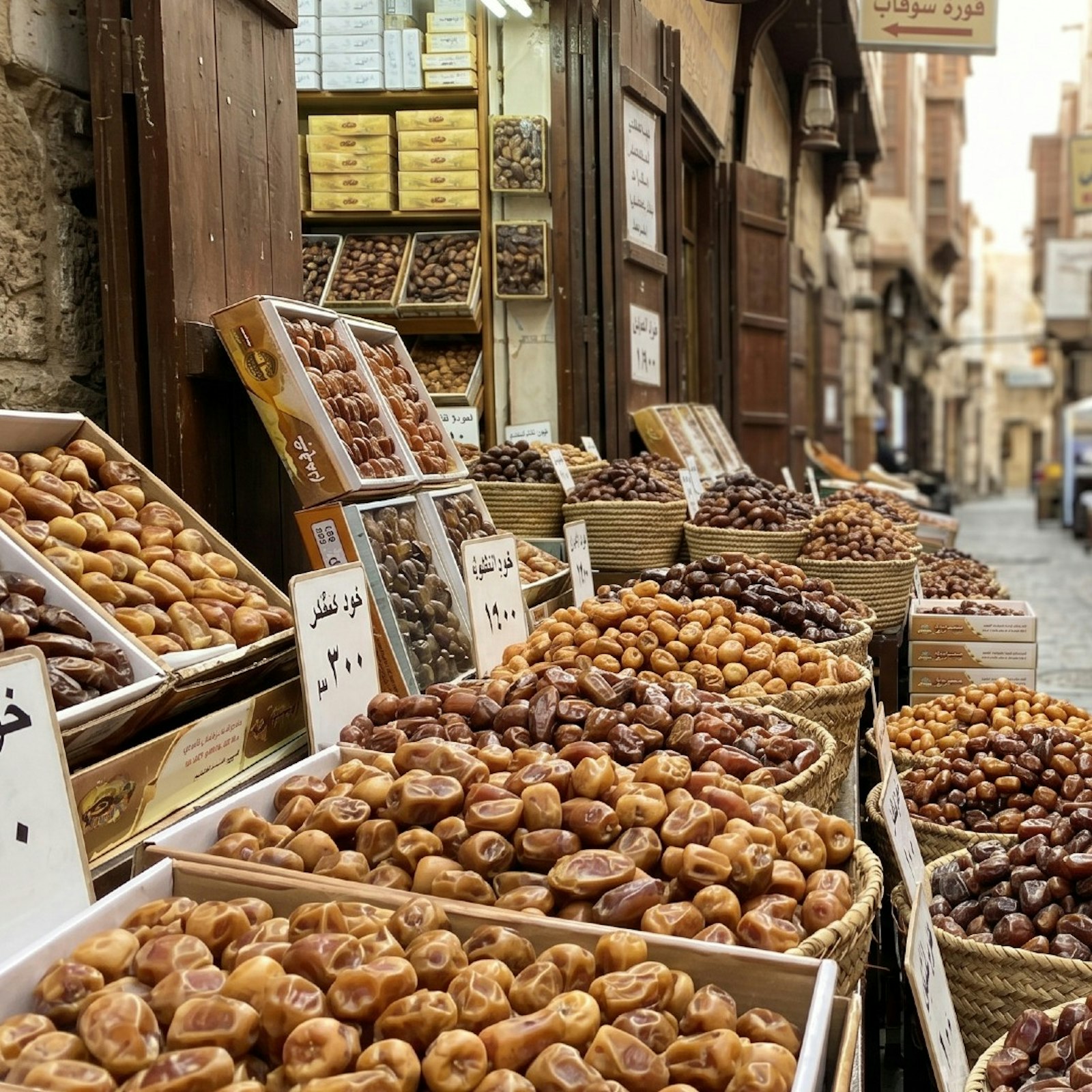
The date markets near the mosque gates are the most accessible buying point, with vendors offering tastings of multiple varieties before purchase – take advantage of this. Prices are reasonable here but slightly higher than the wholesale markets further from the centre. For bulk buying, the wholesale date souks on the outskirts of Madinah offer considerably more variety and better pricing per kilogram; worth the short taxi ride if you are buying large quantities for an extended family.
Most reputable date shops will vacuum-seal your purchase on request, which significantly extends shelf life and simplifies airport security. Ask for this when buying – it is a small additional cost and entirely worth it.
Traditional Hijazi Coffee and Breakfast Spots
The Hijazi breakfast is one of the great unsung pleasures of a Madinah stay. Arriving early to the café and breakfast spots that open before Fajr, finding a table while the city is still quiet, and eating before the first prayer of the day – this is a rhythm that rewards those who notice it.
Arabic coffee (Qahwa) – lightly roasted, flavoured with cardamom and sometimes saffron or cloves – is the defining drink of Madinah hospitality. It is served in small handleless cups and typically accompanied by dates. The correct way to signal you have had enough is to tip the cup gently from side to side; a respectful detail worth knowing.
Foul (slow-cooked fava beans with olive oil and lemon) is the cornerstone of the Hijazi breakfast, served with Tamees – a soft, circular flatbread with a characteristic hollow centre – and topped with options including eggs, cream cheese, and chillies. This combination sustains pilgrims through the morning prayers and the Ziyarat circuit far better than hotel buffets tend to.
Insider tip
Breakfast spots open from approximately 4 am, catering to pilgrims returning from Fajr. The best are found along the smaller streets behind the main hotel facades – look for plastic chairs, metal tables, and a queue of locals. If the locals are eating there, the food is worth eating.
Frequently Asked Questions
Practical answers about eating in Madinah
Where can I find the best cheap eats near Gate 330 in Madinah?
The streets immediately surrounding Gate 330 on the northern side of Masjid an-Nabawi are the best area for affordable, high-quality street food in central Madinah. Fresh shawarma (SAR 6–10), Mandi rice (SAR 15–25), mutabbaq (SAR 5–8), and South Asian street food are all available from the stalls and small restaurants that line the pedestrian routes leading to the gate. The area is busiest – and the food freshest – in the hour after Isha prayer. Bring cash for smaller stalls.
Which restaurants in Madinah are best for Turkish pilgrims?
Turkish cuisine is well represented in central Madinah, particularly north and west of Masjid an-Nabawi. Look for Turkish pide bakeries and lahmacun stalls for quick, familiar meals; sit-down Turkish restaurants in the hotel district serve adana kebab, lentil soup, and grilled dishes closely aligned with what Turkish pilgrims eat at home. Most hotel-district restaurants include at least some Turkish dishes on their menus given the size of the Turkish pilgrim community. Baklava and Turkish sweet shops near the mosque gates also carry a strong selection for those wanting familiar desserts or gift boxes.
What are the must-buy dates in Madinah for gifts?
Ajwa dates are the essential purchase – spiritually significant, grown only in Madinah, and unlike any other variety. For wider appeal, Sukkari (sweet and soft, universally liked) and Medjool (large and luxurious) round out a strong gift selection. Most date shops near the mosque gates will assemble mixed gift boxes combining varieties and can vacuum-seal them for travel. For the best prices on bulk buying, the wholesale date souks on the outskirts of the city offer the widest selection at the most competitive rates.
Is there a food court inside the Anwar Al Madinah Mall?
Yes, Anwar Al Madinah Mövenpick Hotel and the adjoining Anwar Al Madinah complex include dining options within the building, making it a convenient choice for pilgrims staying in the central hotel zone who want enclosed, air-conditioned dining close to the mosque. The food courts and hotel restaurants here serve a range of Arabic and international options across different price points. For pilgrims who prefer to eat within the air-conditioned comfort of a mall environment rather than navigating street stalls, this is one of the most conveniently located options in central Madinah.
Your pilgrimage in the safest hands online
The world's #1 halal-friendly booking platform. Officially aligned with Saudi authorities, airline and lifestyle rewards programs.






Scan the QR code with your phone camera to download it.


Plan Your Madinah Stay with Halalbooking
The closer your hotel to Masjid an-Nabawi, the easier it is to eat well and eat often without disrupting your prayer schedule. Hotels in the central zone give direct access to Gate 330, the date souks, and the mid-range restaurant district.