Road trips with Halalbooking: A journey through the Balkans from the Alps to the Aegean
The Balkans are one of Europe’s most rewarding regions to explore by road. Within a compact area, travellers encounter an exceptional range of landscapes, cultures and histories shaped by centuries of shifting borders and overlapping civilisations. Alpine lakes, Ottoman bazaars, medieval coastal towns and vibrant modern capitals all form part of a journey that feels constantly varied yet surprisingly cohesive.
This journey also traces the legacy of empires that shaped the region, particularly the Ottoman influence that remains visible in architecture, culture and daily life across many of these destinations.
Over the course of a single journey, travellers can move seamlessly between contrasting experiences: walking along the fortified walls of Adriatic cities, pausing for coffee in Ottoman-era marketplaces, hiking through mountain national parks and exploring lakeside towns that have served as cultural centres for centuries.
This route connects some of the most captivating destinations across southeastern Europe, following a scenic path through the western Balkans. Beginning in Slovenia, the route continues to Croatia, Bosnia and Herzegovina, Montenegro, Albania, Kosovo and North Macedonia, before continuing into Greece and finally European Türkiye. Along the way, travellers encounter historic cities shaped by multiple empires, spectacular natural landscapes and vibrant local cultures that continue to evolve today.
While the distances are manageable, travelling across multiple countries requires some advance planning, particularly when it comes to car rental and border crossings.
Route overview and practicalities
This itinerary is best enjoyed over 16–18 days, allowing for a relaxed pace with time to explore each destination without long or tiring drives. Travellers with less time can complete a shortened version in 10–12 days by focusing on selected stops and planning longer driving days.
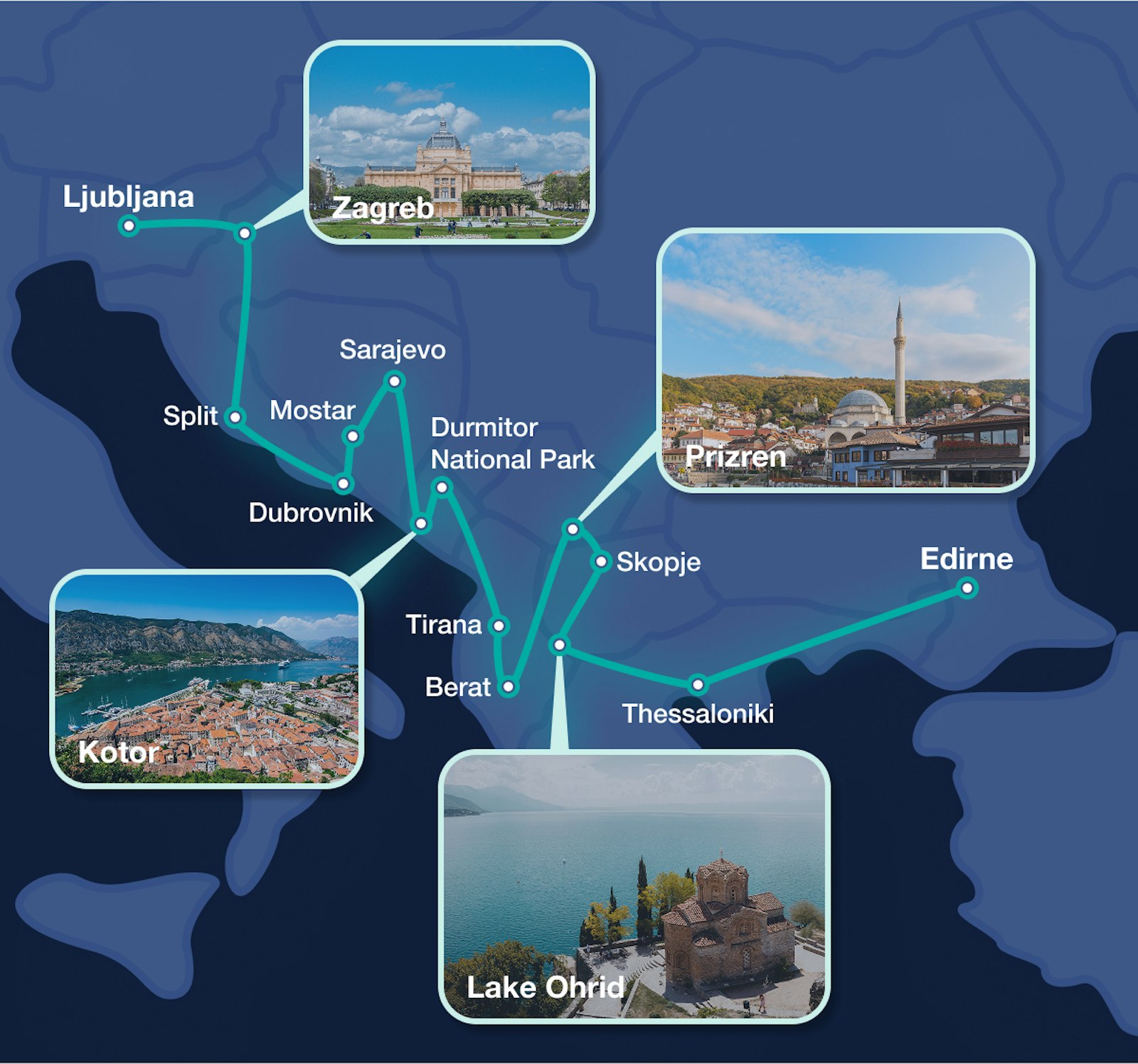
The full route covers approximately 2,800–3,100 km, depending on variations and optional detours along the way.
Slovenia (Ljubljana) → Croatia (Zagreb): ~140 km
Croatia (Zagreb → Split → Dubrovnik): ~650–750 km (depending on route and coastal detours)
Croatia (Dubrovnik) → Bosnia and Herzegovina (Mostar): ~130 km
Bosnia and Herzegovina (Mostar → Sarajevo): ~130 km
Bosnia and Herzegovina (Sarajevo) → Montenegro (Kotor): ~200–230 km
Montenegro (Kotor → Durmitor National Park): ~170 km
Montenegro (Durmitor) → Albania (Tirana): ~180–220 km
Albania (Tirana → Berat): ~100–120 km
Albania (Berat) → Kosovo (Prizren): ~180–220 km
Kosovo (Prizren) → North Macedonia (Skopje): ~90 km
North Macedonia (Skopje → Lake Ohrid): ~170 km
North Macedonia (Lake Ohrid) → Greece (Thessaloniki): ~230–260 km
Greece (Thessaloniki) → Türkiye (Edirne): ~300–350 km
Daily distances and driving times are indicated throughout the itinerary. These estimates do not include potential delays at border crossings, which can significantly extend travel time during peak periods.
How to start and end your trip
The most convenient starting point is Ljubljana Jože Pučnik Airport (LJU), which provides easy access to the beginning of the route. As the journey concludes in Edirne, in European Türkiye, the nearest major departure hub is Istanbul Airport (IST), located approximately 2.5–3 hours away by road.
As this is a one-way itinerary, flights should be booked as multi-city: arriving in Ljubljana and departing from Istanbul.
Best transport: rental car
A rental car offers the greatest flexibility for exploring multiple countries along the route, particularly as some of the most scenic stretches pass through mountains, national parks and coastal landscapes.
However, this journey requires careful planning. As the route begins in Slovenia and ends in Türkiye, one-way international drop-offs are often not permitted or may incur very high fees. In practice, it is usually difficult to rent a car in Slovenia and return it in Edirne.
For this reason, many travellers choose alternative arrangements, such as returning the vehicle to the original country of rental or arranging drop-off in a nearby major city such as Sofia or Belgrade. Another option is to split the journey, using separate rental cars for different sections of the route.
Travellers should also confirm in advance that their rental provider permits travel across all countries included in the itinerary. For non-EU countries, an international motor insurance certificate (Green Card) may be required and should be checked with the rental company in advance.
Important logistics: borders and visas
This route crosses multiple international borders, including transitions in and out of the Schengen Area, so preparation is essential.
Visa requirements - Slovenia, Croatia and Greece are part of the Schengen Area, while Bosnia and Herzegovina, Montenegro, Albania, Kosovo, North Macedonia and Türkiye are not. Travellers who require visas should ensure they hold a multiple-entry Schengen visa where applicable.
Passport control - Passport checks and occasional vehicle inspections can be expected at non-Schengen borders along the route.
Border wait times - During peak summer months (July and August), border crossings can become extremely busy, with delays of several hours. Travelling in May–June or September–October generally offers a smoother experience.
Best travel seasons
The most comfortable times for this journey are May–June and September–October, when temperatures are milder, landscapes are at their most vibrant and roads are less crowded.
Travelling as a Muslim in the Balkans
The Balkans offer a diverse and often surprising experience for Muslim travellers, with many destinations reflecting a strong Ottoman heritage. Cities such as Sarajevo, Mostar, Prizren and Skopje have well-established Muslim communities, where mosques, halal food and Islamic cultural sites are easily accessible.
In coastal areas and parts of Greece, halal options may be more limited, but vegetarian and seafood dishes are widely available. Travellers may also wish to plan ahead for prayer facilities in more remote or rural areas, particularly when exploring national parks or mountain regions.
Day 1–2 – Ljubljana and Lake Bled, Slovenia
Your journey begins in Ljubljana, Slovenia’s relaxed and elegant capital. Compact and easily walkable, Ljubljana offers an ideal introduction to the Balkans.
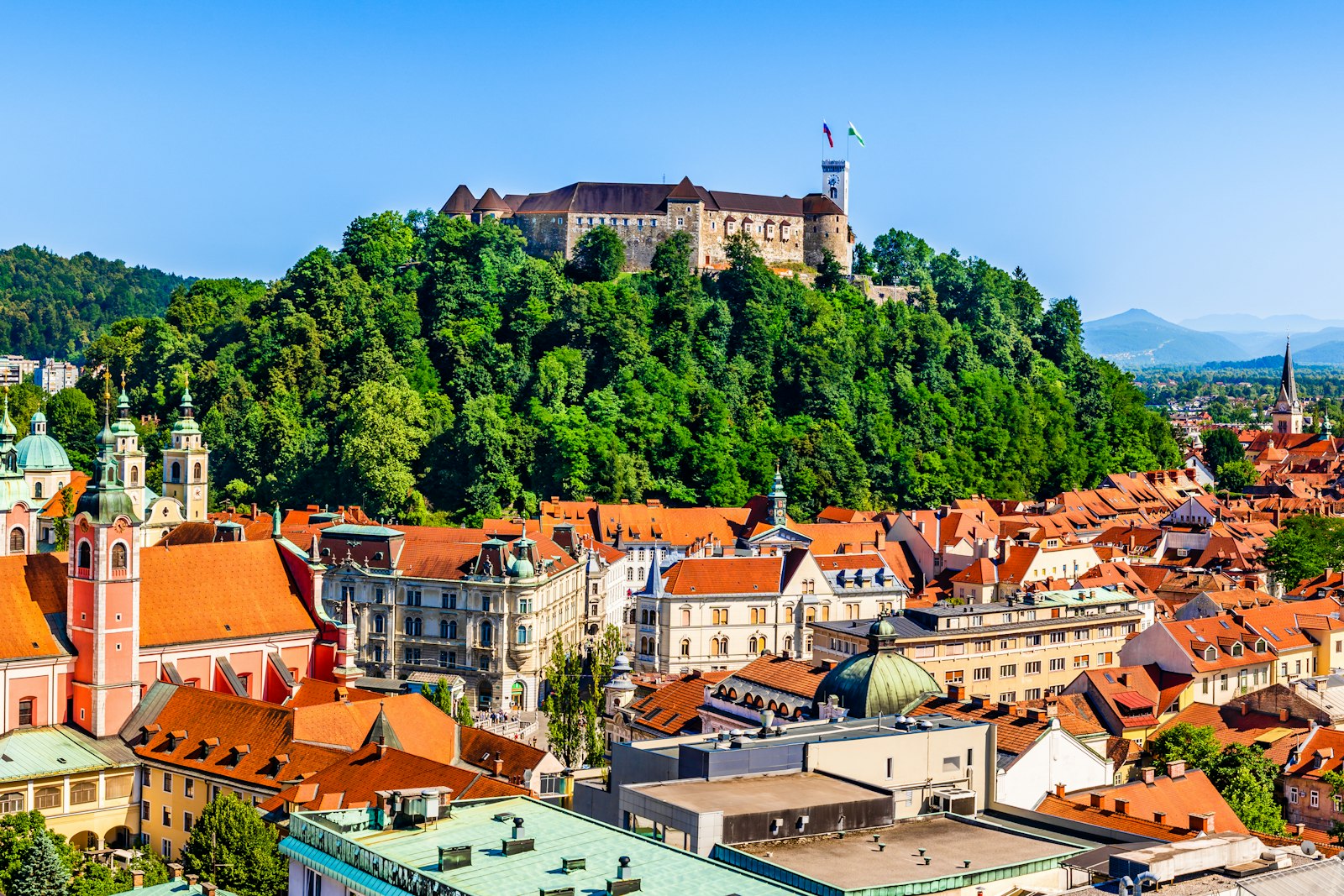
The old town sits along the Ljubljanica River, where bridges and pastel-coloured buildings create a charming urban landscape. At the heart of the city stands Ljubljana Castle, which overlooks the rooftops and provides sweeping views of the surrounding hills. One of the most pleasant ways to explore the city is simply to wander along the riverside promenades, where cafés and restaurants spill out onto terraces beneath leafy trees. The famous Triple Bridge, designed by architect Jože Plečnik, links the historic centre with the lively squares beyond.
From Ljubljana, a short drive of about 55 km (around 1 hour) brings you to Lake Bled, one of Slovenia’s most iconic landscapes. The lake is framed by forested hills and the peaks of the Julian Alps. In its centre sits a tiny island topped by a church, while Bled Castle rises dramatically on a cliff above the water. Visitors can row traditional wooden boats to the island or walk the scenic path that circles the lake.
Nearby Triglav National Park offers opportunities for hiking, waterfalls and alpine scenery – a reminder that the Balkans include some of Europe’s most impressive mountain landscapes.
From here, the route begins to move beyond Central Europe and into the layered cultural landscapes that define the Balkans.
Day 3 – Zagreb, Croatia
Bled → Zagreb Approx. 180 km | 2 hours
Crossing the border into Croatia, the road leads to Zagreb, the country’s capital.
Border note: Croatia is part of the Schengen Area, so travellers entering from Slovenia may not encounter passport checks. However, this changes when continuing into non-Schengen countries later in the route.
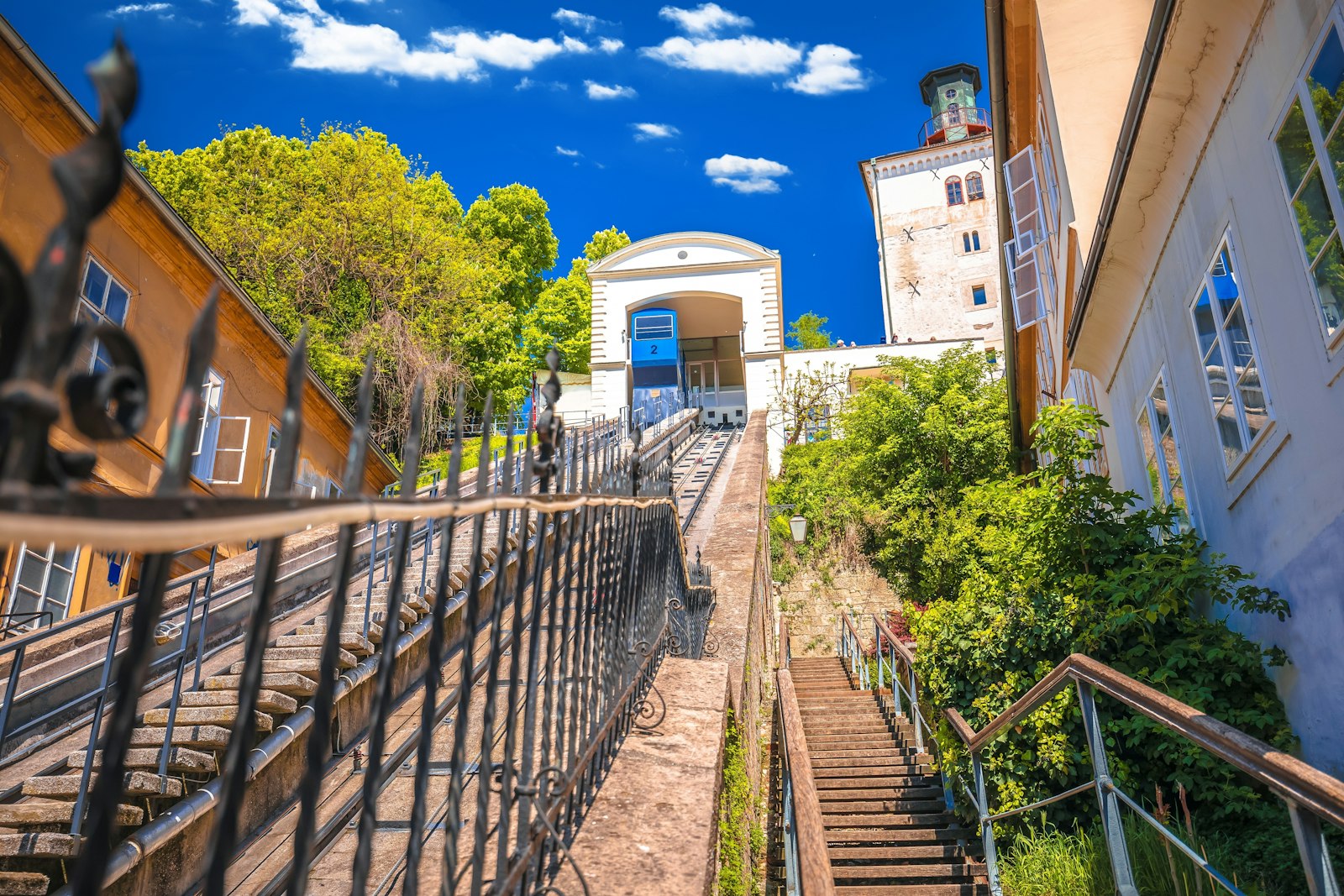
Zagreb offers a different atmosphere from the Adriatic coast, with elegant Austro-Hungarian architecture and a lively café culture shaping much of the city centre. The historic Upper Town (Gornji Grad) is characterised by medieval streets, churches and colourful rooftops, while the Lower Town (Donji Grad) unfolds through grand boulevards, parks and museums. Connecting the two, the Zagreb Funicular – one of the shortest cable railways in the world – provides a distinctive and atmospheric link between the city’s upper and lower levels.
The city’s central square, Ban Jelačić Square, forms the heart of urban life and connects several important streets and markets. Nearby, the Dolac Market offers a vibrant glimpse into everyday Croatian life, with stalls selling fresh fruit, vegetables, cheeses and baked goods. Green spaces extend beyond the centre, with areas such as Jarun Lake offering a relaxed setting for walks, cycling and time by the water. Zagreb’s café culture reflects strong Central European influences – sitting for coffee here often extends into long, unhurried conversations and relaxed afternoons.
Day 4–5 – Split and Dubrovnik, Croatia
Zagreb → Split Approx. 410 km | 4–5 hours
Driving south toward the Adriatic coast reveals Croatia’s dramatic coastal scenery.
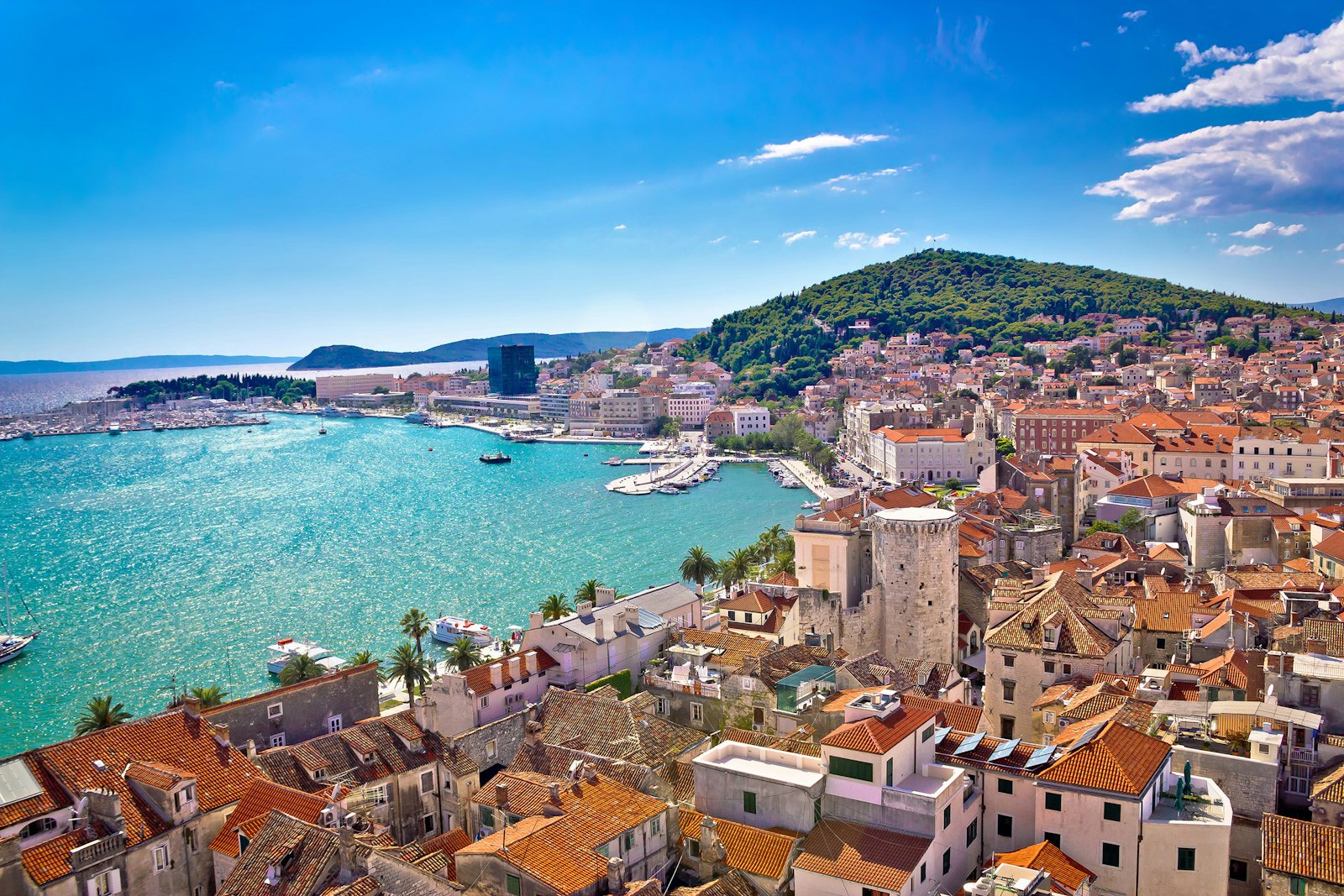
The city of Split grew around the enormous Palace of Diocletian, built by the Roman emperor in the 4th century. Over the centuries, houses, shops and cafés were gradually built within the palace walls, turning the ancient structure into a living part of the modern city. Walking through Split means wandering through Roman corridors that open into lively squares filled with restaurants and musicians. The city’s waterfront promenade, known as the Riva, is one of the most pleasant places to relax and watch daily life unfold.
From Split, continue south to Dubrovnik.
Split → Dubrovnik Approx. 230 km | 3–4 hours
Dubrovnik is one of the most spectacular historic cities in Europe. Surrounded by massive stone walls overlooking the Adriatic Sea, the old town has remained remarkably well preserved. Walking along the city walls offers panoramic views of terracotta rooftops, church domes and the sparkling sea beyond. Within the walls, narrow streets lead to monasteries, palaces and quiet courtyards that reflect Dubrovnik’s history as a powerful maritime republic.
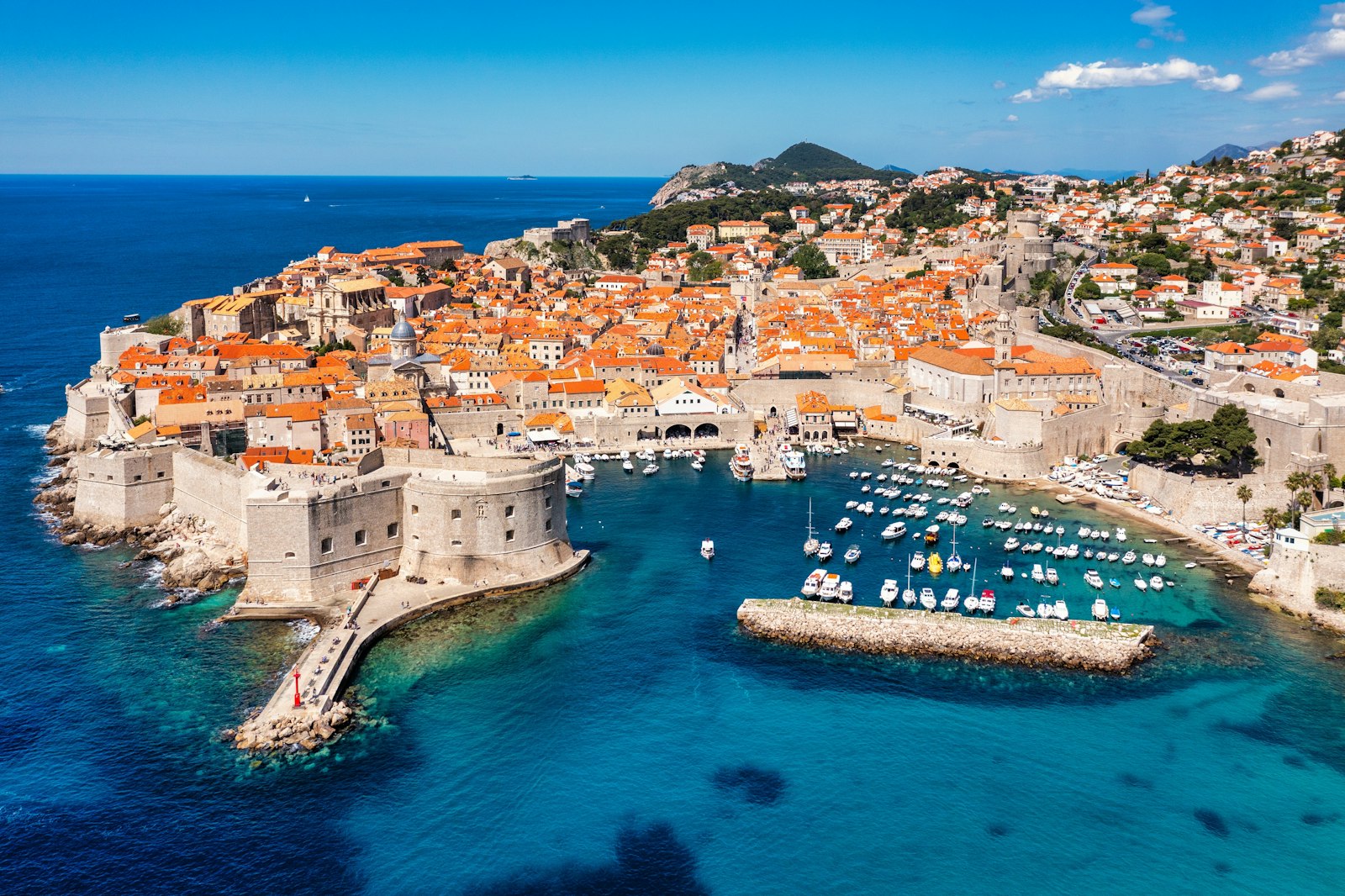
While Croatia’s coastline is often associated with its Venetian heritage, the journey ahead reveals a different historical layer shaped by centuries of Ottoman presence further inland.
Day 6 – Mostar, Bosnia and Herzegovina
Dubrovnik → Mostar Approx. 130 km | 2.5–3 hours
Leaving the Adriatic coast behind, the route turns inland toward Bosnia and Herzegovina.
Border note: This crossing marks entry into a non-Schengen country. Ensure you have your passport ready, along with your vehicle documents and Green Card insurance. Delays are possible during busy travel periods.
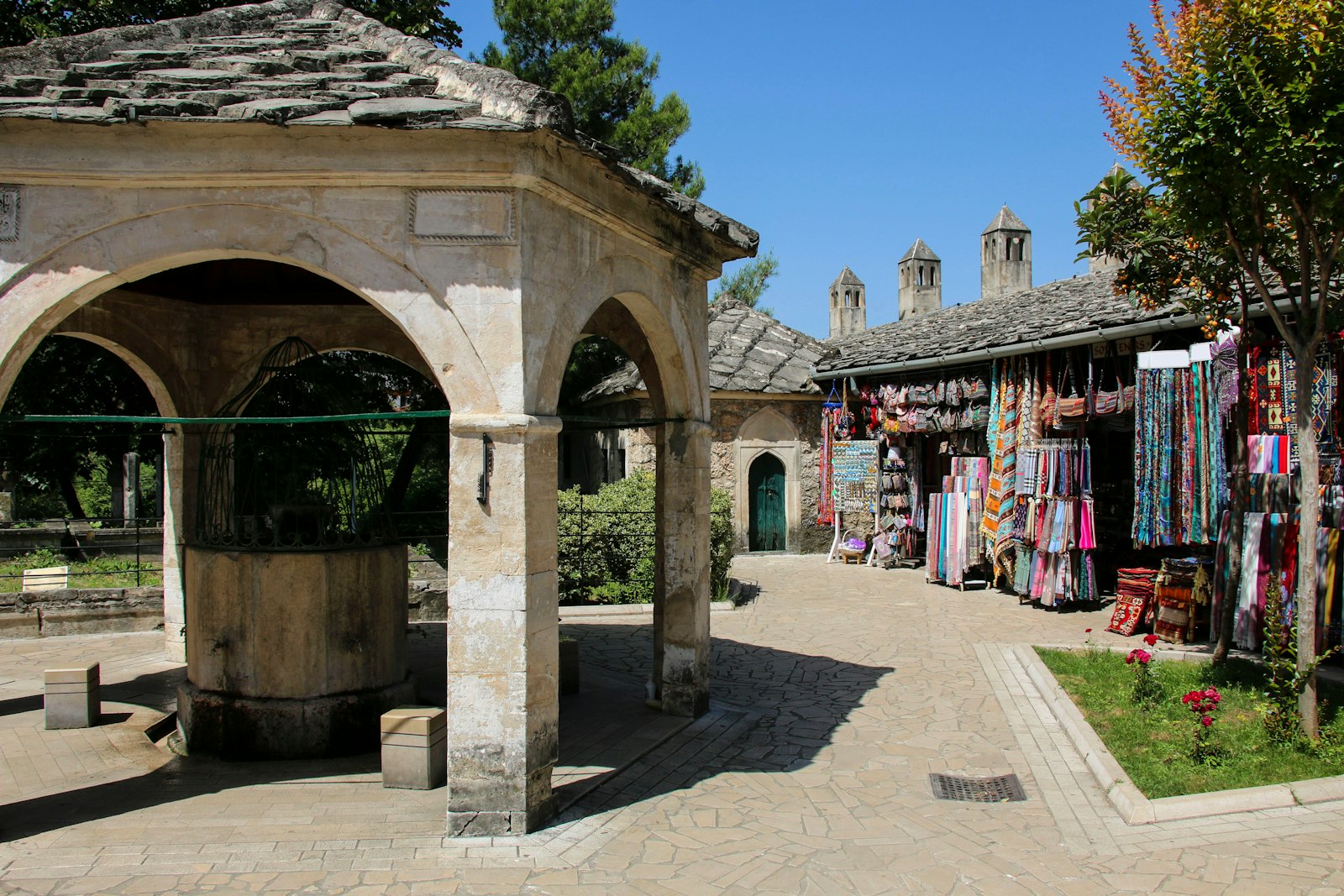
Arriving in Mostar, the atmosphere shifts immediately. The elegant Stari Most (Old Bridge) arches over the turquoise Neretva River, forming the heart of one of the Balkans’ most distinctive towns. Originally built during the Ottoman period in the 16th century, the bridge was destroyed during the Bosnian war and later rebuilt using traditional techniques. Today it remains one of the most powerful symbols of the city. The surrounding Old Bazaar (Kujundžiluk) is filled with traditional shops selling handicrafts, textiles and jewellery. Small cafés overlooking the river provide perfect spots to relax and take in the atmosphere of the town.
Day 7 – Sarajevo, Bosnia and Herzegovina
Mostar → Sarajevo Approx. 130 km | 2 hours
The drive from Mostar to Sarajevo follows a scenic valley route that winds through mountains and villages. This stretch of the journey highlights how closely natural landscapes and historical routes are intertwined, following valleys that have connected regions and cultures for centuries.
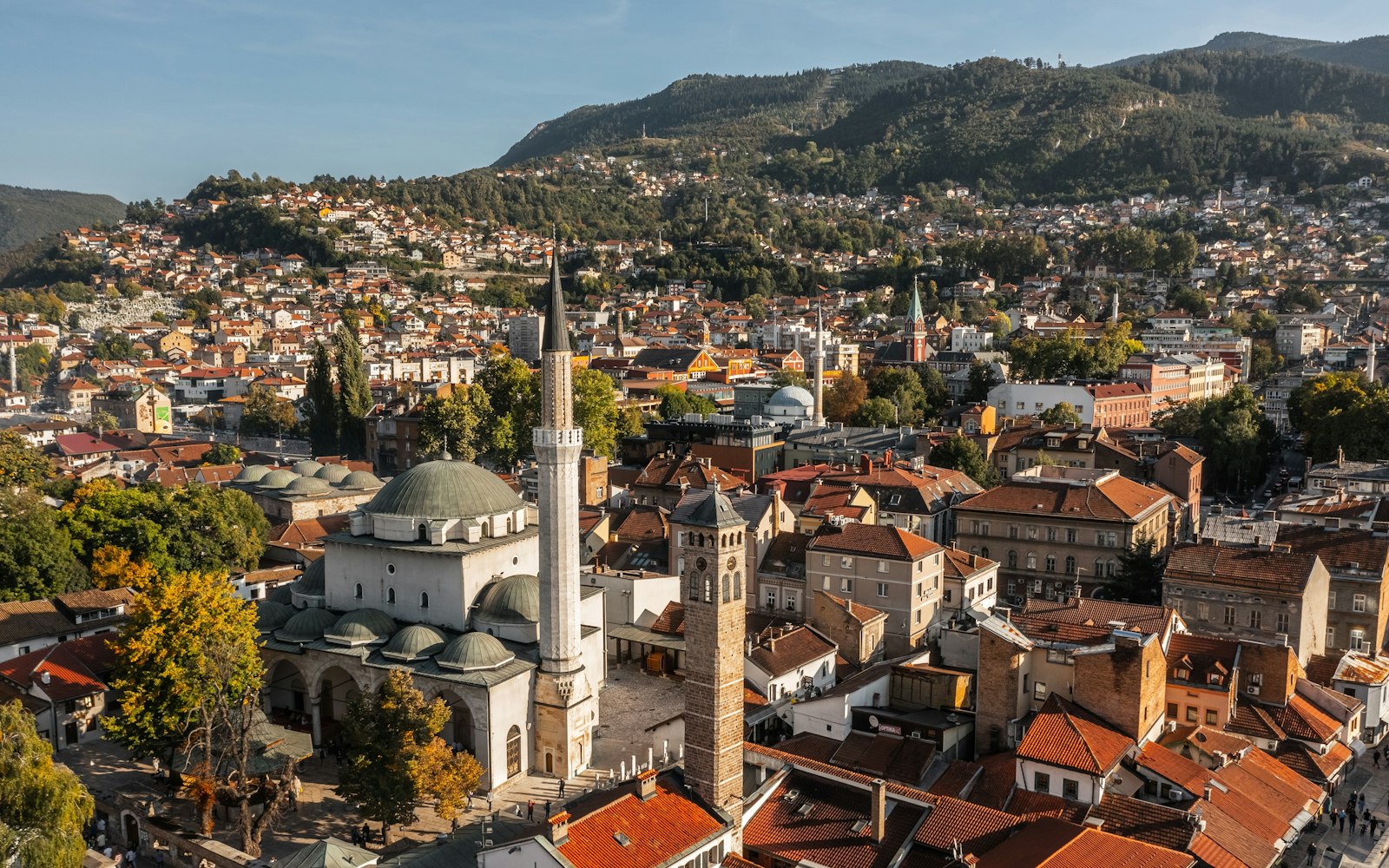
As you arrive in Sarajevo, the contrast between cultures becomes immediately visible, where Ottoman bazaars and Austro-Hungarian boulevards sit side by side. At the centre of Sarajevo lies Baščaršija, the historic Ottoman bazaar district. Its cobbled streets are lined with copper workshops, bakeries and traditional cafés serving Bosnian coffee. Nearby stands the Gazi Husrev-beg Mosque, one of the most important Islamic landmarks in the Balkans. Just a short walk away, the architectural style changes dramatically as Austro-Hungarian buildings line elegant boulevards, illustrating the city’s unique blend of cultures.
Day 8 – Kotor, Montenegro
Sarajevo → Kotor Approx. 230 km | 4–5 hours
Continuing south brings travellers into Montenegro, where dramatic mountain landscapes meet the Adriatic Sea.
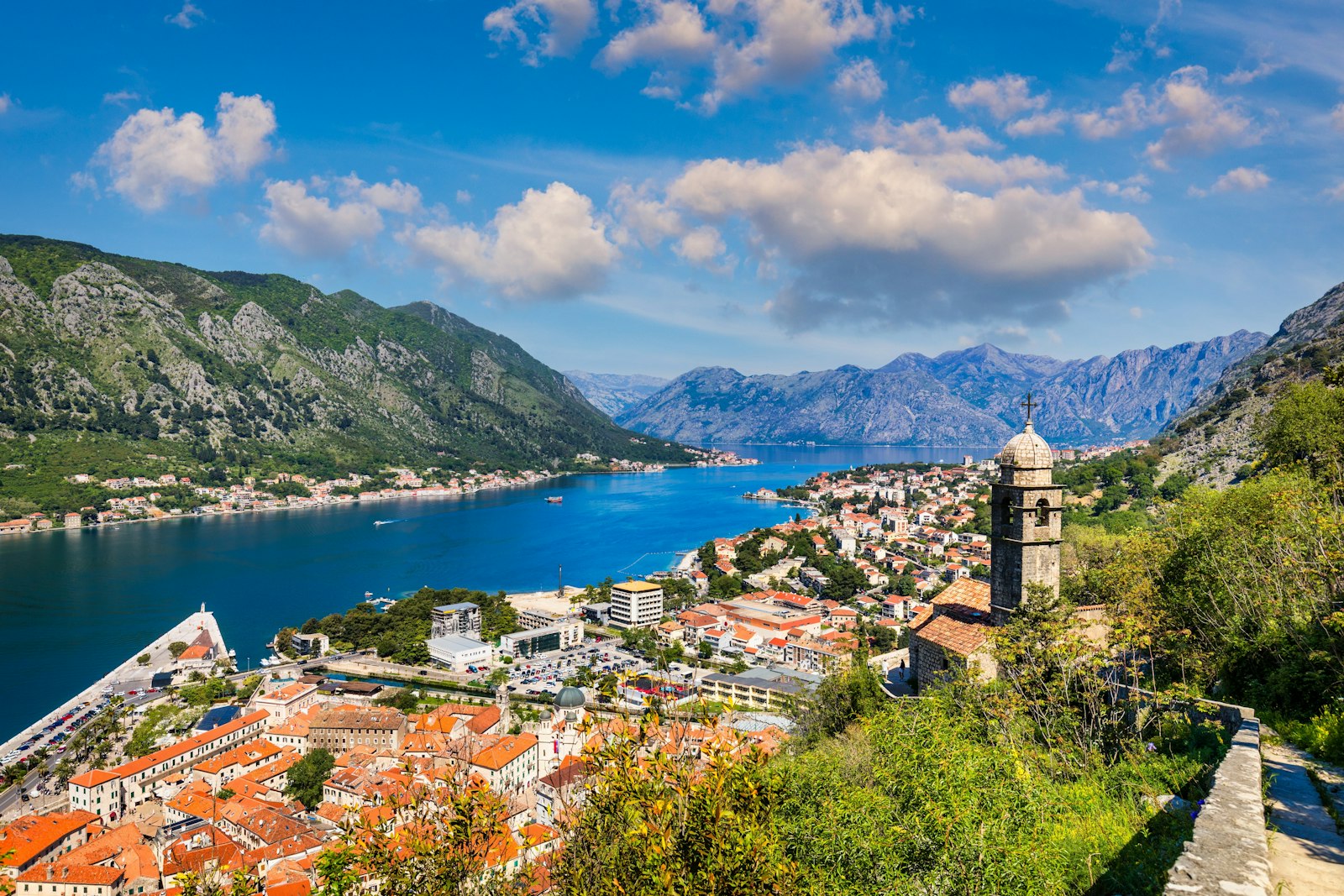
At the end of a dramatic bay surrounded by steep limestone mountains lies the medieval town of Kotor, one of the most striking coastal settings in the Balkans. Within its fortified walls, narrow streets wind through stone squares, churches and historic buildings reflecting centuries of Venetian influence. One of the most memorable experiences in Kotor is climbing the fortress walls above the town. The steep path leads to breathtaking views over the bay and surrounding mountains.
Day 9 – Durmitor National Park, Montenegro
Kotor → Zabljak (Durmitor National Park) Approx. 160–170 km | 3 hours
The drive itself becomes part of the experience here, as winding mountain roads reveal some of the most striking scenery in southeastern Europe. Leaving the coast behind, the road climbs into the mountains toward Durmitor National Park.
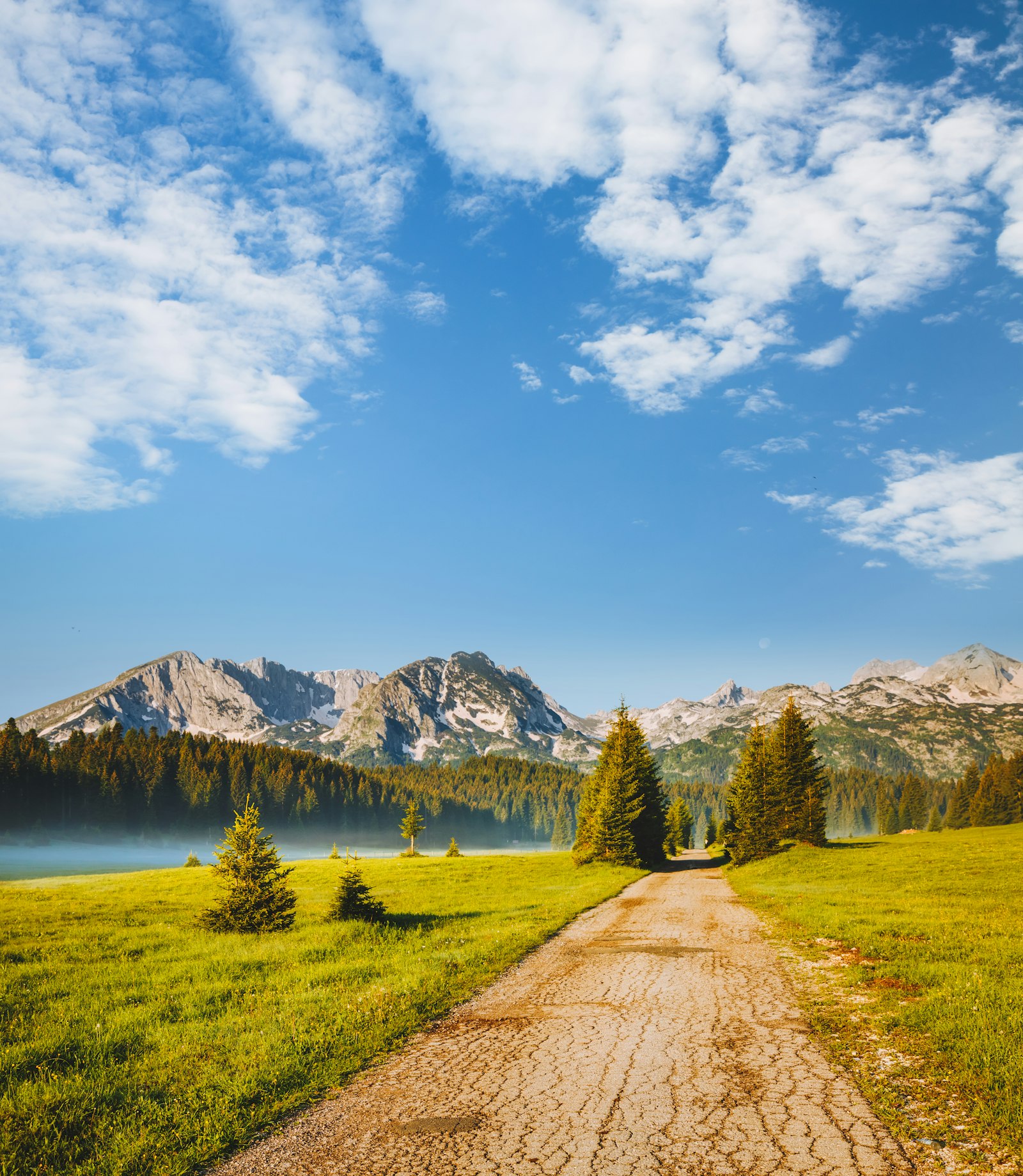
Durmitor is one of the most impressive natural landscapes in the Balkans. Glacial lakes, dense forests and dramatic limestone peaks create scenery that feels both wild and pristine. The nearby Tara River Canyon, among the deepest gorges in Europe, offers spectacular viewpoints and opportunities for rafting or hiking.
Day 10 – Tirana, Albania
Zabljak → Tirana Approx. 200 km | 4 hours
Crossing into Albania, the journey continues toward Tirana, the country’s vibrant capital.
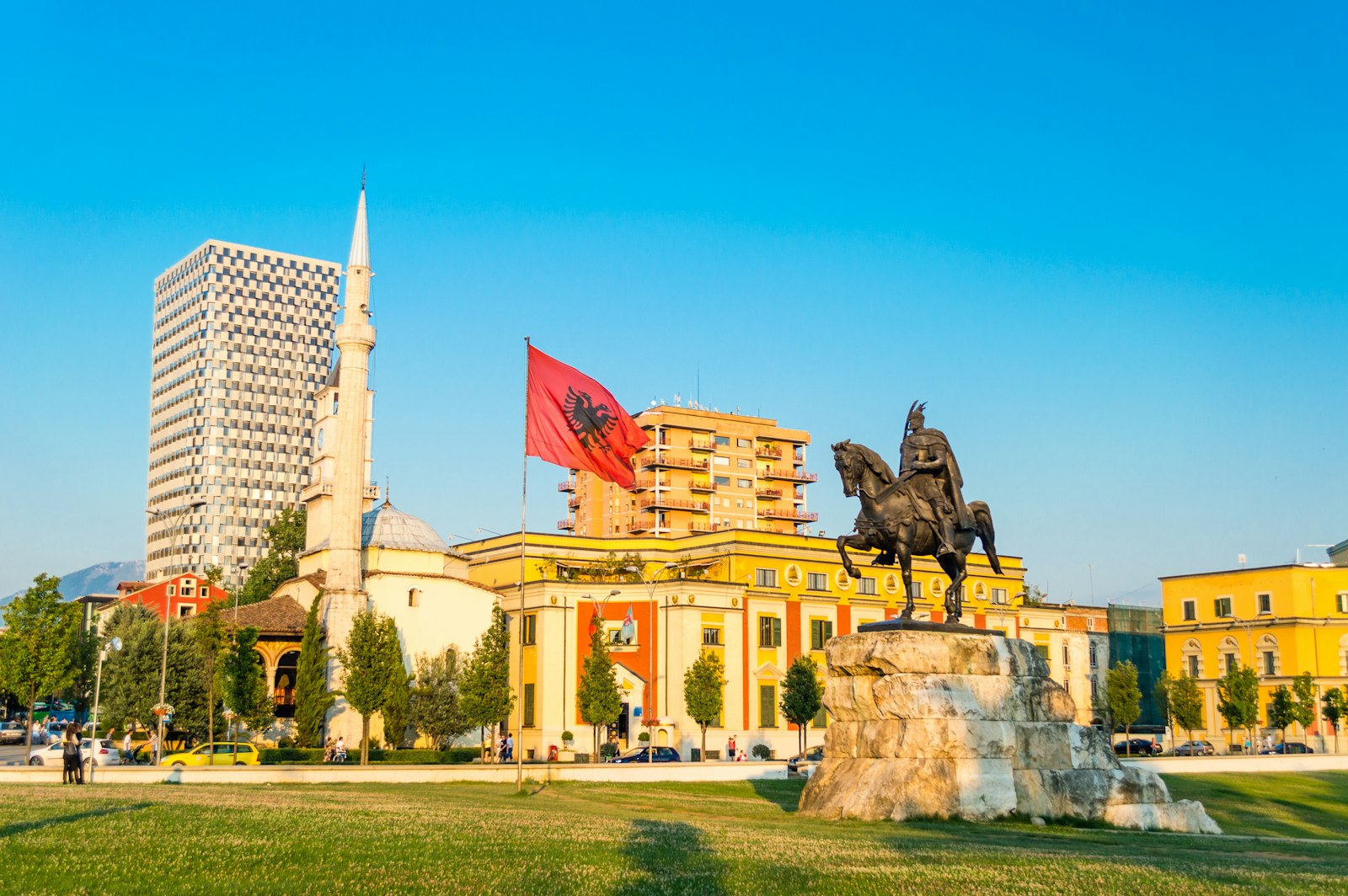
Tirana feels energetic and evolving, with colourful buildings, lively squares and a growing creative scene shaping the city’s identity. At its centre lies Skanderbeg Square, surrounded by museums, government buildings and the historic Et’hem Bey Mosque. The city’s cafés, restaurants and creative neighbourhoods reflect Albania’s youthful energy and rapidly evolving cultural life.
Day 11 – Berat, Albania
Tirana → Berat Approx. 120 km | 2 hours
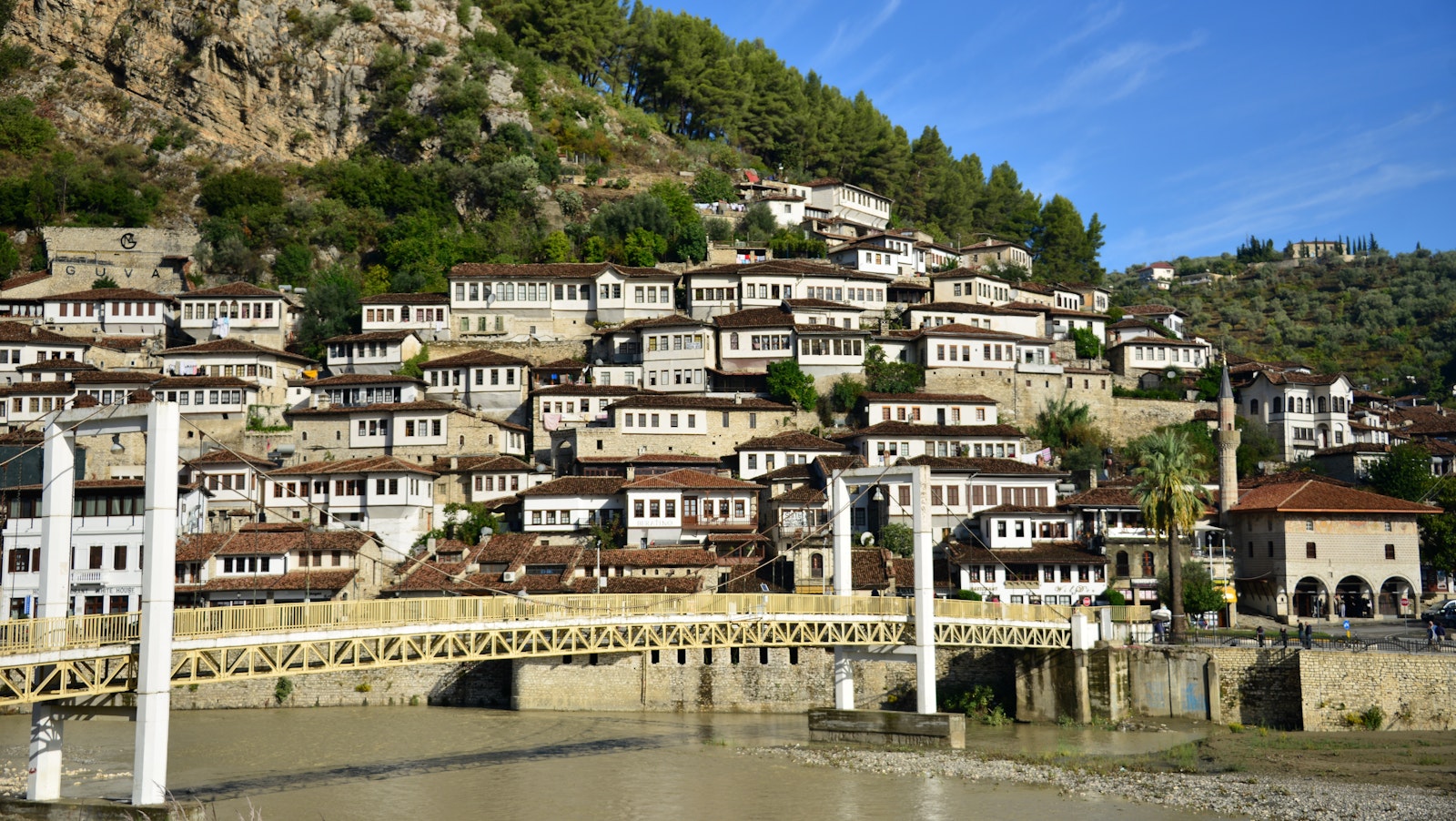
Known as the “City of a Thousand Windows,” Berat unfolds across a hillside overlooking the Osum River. Its white Ottoman-era houses climb the slope beneath a hilltop fortress, creating one of Albania’s most distinctive historic landscapes. The town’s historic centre is a UNESCO World Heritage Site and offers a fascinating glimpse into Ottoman-era architecture and urban life.
Day 12 – Prizren, Kosovo
Berat → Prizren Approx. 200 km | 4 hours
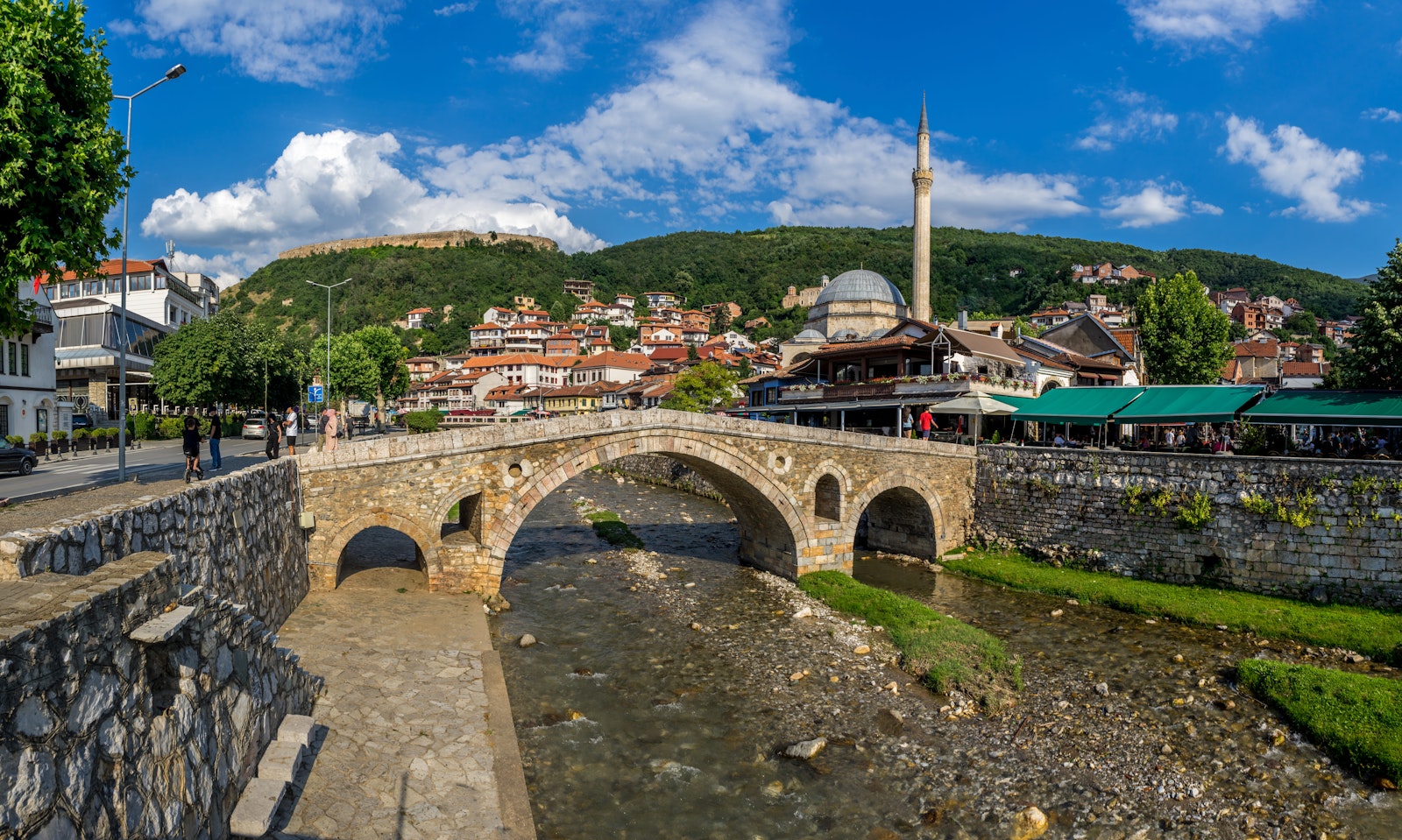
Prizren is often regarded as Kosovo’s most picturesque city, where stone bridges, mosques and Ottoman houses line the river beneath a hilltop fortress. The historic centre is compact and atmospheric, with cobbled streets leading between traditional buildings, small cafés and local shops. The Sinan Pasha Mosque stands prominently near the river, while the call to prayer echoing through the valley adds to the city’s distinctive character. Above the town, Prizren Fortress offers panoramic views across the rooftops and surrounding mountains, particularly striking at sunset.
Day 13 – Skopje, North Macedonia
Prizren → Skopje Approx. 90 km | 2 hours
Skopje presents a striking contrast between past and present, where the historic Old Bazaar sits alongside grand modern architecture. The bazaar remains one of the largest in the Balkans, with narrow streets lined with mosques, caravanserais and traditional shops reflecting the city’s Ottoman heritage.
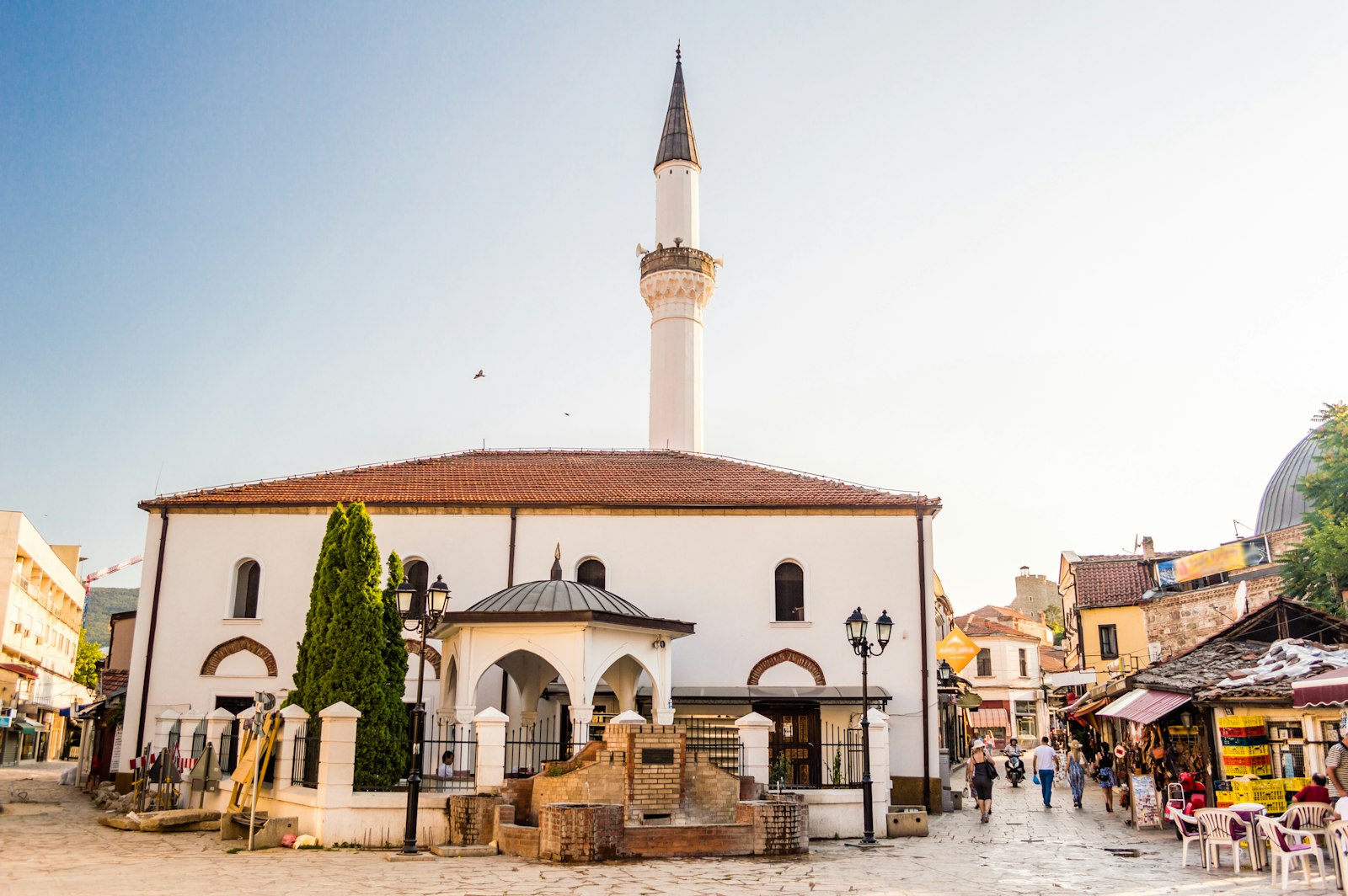
Across the Vardar River, monumental buildings and statues create a very different urban landscape. The Stone Bridge connects these two sides of the city, symbolising the meeting of cultures that has shaped Skopje over centuries.
Day 14 – Lake Ohrid, North Macedonia
Skopje → Ohrid Approx. 170 km | 3 hours
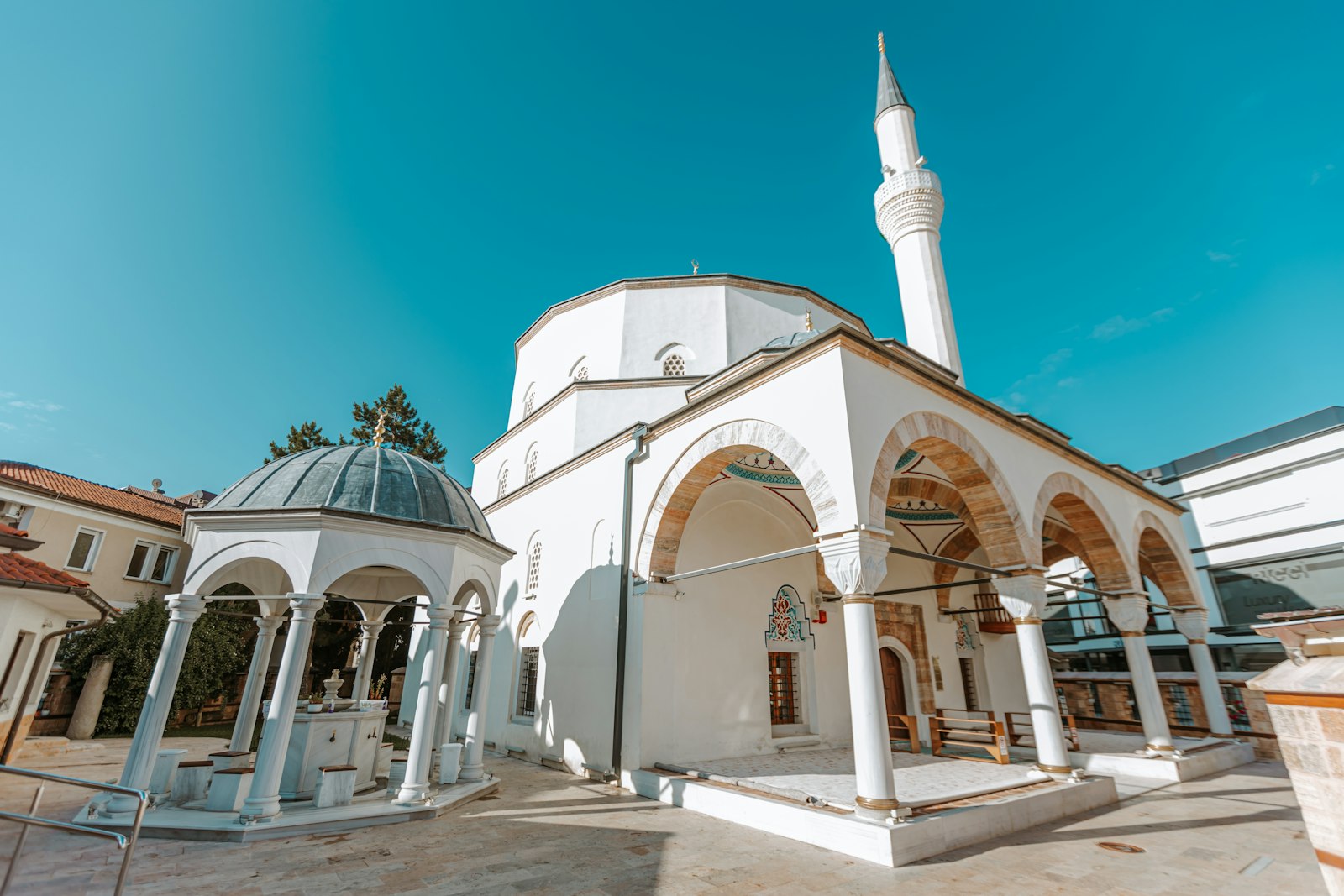
Lake Ohrid offers one of the most serene landscapes in the Balkans, where historic churches and monasteries overlook clear, still waters framed by mountains. The town of Ohrid is known for its rich religious heritage, once home to hundreds of churches, many of which remain today. The Church of St John at Kaneo, perched dramatically on a cliff above the lake, is one of the region’s most iconic and photographed sites. Narrow streets wind down toward the lakeshore, where small beaches and waterfront cafés create a relaxed atmosphere. Ottoman influences are also present, notably in landmarks such as the Ali Pasha Mosque, which adds another layer to the town’s diverse past.
Day 15 – Thessaloniki, Greece
Ohrid → Thessaloniki Approx. 230 km | 4 hours
The journey continues into Greece, arriving in Thessaloniki, a lively port city that connects the Balkans with the wider Mediterranean world. Once an important city of the Ottoman Empire, Thessaloniki retains traces of this period alongside its Byzantine and modern Greek identity.
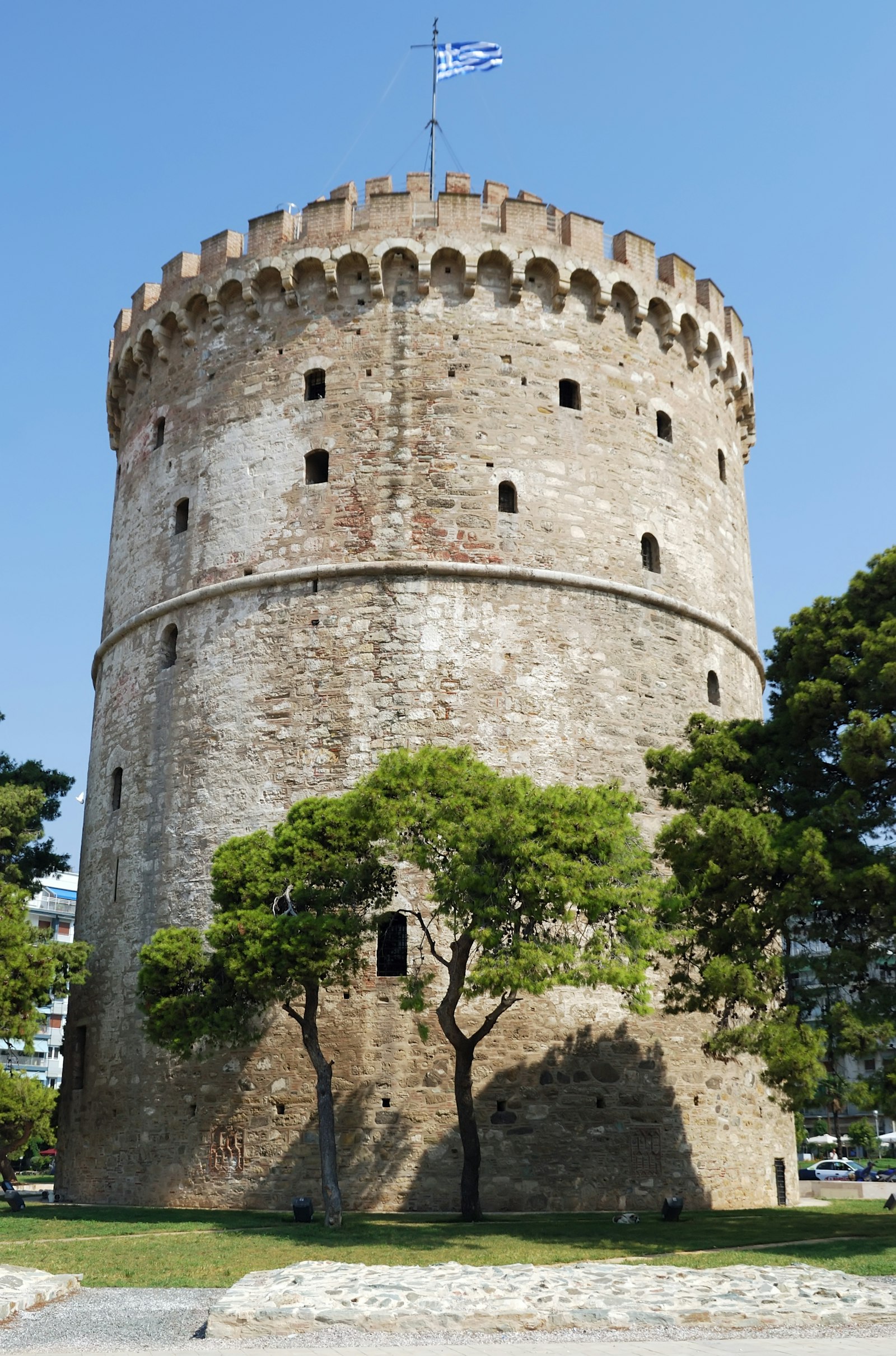
Its long waterfront promenade is ideal for an evening walk, with views stretching across the Thermaic Gulf towards the iconic White Tower, a 15th-century Ottoman-era landmark that once formed part of the city’s fortifications and now stands as its most recognisable symbol.
The city’s layered history is visible in its Byzantine churches, Ottoman-era landmarks and vibrant markets. Among them, the Hamza Bey Mosque, built in 1460 during the Ottoman period, stands as one of the city’s earliest surviving Islamic monuments, later repurposed and long known locally as the “Alkazar”. Areas such as Ladadika offer a lively atmosphere with restaurants and cafés, making Thessaloniki a natural place to pause and experience a different rhythm before the final leg of the journey.
Day 16 – Edirne, European Türkiye
Thessaloniki → Edirne Approx. 300 km | 4–5 hours
The road trip concludes in Edirne, located in the European part of Türkiye. By the time you reach Edirne, the journey itself becomes as memorable as the destinations, bringing together landscapes, cultures and histories that define the Balkans.
Final border crossing: Entering Türkiye involves full passport control and vehicle checks. During peak summer, this border can be particularly busy, so allow extra time for your arrival.
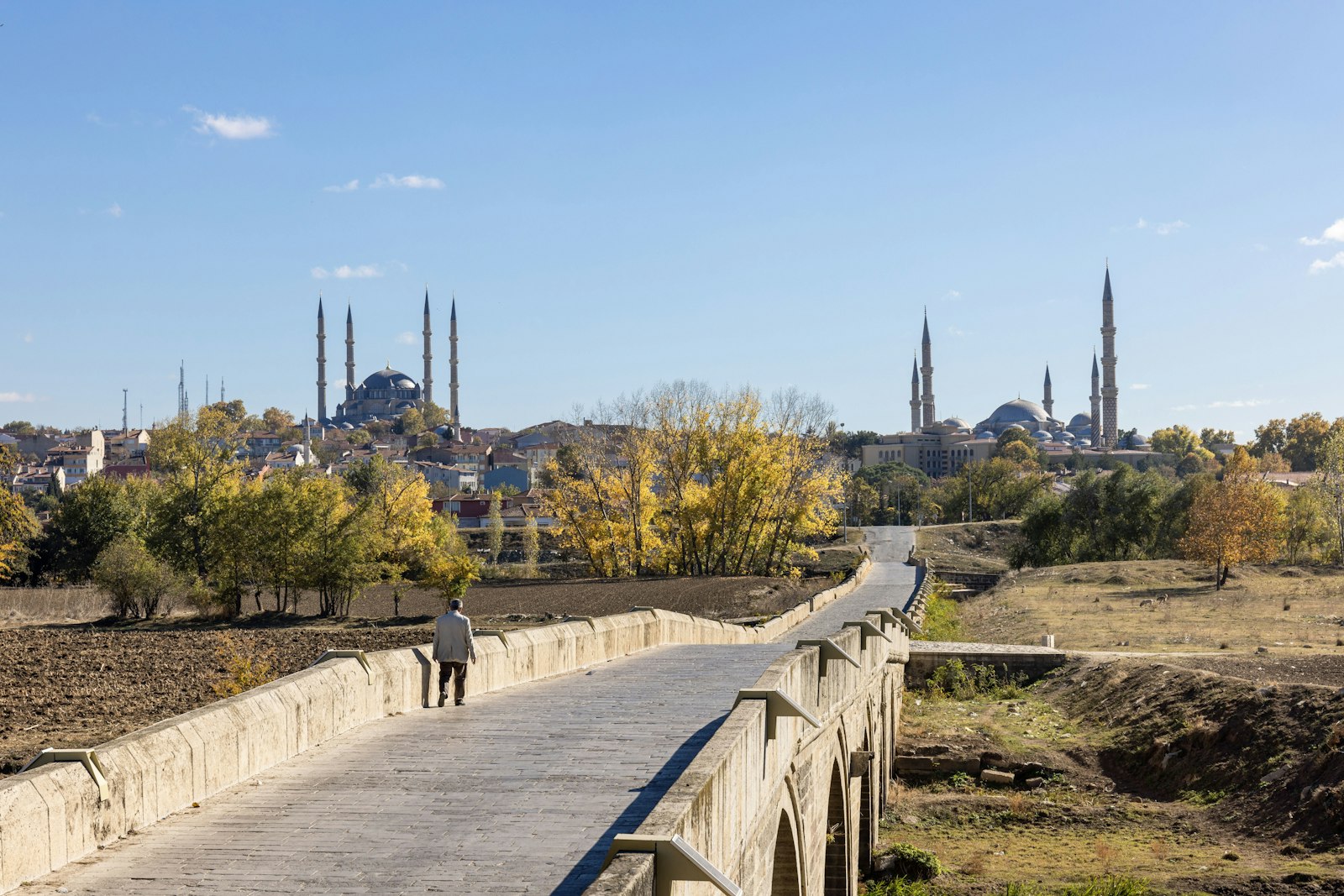
Once the second capital of the Ottoman Empire, Edirne is home to the magnificent Selimiye Mosque, widely regarded as one of the finest masterpieces of Ottoman architecture. Its elegant domes and towering minarets dominate the skyline, reflecting the city’s historical importance. The city also preserves a wealth of Ottoman heritage, with landmarks such as the Eski Cami (Old Mosque) and the Üç Şerefeli Mosque, as well as historic bridges, bazaars and traditional hamams that offer a glimpse into its past. Positioned near the borders with Greece and Bulgaria, Edirne has long been a cultural crossroads, shaping its distinctive character and atmosphere.
For inspirational information on the individual sites and cities, read our dedicated blog article: The Balkans – A crossroads of cultures and landscapes.