A spectacular journey through Morocco: From the Atlas to the Sahara
There is a version of Morocco that most travellers know: the medina at dusk, the smell of spices drifting from an open doorway, the call to prayer rising over the rooftops of Marrakech. It is a real version, and a beautiful one. But it is only the beginning. For a closer look at the Red City itself, our Marrakech blog post explores its souks, gardens, riads and halal-friendly stays in more detail.
Drive south from Marrakech and the country begins to reveal itself in full. The city gives way to olive groves and walled farms, then to the foothills of the High Atlas, where the road climbs through switchbacks and the air cools noticeably with every hundred metres of altitude. Beyond the mountains, the landscape transforms again, softening into valleys of palm and river before the earth turns red and the horizon stretches flat and immense towards the edge of the Sahara.
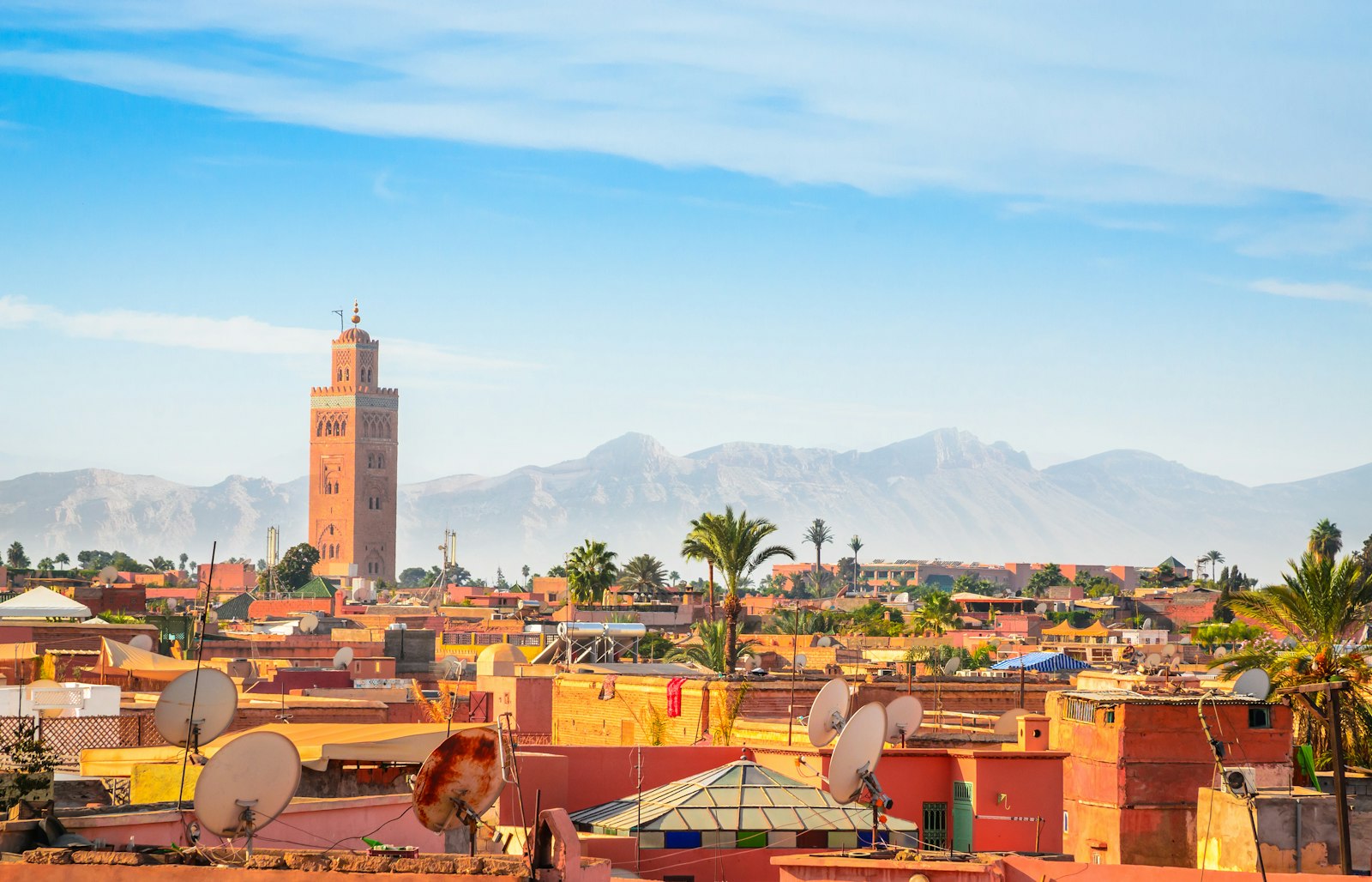
This is one of the great land journeys of the world. Not because of any single destination, but because of what happens in between — the quiet accumulation of landscapes, the way Morocco changes colour and character as you move south, the sense of arriving somewhere older and more elemental with every passing hour.
The High Atlas: crossing the roof of Morocco
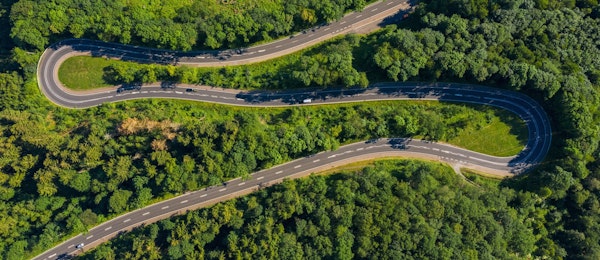
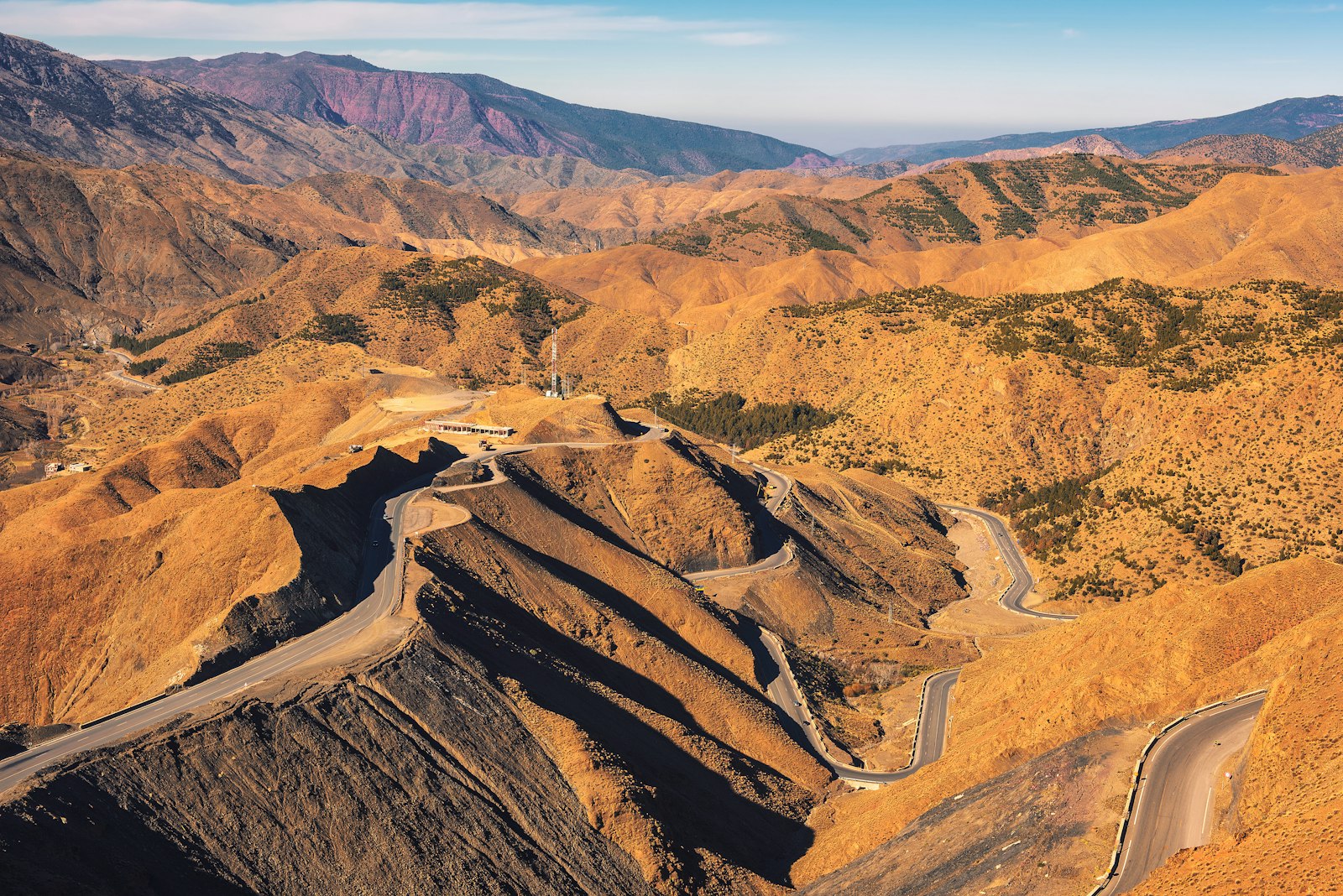
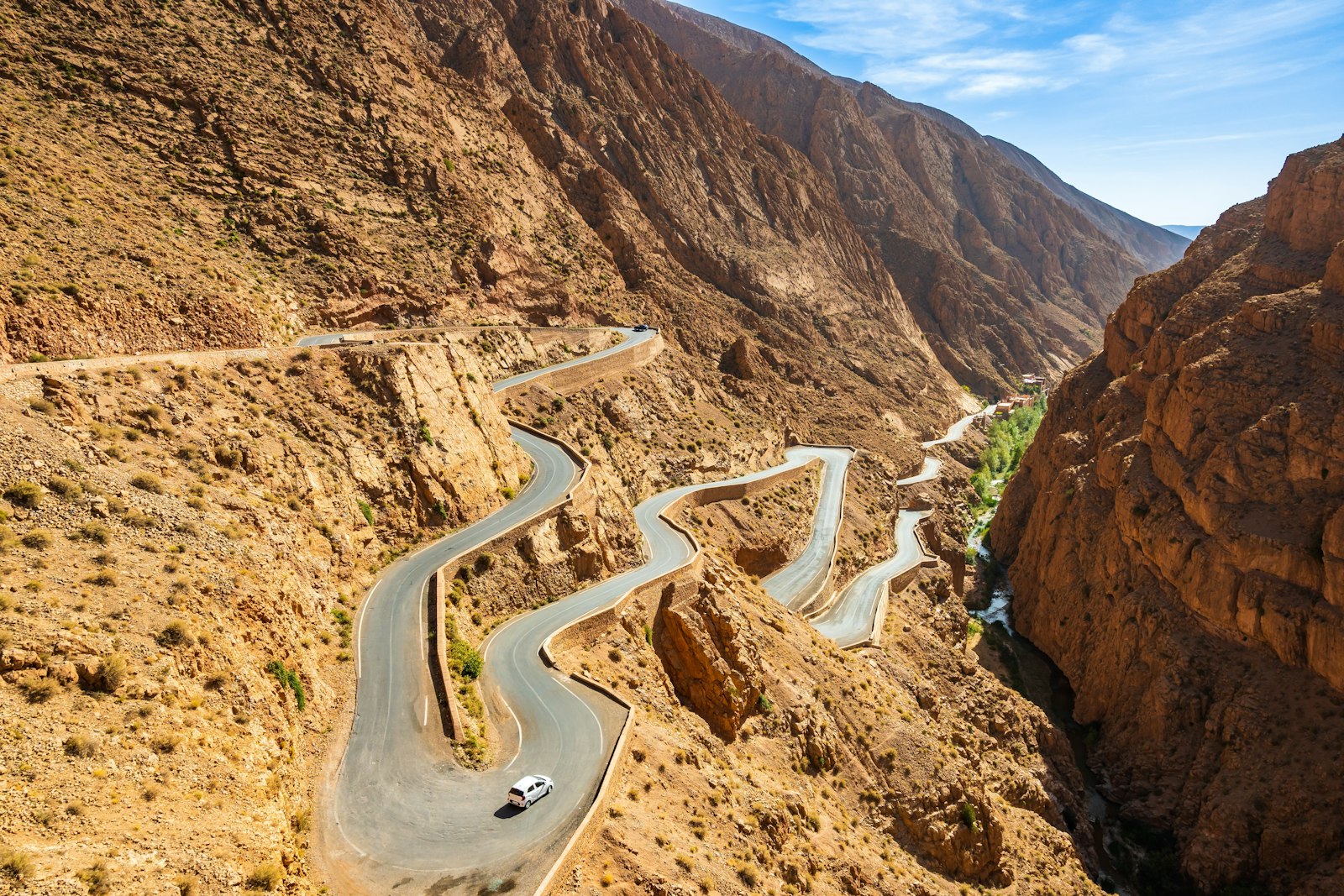
The road over the Tizi n'Tichka pass is the most direct route from Marrakech to the desert, and one of the most dramatic in North Africa. Rising to around 2,200 metres — the highest major mountain pass in North Africa, it winds through Berber villages built into the rockface, past terraced fields and tumbling streams, before reaching the bare, mineral ridgelines of the High Atlas summit. The road itself was built by the French military in 1936 along an ancient caravan trail — the same route that merchants and travellers had navigated for centuries before the first tarmac was laid.
The journey across the pass rarely takes more than two to three hours, but it's worth pausing along the way. Roadside vendors sell fossils and minerals carved from the mountains, and the views from the higher bends — looking back towards the plains of Marrakech, or forward into the deep valleys of the south — are among the finest in Morocco.
On the southern side of the pass, the road descends quickly and the landscape changes in tone. The green of the northern slopes gives way to ochre and rust, the vegetation thins, and the mountains spread themselves into a long, arid expanse. Somewhere in that descent, you cross an invisible threshold. You are, unmistakably, in a different Morocco.
Aït Ben Haddou and Ouarzazate: a gateway carved in earth
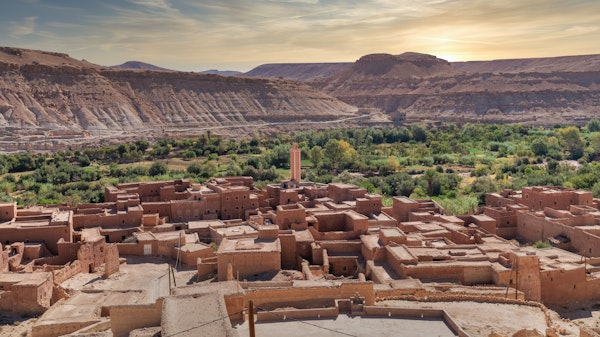
The first landmark most travellers encounter on the southern side of the Atlas is Aït Ben Haddou, a UNESCO World Heritage ksar perched above a shallow river crossing on a low hill of ancient earthen towers. It is one of the finest examples of southern Moroccan architecture anywhere in the country — a fortified village built entirely in pisé, the compacted clay-and-straw technique that has defined construction in this region for centuries.
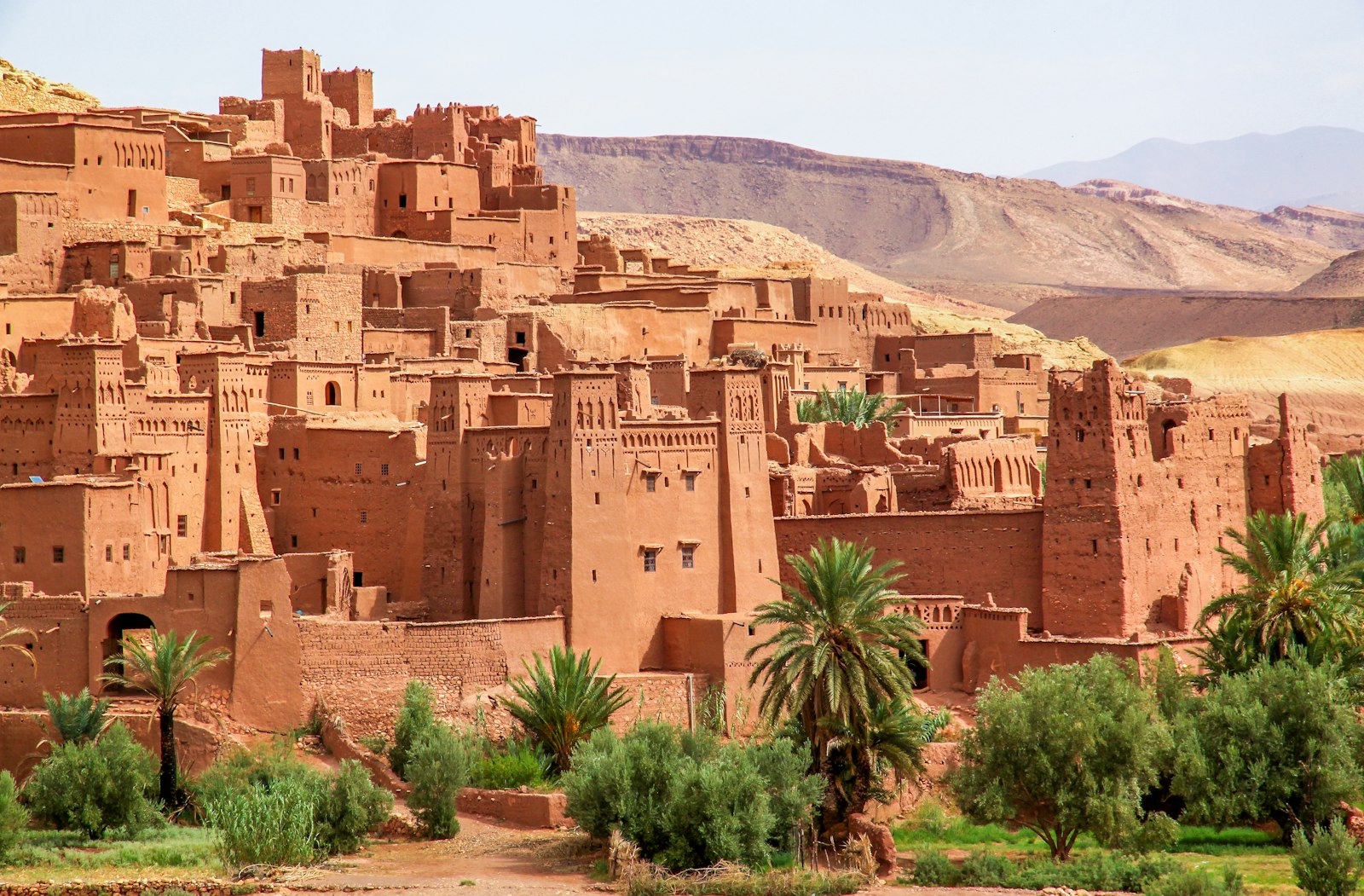
The scale is deceptive from a distance. Up close, the ksar is vast, a labyrinth of crumbling towers, carved wooden doors and smooth-worn alleyways that few visitors fully explore. The best approach is on foot, crossing the river and ascending slowly through the outer rings of the settlement towards the granary at the top, where the views across the valley and the surrounding hamada are extraordinary. It is not difficult to understand why Aït Ben Haddou has served as the backdrop for some of cinema's most ambitious productions — from Lawrence of Arabia to Gladiator — drawn not by novelty but by the timeless authority of the place itself.
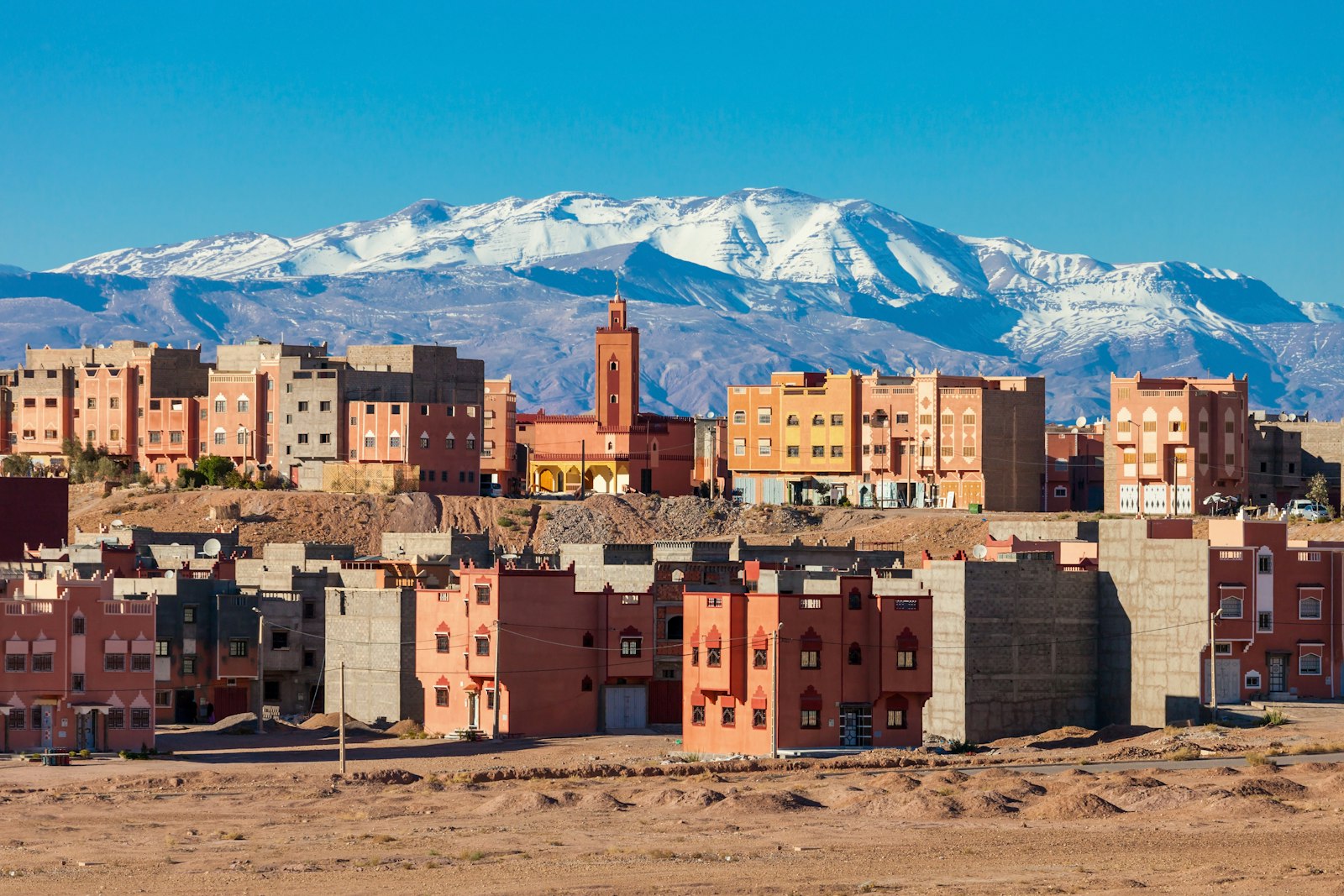
From Aït Ben Haddou, the road leads east to Ouarzazate — the city often called the gateway to the Sahara, though its real character is perhaps better described as a transition point, a place that feels both settled and provisional, as if the desert has already begun to influence everything within its orbit. The kasbah of Taourirt, which dominates the old part of the city, is worth an unhurried visit: its painted reception rooms and layered courtyards hint at the prosperity that once moved through these routes, when Ouarzazate sat at the crossroads of caravan roads connecting sub-Saharan Africa to the imperial cities of the north.
The Draa Valley: the road into the south
East of Ouarzazate, the road enters one of Morocco's most quietly spectacular landscapes. The Draa Valley follows the course of Morocco's longest river southward through a succession of oasis settlements, palmeries and ancient kasbahs. For much of its length, the valley floor is a dense corridor of date palms and irrigated gardens flanked by bare rock walls — a thread of green through an increasingly severe landscape.
The villages along the Draa have been settled for thousands of years. Their kasbahs — some still inhabited, others slowly returning to the earth — rise in earthen towers above the palm groves, built with the same materials and roughly the same techniques as Aït Ben Haddou. In the late afternoon, when the light falls flat and golden across the valley, the effect is quietly overwhelming.
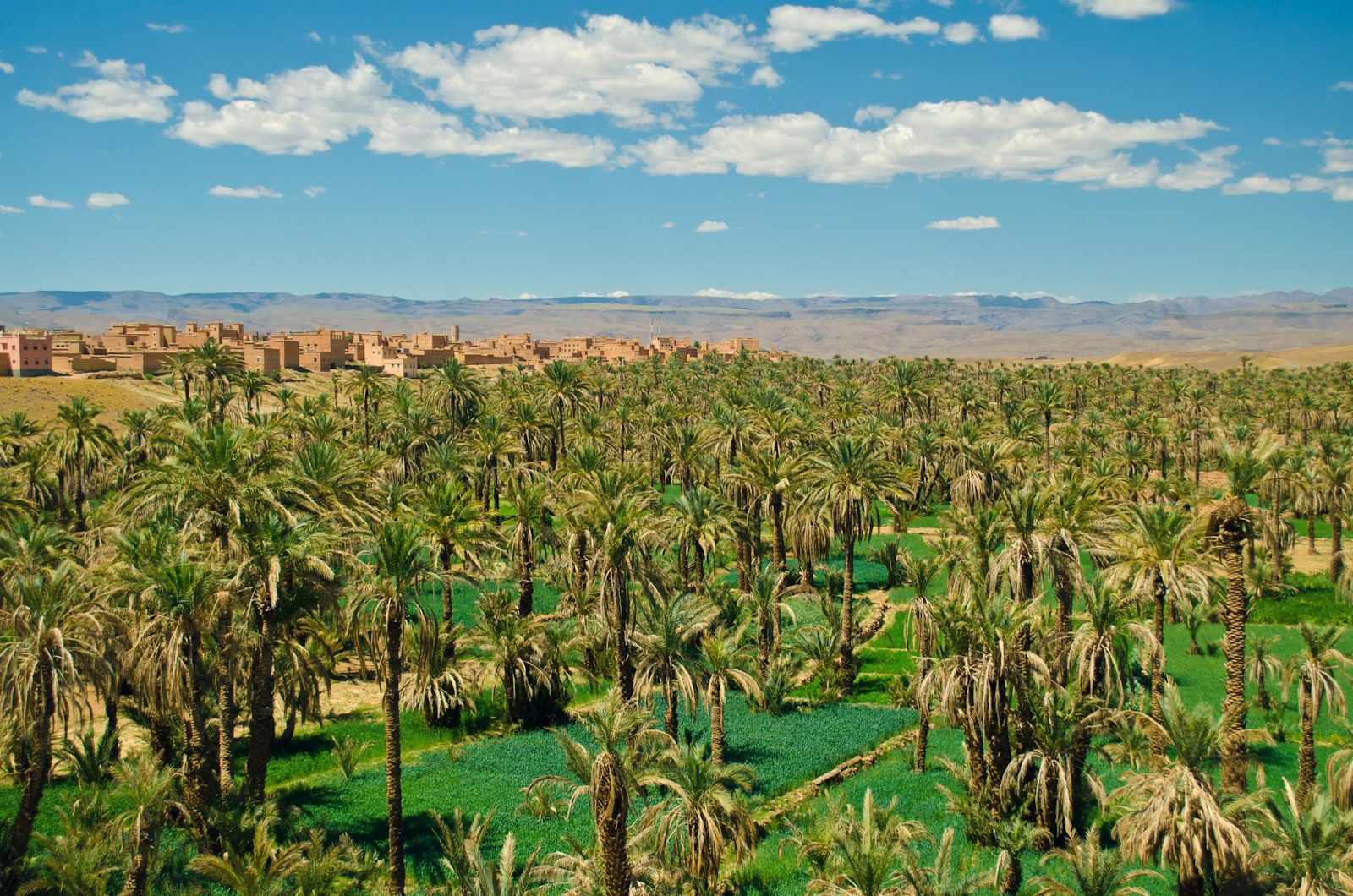
The town of Zagora marks the traditional southern end of the Draa Valley route. A sign at the edge of town points south and lists the distance to Timbuktu in camel-days — a somewhat self-aware landmark these days, but one that points to something real. For centuries, Zagora was a staging post for the great trans-Saharan caravans, their departure the beginning of a journey of weeks across one of the most inhospitable landscapes on earth. You are, at this stage of your own journey, standing at the same edge.
The Ziz Valley and the road to Merzouga
An alternative route — and one that many travellers combine with the Draa road to form a longer loop — runs east from the Atlas through the Ziz Valley. Where the Draa route is lush and vertical, the Ziz feels more open and austere, descending from the cedar forests of the Middle Atlas through dramatic gorge scenery to the pre-Saharan plains in a long, unhurried transition.
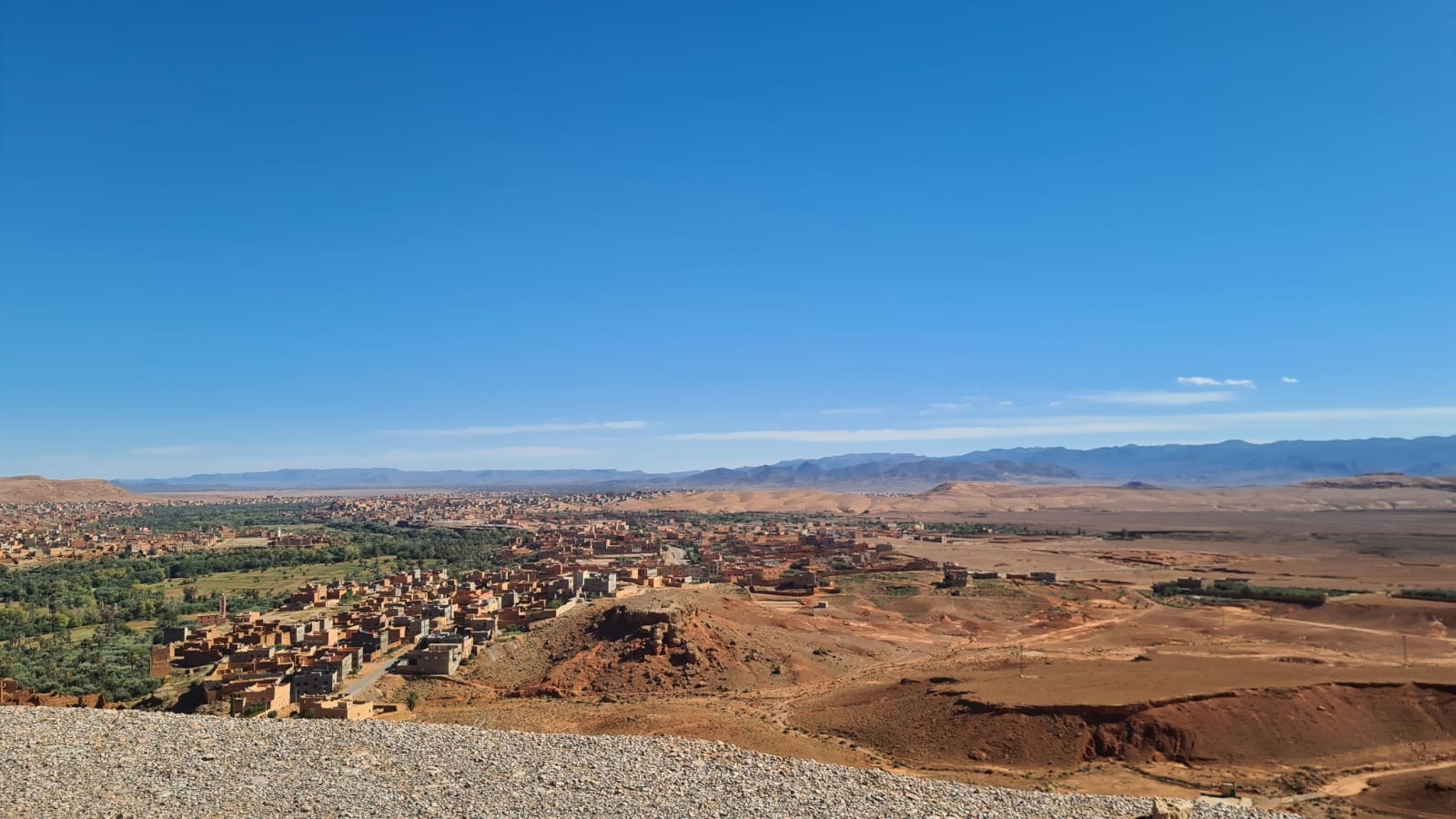
The Ziz Gorges, beginning south of the small town of Rich, are among the most striking landscapes on this route: a narrow canyon where the river cuts through limestone cliffs and the road clings to the rock face above, passing through the Tunnel du Légionnaire — blasted through the rock by French engineers in 1928.
The valley continues south to Errachidia, the provincial capital of a vast territory that stretches all the way to Merzouga, Taouz and the edges of the Sahara — a modern town and practical base that marks the gateway to this entire desert region. The valley then opens gradually into a broad, palm-filled corridor lined with ksar settlements, their earthen towers reflecting the same architectural traditions as the south, before reaching Erfoud — a town famous for its fossil-rich landscape, where artisans polish ancient stone to reveal the coiled shells of ammonites from a prehistoric sea.
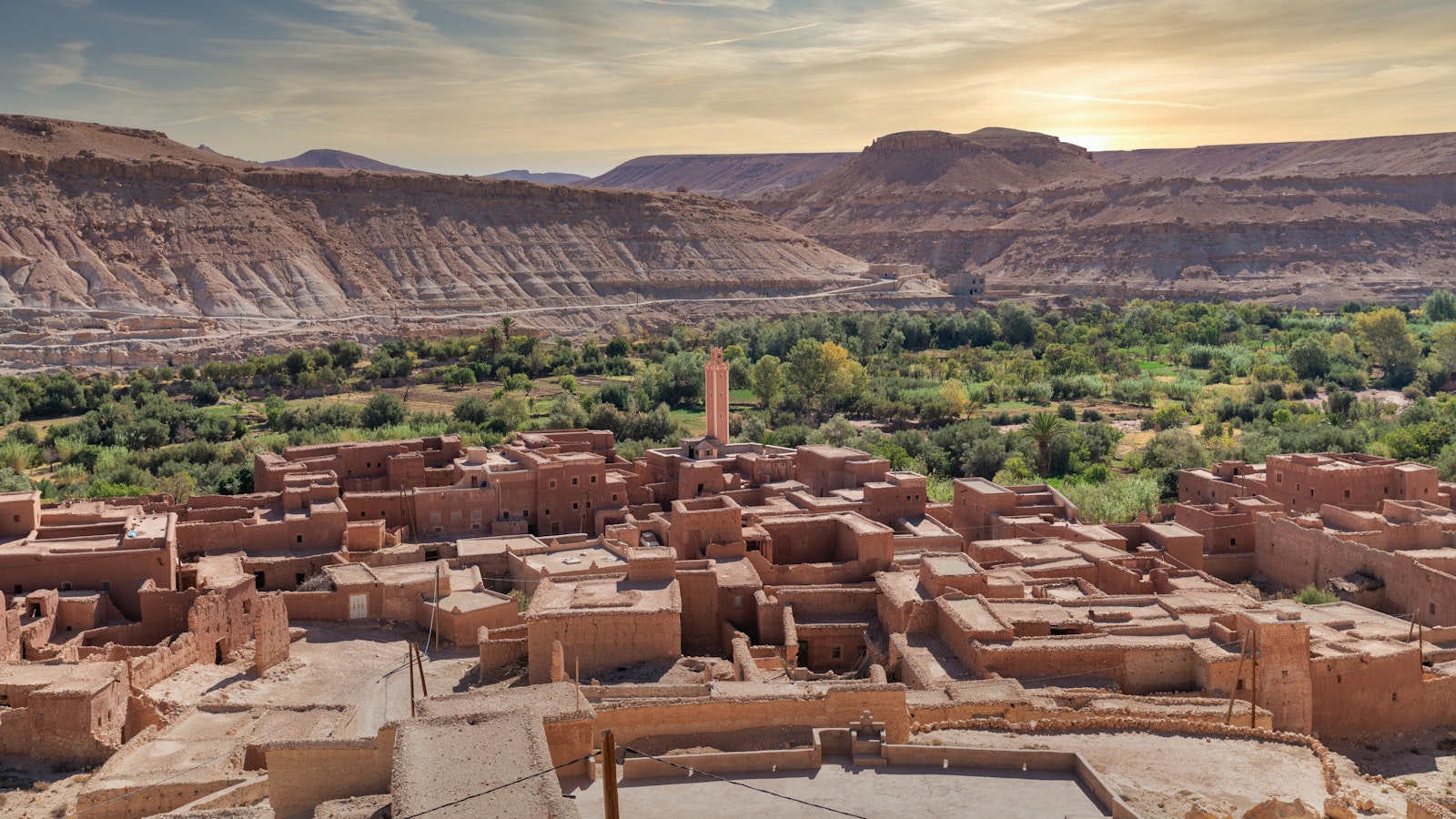
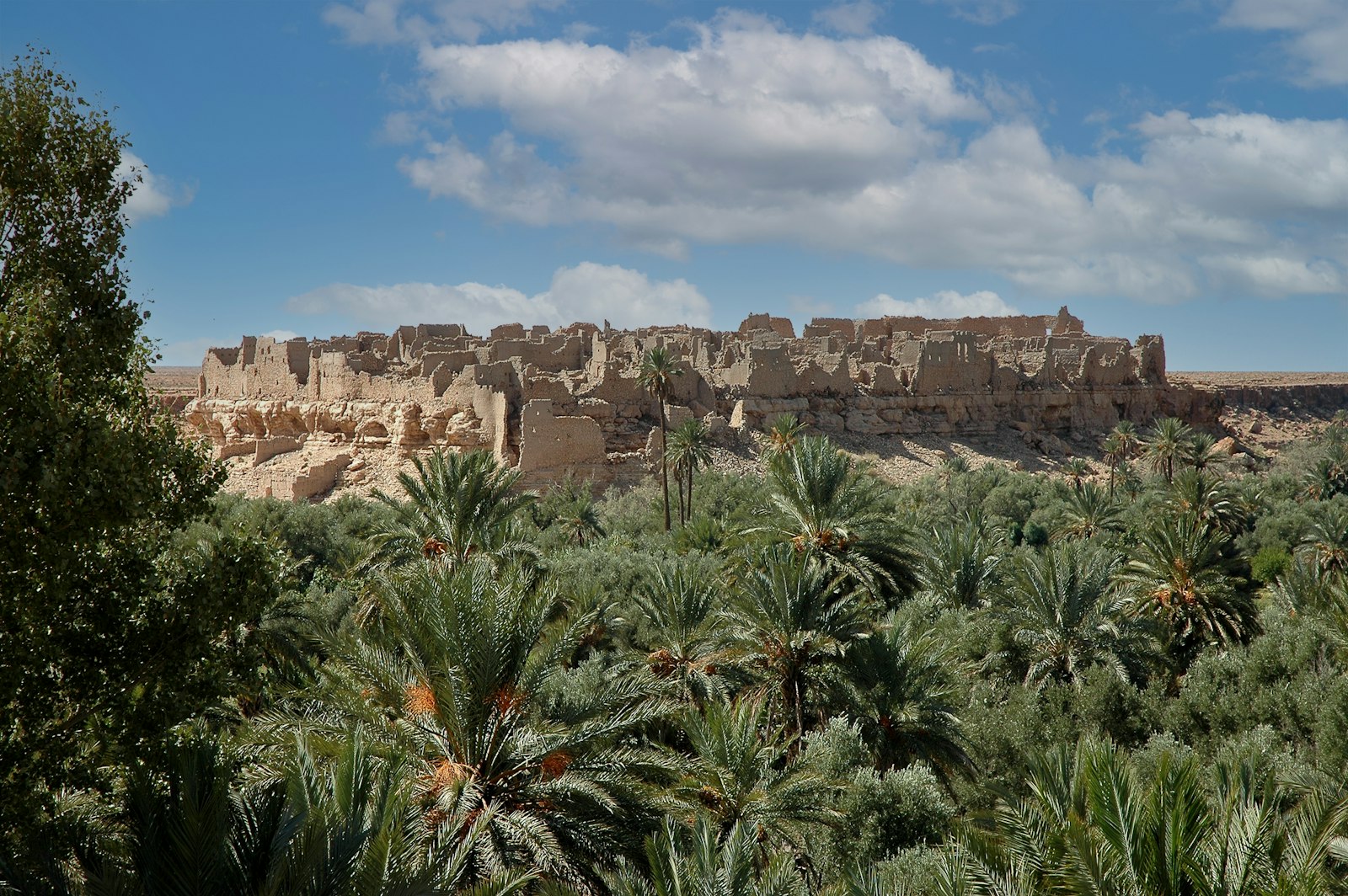
East of Erfoud, the landscape loses its last traces of green. The earth becomes gravelly and flat, broken only by occasional outcrops of rock and the ruins of ancient ksour slowly dissolving back into the ground. The piste towards Taouz, pushing further south and east into the deep Saharan wilderness, rewards those with a four-wheel drive and a spirit of detour — a landscape of rock and silence where the desert feels entirely unmediated.
The pre-Saharan zone around Alnif and Rissani is one of the most atmospheric stretches of the entire journey — less visited than Merzouga itself, but rich in history and landscape.
Near Rissani, in the heart of the Tafilalt Oasis, lie the ruins of Sijilmassa, a medieval city founded in the 8th century that grew into one of the great trading centres of the Islamic world. At its height, it was among the wealthiest cities in North Africa, its markets handling gold, salt, ivory and textiles carried by caravans from across sub-Saharan Africa. The 11th-century geographer al-Bakrī described it as “the last civilised place” before the long crossing of the Sahara — a reminder of the city's role as the final oasis and gateway between the Mediterranean world and the vast desert beyond.
Merzouga and the dunes of Erg Chebbi
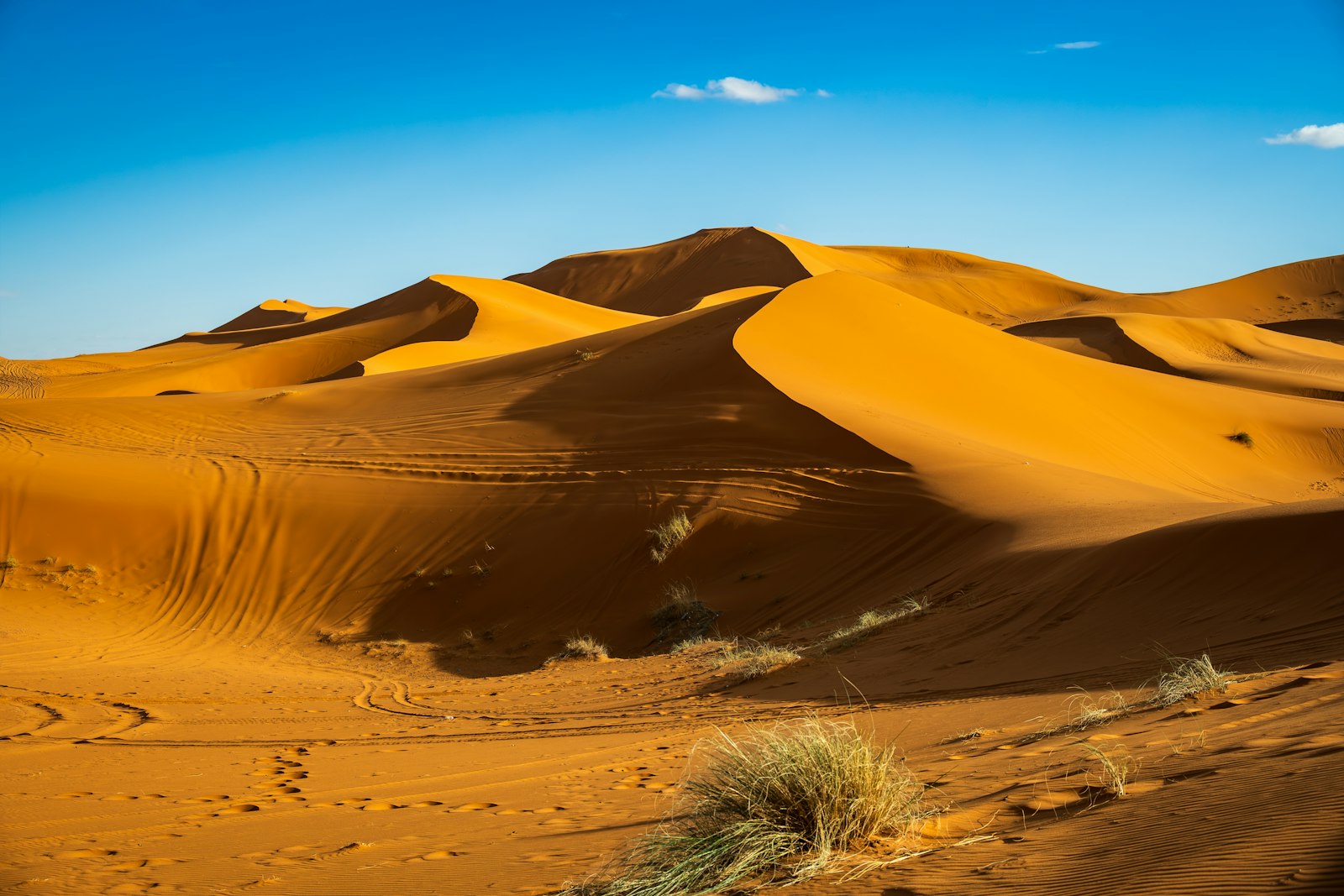
The dunes of Erg Chebbi appear without warning. After hours of flat, stony hamada, the sand rises suddenly from the plain in great orange waves — more than 150 metres high at their peak, stretching for nearly 30 kilometres along the Algerian border. It is one of the most arresting sights in Morocco, and one of the few moments in travel when a landscape genuinely exceeds expectation.
Merzouga, the small town that sits at the edge of the dunes, serves as the main base for desert experiences. The rhythm here is shaped by the light: the dunes shift colour through the day, from pale gold in the morning to deep amber at midday to an almost violet red as the sun drops. Most visitors rise before dawn to watch the sunrise from the ridge of a high dune — a worthwhile effort, and one of those rare experiences that justifies the phrase "once in a lifetime" without exaggeration.
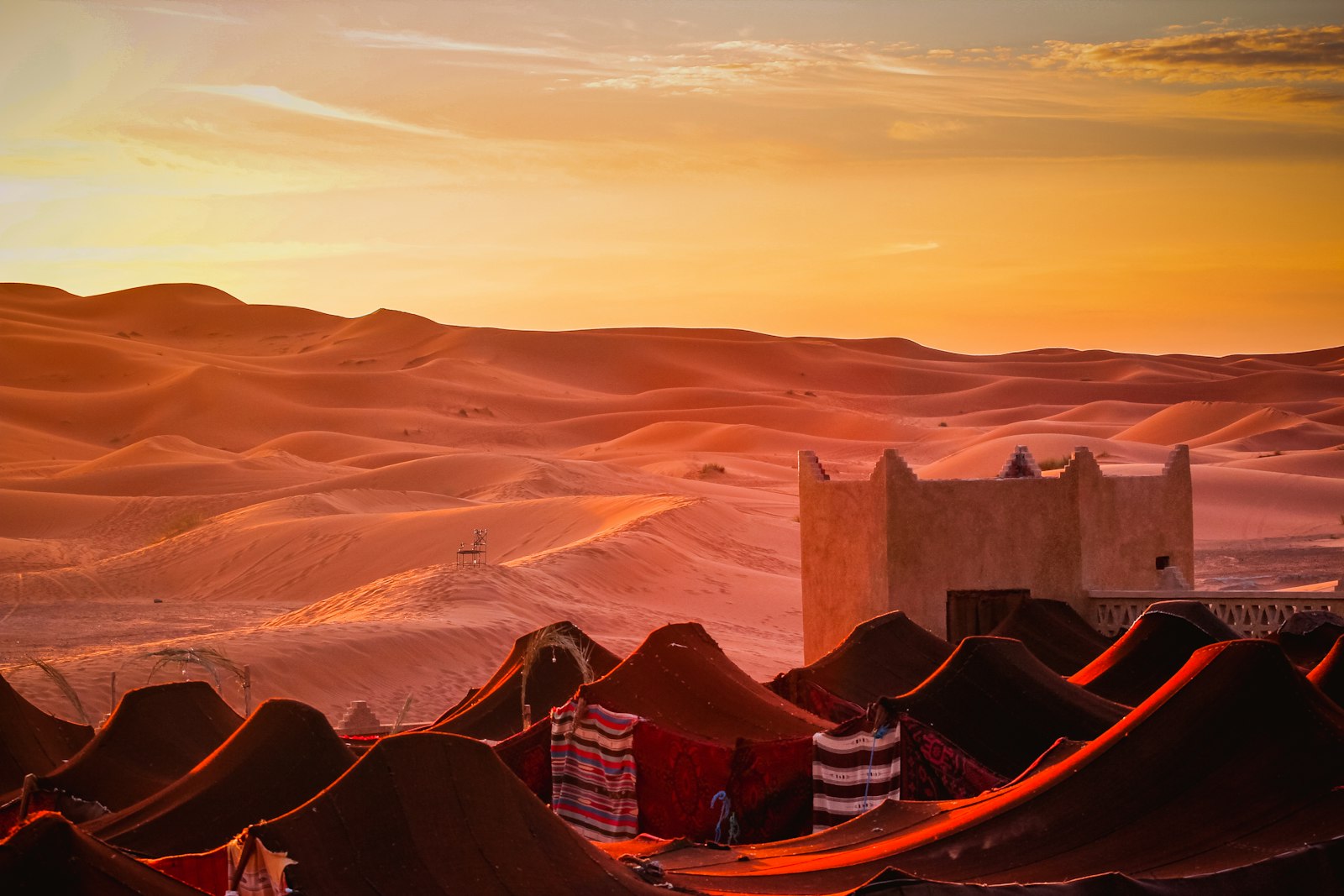
Camel journeys into the dunes are the most common way to experience the desert, typically departing in the late afternoon to reach a camp before darkness falls. The camps range from basic to genuinely luxurious, but what matters most is the setting: the silence, the scale, the sky. Far from any city, the Saharan night sky is extraordinary — dense with stars in a way that is increasingly rare in a world defined by light pollution.
For a longer, more immersive desert experience, the more remote dunes of Erg Chigaga, reached via a long piste west of M'hamid, offer even greater solitude. The journey to reach them is an experience in itself.
Practical notes for the journey
By car: The Atlas-to-Sahara route is best done by car, which allows you to set your own pace and stop freely along the way. Road surfaces are generally good on the main routes, though some detours towards remote kasbahs and desert camps require a higher-clearance vehicle. The full journey from Marrakech to Merzouga covers roughly 560 kilometres and is typically spread over two to four days. Many travellers combine it with a loop back via the Todra Gorge, the Dades Valley and the rose-growing region around Kelaa M'Gouna.
Best time to travel: Spring (March to May) and autumn (September to November) offer the most comfortable conditions for this route. Summer heat in the desert can be intense, and while the Atlas Mountains provide some relief, temperatures in the valleys and pre-Saharan plains regularly exceed 40°C. Winter travel is possible and has its own rewards — cool, clear desert days and the possibility of snow on the Atlas passes — but requires additional planning and flexibility.
Where to stay: Accommodation along the route has improved significantly in recent years. Ouarzazate offers a good range of hotels and riads. The Draa Valley has a growing selection of guesthouses, many of them atmospheric and family-run. In Merzouga, both town hotels and desert camps provide comfortable options at a range of price points. For those preferring the immersive experience of a desert camp, booking in advance is recommended during peak season.
Food: Halal food is the default throughout this region, as it is across Morocco. Roadside restaurants serve straightforward tagines, brochettes and harira, while the larger towns offer wider menus. In smaller villages and rural areas, a few words of French or Arabic are useful for navigating local cafés.
The return: a different Morocco on the road north
The journey south is one of revelation — each new landscape superseding the last. The return north carries a different quality: a growing awareness of what you have seen, and the accumulating sense of a country whose surface has only been partially understood.
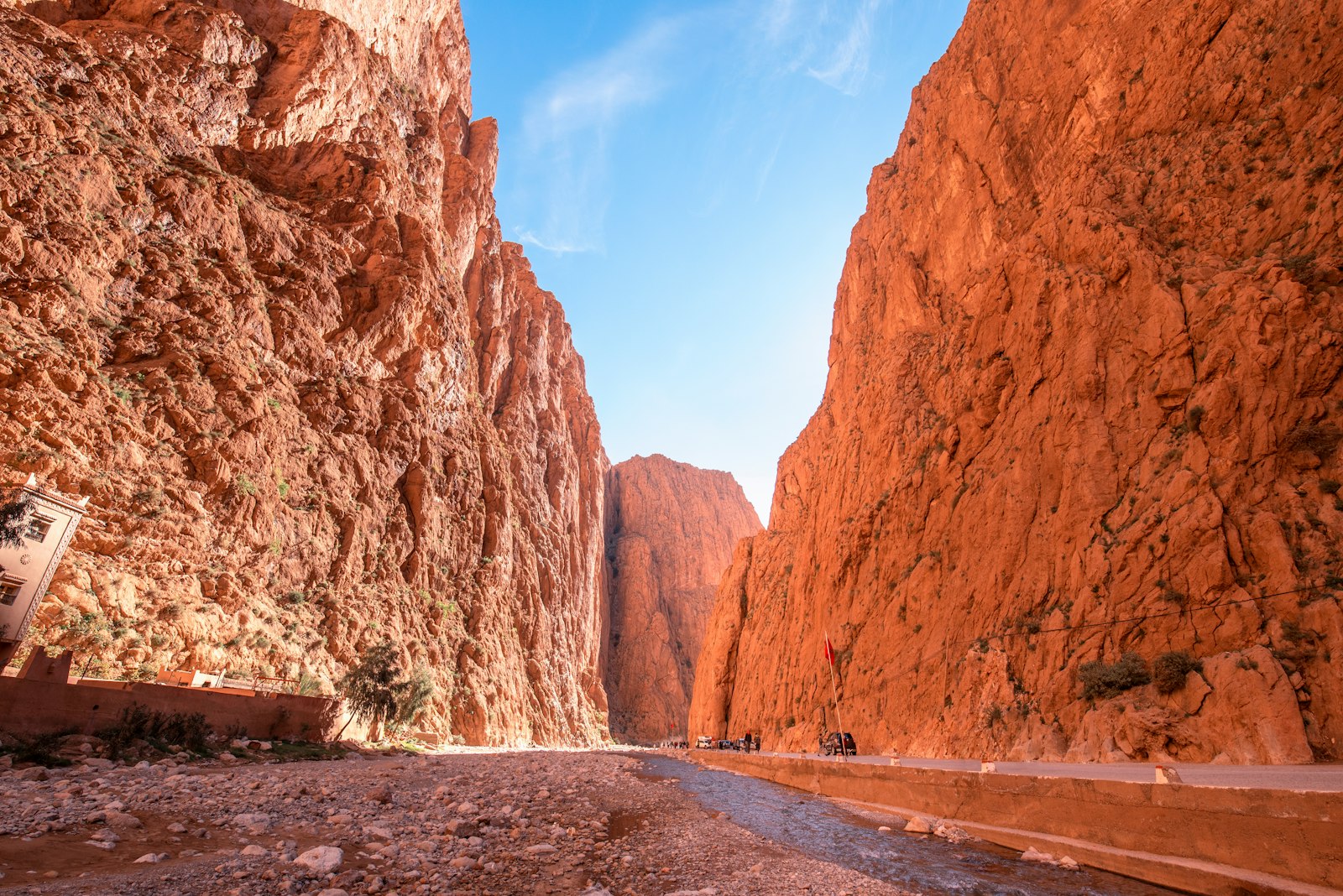
The most rewarding return routes swing north through the Todra Gorge near Tinghir — where sheer limestone cliffs rise 300 metres above a narrow riverbed and the light in the early morning is exceptional — and the Dades Valley, which winds west between eroded rock formations and fortified kasbahs in a sequence of increasingly wild scenery ; and, if time allows, the kasbah of Taourirt in Ouarzazate once more, before the long climb back over the Atlas.
By the time the road drops back into the ochre suburbs of Marrakech, the city feels both familiar and slightly smaller — the way a known place always feels after you have seen what lies beyond it. What often remains just as vividly in travellers' memories as the landscapes is the warm hospitality of the Moroccan people: the quiet generosity of riad hosts and family-run stays, the patience of roadside vendors, and the easy kindness encountered in villages, cafés and small local businesses along the way. Across the journey, hospitality becomes part of the landscape itself — not a separate attraction, but one of the reasons Morocco leaves such a lasting impression.
Morocco, seen whole, is not one country but several: the medina and the mountain, the valley and the desert, the ancient city and the vast, unhurried silence of the dunes. This journey travels through all of them. For more inspiration on planning a halal-friendly holiday in Morocco, see our complete guide to Morocco as a rich and rewarding travel destination.